 Lynden Roofing
 Roofing in Acme's Wooded, Wet Corner of Whatcom County
Acme sits in the tree-covered foothill country east of Lynden, where the Nooksack River valley starts climbing toward the Cascades. It's a different roofing environment than the open farmland closer to town. Mature conifers shade most rooflines for a good part of the day, canopy cover slows down drying after every storm, and the region's marine-influenced weather keeps humidity high even when it isn't actively raining. Put those three things together and you get roofs that age faster than their warranty paperwork suggests, no matter how well they were installed originally.
We work on homes throughout Whatcom County, and Acme roofs consistently show the same pattern: shingles that still look intact from the ground but are quietly failing underneath from years of trapped moisture, moss growth in shaded valleys and north-facing slopes, and gutters and edges that take the brunt of driving rain coming off the foothills. A roof replacement out here isn't just "put new shingles on" — it's an opportunity to fix the conditions that wore the old roof out early.
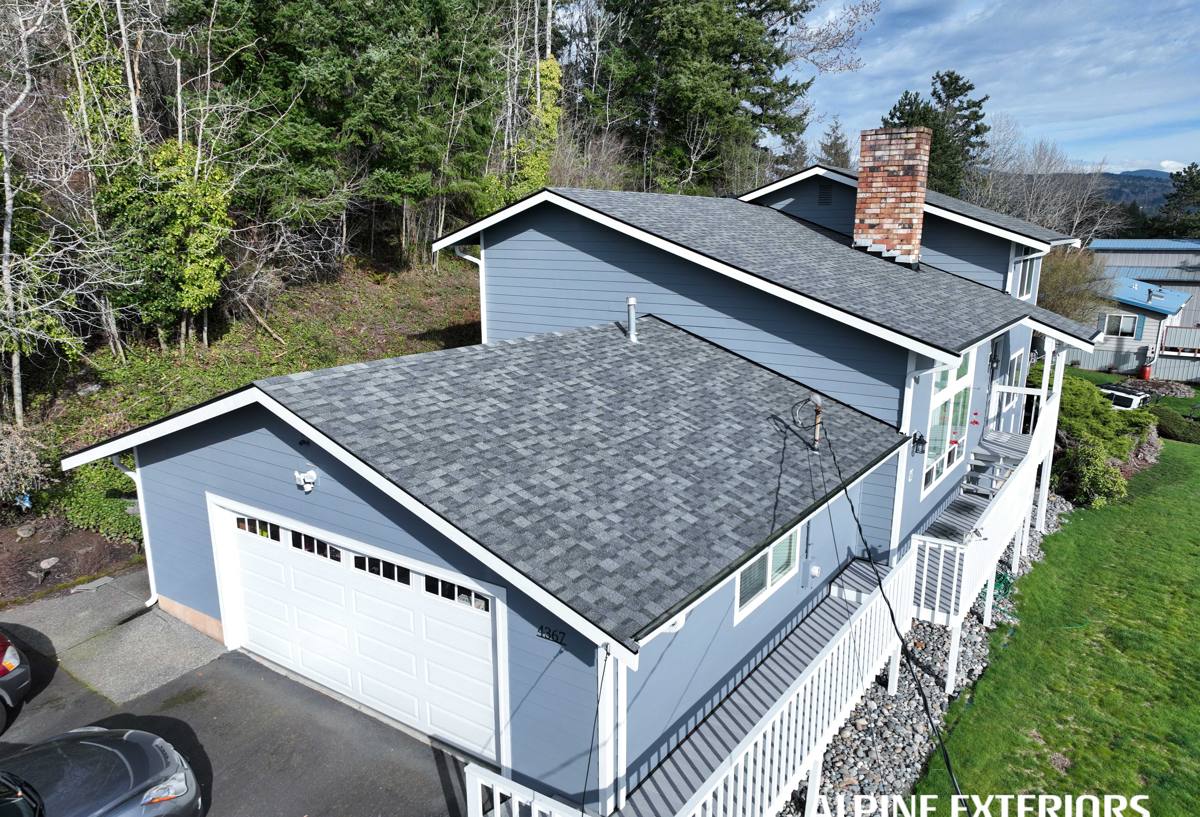
Signs an Acme Roof Has Reached Replacement Age
Repair makes sense when the damage is isolated. Replacement makes sense when the roofing system as a whole is past the point where patching buys you real time. Some signs point clearly toward replacement:
- Granule loss heavy enough that you can see bare, shiny patches on the shingle surface
- Shingles that are curling, cupping, or cracking across multiple slopes, not just one spot
- Moss or dark algae staining that keeps returning within a season or two of cleaning
- Soft or spongy decking felt underfoot, or daylight visible through the attic sheathing
- Water stains on interior ceilings that show up during heavy rain events
- A roof that's already had two or more rounds of repairs in the last several years
- Flashing around chimneys, skylights, or valleys that's rusted, lifted, or was never properly stepped in the first place
If you're only seeing one or two of these and the roof is under 15 years old, a repair or partial re-cover is often the right call. When several show up together, or the roof is already near or past its expected lifespan, replacement is usually the more honest recommendation — and the more economical one over time, since repeated repairs on a failing roof rarely add up to less than a full replacement done right.
What Moss, Shade, and Driving Rain Do to a Roof Here
Every roofing material has a failure mode, and in Acme's climate the failure mode is almost always moisture-related rather than sun or heat damage. Three things drive most of the wear we see:
Moss and Organic Growth
Shade from surrounding trees keeps roof surfaces damp long after a storm passes elsewhere. Moss doesn't just sit on top of shingles cosmetically — its root structure lifts shingle edges and granules, which lets water work underneath instead of shedding off. Left unaddressed through a long moss season, that lifting compounds year over year.
Driving Rain and Wind-Driven Water
Storms coming off the foothills often push rain sideways instead of straight down, which stresses the parts of a roof that a calm, vertical rain would never touch: exposed nail heads, shingle laps, valley metal, and any flashing that was cut corners on originally. A roof that would perform fine somewhere with mild, straight-down rain can leak in Acme if those details weren't built for wind-driven water.
Slow Drying Cycles
Tree cover and the region's marine air mean roof surfaces here dry more slowly between rain events than roofs in open, sunny areas. That extended damp period is exactly what accelerates moss growth, wood rot in decking, and premature aging of the shingle mat itself.
A correct replacement accounts for all three — it's not just about the shingle brand, it's about the underlayment, ventilation, and flashing choices that determine how the roof handles moisture over its full lifespan.
Choosing the Right Roofing Material for an Acme Property
There's no single "best" material — the right choice depends on your home's shade exposure, budget, and how much roof maintenance you want to do. Here's how the common options stack up for a wooded, wet property like the ones we see around Acme:
| Material | Moss/Moisture Resistance | Typical Lifespan | Considerations |
|---|---|---|---|
| Asphalt composition shingle (architectural) | Good with algae-resistant granules and proper ventilation | 25–30 years | Most common choice; wide color range; needs periodic moss treatment in shaded areas |
| Metal (standing seam or panel) | Very good — sheds water fast, little surface for moss to grip | 40–50+ years | Higher upfront cost; performs well under heavy tree cover; quieter than most people expect with proper underlayment |
| Synthetic/composite shingle | Good, engineered for moisture resistance | 30–50 years depending on product | Mimics wood or slate appearance without the maintenance burden of natural wood |
| Cedar shake/shingle | Requires ongoing maintenance to resist moss and rot in shaded, damp settings | 20–30 years with upkeep | We'll discuss this honestly if you're considering it — natural wood in a low-drying, high-shade environment like Acme needs a real maintenance commitment to hold up |
For most Acme homes with meaningful tree cover, we steer conversations toward architectural asphalt with algae-resistant granules or metal roofing, simply because they tolerate slow-drying, shaded conditions with the least ongoing maintenance. That's a recommendation based on how these materials behave in this specific climate, not a judgment on any manufacturer.
What a Correct Roof Replacement Involves (Not Just Shingles)
A roof replacement is a system, not a single product. Skipping any layer of that system is where premature failures come from, especially in a climate that punishes weak points. A proper job includes:
- Full tear-off — removing old material down to the decking rather than layering over it, so we can actually see the condition of the wood underneath
- Decking inspection and repair — replacing any sheathing that's soft, delaminated, or rotted before new material goes down
- Ice-and-water shield at eaves, valleys, and around penetrations, where wind-driven rain is most likely to find a way in
- Synthetic underlayment across the full roof as the water-resistant layer beneath the shingles
- Balanced attic ventilation — intake at the eaves and exhaust at the ridge, sized correctly so the attic can actually dry out between wet spells instead of trapping moisture
- New flashing at chimneys, skylights, sidewalls, and valleys — reused flashing is one of the most common causes of "new roof, old leak"
- Proper shingle installation with correct nailing pattern and exposure, which matters more for wind resistance than most homeowners realize
Our Roof Replacement Process
We keep the process straightforward and communicate at each stage so there aren't surprises:
- On-site inspection and estimate — we walk the roof (or use appropriate access for steep pitches), check the attic, and give you a written scope and price, not a verbal ballpark
- Material selection — we go over the options above in the context of your home's shade and exposure, and help you land on something that fits your budget and how much upkeep you want long-term
- Scheduling around weather — in a climate with this much rain, timing matters; we plan tear-off in stages so your home isn't exposed longer than necessary
- Tear-off and decking inspection — old material comes off, decking gets inspected and repaired as needed, with photos so you can see exactly what we found
- Underlayment, flashing, and ventilation installed — the parts that don't show but do the actual work of keeping water out
- New roofing material installed to manufacturer specification, including nailing pattern and exposure
- Cleanup and final walkthrough — magnetic sweep for nails, full site cleanup, and a walkthrough so you know what was done and what maintenance to expect going forward
Cost Factors for Acme Roof Replacements
Every roof is priced individually after inspection, but the variables that move the number are consistent:
| Factor | Why It Matters |
|---|---|
| Roof size and number of planes | More material and more seams, valleys, and flashing detail work |
| Pitch and access | Steep roofs and roofs with limited ground access around trees take more time and safety equipment |
| Decking condition | Rot or delamination from long-term moisture exposure adds repair cost that's only visible once tear-off happens |
| Material chosen | Asphalt, synthetic, and metal have different material and labor costs |
| Ventilation and flashing needs | Homes with inadequate original ventilation often need upgrades during replacement, which pays off in shingle lifespan |
| Number of penetrations | Chimneys, skylights, and vent stacks each need individual flashing work |
We'd rather give you an accurate number after actually seeing the roof than a rough figure over the phone that changes once we're up there — that's the only way to avoid change-order surprises mid-project.
Why a Crew That Already Works Acme Matters
A roofing crew that's worked in and around Acme knows what to expect before the ladder goes up: how much shade a given lot typically holds through the day, which slopes tend to hold moss longest, and what wind-driven rain does to flashing details that would hold up fine somewhere drier. That's not a substitute for a careful inspection of your specific roof, but it does mean fewer surprises and a scope of work that accounts for local conditions from the first estimate, rather than treating your home like a generic job. It also means we're a known, reachable local business if a question comes up two years after the job is done — not a crew that worked the area once and moved on.
After Replacement: Keeping Your New Roof Performing in This Climate
A correctly installed roof still benefits from a little seasonal attention in a shaded, wet environment like Acme. A short annual routine goes a long way:
- Clear overhanging branches enough to let more light and airflow reach the roof surface
- Keep gutters and downspouts clear so water isn't backing up under the shingle edge, especially before and after the wettest months
- Have moss growth treated early rather than waiting for it to spread — a light, shaded valley now is easier to manage than a mossy slope in three years
- Check attic ventilation isn't blocked by insulation or storage, since airflow is part of what keeps the new roof drying properly
- Schedule a periodic visual check after major windstorms, particularly around flashing and any tree-adjacent areas
None of this is heavy maintenance — it's the kind of basic upkeep that lets a well-installed roof actually reach its expected lifespan instead of falling short of it because of conditions unique to a wooded, damp property.
If your Acme roof is showing its age or you just want an honest opinion on repair versus replacement, we're glad to take a look. The estimate is free, there's no pressure either way, and you'll get a straight answer about what your roof actually needs — use the form below to get started.