 Lynden Roofing
 Roof Repair for Wiser Lake Homes
Wiser Lake sits in a pocket of Whatcom County that gets more shade, more standing moisture, and more moss pressure than a lot of open-field properties around Lynden. Homes here tend to be tucked among mature trees, close to the water, and set back from busy roads — which is a beautiful place to live, but it's also a tough environment for a roof. Constant shade slows drying time after every rain. Tree cover means needles, leaves, and branches collect in valleys and behind chimneys. And the lake itself adds humidity to the air that settles on roof surfaces overnight, even when it isn't actively raining.
This page is about one job, done right, in one area: roof repair for Wiser Lake properties. Not a full re-roof, not a generic service list — just what it actually takes to fix a roof correctly out here, and why the details matter more in this microclimate than they might in a drier, more open part of the county.
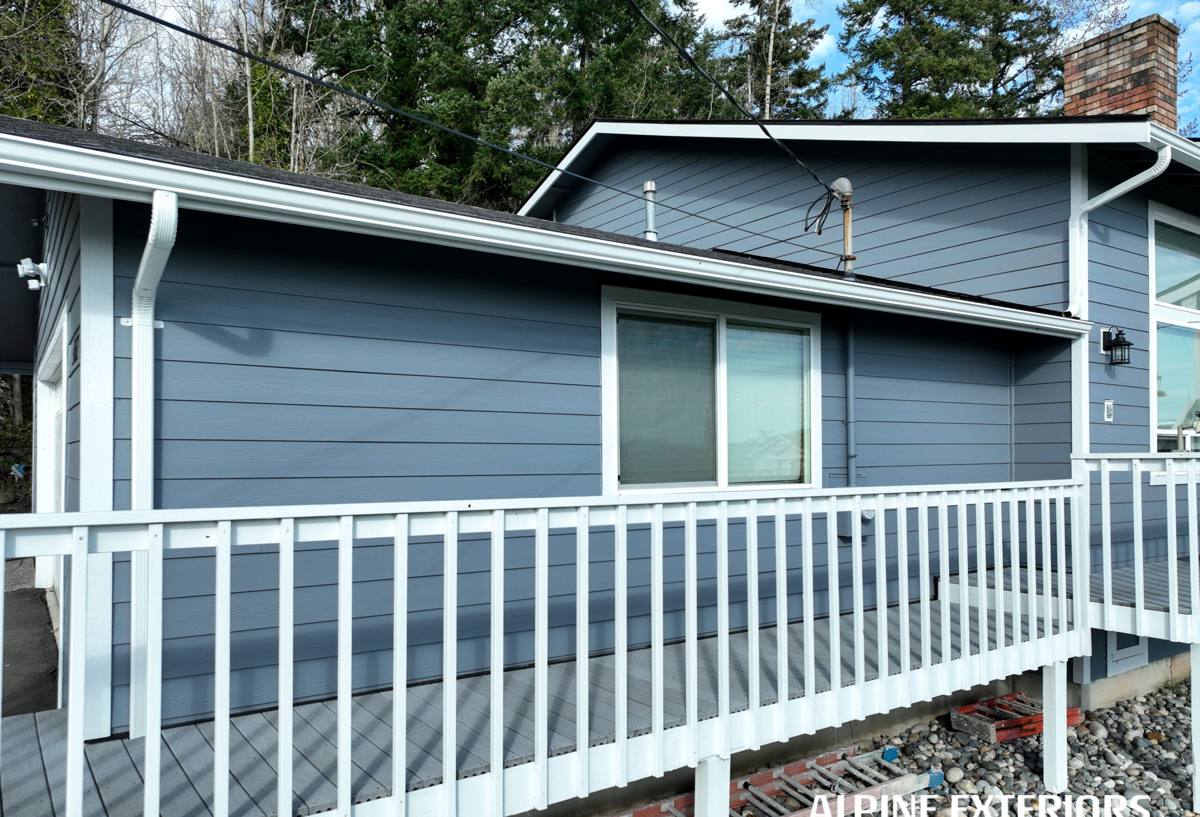
What Wiser Lake's Environment Does to a Roof
Moss and Shade From the Tree Cover
Moss needs three things to take hold: moisture, shade, and time. Wiser Lake properties usually have all three in abundance. North-facing slopes and sections of roof shaded by overhanging trees stay damp long after the rest of the roof has dried out, and that's exactly where moss gets started. Left alone, moss doesn't just sit on top of shingles — it works into the granule layer, holds water against the roof deck, and gradually lifts shingle edges, which is how a moss problem turns into a leak problem.
Humidity Off the Lake
Being close to open water changes the moisture load a roof deals with. Morning dew, fog, and general humidity off the lake keep roofing materials damp longer than they'd stay in a drier inland location, even on days without measurable rainfall. That extra moisture cycle — wet, damp, wet again — is hard on flashing, fasteners, and any spot where the roofing material has already been compromised.
Wind-Driven Rain and Long Wet Winters
Whatcom County's winters bring long stretches of steady, sometimes wind-driven rain rather than isolated storms. Driving rain finds the weak points in a roof system that a straight-down rain would never reach — under shingle tabs, around vent pipes, along step flashing at wall intersections. A repair that would hold up fine somewhere with occasional light rain can fail here if it isn't sealed and flashed with this kind of weather in mind.
Common Repair Calls We See Around Wiser Lake
Every roof is different, but certain issues show up again and again on lake-adjacent, tree-shaded properties:
- Moss growth along shaded slopes and north-facing sections that has started lifting shingles
- Clogged valleys and gutters from needle and leaf debris causing water to back up under roofing material
- Cracked or deteriorated flashing around chimneys, skylights, and vent pipes, often where wind-driven rain gets pushed uphill under the material
- Granule loss and premature aging on shingles that stay damp longer than average due to shade
- Soft or spongy decking discovered under a section of roof that's had a slow, unnoticed leak for a while
- Damage from falling branches or storm debris, common on heavily treed lots
Most of these start small. The problem is that a roof surrounded by trees hides its own damage well — moss and debris cover up early warning signs that would be obvious on a bare, sun-exposed roof.
What a Correct Roof Repair Actually Involves
A roof repair that actually solves the problem, instead of just covering it up for a season, involves a few non-negotiable steps.
Diagnosis before patching. Water rarely leaks in at the spot where it shows up inside the house. A stain on a ceiling can trace back to a flashing gap several feet away. Before any repair starts, we trace the actual path the water is taking — not just seal the visible symptom.
Matching materials, not improvising. A patch that doesn't match the existing shingle profile, color, or exposure will fail faster and stand out visually. When exact matches aren't available due to age, we use the closest reasonable match and explain the trade-off up front rather than pretending it's invisible.
Flashing done properly, not just caulked. Caulk and roofing cement are useful in the right spot, but they're not a substitute for correctly layered flashing at chimneys, walls, and vent penetrations. A lot of repeat leak calls we see trace back to a previous repair that relied on sealant instead of proper flashing technique.
Checking the deck, not just the surface. If a leak has been active for any length of time, the plywood or OSB decking underneath may be softened or delaminating. Repairing the visible roofing without addressing compromised decking is a short-term fix that will need to be redone.
Addressing the cause, not just the leak. If moss caused the failure, the moss needs to be treated and the shade/debris situation addressed — not just the resulting hole patched. Otherwise the same spot fails again within a season or two.
Our Roof Repair Process
- Inspection and honest assessment. We get on the roof (or use a camera where access is limited) and look at the whole system — shingles, flashing, decking, ventilation — not just the spot you called about.
- Clear, written estimate. You get a plain-language explanation of what's actually wrong, what needs to be done, and what it will cost before any work starts. No surprise add-ons mid-job.
- The repair itself. We do the work to the standard we'd want on our own roofs — correct flashing technique, matched materials where possible, and attention to the specific cause of the failure.
- Cleanup and debris removal. Old material, moss debris, and any branches or clutter contributing to the problem get cleared, not left in the gutters or yard.
- Follow-up. We stand behind the work and are reachable if anything doesn't perform the way it should once the next round of Whatcom County weather tests it.
Repair or Replace? How We Help You Decide
Not every roof problem calls for a full replacement, and not every roof is worth repairing indefinitely. We give you a straight answer based on the roof's age, condition, and how the damage is distributed — not a sales pitch toward the bigger job.
| Situation | Repair Usually Makes Sense | Replacement Usually Makes Sense |
|---|---|---|
| Roof age | Under roughly 15-18 years with a well-maintained history | Approaching or past the material's expected service life |
| Damage pattern | Localized — one slope, one flashing point, one storm-damaged area | Widespread granule loss, curling, or moss damage across most slopes |
| Decking condition | Solid, dry decking found under the damaged area | Soft, delaminated, or repeatedly wet decking in multiple spots |
| Repair history | First or second repair on this roof | Third or later repair addressing the same recurring symptoms |
| Rough cost range | Often a few hundred to a few thousand dollars depending on scope | A larger investment, but resets the moss/leak cycle instead of managing it |
If your roof falls in a gray area, we'll say so plainly and lay out both options so you can decide based on your budget and how much longer you plan to be in the home.
Roofing Materials We Repair Around Wiser Lake
Most homes in the area are covered in composition (asphalt) shingle, with metal roofing and some cedar shake also present on older or higher-end properties. Each has different repair considerations in this climate:
Composition shingle is the most common and generally the most straightforward to repair, provided a reasonably close match to the existing shingle is available. In a shaded, damp environment like Wiser Lake, we favor algae- and moss-resistant shingle products for any full-slope replacement work done as part of a larger repair, since standard shingles lose that resistance over time as the granule treatment wears.
Metal roofing handles wind-driven rain and moss better than most materials, but repairs require matching panel profile and fastener type correctly — a mismatched patch on a metal roof is both more visible and more likely to leak than one on shingle.
Cedar shake looks right on some of the older lake-area homes, but it's also the material most affected by the shade-and-moisture combination common here. As a matter of professional standard, we're upfront that shake requires more frequent moss treatment and maintenance in this specific setting than shingle or metal — that's a maintenance-burden trade-off worth knowing about before committing to shake for a repair or a re-cover, not a knock on the material itself.
Why a Crew That Already Works Wiser Lake Matters
A roofer who mostly works open, sun-exposed neighborhoods elsewhere in Lynden may not think twice about moss until it's already caused a leak. Working Wiser Lake regularly changes what you look for: which slopes stay shaded longest, how quickly debris builds up under tree cover, and how much extra attention flashing needs where wind-driven rain gets pushed uphill by the terrain around the lake.
There's also the practical side — narrow or tree-lined driveways, limited staging space on smaller lake lots, and overhanging branches that need to be worked around rather than just cut down. A crew familiar with the area plans for that instead of being surprised by it on arrival, which keeps the job moving and the property undamaged.
Local knowledge also means faster response. Whatcom County weather can turn a small leak into an emergency fast during a heavy winter storm, and knowing the area means being able to get a tarp on a Wiser Lake roof quickly rather than losing hours to logistics.
Simple Roof Maintenance Between Repairs
A repair holds up longer when it's not fighting the same conditions that caused the original damage. Between service calls, these habits go a long way for homes around Wiser Lake:
- Clear valleys, gutters, and downspouts of needles and leaves at least twice a year, more often under heavy tree cover
- Trim back branches that overhang the roofline to reduce shade, debris, and abrasion damage
- Have visible moss growth treated before it spreads across a full slope
- Check attic ventilation — poor airflow traps moisture and accelerates deck and shingle damage from underneath
- Walk the property after major windstorms and look for displaced shingles, dented vents, or new debris on the roof
- Address small leaks as soon as they're noticed rather than waiting for the next dry stretch
None of this replaces a proper inspection, but it slows down the moss-and-moisture cycle that drives most of the repair calls we see in this area.
If you're dealing with a leak, visible moss, storm damage, or just want an honest look at where your roof stands, we're glad to come out to your Wiser Lake property for a free, no-pressure estimate. Use the form below to get started.