 Lynden Roofing
 Building New in Sumas: Windows Deserve More Than an Afterthought
When a home is going up from the ground in Sumas, the windows usually get scheduled in as just another line item on the framing crew's punch list. That's a mistake. New-construction window installation is one of the few points in a build where a mistake gets sealed behind siding and trim for the next 20-plus years before anyone finds out. In a place like Sumas, sitting low in the river valley near the Canadian border with a long wet season and a high water table, a rushed or generic window install shows up later as staining, soft trim, or a musty smell in a wall cavity that never should have gotten wet in the first place.
We install new-construction windows for builders and homeowners throughout Lynden and the surrounding Whatcom County area, and Sumas jobs get treated the same way every time: as a moisture-management job first, and a window job second.
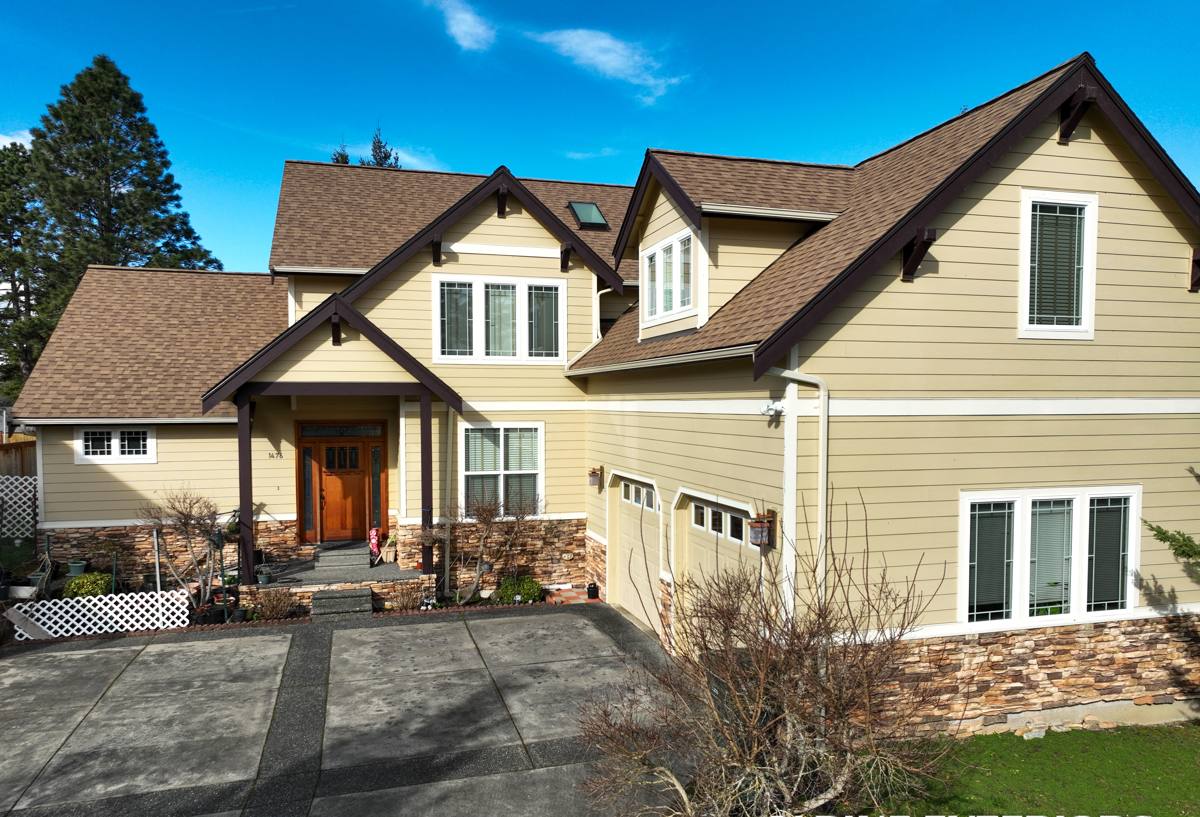
Why Sumas's Climate Changes the Job
Sumas doesn't get hit with surf spray the way the immediate coastline does, but it sits well within the marine air pattern that moves in off the Sound and up the valley, and it gets its own dose of driving, wind-pushed rain during fall and winter storms. Combine that with a low-lying valley setting and a water table that sits close to the surface much of the year, and you get long stretches where wall assemblies simply don't dry out between rain events.
Two things follow from that:
- Rain doesn't just fall straight down here — wind pushes it sideways into wall openings, so flashing has to manage water coming from more than one direction.
- North and shaded sides of new homes green up with moss and algae faster than in drier parts of the state, which is a sign of how long surfaces stay damp — the same dampness that punishes a poorly flashed window opening.
None of this means Sumas needs exotic materials. It means the flashing details and sequencing have to be done correctly, every time, because the climate won't forgive shortcuts the way a drier region might.
New-Construction Windows vs. Replacement Windows
These are two different trades wearing the same name. It matters that you're getting the right one.
Nail-Fin Integration Into the Rough Opening
New-construction windows have a nailing fin around the perimeter that gets fastened directly to the sheathing, then integrated into the weather-resistive barrier (housewrap) before siding goes on. Replacement windows, by contrast, get inserted into an existing frame with no fin and no access to the sheathing behind it. If a crew installs a new-construction window using replacement-window habits — or vice versa — the water management sequence breaks down.
One Shot to Get the Flashing Right
On a new build, the window opening is still open to the framing. That's the only point in the entire life of the house where the sill, jambs, and head can be flashed properly before they're buried behind siding and trim. Get it right during framing, and the window is protected for the life of the house. Get it wrong, and there's no cost-effective way to fix it until siding comes off decades later.
What a Correct New-Construction Window Install Involves
There's a specific order of operations for installing a window into a new rough opening, and skipping or reordering steps is where most water problems start.
Sill Pan Flashing First
Before the window ever goes in, the sill of the rough opening gets a flexible flashing pan built with corner dams and a slight slope to the exterior. This is the single most important detail on the job — it's the backstop that carries away any water that gets past the window itself, whether from wind-driven rain or ordinary condensation.
Shingle-Lap Sequencing
Flashing tape and housewrap have to be layered like shingles on a roof — each piece overlapping the one below it — so water is always directed outward and down, never into a seam that channels it inward. Sill flashing goes on first, then the window, then jamb flashing over the fin, then head flashing last, lapped over the housewrap above.
Sealant and Backer Rod, Used Correctly
Sealant is not a substitute for flashing — it's a secondary defense. Backer rod sets the joint depth so sealant can flex with the building instead of tearing, and sealant only goes where it's supposed to shed water, never trapping moisture behind the fin where it can't escape.
Fastening to Manufacturer Spec
Every window has a fastening schedule from the manufacturer — spacing, fastener type, and shimming requirements to keep the frame square and prevent the sash from binding. Skipping shims or over-driving fasteners is a common shortcut that shows up later as windows that won't open smoothly or that leak at the corners.
A quick checklist we hold every new-construction window install to:
- Rough opening checked for square and correct size before the window ever arrives on site
- Sloped sill pan flashing with corner dams installed and inspected before the window goes in
- Window shimmed and fastened per the manufacturer's schedule — not "close enough"
- Jamb and head flashing shingle-lapped over the fin and integrated with housewrap
- Sealant and backer rod placed only where they're designed to shed water, not trap it
- Interior air seal completed so conditioned air isn't leaking into the wall cavity
Choosing the Right Window for a Sumas Build
Frame material matters more here than in a drier climate, mostly because of how each material handles sustained dampness and temperature swings between summer and a Whatcom County winter.
| Frame Material | How It Handles Sumas's Wet Climate | Where It Fits Best |
|---|---|---|
| Vinyl | Won't rot, low maintenance, good value; performance depends heavily on installation quality | Most new-construction homes on a standard budget |
| Fiberglass | Very stable through temperature and moisture swings, holds paint well, longer-term durability | Homeowners planning to stay long-term or upgrading window quality |
| Wood / Wood-Clad | Best appearance for some builds, but exterior wood needs consistent maintenance in a damp climate | Design-driven projects where upkeep is planned for |
| Aluminum | Strong and slim-profile, but conducts cold and can condense in our climate without a thermal break | Specific architectural applications, less common for whole-house use |
Whatever frame material a homeowner or builder chooses, we also look at the U-factor and Solar Heat Gain Coefficient (SHGC) ratings on the label. Washington's energy code sets minimum performance requirements for new construction, and in a marine climate like Whatcom County's, a window that's tuned for heat loss (a good U-factor) matters more than one tuned for blocking sun, since Sumas doesn't see the intense solar load that a drier, sunnier region does.
How Our Process Works on a New-Construction Job
We coordinate directly with the builder or general contractor on timing, since windows have to go in at the right point in the framing sequence — after the rough openings are framed and the WRB is on, but before siding starts.
- Site walk with the builder to confirm rough opening sizes match the ordered window sizes and to flag any framing corrections before install day.
- Sill pan flashing installed and inspected at every opening before a single window is set.
- Windows set, shimmed, and fastened to manufacturer spec, checked for square and smooth operation.
- Flashing integration completed — jambs, head, and tie-in to the housewrap — so the opening is fully weathered-in before siding crews arrive.
- Final walkthrough with photos of the flashing work before it's covered, so there's a record of what's behind the finished wall.
That last step matters more than people expect. Once siding goes up, nobody can see the flashing again — documenting it while it's still visible is good practice for any new build.
Why It Matters to Hire a Crew That Already Works in Sumas
Window installation itself isn't unique to any one town, but the judgment calls around it are shaped by local conditions. A crew that regularly works Sumas and greater Lynden already knows how much lap and overlap the flashing needs for the wind-driven rain this valley sees, understands how a high water table and low elevation affect drying time for framing, and has already coordinated with the builders and trades active in this area. That familiarity shows up as fewer surprises mid-build and a job that's sequenced correctly with the rest of the construction schedule — not learned on your house.
We also know what a poorly flashed new-construction window looks like ten or fifteen years later, because we get called out to fix them. That's not a mystery in Whatcom County's climate — it's a predictable result of skipped steps at the framing stage, and it's entirely avoidable with the right sequence the first time.
Get a Straight Answer for Your Sumas Build
If you're framing a new home in Sumas or coordinating windows for a build in progress, we're glad to walk the site, look at your rough openings and window schedule, and give you a straightforward, no-pressure estimate — no exaggerated claims, just what the job actually needs.