 Lynden Roofing
 Metal Roofing for Laurel Homes
Laurel sits in that stretch of Whatcom County where farmland, tree cover, and proximity to the water all combine to make roofs work harder than they do in drier parts of the state. Homeowners here already know the pattern: long stretches of steady rain from fall through spring, a marine air influence that carries salt further inland than people expect, and shaded, damp rooflines that grow moss almost year-round if nothing is done about it. Metal roofing holds up well against all three of those pressures, but only when the system, the fasteners, and the installation details are matched to this specific climate rather than treated like a generic upgrade.
We install and replace metal roofs for homes in and around Laurel and the rest of Lynden, so this page focuses on what that actually means in practice: what the climate demands, what a correct installation looks like, and what ongoing care a metal roof needs once it's on your house.
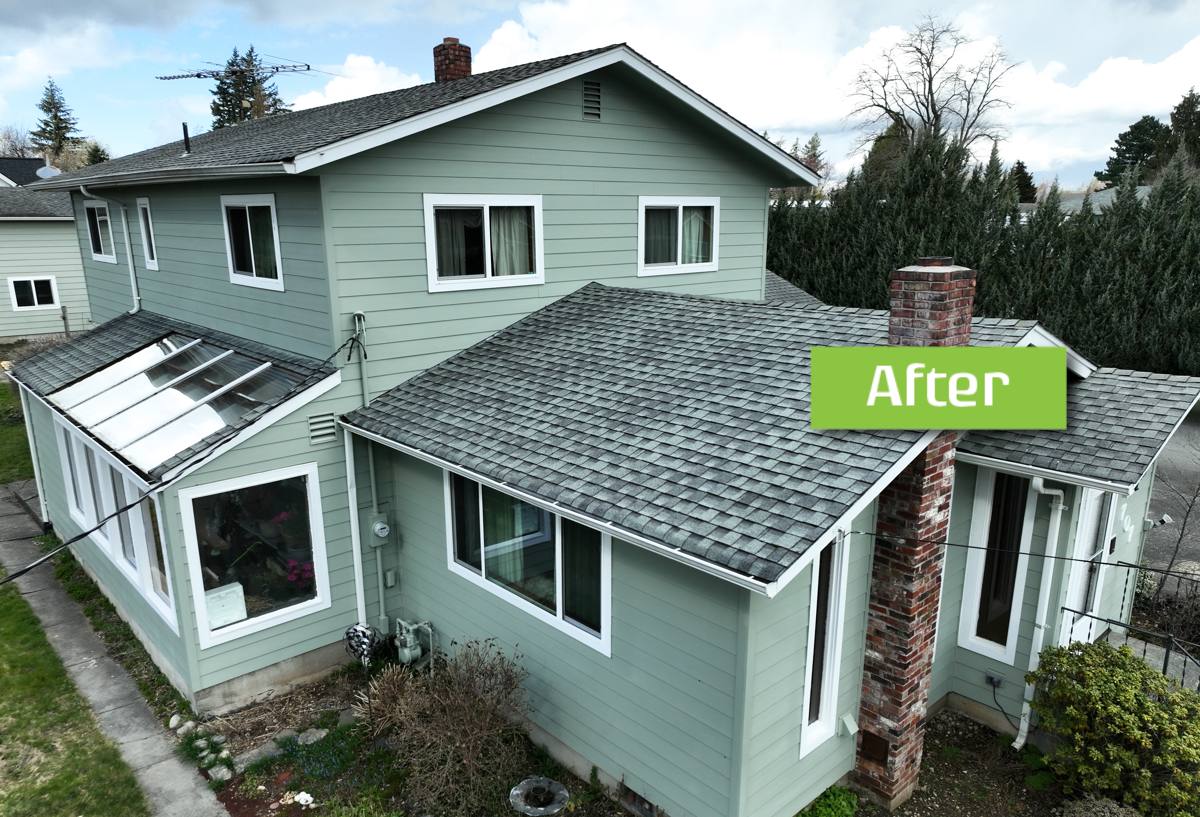
What Whatcom County Weather Does to a Roof Over Time
Three climate factors drive almost every roofing decision we make for Laurel properties:
Salt air
Even properties that don't feel "coastal" pick up salt-laden air drifting in from Puget Sound and the Strait of Georgia, especially during winter storm patterns. Salt accelerates corrosion on fasteners, flashing, and any exposed cut edges of metal that weren't properly treated or sealed at installation.
Driving rain
Storms here rarely fall straight down. Wind-driven rain gets pushed sideways into laps, seams, and penetrations, which means a roof that's watertight in a light rain can still leak in a windstorm if seams, fastener spacing, and underlayment weren't done correctly the first time.
A long moss season
Shade, moisture, and mild temperatures give moss and algae most of the year to establish themselves. On asphalt shingles this shortens roof life significantly. On metal, moss has a much harder time getting a foothold, but it can still build up in valleys, around fasteners, and wherever debris collects and holds moisture against the panel.
Why Metal Roofing Fits This Climate Well
Metal isn't the right fit for every home or every budget, but for the specific conditions Laurel deals with, it has real advantages:
- Sheds water fast. The slick, non-porous surface and steep-enough profiles move rain off the roof before it has a chance to pool or wick under laps.
- Doesn't feed moss the way organic materials do. Moss can still collect debris on a metal roof, but it doesn't root into the surface the way it does into shingle granules.
- Long service life when the metal and coating are matched to a marine-influenced climate. The right substrate and finish resist the slow corrosion that salt air causes over decades.
- Handles wind-driven rain better when seams are properly formed, since there are far fewer overlapping edges for water to find its way under compared to a shingle roof.
The trade-off is upfront cost and the need for a crew that understands metal-specific detailing — flashing, expansion allowance, and fastener choice all matter more with metal than with shingles, and mistakes are more visible and more expensive to fix.
Choosing the Right Metal System
Not all metal roofing is the same product wearing a different name. The two systems we install most often for homes in this area are standing seam and exposed-fastener panels, and the right choice usually comes down to roof pitch, budget, and how long you plan to own the home.
| Factor | Standing Seam | Exposed Fastener |
|---|---|---|
| Fasteners | Hidden under seams, not exposed to rain or UV | Visible, driven through the panel face |
| Long-term maintenance | Very low — no exposed fasteners to re-seat or reseal | Fastener gaskets need occasional inspection and replacement |
| Performance in wind-driven rain | Excellent — fewer penetration points | Good, but relies on gasket condition over time |
| Upfront cost | Higher | Lower |
| Best fit | Homeowners planning to stay long-term, or roofs with lower pitches exposed to more standing water | Outbuildings, budget-conscious projects, steeper roofs that shed water quickly regardless |
For most primary residences in Laurel, we lean toward recommending standing seam specifically because of the salt-air and driving-rain combination — fewer exposed fasteners means fewer future points of corrosion or leak risk. That said, exposed-fastener systems are a legitimate, durable choice for shops, barns, and secondary structures, or for homeowners prioritizing upfront cost.
Metal type and coating
Steel and aluminum are both used here. Aluminum has a natural advantage in salt-exposed environments since it doesn't rust the way steel can if the protective coating is ever compromised. Steel panels with a quality factory finish still perform well and cost less, which is why the right call depends on your specific site — how exposed the roof is, how close to open water, and how long you intend to keep the coating maintained.
What a Correct Metal Roof Installation Involves
A metal roof is only as good as the details underneath it. The panels get the attention because they're visible, but most of the leaks and premature failures we get called out to fix trace back to what's underneath or around them.
Underlayment
Metal roofing should go over a high-temperature synthetic or self-adhered underlayment, not a bare deck. This layer is the backup plan if wind-driven rain ever gets past a seam or fastener — skipping it or using an undersized product is one of the most common corners we see cut.
Fastener and seam detailing
On exposed-fastener systems, correct fastener spacing and gasket compression matter — over-driven or under-driven screws are a leading cause of early leaks. On standing seam, the seams need to be mechanically formed to spec, not just crimped by hand or eyeballed.
Flashing and penetrations
Every valley, wall transition, chimney, and vent penetration is a place where water gets pushed sideways by wind. These get custom-formed flashing, not generic trim pieces, and every penetration is sealed with materials rated to move with the metal as it expands and contracts.
Ventilation
Metal roofs still need proper intake and exhaust ventilation underneath. Without it, moisture gets trapped in the attic space, which causes condensation problems that have nothing to do with the roof surface itself but will still show up as staining or rot.
Preventing Moss, Corrosion, and Rain-Related Problems
A well-installed metal roof needs far less upkeep than shingles, but "far less" doesn't mean "none." A short seasonal checklist keeps small issues from becoming expensive ones:
- Clear valleys, gutters, and any low spots of needles, leaves, and debris at least twice a year — this is where moisture sits longest and moss gets its best chance to establish.
- Check that gutters and downspouts are flowing freely before the heavy fall rains start; a clogged gutter backs water up under the roof edge.
- Look at exposed fasteners (on exposed-fastener systems) every year or two for signs of a worn gasket or a screw that's backed out slightly.
- Watch for any scratches or scuffs in the finish from ladders, branches, or other work on the roof — exposed bare metal is where corrosion starts, and it's an easy touch-up if caught early.
- After any major windstorm, a quick visual check for lifted panels or displaced flashing is worth the ten minutes it takes.
Our Process, Start to Finish
We keep this straightforward:
- On-site assessment. We look at your existing roof, deck condition, ventilation, and any problem areas before recommending a system — not before we've actually seen the roof.
- Straightforward estimate. You get a clear breakdown of materials, system type, and scope, with honest trade-offs explained rather than a single "take it or leave it" number.
- Tear-off and deck check. We remove the old roofing and inspect the deck for any rot or soft spots before anything new goes down — this is the point where hidden problems get caught, not covered up.
- Underlayment, flashing, and panel installation. Done to manufacturer spec and matched to the wind and rain exposure of your specific site.
- Final walkthrough and cleanup. We go over the finished roof with you and make sure the site is left clean.
Why a Crew That Already Works Laurel Matters
Roofing crews who mostly work drier or more inland climates sometimes under-detail for wind-driven rain and salt exposure because they don't deal with it regularly. We work throughout Lynden and the surrounding Whatcom County communities, including Laurel, so the underlayment choices, fastener selection, and flashing details on your roof reflect what actually holds up here — not what holds up somewhere with a different weather pattern. Being local also means faster response if you ever need a warranty check or a storm follow-up, instead of waiting on a crew that has to travel in from out of the area.
Get a Straightforward Estimate
If you're weighing metal roofing for a home in Laurel — whether it's a full replacement or you're comparing it against another material — we're happy to take a look and walk you through what makes sense for your roof, your budget, and this climate. Use the form below to request a free, no-pressure estimate.