 Lynden Roofing
 Custer's Coastal Climate and What It Does to a Roof
Custer sits close enough to the water that salt-laden air is a fact of daily life, not an occasional nuisance. Add in the driving, wind-pushed rain that rolls through Whatcom County most of the fall and winter, plus heavy tree cover and shaded rooflines that never fully dry out, and you get a long moss season that pushes roofing materials harder than most manufacturers' spec sheets account for.
Each of those factors attacks a roof differently. Salt air speeds up corrosion on any exposed fastener, cut edge, or unprotected metal seam. Wind-driven rain doesn't just fall straight down — it gets pushed sideways and upward under laps and around penetrations, which means flashing details and underlayment matter as much as the roofing material itself. And moss doesn't just look bad. It holds moisture against the roof surface long after a storm has passed, which shortens the life of anything underneath it.
A roof built for a drier inland climate, or installed by a crew that hasn't worked this specific combination of salt, rain, and shade before, tends to show problems here years before it should.
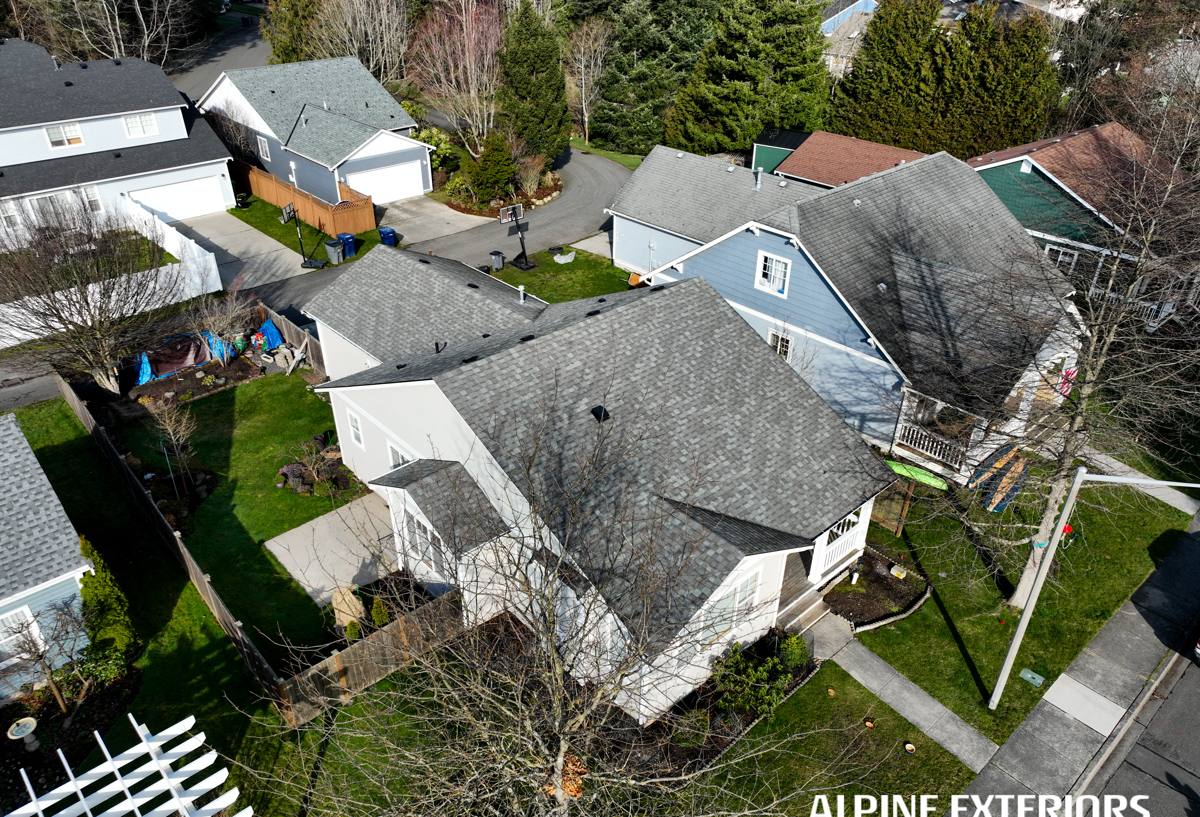
Why Metal Roofing Fits Custer Homes
Metal roofing holds up well against everything on that list, but it's not automatically immune to any of it — the material has to be specified and installed correctly for coastal, moss-prone conditions, not just installed "by the book" for a generic climate.
The advantages are real. A standing seam or properly fastened metal roof has far fewer horizontal laps than shingles, which means fewer places for wind-driven rain to find a way in. The surface is smooth and non-porous, so it doesn't hold grit or texture the way asphalt shingles do — moss and algae have a much harder time getting a foothold and rooting in. Steel and aluminum panels with the right protective coating resist corrosion well even with regular salt exposure, and metal roofing carries strong wind and fire resistance ratings.
The honest trade-off is cost. Metal roofing costs more up front than asphalt shingles. What you're buying is a longer service life and lower long-term maintenance — but only if the installation details are right, which is where a lot of metal roofs fall short.
What a Correct Metal Roof Installation Involves
Metal panels themselves are durable, but a metal roof fails or leaks almost exclusively because of what's underneath and around them, not the panels themselves. This is where installation quality separates a roof that lasts decades from one that causes problems in five years.
Underlayment and Moisture Barrier
Because coastal storms push rain sideways rather than letting it fall straight down, a synthetic or high-temperature self-adhered underlayment matters more here than it does further inland — especially at eaves, valleys, and low-slope transitions where wind-driven water is most likely to find a way past the panel laps.
Fasteners, Flashing, and Metal Compatibility
Every fastener and piece of flashing has to be metal-compatible with the panels it touches. Mixing incompatible metals — say, a plain steel screw against an aluminum panel — sets up galvanic corrosion that accelerates rapidly in salt air. Flashing at every penetration, valley, wall transition, and chimney needs to be sized and lapped correctly; this is where the vast majority of metal roof leaks actually originate, not in the field of the panel.
Ventilation
Metal is a poor insulator, which means warm, moist air from inside the attic can condense on the underside of cold panels if the roof isn't ventilated properly. Ridge and soffit venting sized to the roof keeps that moisture moving instead of collecting where it can rot decking or feed mold, quietly, from the inside.
Panel Options for a Custer Roof
Not every metal roofing system is built the same way or suited to the same house. The table below compares the three options we most commonly discuss with Custer homeowners.
| Panel Type | Best For | Moss/Salt Performance | Maintenance |
|---|---|---|---|
| Standing seam | Most roof types; especially good on lower slopes and where a clean, modern look is wanted | Best — concealed fasteners, fewest laps, smoothest surface for water and debris to shed off | Lowest — no exposed fasteners to re-seal over time |
| Exposed fastener panel | Budget-conscious projects, outbuildings, simpler rooflines | Good, but exposed screws are the weak point in salt air and need the correct washered fasteners | Moderate — fasteners and washers should be checked periodically |
| Stone-coated steel | Homeowners who want the profile of shingles or tile with metal's durability underneath | Good — textured surface sheds water well but can hold more debris than smooth standing seam | Moderate — valleys and textured surfaces benefit from an occasional debris check |
There isn't a single "correct" answer for every house — roof pitch, budget, and how close a property sits to direct salt spray all factor into which system makes sense.
Our Process, Start to Finish
We keep the process straightforward because a metal roof is a big investment and you deserve to know exactly what's happening at each step.
- On-site inspection of the existing roof, decking condition, ventilation, and any problem areas like valleys or chimney flashing
- An honest recommendation on tear-off versus a compatible overlay system, based on what we actually find — not a default answer
- A written scope covering panel type, underlayment, fastener and flashing specifications, and ventilation plan
- Tear-off (when needed) and deck inspection, with any soft or damaged decking replaced before anything goes back on
- Underlayment, flashing, and panel installation in that order, with attention to every penetration and transition
- Full site cleanup, including a magnetic sweep for stray fasteners
- A walk-through so you know what was done and what to watch for going forward
What Affects the Cost of a Metal Roof in Custer
Metal roofing costs vary by house, and anyone quoting a firm number without seeing your roof is guessing. The factors below are what actually move the price up or down.
| Factor | Why It Matters |
|---|---|
| Roof pitch and complexity | More valleys, hips, and dormers mean more flashing work and cut panels, which adds labor |
| Panel type | Standing seam runs higher than exposed fastener panels due to material and installation time |
| Tear-off vs. overlay | Removing old roofing and disposing of it adds cost but lets us fully inspect and repair the decking |
| Decking condition | Rotted or soft decking found underneath existing roofing has to be replaced before new roofing goes on |
| Penetrations | Chimneys, skylights, and multiple vents each need individual flashing, which adds time |
| Access and site conditions | Steep sites or limited equipment access can add to labor time |
Living With a Metal Roof Through Moss Season
A metal roof needs far less upkeep than shingles, but "far less" isn't "none." A little attention through the wetter months keeps a good installation performing the way it's supposed to for decades.
- Trim back overhanging branches so shaded sections of roof get more airflow and sunlight
- Keep gutters, valleys, and any low-slope transitions clear of needles and leaf debris where moisture can sit
- Do a visual check from the ground each fall and spring for any lifted panel edges, damaged flashing, or granular buildup in valleys
- Avoid pressure washing — it can strip protective coatings and drive water under laps; a soft brush and low-pressure rinse is safer for moss
- Address any small moss growth early rather than letting it establish and hold moisture against the surface
- Have flashing and fastener condition checked periodically rather than waiting for a visible leak
Why a Crew That Already Works Custer Matters
Metal roofing done "by the book" for a generic climate and metal roofing done right for a property this close to salt water and this deep into moss season are not the same job. A crew that already works in and around Custer and the wider Lynden area has seen firsthand which fastener and coating combinations hold up here and which ones start showing corrosion early, which flashing details actually stop wind-driven rain in this kind of storm pattern, and how much ventilation a roof under heavy tree shade really needs.
That local experience also means fewer surprises during the project — familiarity with Whatcom County permitting requirements, realistic expectations for weather windows during installation, and a track record you can actually check with neighbors rather than a name that showed up for one job and moved on.
Warranty: What's Actually Covered
Metal roof warranties are often misunderstood, and it's worth being clear about what each piece actually covers before you sign anything.
The panel's paint or finish warranty covers fading, chalking, and coating failure — it does not cover leaks or installation problems. A separate substrate warranty from the manufacturer typically covers the metal itself against rust-through or perforation, again independent of how the roof was installed. The piece that actually protects you against a poor installation is the contractor's workmanship warranty, which is only as good as the company standing behind it. We'll walk you through exactly what each warranty on your project covers and for how long, in writing, before work begins.
If you're weighing a metal roof for a Custer property, we're happy to take a look and give you a straight, no-pressure estimate — use the form below to get started.