 Lynden Roofing
 Windows in Maple Falls Work Harder Than the Brochure Says
Maple Falls sits up against the foothills, and that location shapes what a window has to survive here. Storms come through with real force behind the rain, driving water sideways into wall assemblies for hours at a time. The moist marine air that moves up through Whatcom County settles into the valleys and rarely fully dries out, which is why moss season here isn't a few weeks in spring — it's most of the year. Add in temperature swings between cold, damp nights and warmer afternoons, and you've got conditions that will find every weak point in a window's seal, flashing, or frame within a few seasons.
None of that is a reason to panic about your windows. It is a reason to be honest about what "window replacement" actually needs to accomplish in this area, and why a rushed or generic install tends to fail here faster than it would somewhere drier.
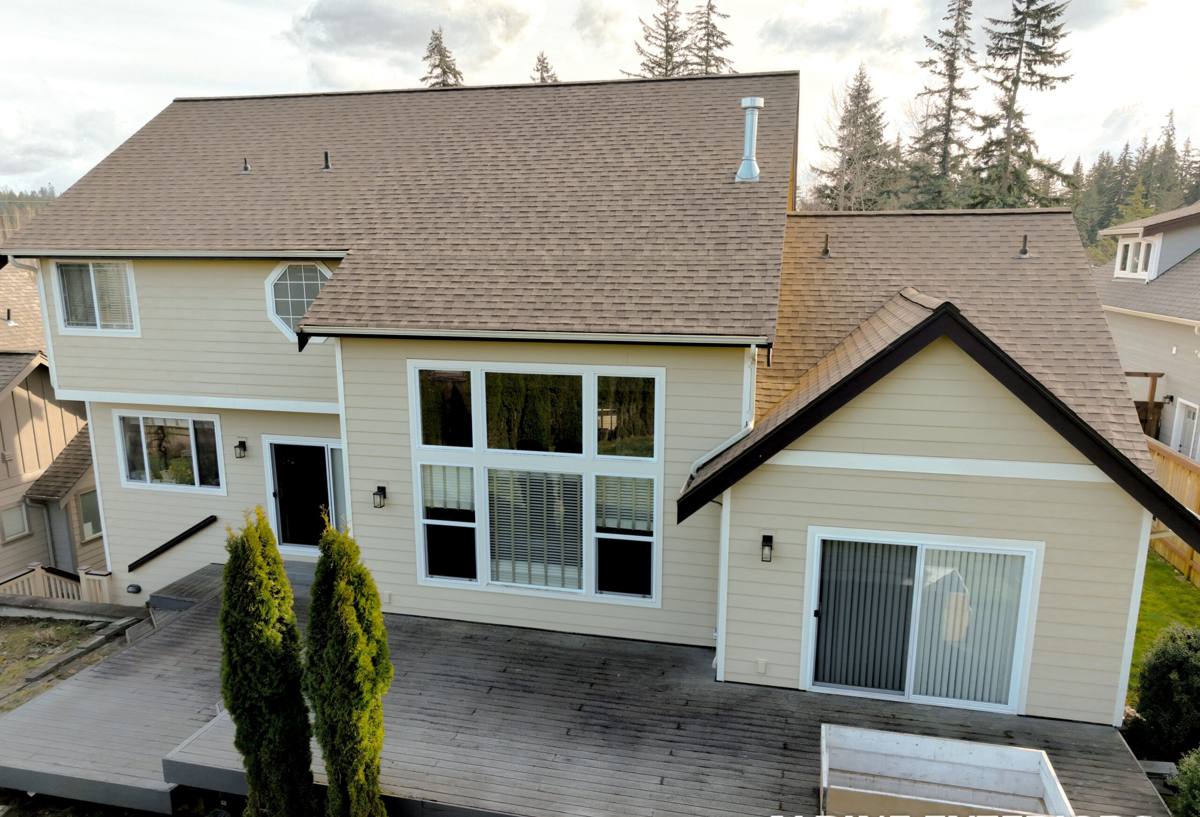
Signs a Window Needs Replacing, Not Just Repair
Not every problem window needs to come out. But in this climate, certain symptoms mean the window itself — not just the caulk or the weatherstripping — has reached the end of its useful life.
- Fogging or a milky haze between panes on a double-pane unit (the seal has failed and moisture is inside the glass permanently)
- Soft, spongy, or discolored wood at the sill or lower frame corners
- Persistent moss or dark streaking on the frame or sill that keeps coming back within weeks of cleaning
- Drafts you can feel with a hand near the frame on a windy day, even with the window latched
- Difficulty opening, closing, or locking that isn't fixed by cleaning the tracks
- Visible daylight or gaps around the frame from outside
If you're only seeing one of these and the frame is otherwise solid, a repair or reseal might buy you more time. Once wood has gone soft or a seal has failed, replacement is the honest answer — patching a failed seal doesn't restore it.
What a Correct Window Replacement Actually Involves
The window itself is only part of the job. Most window failures we see in this area — leaks, rot, drafts within a year or two of a "new" install — trace back to what happened around the window, not the unit itself.
The Opening Has to Be Right First
Before a new window goes in, the rough opening needs to be checked for square, level, and soundness. Any rot in the surrounding framing has to be cut out and replaced — installing a new window against compromised wood just hides the problem behind new trim.
Flashing and Water Management
This is the step that matters most in a wet climate. A window needs a sill pan or sloped sill flashing so any water that gets past the exterior seal has somewhere to go besides into the wall. Housewrap or building paper needs to be integrated with the flashing in the correct shingle-lap order — top layer over the one below it — so water sheds outward at every layer, not just at the surface caulk line.
Sealing Without Trapping Moisture
Sealant belongs on the exterior face to block bulk water, but the assembly also needs a way to let incidental moisture escape rather than getting sealed in on all sides. A window installed airtight on the outside and the inside with no path for trapped moisture to dry out is a setup for hidden rot, even if it looks perfect on install day.
Interior and Exterior Finish
Insulation around the frame gap (not stuffed too tight, which can bow the frame), interior trim, and exterior trim or brick mold all get reinstalled or replaced as needed, matched to what the house already has where possible.
Choosing a Frame Material for This Climate
There's no single "best" window material — it's a set of trade-offs. Here's how the common options actually perform in a wet, moss-prone environment like this one.
| Frame Material | Moisture Behavior | Maintenance | Typical Lifespan |
|---|---|---|---|
| Vinyl | Doesn't absorb water or rot; seams and welds are the main watch point | Low — occasional cleaning | 20-30+ years |
| Fiberglass | Very stable in moisture and temperature swings; minimal expansion/contraction | Low | 30+ years |
| Wood | Handsome, but needs an intact exterior finish to keep water out long-term | High — repainting/resealing on a cycle | Varies widely with upkeep |
| Wood-clad (wood interior, aluminum/vinyl exterior) | Exterior shell resists weather; interior still needs normal indoor care | Moderate | 20-30+ years |
| Aluminum | Durable but conducts heat and cold; prone to condensation without a thermal break | Low | 20-30+ years |
For most Maple Falls homes, we lean toward vinyl or fiberglass for exposed elevations that take the worst of the driving rain, because they don't give moisture and moss anything organic to work into over time. Solid wood windows can still be the right call on homes where matching an existing look matters, as long as the owner understands the maintenance commitment that comes with it. We'll walk through what your specific elevations are exposed to before recommending a direction — it's not a one-size answer.
Glass and Weatherstripping Details Worth Knowing
Beyond the frame, a few details make a real difference in a wet, mossy climate:
- Double or triple-pane glass with an argon or krypton gas fill reduces condensation on the interior glass — a common complaint in cold, damp mornings here
- Low-E coatings help manage heat loss without darkening the glass noticeably
- Compression weatherstripping at the sash generally outperforms basic fin-style strips for keeping wind-driven rain out under real storm pressure
- Corrosion-resistant hardware (locks, hinges, cranks) matters more here than in a dry climate — cheaper hardware pits and sticks faster in persistent humidity
Our Process, Start to Finish
- On-site assessment — we look at each window opening individually, not just the house as a whole. Sun exposure, wind exposure, and existing water damage all vary window to window.
- Honest scope — we tell you which windows need full replacement, which could be repaired, and why, before any contract is signed.
- Framing and flashing check — every opening gets inspected for rot and correctly flashed as part of the install, not as an upcharge surprise later.
- Installation — set, shimmed level and square, insulated, flashed, and sealed following the sequence above.
- Interior and exterior finish work — trim, caulk lines, and touch-up so the result looks finished, not just functional.
- Walkthrough — we open, close, and lock every new window with you before we consider the job done.
What Affects the Cost
| Factor | Why It Matters |
|---|---|
| Number and size of openings | Larger and more numerous windows raise material and labor cost directly |
| Frame material chosen | Fiberglass and premium vinyl cost more upfront than economy vinyl or aluminum |
| Condition of existing framing | Rot repair at the opening adds labor beyond a straightforward swap |
| Access and elevation | Upper-story or hard-to-reach windows take more time and equipment |
| Glass upgrades | Triple-pane, specialty coatings, or tempered safety glass add cost per unit |
| Trim and siding tie-in | Matching existing trim profiles or siding repair around the opening adds scope |
Whole-house window jobs typically run into five figures, while replacing a handful of problem windows is a smaller, more contained project. We'll give you real numbers for your specific windows during the estimate — not a ballpark pulled from a national average that doesn't account for your house.
Why It Matters That We Already Work in Maple Falls
A crew that regularly works this part of Whatcom County has already seen how the local weather pattern affects different house styles, orientations, and ages of construction around here. That familiarity shows up in small but real ways — knowing which elevations on a typical local home take the worst of the driving rain, recognizing early rot patterns before they've spread, and not having to guess at how the regional moss and moisture cycle will treat a given install a few years down the road. It also means we're not learning the area on your project. We show up, look at the house, and already understand what we're dealing with.
A Simple Homeowner Maintenance Checklist
- Clean window tracks and weep holes twice a year to keep drainage paths clear
- Wipe down sills and frames where moss or algae tends to collect, especially on shaded or north-facing walls
- Check exterior caulk lines annually for cracking or separation
- Test locks and operation each season — stiffness can be an early sign of frame movement
- Watch for condensation between panes, which signals a failed seal rather than a cleaning issue
If your windows are showing any of the signs above, or you're just ready to stop fighting drafts and moss every winter, we're happy to take a look. Estimates are free and there's no pressure to sign anything on the spot — fill out the form below and we'll set up a time to walk the house with you.