 Lynden Roofing
 Siding Installation in Maple Falls: A Different Kind of Wear
Maple Falls sits up along the Mount Baker Highway corridor in the North Fork Nooksack valley, in the forested foothill country east of Lynden where the terrain starts climbing toward the mountains. Homes here live under a heavier tree canopy than most of lowland Whatcom County, with less direct sun reaching the walls and more standing shade through the wet months. The same Pacific storm systems that bring salt-tinged moisture across the rest of the county reach up into these foothills too — the salt content thins out with the miles inland, but the driving rain and the long, damp moss season it feeds don't let up nearly as much as people expect from a mountain community.
We're based in Lynden and this is regular territory for our crew, but we're not writing about siding in general here. This page is specifically about siding installation for Maple Falls homes: what the local conditions actually require, what a correct installation involves in a heavily shaded, high-moisture setting like this, and why we install one product system rather than offering the wider menu some contractors sell.
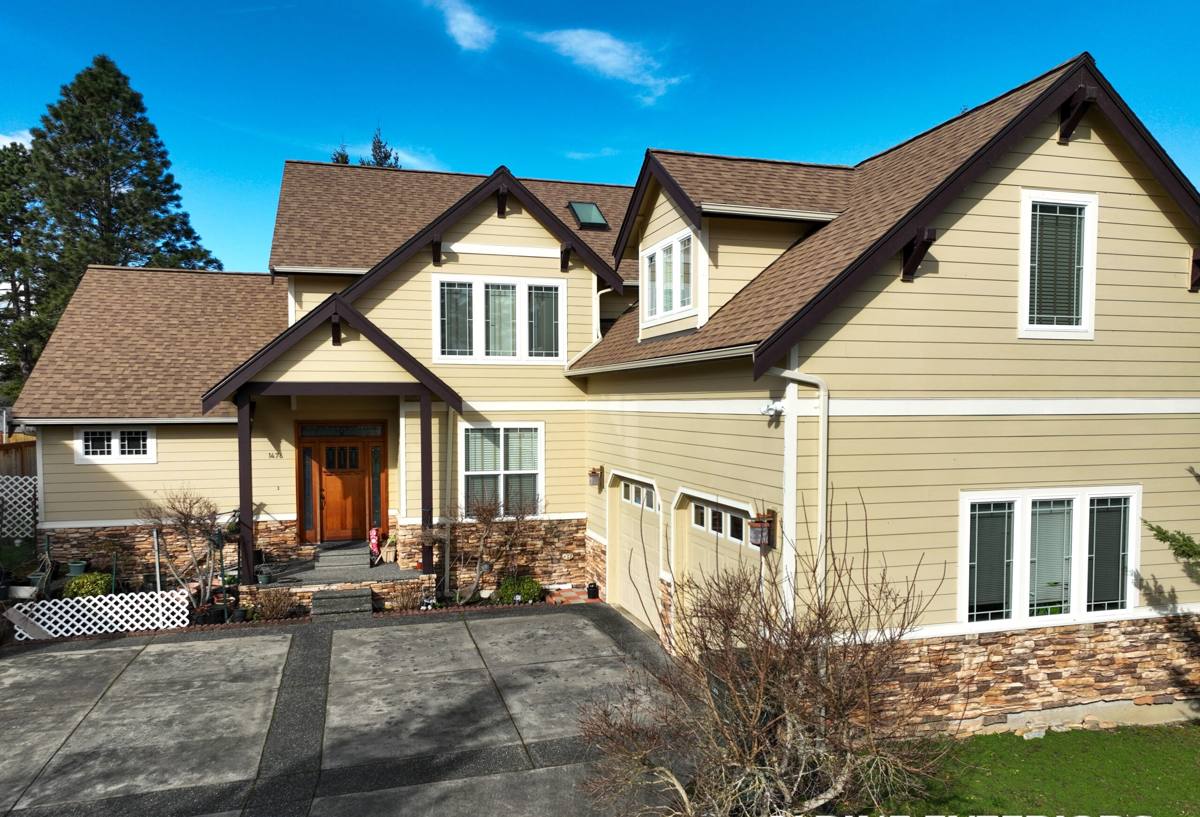
What Maple Falls' Climate Does to a House
Rain That Sits Instead of Draining Off
Driving rain off Pacific storm systems is a fact of life across Whatcom County, but in Maple Falls the heavy tree cover changes how that moisture behaves once it lands. Instead of drying off quickly in open sun the way it might on a cleared lot, walls under a dense canopy stay damp longer after every storm. Siding that can't shed and drain that moisture properly ends up sitting wet for extended stretches, which is exactly the condition that leads to swelling, soft spots, and early paint failure on lower-grade materials.
A Moss and Mildew Season That Runs Long
Shade and moisture together are what moss and mildew need to establish, and Maple Falls has more of both than most of the towns we work in closer to the lowlands. North-facing walls and anything tucked under overhanging branches can stay damp enough to grow moss for most of the year, not just through the wettest months. Any siding material with even a little surface porosity becomes a foothold for that growth over time, and once moss takes hold against a wall, it holds moisture against the surface even longer.
Salt-Tinged Moisture, Carried Further Than People Expect
Maple Falls isn't a coastal town, and the salt exposure here is lighter than what a house on the water deals with. But the same weather systems that push salt-laden air across the county don't stop at the shoreline — they track inland with the rain, and over years that adds a small but real corrosive load to exposed fasteners and trim, on top of everything the shade and moisture are already doing. It's a secondary factor here compared to driving rain and moss, but it's part of why we don't treat foothill installations as a "lighter" version of coastal ones.
Why We Install Only James Hardie Fiber Cement Siding
We used to offer a broader range of siding products. We narrowed to one system after seeing, repeatedly, which materials actually held up in high-shade, high-moisture Whatcom County conditions like Maple Falls and which ones needed constant upkeep or failed early. That's a professional standard we hold to on every job, not a sales position.
- Non-combustible core: Fiber cement doesn't feed a fire the way wood-based siding can, which carries real weight for a forested foothill community where wildfire awareness is part of living close to the timber.
- Factory-applied ColorPlus finish: The color is baked on under controlled factory conditions instead of applied in the field, so it holds up longer against the fading and mildew staining that shaded, damp walls are prone to.
- Climate-engineered HZ product line: Hardie's HZ5 formulation is built for sustained moisture and freeze-thaw cycling, which describes foothill Whatcom County winters well.
- Dimensional stability: Fiber cement doesn't swell, cup, or warp the way engineered wood products can after repeated wet-dry cycling under heavy shade.
- Strong transferable warranty: Hardie backs the product with one of the stronger warranty structures in the industry, as long as installation follows their spec.
We don't install LP SmartSide, vinyl siding, Cemplank, Allura, primed spruce, or cedar. Every one of those products has a place in the market, and plenty of homeowners are satisfied with them in the right setting. But in a shaded, damp, long-moss-season environment like Maple Falls, we've made the call to stand fully behind one system rather than offer something cheaper that quietly pushes maintenance risk back onto the homeowner a few years down the road.
What "Correct Installation" Actually Means Here
Hardie siding is engineered to perform for decades, but only when it's installed to spec — and in a heavily shaded lot where walls take longer to dry between storms, the installation details matter more than they would on an open, sun-exposed site. The basics we won't skip:
- Rain screen drainage gap: A small cavity behind the siding lets any moisture that gets past the surface drain and evaporate instead of sitting against the wall sheathing — critical on walls that already take longer to dry out under tree cover.
- Manufacturer-spec fastener type and spacing: Loose spacing or the wrong fastener is one of the most common causes of early siding failure we find on tear-offs, and it matters even more where moisture exposure runs long.
- Properly lapped house wrap and flashing: Every seam and penetration needs to shed water down and out, especially on shaded walls that don't get the benefit of quick sun-drying after a storm.
- Sealed butt joints and trim transitions: Open or poorly sealed joints are where standing moisture and moss find their way behind the siding first.
- Clearance from grade, decks, and landscaping: Siding installed too close to soil, mulch beds, or dense plantings stays damp longer and invites rot and moss growth at the bottom courses — a detail that matters more on forested lots than open ones.
How Our Process Works
We start with a walk-through of the property, looking at the existing siding condition, how much of the house sits under tree cover, drainage and grading around the foundation, and whether there's any sign that moisture has already worked its way behind the current siding. On a lot with heavy canopy, we also look at how much of that shade is realistic to trim back versus what's simply part of living on a wooded property, since that affects how a wall will dry out after installation regardless of the siding product.
From there we talk through tear-off versus overlay, color and profile options within the Hardie lineup, and a straightforward timeline. Removal of the old siding often turns up sheathing or framing issues that weren't visible from outside, especially on older homes where moisture has been sitting against a wall for years — we address that substrate work before any new siding goes up, not after, and we'll walk you through what we find rather than just billing for it after the fact. Siding replacement in Whatcom County generally requires the standard local building permit for exterior work of this scope; we handle that step as part of the job. Once the wall is ready, installation follows the sequence above — drainage plane, flashing, fastening to spec, then the finished siding and trim — and we close out with a walkthrough so you know exactly what was done and what little maintenance the finished product actually needs.
James Hardie Compared to the Alternatives
| Material | How It Handles Shade & Moisture | Maintenance | Fire Resistance |
|---|---|---|---|
| James Hardie fiber cement | Strong — dimensionally stable, resists moisture-driven warping and swelling | Occasional washing; factory finish holds color for years | Non-combustible core |
| LP SmartSide (engineered wood) | Moderate — engineered wood core can be vulnerable if the factory coating is compromised | Field-applied finish needs monitoring over time | Wood-based core |
| Vinyl siding | Weak in constant shade — can trap moisture behind panels; prone to warping in temperature swings | Low, but panels can crack or fade and are hard to color-match later | Combustible, can deform under heat |
| Cedar siding | Poor in long-shade, high-moisture settings without diligent upkeep — prone to rot and moss | Regular sealing, staining, or painting required | Combustible |
| Primed spruce | Weak — softwood substrate absorbs moisture readily once the primer coat is breached | Frequent repainting and moisture monitoring | Combustible |
This isn't a claim that every alternative fails on every house. It's a summary of the trade-offs we weighed before standardizing on one product, and why that product is the one we're comfortable putting our name behind on a shaded, high-moisture Maple Falls lot.
Signs a Maple Falls Home Needs New Siding
- Moss or dark green-black staining that returns quickly after cleaning, especially on north-facing or heavily shaded walls
- Soft, spongy, or bubbling siding, particularly near the bottom courses or around window trim
- Paint that's peeling, chalking, or failing faster than it should on a wall that gets little direct sun
- Visible warping, cupping, or gaps opening up between siding panels or boards
- Rust staining around fasteners or trim, especially on older installations
- A musty smell near exterior walls, which can point to moisture already working its way behind the siding
None of these show up overnight. They're the visible end result of moisture sitting against a wall longer than it should, which is more common on shaded foothill lots than it is on open, sun-exposed sites elsewhere in the county.
Why It Matters That We Already Work in Maple Falls
A crew that mostly installs siding on open, lowland lots can still do competent work, but a heavily wooded foothill property like a typical Maple Falls home has variables that don't come up as often elsewhere — walls that take longer to dry after a storm, moss pressure that runs nearly year-round on shaded sides, and access that's sometimes tighter or steeper than a standard suburban lot. Working this area regularly means we're not guessing at how those conditions affect an installation. We know which walls on a forested lot need the most attention to drainage and flashing detail, and we're straightforward about what a house in this setting actually needs versus what's just an upsell.
That local familiarity also shows up in smaller, practical ways — knowing how far back tree cover realistically needs to be trimmed for a wall to dry properly, and recognizing early moisture damage on a tear-off before it becomes a bigger, more expensive repair.
Get a Free, No-Pressure Estimate
If your Maple Falls home needs new siding, or you're just not sure whether what you're seeing on the walls is cosmetic or a sign of something deeper, we're glad to take a look and give you a straightforward, honest read on it. Reach out using the form below to schedule a free estimate — no pressure, no upsell script.