 Lynden Roofing
 Roof Replacement Built for Maple Falls Conditions
Maple Falls sits inside the same tough weather pattern that wears down roofs across Whatcom County: long stretches of driving rain, damp air that never fully dries out between storms, and shade from tall conifers that keeps roof surfaces wet longer than they should be. Add in the salt-tinged marine air that moves through this part of Western Washington and you get a climate that is genuinely harder on a roof than most manufacturers' warranty testing assumes. A roof replacement here isn't just about swapping old shingles for new ones — it's about correcting whatever let the old roof fail early in the first place.
We work on homes throughout Lynden and the surrounding Whatcom County communities, and Maple Falls properties tend to share a few things in common: steep or heavily wooded lots, roofs with more shade than sun exposure, and a moss problem that comes back every year if the underlying cause isn't addressed. A correct replacement fixes that cycle instead of just resetting the clock on it.
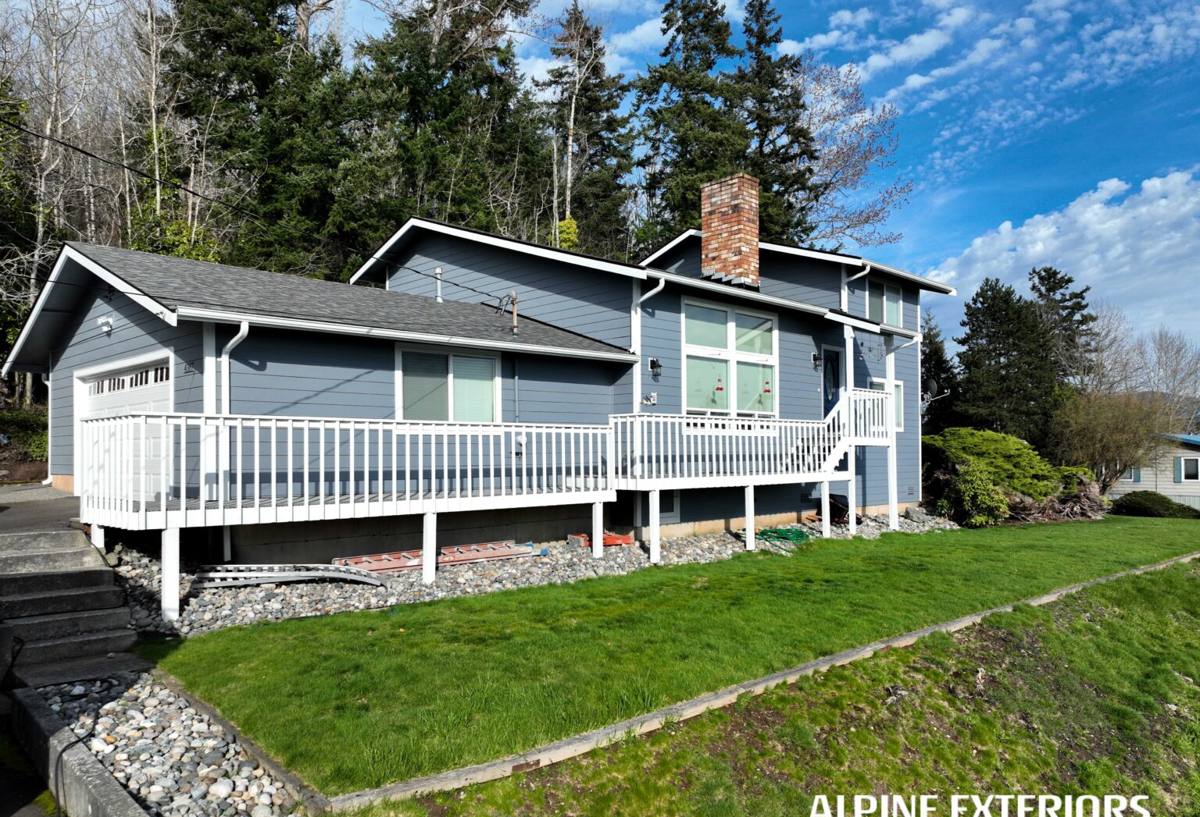
How to Tell It's Replacement Time, Not Another Repair
Homeowners often ask us to patch a leak, and sometimes that's genuinely the right call. But there's a point where repair spending stops making sense and a full replacement becomes the smarter investment. Some signs we look for on a roof inspection:
- Granule loss heavy enough that you can see bare, shiny patches on the shingle surface
- Shingles that are cupping, curling at the edges, or cracking when walked on
- Moss or algae staining that returns within a season or two of cleaning, even after treatment
- Soft spots in the decking, visible daylight in the attic, or water staining on interior ceilings
- A roof already past 20-25 years old (typical for standard asphalt shingles in this climate) with multiple repair visits behind it
- Flashing around chimneys, valleys, or skylights that's rusted, lifted, or was never properly step-flashed to begin with
If you're seeing two or more of these at once, that's usually the tipping point where a full replacement costs less over five years than continuing to chase leaks.
What a Correct Roof Replacement Actually Includes
A roof replacement done right is not just laying new shingles over the old ones — that's a shortcut that traps moisture and voids most manufacturer warranties. Our process always includes:
Full Tear-Off and Deck Inspection
We remove the existing roofing down to bare decking so we can actually see what's underneath. In this climate, it's common to find soft or delaminated plywood sections, especially around valleys and eaves where water sits longest. Any compromised decking gets replaced before anything new goes down — covering rotten wood with new shingles just hides the problem for another few years.
Underlayment That Matches the Climate
Given how much rain Whatcom County sees, we use synthetic underlayment as a standard, with self-adhered ice-and-water membrane in valleys, along eaves, and around any roof penetration. This is the layer that protects your home if wind-driven rain ever gets under the shingles — and with the driving rain this area gets, it's not an optional upgrade, it's a baseline.
Flashing Done Properly
Most leaks we're called out to repair trace back to flashing, not shingles. Chimneys, skylights, dormers, and roof-to-wall transitions all need correctly layered step flashing and counter-flashing, not just a bead of caulk. Caulk fails; properly lapped metal flashing doesn't.
Ventilation Correction
A huge number of premature roof failures we see start with poor attic ventilation, not bad shingles. If intake and exhaust airflow aren't balanced, heat and moisture build up under the roof deck, which shortens shingle life and feeds the moss and mildew this region is already prone to. We check and correct venting as part of every replacement, not as an upsell after the fact.
Material Options for a Maple Falls Roof
There's no single "best" roofing material — it depends on your home's exposure, budget, and how much shade and moss pressure the roof will see. Here's how the common options stack up for this specific climate:
| Material | Typical Lifespan Here | Moss & Moisture Behavior | Relative Cost |
|---|---|---|---|
| Standard 3-tab asphalt | 15-20 years | More prone to granule loss and moss grip; needs more frequent cleaning | Lowest |
| Architectural (laminate) asphalt | 25-30 years | Denser, better shedding profile; algae-resistant granule options available | Moderate |
| Standing seam metal | 40-50+ years | Sheds moss and needles very well due to smooth, steep-shedding surface | Highest upfront, lowest lifetime cost |
| Synthetic/composite shingle | 30-40 years | Good moisture resistance, resists cracking in freeze-thaw cycles | Moderate-high |
For heavily shaded Maple Falls lots, we lean toward recommending architectural asphalt with algae-resistant granules or metal roofing over basic 3-tab — the up-front cost difference is usually offset within a decade by fewer moss treatments and repair calls.
Why Algae-Resistant Shingles Matter Here
Standard shingles are a food source for the blue-green algae that causes those dark streaks homeowners often mistake for dirt or soot. Algae-resistant (AR) shingles are manufactured with copper or zinc granules blended into the surface, which slowly release trace metal ions that discourage algae growth. In a climate with a long moss and algae season like this one, upgrading to AR shingles is one of the simplest ways to keep a roof looking clean and performing well for years longer without adding much to the overall cost.
Our Replacement Process, Step by Step
- On-site inspection and estimate — we walk the roof (not just look from the ground), check the attic, and give you a written scope and price, no pressure to decide on the spot.
- Material selection — we go over the options above in plain terms so you can pick based on budget and how the roof will actually perform on your lot.
- Scheduling around the weather — we plan the job for a realistic dry window, since a roof deck should never sit open overnight in driving rain.
- Tear-off and deck repair — old roofing comes off, decking gets inspected and repaired as needed, debris is hauled and cleaned up daily.
- Underlayment, flashing, and ventilation install — the protective layers go in correctly before a single shingle is nailed down.
- New roofing installed to manufacturer spec — proper nailing pattern, exposure, and fastening, which matters for wind resistance and warranty validity.
- Final walkthrough — we inspect the finished roof with you and go over any warranty paperwork.
Timing the Job Around Whatcom County Weather
Roofing materials need a dry, workable window to install correctly — asphalt shingles in particular need proper temperatures to seal down. Given how much of the year in this area brings driving rain, we plan replacements for stretches of stable weather and stage materials so the job moves efficiently once we start. A roof that's exposed longer than necessary during a tear-off is a roof at risk, so we don't start a job we can't reasonably finish before conditions turn.
Why Hiring a Crew That Already Works Maple Falls Matters
Roofing code requirements, permitting, and typical problem spots don't change much across Whatcom County, but the practical realities of a job do — steep driveways, limited staging space on wooded lots, septic systems that can't be driven over, and the specific moss and shade patterns of a given property. A crew that already works in and around Lynden and Maple Falls has seen these conditions repeatedly and plans around them instead of discovering them mid-job. That local familiarity translates into fewer surprises, more accurate estimates, and a crew that already understands what "normal" looks like for a roof out here versus a drier climate.
Before hiring anyone for a roof replacement, it's worth checking a few basics:
- Current Washington state contractor license and active liability insurance
- A written estimate that spells out tear-off, decking, underlayment, flashing, and ventilation work separately — not a single vague lump sum
- Manufacturer certification if you're considering a material with an enhanced warranty
- References or completed work you can actually see, ideally in a similar climate exposure to your own property
- A clear plan for weather contingencies and daily cleanup during the job
What a New Roof Means for Your Home Long-Term
A properly installed replacement isn't just a cosmetic fix — it's what keeps moisture out of your attic insulation, protects your framing from rot, and prevents the slow, expensive damage that comes from small leaks nobody notices until there's a stain on the ceiling. In a climate that gives roofs this little downtime between rain events, doing the replacement correctly the first time is what actually saves money over the life of the roof.
If your roof is showing its age or you just want an honest read on where it stands, we're happy to take a look. There's no cost and no pressure for a walk-through and estimate — fill out the form below and we'll get in touch to schedule a time that works for you.