 Lynden Roofing
 Building New in Everson Means Getting the Envelope Right the First Time
When you're framing a new home in Everson, the windows are one of the few components that have to perform two jobs at once: keep weather out for the next 30-plus years, and look right doing it. Whatcom County's climate isn't dramatic, but it's relentless. Marine air moving in off the Salish Sea keeps humidity high most of the year, driving rain comes in sideways during fall and winter storms, and anything shaded or north-facing spends a good chunk of the year growing moss and algae. None of that is a problem for a window that's specified and installed correctly. All of it becomes a problem for one that isn't.
New construction is the one point in a home's life where you have full access to the rough opening, the sheathing, and the weather-resistive barrier before anything gets covered up. Get the window install right at this stage and you're not thinking about it again for decades. Get it wrong, and it's usually hidden behind siding and trim until someone finds rot, mold, or a soft spot on the wall years later.
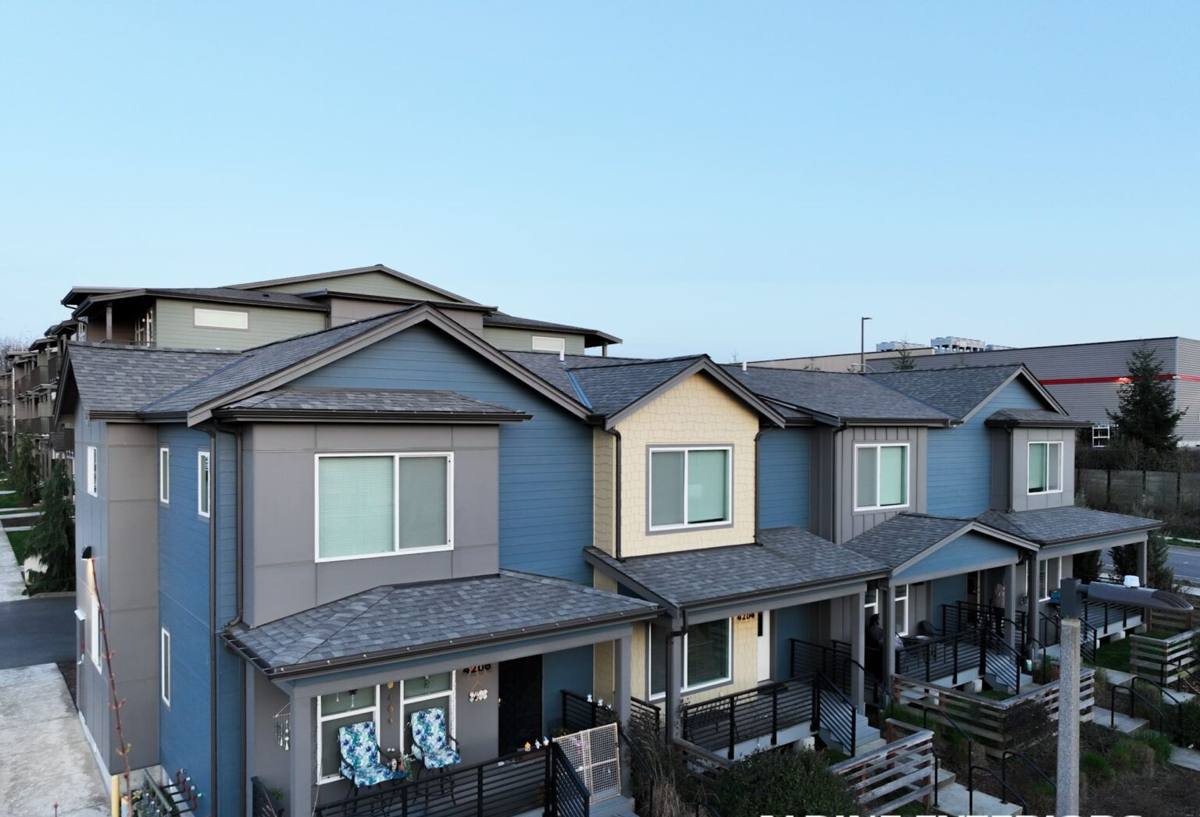
Why New Construction Is the Right Time to Get Windows Right
Retrofit and replacement window work has to compromise around what's already there — existing trim, existing siding, existing flashing that may or may not be in good shape. New construction has no such constraints. The opening is built to the window, not the other way around, and every layer of the water management system goes in fresh, in the correct order, with nothing hidden or patched.
That's an advantage, but it's also where mistakes get baked in permanently. A flashing detail done backward, a nailing fin installed without proper sealant, or a rough opening cut a half-inch off square will sit behind the siding looking fine for years before it causes damage. New construction gives you one clean shot to do it correctly — there's no "we'll fix it during the next remodel."
What "Correct" Actually Means Here
A correct new-construction window install isn't about the window itself so much as everything around it — how water that gets past the exterior cladding is directed back out rather than into the wall cavity. That's true anywhere, but it matters more in a county that sees this much sustained rain and humidity.
What a Correct New-Construction Window Install Involves
There's a specific order of operations for installing a window in new framing, and skipping or reversing a step is where most long-term problems start.
Weather-Resistive Barrier and Flashing, in the Right Order
The house wrap or weather-resistive barrier goes on first, then the opening is cut and flashed using a shingle-lap method — sill flashing first, then jamb flashing, then head flashing last, each layer overlapping the one below it so water is always directed downward and outward. Reverse that order, or leave a gap at a corner, and you've built a channel for water to get behind the barrier instead of running off it.
Sill Pan and Back Dam
A sloped sill pan under the window, with a back dam at the interior edge, gives any water that does make it past the window itself a way to drain back outside instead of pooling against the sheathing. This is one of the details that's easy to skip and impossible to see once the siding is up — which is exactly why it shouldn't be skipped.
Fastening and the Nailing Fin
New-construction windows use an integral nailing fin around the frame that gets fastened directly to the sheathing through the weather barrier. Fastener spacing, type, and placement all affect how the window performs in wind and how evenly it seals — and over-driving or under-driving fasteners can distort the frame enough to affect operation.
Sealant and Backer Rod
Sealant isn't the primary defense against water — the flashing is — but it's still important, and it needs to be compatible with the housewrap, the window frame material, and applied where it can actually do its job (typically the head flashing and select joints, not indiscriminately around the whole frame, which can trap water instead of releasing it).
Choosing the Right Window for an Everson Build
Frame material matters more here than in a drier climate, because whatever you choose is going to spend a lot of its life damp. There's no single right answer — it depends on your budget, your home's design, and how much upkeep you want to sign up for.
| Frame Material | Moisture Behavior | Maintenance | Typical Fit |
|---|---|---|---|
| Vinyl | Won't rot; performs consistently in humidity | Low — occasional cleaning | Most new builds; best value |
| Fiberglass | Dimensionally stable, handles moisture and temperature swings well | Low | Higher-end builds, larger openings |
| Wood (clad exterior) | Interior wood needs protection from condensation; exterior cladding shields from rain | Higher — interior finish upkeep | Traditional or high-end aesthetic |
| Aluminum | Doesn't rot but conducts cold, which increases condensation risk | Low | Modern designs, larger glass spans |
For most Everson builds, vinyl or fiberglass gives you the best balance of moisture tolerance and low upkeep. Wood-clad windows can absolutely work here, but they ask more of the homeowner in terms of finish maintenance on the interior side, especially in rooms prone to condensation.
Our New-Construction Window Process
We work directly with builders, GCs, and owner-builders on new homes, so our process is built to fit into a framing schedule rather than disrupt it.
- Plan and spec review — we confirm window sizes, egress requirements, and rough opening dimensions against the actual framing before anything ships.
- Rough opening verification — every opening gets checked for square, level, and correct dimensions on site before install day, not assumed from the plans.
- Weather barrier and flashing install — sill pan, jamb flashing, and head flashing go in following the shingle-lap sequence, sealed with materials compatible with your specific housewrap.
- Window setting and fastening — windows are set plumb, level, and square, then fastened per manufacturer spec so the frame isn't stressed or twisted.
- Final seal and walkthrough — sealant details are finished, and we walk the openings with the builder before siding closes everything in.
Common Mistakes We See on New Builds — and Fix Before Siding Goes On
Most of these aren't visible until something fails, which is exactly why catching them at the framing stage matters.
- Flashing installed out of order, so water drains into the layer below instead of over it
- No sill pan or back dam, leaving no drainage path for water that gets past the window
- Rough openings cut too tight, forcing the frame and racking it out of square
- Fasteners over-driven into the nailing fin, distorting the frame and affecting how the sash seals
- Sealant used as the only water defense instead of a backup to proper flashing
- Incompatible sealant and housewrap materials that fail to bond over time
Cost Factors for New-Construction Windows
Pricing for a new build varies a lot by window count, size, and frame material, so we won't throw out a number that doesn't mean anything without seeing your plans. What actually moves the price:
- Frame material (vinyl, fiberglass, wood-clad, aluminum)
- Glass package — standard dual-pane versus upgraded low-E or triple-pane glazing
- Window count and size, including any oversized or specialty shapes
- Number of stories and access/staging requirements during framing
- Whether flashing materials are being upgraded beyond code minimums
We'll walk your plans with you and give you real numbers tied to your actual window schedule, not a per-window average that may not reflect your build.
Why an Everson-Familiar Crew Matters
Window installation technique doesn't change dramatically from one town to the next, but familiarity with how a region's weather actually behaves does. A crew that's worked framing sites around Everson and the rest of Whatcom County has already seen how driving rain hits certain elevations, how long moisture lingers on shaded walls before a home is fully closed in, and where builders in this area tend to run into scheduling pressure to get windows in before siding. That familiarity shows up in small decisions — sequencing flashing work around a wet week, or flagging a rough opening issue before it becomes a change order — that a crew unfamiliar with the area might not catch as quickly.
If you're framing a new home in Everson and want the window package done right the first time, we'd be glad to look at your plans. Reach out for a free, no-pressure estimate using the form below — we'll go through your window schedule and give you a straightforward read on materials, timeline, and cost.