 Lynden Roofing
 Building New in Maple Falls? The Windows Are Not the Place to Save Time
New construction gives you one real chance to get windows right. Once the siding or stucco closes over the rough opening, the flashing details underneath are hidden for the life of the house. In Maple Falls and the surrounding Whatcom County foothills, that first install has to account for a wetter, shadier, longer rainy season than most window manufacturers assume in their generic installation guides. Get it right during framing and you won't think about it again for decades. Get it wrong and the first sign of trouble is usually a soft spot in the wall sheathing three or four years later, long after the crew that hung the windows has moved on to other jobs.
We install new-construction windows on framing crews and with builders working in and around Lynden and out toward Maple Falls, and we treat every opening the same way: as a water-management detail first, and a window second.
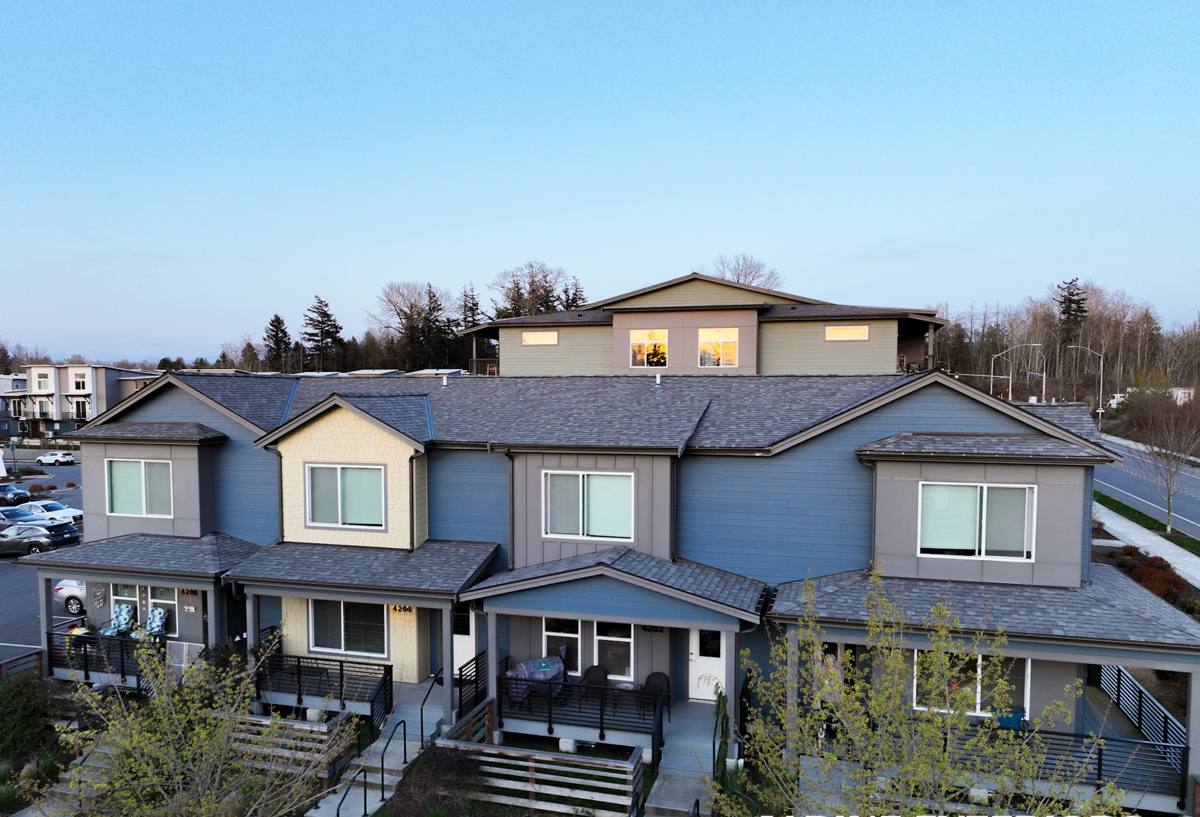
What This Climate Does to a New Window Opening
Driving rain and wind-driven moisture
Whatcom County doesn't just get rain — it gets sideways rain, pushed by wind off the Nooksack valley and the foothills toward Mount Baker. Wind-driven rain finds any gap in a window's flashing and pushes water uphill against gravity, past a housewrap lap that would hold up fine in a drier climate. A window that's only "close enough" on flashing will pass a dry-season inspection and still leak the first hard winter storm.
A long moss season
Shade from tree cover and a cool, damp climate mean moss and algae get a long head start here compared to drier parts of the state. Around windows, that shows up as green growth on sills, trim, and the caulk lines themselves — and moss holds moisture against wood and paint far longer than bare siding does. Trim details, sill pitch, and drainage gaps matter more here than they would in a sunnier neighborhood.
Marine-influenced, salt-tinged air
Whatcom County sits close enough to Bellingham Bay and the Strait that the regional air carries a mild salt influence, especially on windier days. It's not the direct salt exposure you'd get on a beachfront lot, but over years it adds a slow corrosive edge to unprotected fasteners and lower-grade hardware. Combined with the rain and humidity, it's one more reason we don't cut corners on flashing tape, fasteners, or sealants.
New-Construction vs. Replacement: Why the Install Method Is Different
A lot of homeowners assume a window is a window. In new construction, the difference isn't the glass — it's the frame and how it ties into the wall's water barrier.
- New-construction windows have a nailing fin around the perimeter that gets integrated directly into the housewrap and flashing before siding goes on. This is the correct method for a wall that's open to the studs.
- Replacement (retrofit) windows are built to install into an existing, finished opening without disturbing the exterior siding or trim. Using a retrofit window on new construction — or vice versa — creates weak points in the water barrier that no amount of caulk fixes long-term.
On a new build or an addition in Maple Falls, we install true new-construction units with a full flashing sequence, because the wall is open and there's no reason to compromise.
What a Correct New-Construction Install Actually Involves
Flashing and water management, in order
The sequence matters more than any single product. Done correctly, water that gets past the siding is directed back out, not into the wall cavity:
- Sill pan flashing installed first, sloped slightly to the exterior, so any water that reaches the sill drains out instead of pooling.
- Housewrap or building paper lapped correctly at the sides and head — always shingle-style, upper courses over lower, never reversed.
- Window set into the opening, fastened per the manufacturer's schedule, and checked for level, plumb, and square before anything is taped.
- Flashing tape at the jambs, then the head, integrated with the housewrap so water sheds over each layer like shingles on a roof.
- A gap left above the window head — never caulked solid — so any moisture that does get behind the siding has somewhere to go.
Window selection for this climate
Product choice matters less than the install, but it's not irrelevant. For Maple Falls builds we generally steer homeowners toward vinyl or fiberglass frames with a solid multi-point locking system and glass packages rated for the marine Northwest climate zone — good U-factor for heat retention through our long wet winters, without overspending on solar-heat-gain features that matter more in sunnier climates. Wood and wood-clad windows can look great, but they demand more upkeep in a climate with this much sustained moisture and shade; we're upfront with clients about that maintenance burden before they commit to them.
Nail fin vs. block frame considerations
Most new-construction homes use nail-fin windows set into a standard rough opening. On homes with thicker walls, deeper siding profiles, or a masonry or stucco exterior, a block-frame window integrated differently into the wall assembly may be the better call. We look at the wall design during framing, not after the windows are ordered, so there's no mismatch to fix later.
Frame Material Comparison for Whatcom County New Builds
| Frame Material | Upfront Cost | Maintenance in This Climate | Notes |
|---|---|---|---|
| Vinyl | Lowest | Low — rinse off moss/algae periodically | Good value; wide range of quality tiers |
| Fiberglass | Mid to high | Low — very stable in temperature swings and moisture | Holds paint well if a custom color is wanted later |
| Wood / Wood-Clad | Highest | High — exposed wood needs regular inspection and refinishing | Best suited to covered or less-exposed elevations |
| Aluminum | Mid | Moderate — watch for condensation without a thermal break | Less common in residential new construction here |
Our Process for a Maple Falls New Build
- Framing review. We walk the rough openings with the builder or homeowner before windows are ordered, confirming sizes, header heights, and any wall assemblies that need a different flashing approach.
- Product selection. We go over frame material, glass package, and grille or hardware options against the home's exposure, shade, and budget — no upselling toward features that don't earn their keep in this climate.
- Flashing and install. Sill pan, housewrap integration, tape sequence, and fastening schedule, done in order and checked before siding closes over it.
- Sealant and trim. Exterior sealant beads and interior trim details finished to shed water and resist the moss and algae growth that shaded Whatcom County walls are prone to.
- Final walk-through. Every opening checked for operation, seal, and squareness before we consider the job done.
Checklist: What to Confirm Before the Wall Closes Up
- Sill pan flashing is installed and sloped to drain outward, not just caulked flat.
- Housewrap laps follow shingle order at the head and jambs — no reversed laps.
- Flashing tape is rated for the temperature range it was installed in (cold, damp mornings can affect adhesion).
- A drainage gap is left above the window head rather than sealed solid.
- Windows are shimmed, leveled, and squared before final fastening — not just tacked in place.
- Frame material and glass package match the home's actual sun and moisture exposure, not a one-size default.
Why a Crew That Already Works Maple Falls Matters
Window flashing details that work fine in a dry climate fail here, and manufacturer install guides are written for national averages, not for a foothill community with this much sustained rain and shade. A crew that installs windows across Lynden and out toward Maple Falls regularly has already seen which details hold up through a full Whatcom County winter and which ones come back as callbacks. That's not a marketing claim — it's just what happens when you do the same work, in the same climate, often enough to notice the patterns.
It also means we're not guessing at code requirements or inspection expectations for this area, and we're not learning the local weather's quirks on your project. We show up knowing what this ground and this climate demand from a window opening before the first piece of flashing tape goes on.
Getting Started
If you're framing a new home, an addition, or a shop in Maple Falls and want the window openings done right the first time, we're happy to walk the plans or the framing with you. Reach out for a free, no-pressure estimate using the form below — there's no obligation, just a straight answer on what your project needs.