 Lynden Roofing
 Building Decks for Maple Falls' Conditions
A deck in Maple Falls lives a different life than one in a dry climate. Between the driving rain that rolls through Whatcom County much of the year, salt-laden air working its way inland off the Strait of Georgia and Bellingham Bay, and a moss season that can stretch from fall through spring, the decking, fasteners, and framing underneath your feet are under near-constant pressure. A deck that's merely "built to code" often shows its age in three or four years around here. A deck that's built for this specific climate holds its finish, its structure, and its footing for decades.
We build and repair custom decks throughout the Lynden area, including Maple Falls, and the lessons don't come from a manual — they come from pulling up decking that was installed without proper airflow underneath, replacing joist hangers that rusted from the inside out, and re-flashing ledger boards that were never flashed correctly in the first place. This page walks through what actually matters when you're putting a deck on a home in this part of Whatcom County.
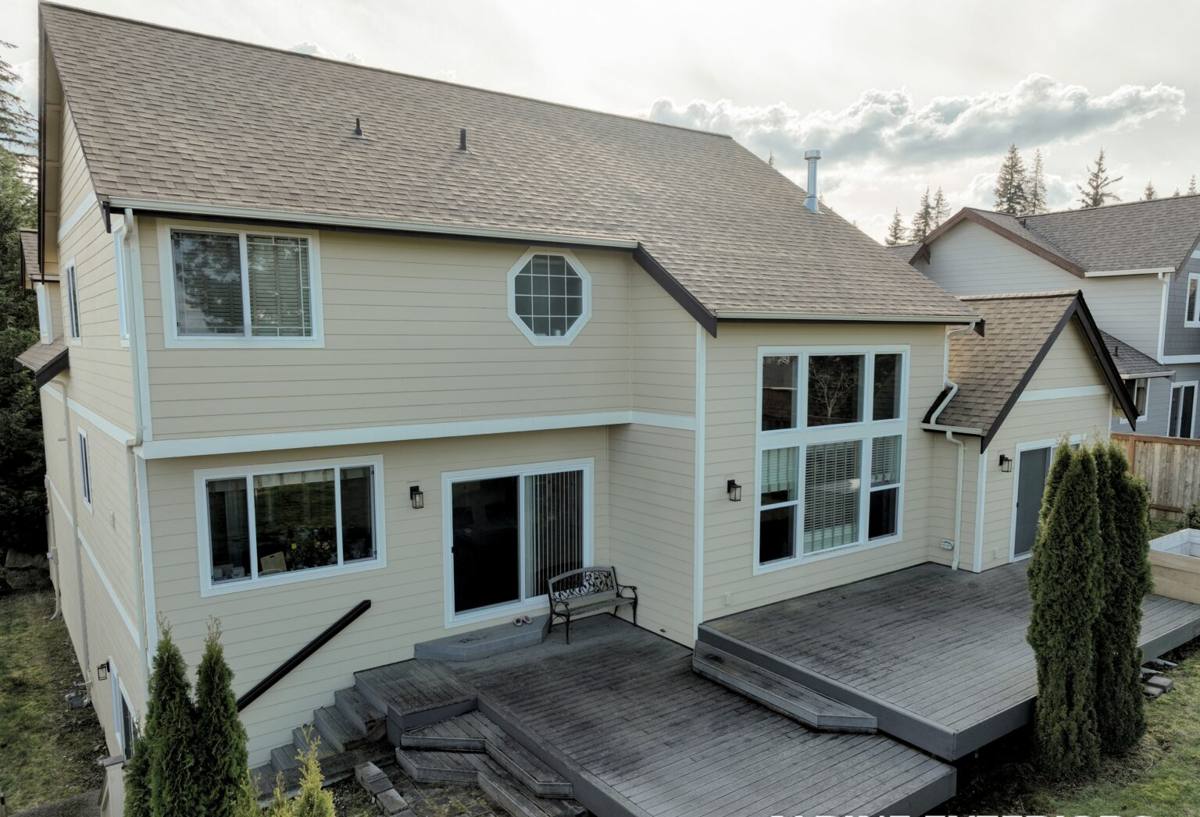
What Local Homes Need From a Deck Here
Moisture That Doesn't Let Up
Long stretches of steady, low-intensity rain are harder on a deck than the occasional downpour. Water finds its way into every joint, every fastener hole, and every spot where two boards meet. If a deck doesn't shed water quickly and let the structure underneath dry out between storms, rot and mold set in — often in places you can't see from the surface.
Moss and Algae Growth
A shaded or partially shaded deck in this area can develop moss within a single wet season if it's not designed and finished to resist it. Moss holds moisture against the wood or composite surface, and on stairs or ramps it turns into a real slip hazard. The right board spacing, surface texture, and finish make a measurable difference in how fast moss takes hold.
Salt Air and Metal Fatigue
Salt air doesn't just affect homes right on the water — it travels, and over years it accelerates corrosion in exposed fasteners, brackets, and railing hardware. Standard zinc-coated screws and hangers can start rusting and staining the decking around them well before the wood itself is due for replacement. Hardware selection matters as much as the decking material.
Freeze-Thaw Cycling
Maple Falls sits at a higher elevation than Lynden proper, so winter freeze-thaw cycles are more frequent here. Water that gets into a crack, a fastener hole, or a poorly sealed cut end expands when it freezes and slowly opens that damage wider each cycle. It's a slow process, which is exactly why it gets ignored until a board or a footing fails.
Choosing the Right Decking Material
There's no single "best" decking material — there's a best material for your budget, your sun exposure, and how much upkeep you're willing to do. Here's how the common options actually perform under the conditions described above.
| Material | Moisture Resistance | Moss Resistance | Maintenance | Typical Lifespan |
|---|---|---|---|---|
| Pressure-treated wood | Good if sealed and maintained | Moderate — needs regular cleaning | Annual cleaning, re-seal every 1-2 years | 15-20 years |
| Cedar | Naturally decay-resistant, needs sealing | Moderate — natural oils help early on | Cleaning and oil/seal every 1-2 years | 15-25 years |
| Composite decking | Excellent — won't rot | Good with textured, capped boards | Periodic washing, no sealing needed | 25-30+ years |
| PVC decking | Excellent — fully synthetic | Good to excellent | Periodic washing, no sealing needed | 30+ years |
We install all of these materials, and we'll give you an honest read on which fits your project. Composite and PVC cost more up front but remove the annual sealing cycle entirely, which matters a lot in a climate that gives you a short weather window to do that maintenance anyway. Wood costs less initially and gives a natural look many homeowners want, but only holds up if the maintenance schedule actually gets followed. We won't talk you into a product that doesn't match how you actually plan to maintain the deck.
Structural Details That Determine How Long a Deck Lasts
Ledger Board Flashing
The ledger board — where the deck attaches to your house — is the single most common failure point we see on decks built without local conditions in mind. Without proper flashing that directs water away from the house sheathing, water works its way behind the ledger and rots the rim joist and wall framing from the inside, often for years before it's visible. Correct flashing here isn't optional in a climate this wet — it's the difference between a deck that lasts and a hidden repair bill down the road.
Joist Spacing and Airflow
Tighter joist spacing than the minimum code requirement gives a stiffer deck and less board flex over time, which matters more once boards start absorbing moisture and drying repeatedly. Equally important is leaving enough clearance underneath the deck for air to move — a deck built too close to grade traps humidity underneath and accelerates rot in the joists and beams, regardless of what decking material sits on top.
Footings for This Ground and This Freeze Depth
Footings need to be sized and set below frost depth for this elevation, on soil that's been properly evaluated rather than assumed. A footing that's too shallow or undersized will shift over a few winters of freeze-thaw cycling, and that shift shows up as a deck that's suddenly out of level or a railing post that's gone loose.
Fasteners and Hardware
Given the salt air moving through the region, we use stainless steel or heavy-duty coated fasteners and structural hardware rated for coastal exposure, not the minimum-grade hardware that's fine in a drier inland climate. It costs more per piece and it's worth every bit of it — replacing a rusted joist hanger means tearing into a finished deck.
Railings and Guards That Hold Up
Railings take direct weather exposure and a lot of hand contact, so material choice and hardware matter as much here as on the decking surface itself. We build with wood, composite, metal, and cable railing systems, matched to your home's style and to how much upkeep you want going forward. Whatever the material, every post is anchored to solid framing — not just fastened to the rim joist — because a wobbly railing is both a safety issue and usually a sign of a shortcut taken somewhere in the structure.
Our Deck-Building Process
- On-site assessment — we look at sun exposure, drainage, grade, and how the deck will tie into your house before recommending materials.
- Design and material selection — we walk through the material comparison above based on your budget and how much maintenance you actually want to do.
- Permitting — we handle the permit application and inspections required for the project.
- Demolition and site prep, if replacing an existing deck, including inspecting the ledger area and framing underneath for hidden rot before we build anything new on top of it.
- Framing and flashing — footings, ledger flashing, joists, and beams built to handle this region's rain and freeze-thaw cycles.
- Decking, railing, and finish work — installed with fastener spacing and gaps that account for wood or composite expansion.
- Final walkthrough — we go over care instructions specific to the material you chose so you know exactly what upkeep, if any, is ahead of you.
Maintenance That Actually Matches This Climate
Whatever material you choose, a short annual routine keeps a deck performing the way it's supposed to. Skipping it in this climate tends to catch up with a deck faster than homeowners expect.
- Clear leaves and debris from between boards and off the surface before the wet season sets in, so moisture doesn't sit trapped against the wood or composite.
- Wash the surface at least once a year to remove early moss and algae growth before it gets established, especially on shaded sections.
- Check and clear gaps around the ledger board and any spots where the deck meets the house to keep water moving away from the structure.
- For wood decking, re-seal or re-stain on the schedule the product calls for — don't wait for visible graying or cracking to start.
- Inspect railings and stair connections once a year for looseness, which can signal a footing or fastener issue underneath.
- Keep gutters and downspouts near the deck clear so runoff isn't dumping directly onto the structure or footings.
Permits and Practical Considerations for the Area
Most new decks and many deck replacements in Whatcom County require a building permit, particularly once you're above a certain height off grade or attaching structurally to the house. Requirements can vary by exact height, footprint, and whether you're replacing an existing structure versus building new, so it's worth confirming specifics for your property rather than assuming. We handle the permitting and inspection process as part of the job, so it's one less thing you have to track down.
Why a Crew That Already Works Maple Falls Makes a Difference
Deck-building skill is only part of the equation here — knowing how this specific stretch of Whatcom County behaves through a full wet season and a full freeze-thaw winter is the other part. A crew that's done this work around Lynden and the surrounding communities has already seen where generic decking specs fall short: the flashing details that matter more in steady rain, the hardware grade that actually holds up with salt air moving through, the airflow clearance that keeps moss and rot from taking hold underneath. That's knowledge that shows up in how long your deck lasts, not just how it looks on installation day.
If you're planning a new deck or need an honest look at whether an existing one is holding up the way it should, we're happy to come take a look. Reach out for a free, no-pressure estimate using the form below — we'll walk the site, talk through materials, and give you a straight answer on what your project needs.