 Lynden Roofing
 Siding Replacement for Laurel Homes: What This Climate Actually Demands
Laurel is one of the residential communities that make up the greater Lynden area of Whatcom County, and homes here face the same core exterior challenges as the rest of this part of the county: salt-tinged marine air working its way inland, driving rain that comes in on the wind rather than falling straight down, and a moss season that runs far longer than most homeowners moving here from drier regions expect. None of these are dramatic on any given day. They're slow, cumulative pressures that show up as siding problems years down the road rather than all at once.
A siding replacement in Laurel isn't just about swapping out an old material for a new one. It's about choosing a system and an installation approach built for this specific combination of moisture, wind, and shade, not a generic install that happens to be sold here. This page covers what Laurel homes specifically need from a siding replacement, what correct installation actually involves, and why the process matters as much as the product.
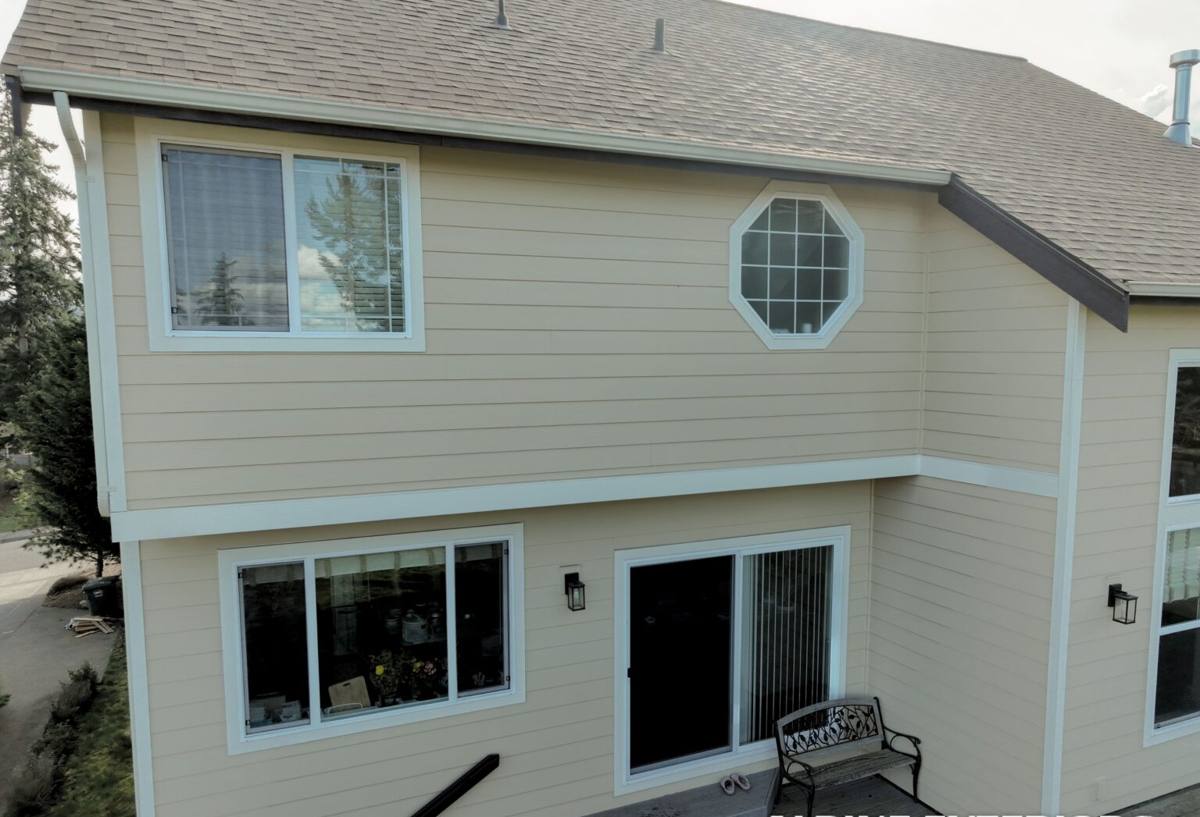
What Salt Air, Driving Rain, and a Long Moss Season Do to Siding
Salt-Tinged Air
Even away from the immediate waterfront, Whatcom County's marine climate carries salt-tinged air well inland, and Laurel is no exception. That air accelerates corrosion in exposed fasteners, hardware, and metal trim, and it keeps painted or coated surfaces damp longer than a drier inland climate would. A finish that isn't built to shed moisture quickly starts breaking down faster here than a manufacturer's general specifications might suggest.
Driving Rain
Storms in this part of Whatcom County rarely fall straight down. Wind pushes rain sideways, driving it into laps, seams, and fastener penetrations that a calmer climate wouldn't test nearly as hard. Flashing details and clearances that might be adequate somewhere drier become genuinely important here, since wind-driven water finds every gap in a siding system that wasn't detailed correctly on day one.
An Extended Moss Season
Shaded walls, tree-lined lots, and north-facing exposures around Laurel stay damp for long stretches through fall, winter, and much of spring, exactly the conditions moss needs to take hold. On wood-based or wood-look siding, that ongoing dampness isn't only a cosmetic issue that shows up as green staining. Sustained moisture against a moisture-absorbent material eventually leads to swelling, softening, and rot at cut edges and seams.
Signs a Laurel Home May Need Siding Replacement
Most homeowners call us because something specific has caught their attention, not because they've been tracking every inch of their exterior. Here's what's worth watching for before a small problem becomes an expensive one:
- Visible moss or green staining on shaded or north-facing walls
- Paint that keeps failing or peeling no matter how many times it's redone
- Soft spots or noticeable give when you press near a window or door trim
- Siding that's cupping, bowing, or separating at the seams
- Rust streaks running down from fasteners or hardware
- A musty smell inside near exterior walls, which can point to moisture working through the siding
- Siding that's original to a home built more than 20-25 years ago, especially wood-based products
Any one of these on its own doesn't automatically mean a full replacement. But they're worth having a professional look at directly, since moisture damage in this climate tends to compound rather than stay put.
Why We Install Only James Hardie Fiber Cement
We don't install vinyl siding, LP SmartSide, primed spruce, cedar, or other fiber cement brands. That's a professional standard we hold ourselves to, not a limit on what we're able to install. In a climate like Laurel's, the products that tend to struggle over the long run share a common thread: they either absorb moisture directly, rely on a field-applied or factory coating to keep water out indefinitely, or expand and contract enough with temperature and humidity swings that seams gradually work themselves loose.
James Hardie fiber cement is engineered specifically to resist that kind of exposure. It's non-combustible, it doesn't swell, rot, or feed moss the way wood-based products can, and its ColorPlus factory finish is baked on under controlled conditions and warrantied against the fading and chalking that constant moisture and UV cycling cause elsewhere. Hardie also builds climate-specific HZ formulations rather than one generic board, which matters in a county that sees this much sustained dampness. Paired with a strong transferable warranty and installation done to the manufacturer's actual specifications, it's the system we trust to perform through a full Whatcom County year, not just look good on install day.
What We Ask Homeowners to Weigh Before Choosing Something Else
Cheaper alternatives aren't dishonest products. Vinyl, engineered wood, and primed wood all have legitimate uses in the right climate and budget. But in a moisture-heavy, moss-prone environment like Laurel's, the maintenance burden on those materials tends to land back on the homeowner within a decade or two, in the form of caulking, repainting, or panel replacement that a fiber cement system simply doesn't demand as often.
Comparing Siding Materials for Laurel's Climate
| Material | Moisture Behavior Here | Typical Long-Term Maintenance |
|---|---|---|
| James Hardie fiber cement | Non-combustible; doesn't absorb moisture or feed rot the way wood-based products can | Low, factory finish holds up against sustained damp and salt-tinged air |
| Vinyl | Doesn't rot, but can warp or crack under temperature swings and wind-driven rain over time | Low upfront, but replacement rather than repair once panels fail |
| LP SmartSide / engineered wood | Wood-based core is more moisture-sensitive at cut edges and seams than fiber cement | Moderate, edge sealing and coating upkeep matter more here |
| Primed spruce or cedar | Natural wood absorbs moisture readily and is a preferred surface for moss | Highest, regular repainting, caulking, and moss treatment needed |
This isn't a claim that every alternative fails outright. It's why our own standard, for the climate we work in every day, is fiber cement installed correctly rather than a material that trades a lower sticker price for a heavier maintenance load down the road.
What a Correct Siding Replacement Involves
James Hardie only performs the way it's engineered to when it's installed to spec, and a full replacement gives us the chance to fix problems a repair can't reach. A correct job in Laurel includes:
Tear-Off and What's Underneath
Full replacement means removing the old siding down to the sheathing, which is also when hidden moisture damage, soft sheathing, or failed house wrap gets found and addressed rather than sealed back up behind new material. Skipping this step to save time is one of the more common shortcuts that causes problems to resurface a few years later.
Weather-Resistive Barrier and Flashing
A properly lapped, sealed house wrap underneath the siding, combined with correctly detailed flashing at every window, door, and penetration, is what actually keeps wind-driven rain from tracking behind the cladding. This is the layer most homeowners never see and the one that matters most in this climate.
Fastening and Clearance
Specific fastener types and spacing, correct clearance above grade and any hardscape, and attention to how a given wall's orientation and shade affect its moisture exposure all factor into a correct install. A wall that stays damp longer than its neighbors needs the same care at the drainage plane even if it doesn't need a different product.
Cost Factors in a Laurel Siding Replacement
| Factor | How It Affects the Project |
|---|---|
| Home size and wall complexity | More square footage and more corners, gables, or dormers mean more material and labor |
| Extent of hidden moisture damage | Rotten sheathing or framing found at tear-off adds repair work beyond siding alone |
| Siding profile and color selection | Lap width, board-and-batten, and specialty ColorPlus finishes vary in material cost |
| Trim, fascia, and window flashing scope | Replacing trim and re-flashing openings alongside siding adds labor but pays off in performance |
| Access and site conditions | Tree cover, tight lot lines, and multi-story walls affect staging and labor time |
We don't quote from a distance. Every estimate is based on an actual walk-around of the property, because two similarly sized homes in Laurel can carry very different scopes once you account for existing damage and wall complexity.
Our Siding Replacement Process
We start with a site visit to look at the existing siding's actual condition, check for soft spots or moisture intrusion, and talk through product, profile, and color options that fit the home and the budget. From there, we give a clear, itemized estimate before any work begins, so there's no ambiguity about scope.
Once a project is scheduled, tear-off comes first, followed by an honest look at the sheathing and framing underneath. Any rot or damage gets addressed before anything new goes back on the wall. Then it's weather-resistive barrier, flashing at every opening, and James Hardie siding installed to manufacturer spec, with correct fastener spacing, correct clearance, and correct laps. We finish with trim, paint touch-up where needed, and a walkthrough covering what the finished siding does and doesn't need going forward.
Why a Local Crew That Works Laurel Matters
A lot of what makes a siding replacement hold up in Laurel comes down to details a generic, out-of-area crew tends to miss: how much wind-driven rain a given wall orientation actually takes on, where moss is likely to establish first based on shade and tree cover, how much clearance siding needs above grade given how consistently damp the ground stays here, and how flashing needs to be layered to shed water through an entire wet season rather than just pass a dry-day inspection.
A crew that works Whatcom County exteriors regularly starts to recognize these patterns from one property to the next. That familiarity shows up in small on-site decisions homeowners rarely notice directly but absolutely feel over the following decade: where a J-channel actually needs to go, where caulk is appropriate versus where flashing is required, and how fasteners are spaced given the local wind exposure.
If your Laurel-area home needs new siding, or you'd just like an honest second opinion on what's happening behind an aging wall, we're glad to take a look. Reach out using the form below to schedule a free, no-pressure estimate.