 Lynden Roofing
 Siding Replacement Built for Deming's Conditions
Deming sits in the tree-covered foothill country east of Lynden, and that setting creates a different set of problems for exterior siding than you'd find on an open lot in town. Heavier tree canopy means more shade, more standing moisture, and a much longer moss season. Add in the driving rain that blows through this part of Whatcom County most of the year, plus the salt-tinged air that moves inland off the Puget Sound region, and you have a climate that is genuinely hard on siding — especially siding that wasn't built to handle sustained dampness.
When we replace siding in Deming, we're not just swapping old material for new. We're accounting for how much longer a shaded, tree-lined lot stays wet after a storm compared to a property with more sun exposure, and we're specifying and installing accordingly.
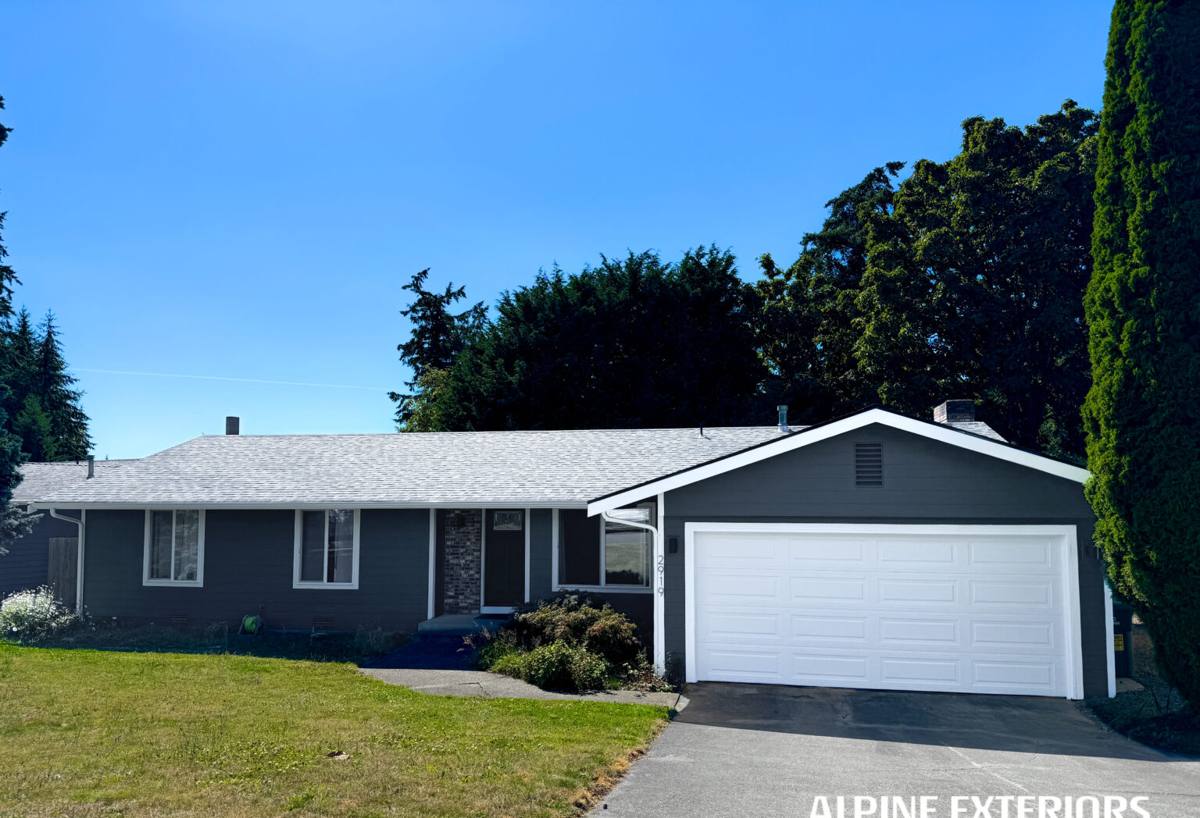
What Shade, Moss, and Driving Rain Do to Old Siding
Most of the siding failures we find on rural, wooded Deming properties trace back to moisture that never got a chance to dry out. Tree cover blocks sun and wind, both of which are what siding relies on to shed water after a rain event. On a home with morning shade from surrounding trees, siding can stay damp for days at a time during the wet months, and that's exactly the environment moss, algae, and mildew need to take hold.
Driving rain adds a second problem: wind-driven water doesn't just hit siding, it gets pushed sideways and upward into laps, seams, and trim joints. On a product that isn't dimensionally stable or properly moisture-managed, that's how water finds its way behind the cladding and into the wall assembly — often years before anyone notices a problem on the surface.
Common signs we see on Deming homes needing replacement rather than a patch or repaint include:
- Persistent green or black staining that returns within a season of cleaning
- Soft, spongy, or crumbling spots, especially near ground level and under eaves without gutters
- Cupping, buckling, or visible gaps at panel seams and corner boards
- Paint that blisters or peels repeatedly in the same spots, no matter how often it's redone
- A musty smell or visible moisture inside exterior walls near siding damage
Why We Only Install James Hardie Fiber Cement
We standardized on James Hardie fiber cement siding for every job we do, including here in Deming, and the reasoning comes directly from what this climate does to lesser-suited products. Fiber cement doesn't absorb and swell with moisture the way wood-based products can, it doesn't provide the same organic food source for moss and mildew that untreated wood fiber does, and it holds its factory-applied ColorPlus finish through repeated wet-dry cycles far longer than field-applied paint on other substrates.
Hardie's HZ5 product line is engineered specifically for climates like ours — cold, wet Pacific Northwest winters with real freeze-thaw cycling — which matters more in a shaded, higher-elevation area like Deming than it does on a sunnier in-town lot. It's also non-combustible, which is worth noting for properties backing up to wooded or brushy land, as many Deming lots do.
We won't install vinyl, LP SmartSide, or similar wood-based composite siding on homes in this area. Not because those products don't have a place somewhere, but because we've seen what a decade of shade and driving rain does to them here, and we're not willing to put our name on an install we don't think will hold up on this ground.
What Correct Fiber Cement Installation Actually Requires
Fiber cement performs the way it's supposed to only when it's installed to spec — and on a shaded, moisture-heavy property, cutting corners on installation shows up faster than it would somewhere drier. A correct job includes:
- Full removal of old siding and inspection of the sheathing and framing underneath for hidden rot
- A weather-resistant barrier installed with proper shingle-lap overlap, not just stapled up quickly
- Rainscreen or furring strip installation where the wall assembly needs a drainage gap behind the siding — especially important on shaded walls that dry slowly
- Correct flashing at every window, door, and penetration, lapped to shed water downward and outward
- Manufacturer-specified fastener type, spacing, and clearance from panel edges and the ground
- Proper clearance between siding and grade, decks, and roof lines to avoid wicking moisture
Any one of these steps done wrong can shorten the life of even the best siding material dramatically. This is where hiring based on price alone tends to backfire.
What We Find Once We Open Up a Deming Wall
Because so many Deming properties are older farmhouses or homes built before current moisture-management standards were common, tear-off often reveals more than what's visible from the outside. Sheathing rot around old, poorly flashed windows, missing or degraded weather barriers, and insulation that's absorbed moisture over the years are all things we routinely find once the old siding comes off on shaded, tree-covered lots.
We build this possibility into how we quote and schedule jobs out here — we'd rather flag it upfront as a possibility than surprise a homeowner with it mid-project. If we find deteriorated sheathing or framing, we stop, show you what we're seeing, and give you options before moving forward. That transparency matters more on rural properties where a hidden problem left in place has years to get worse before anyone's back up on that wall.
Our Process, Start to Finish
Every siding replacement we do in Deming follows the same sequence, whether it's a small single-story home or a larger property with outbuildings:
- On-site walkthrough and estimate — we look at the whole exterior, note trouble spots, and talk through material options honestly.
- Detailed written scope — what's being removed, what's being installed, flashing and moisture-barrier details, and a firm cost range.
- Material staging — on rural lots with longer driveways or limited turnaround space, we plan delivery and staging in advance so equipment and materials don't sit in the way of daily life on the property.
- Tear-off and inspection — old siding comes off, sheathing gets inspected, and any needed repairs are discussed before we close the wall back up.
- Weather barrier, flashing, and drainage plane installation — the unglamorous part that determines whether the new siding actually lasts.
- Hardie installation and finish detailing — panels, trim, and corners installed to manufacturer spec, with attention to caulking and paint lines.
- Final walkthrough — we go over the finished work with you before calling the job done.
Cost Factors for Siding Replacement in Deming
Every property is different, but the factors that most often move the price up or down on a Deming job are fairly consistent:
| Factor | Why It Matters |
|---|---|
| Extent of hidden sheathing damage | Older, shaded properties more often need sheathing repair or replacement once old siding is removed |
| Home size and wall complexity | More corners, dormers, and trim detail means more labor and material waste |
| Site access | Long driveways, limited turnaround, or septic/well locations can affect equipment staging and timeline |
| Existing siding type | Removing old wood, aluminum, or vinyl differs in labor from removing a prior generation of fiber cement |
| Trim and accessory scope | Full trim, fascia, and soffit replacement alongside siding adds cost but keeps the whole system consistent |
| Paint/finish selection | Factory ColorPlus finishes cost more upfront than field-primed products but need far less future maintenance |
We'll walk through where your project lands on each of these during the estimate — no guessing, and no lowball number that grows once the walls are open.
Why Working With a Crew That Already Knows Deming Matters
Rural and semi-rural properties like the ones common around Deming come with logistics that a crew unfamiliar with the area can misjudge — longer gravel driveways, septic field locations that shouldn't have equipment parked over them, wells that need to stay accessible, and tree cover that changes how and where materials can be staged without damage to landscaping. A crew that's worked this area before plans for these things from the first estimate instead of discovering them on install day.
There's also the climate knowledge itself. Knowing that a shaded north wall in Deming is going to hold moisture differently than a south-facing wall in open Lynden isn't something you can fully account for from a generic install checklist — it comes from having done the work here, on homes like yours, in this weather.
Get a Straight Answer for Your Property
If your Deming home's siding is showing moss, staining, soft spots, or paint that won't hold, it's worth getting an honest look before another wet season adds to the damage. We'll come out, walk the exterior with you, and give you a clear, no-pressure estimate for what a correct James Hardie siding replacement would involve on your specific property — no upsell, no scare tactics, just a straight assessment. Use the form below to get started.