 Lynden Roofing
 Siding Repair in Laurel: A Job That Has to Match the Weather
Laurel sits close enough to the water and low enough in the Nooksack valley that its siding takes a different kind of beating than siding twenty miles inland. Homes here deal with salt-tinged air moving in off the Salish Sea, long stretches of driving rain that push water sideways into seams and laps, and a moss season that can run most of the year in the shadier, tree-covered lots common to this part of Whatcom County. Siding repair in Laurel isn't just about patching what's visible. It's about understanding why that section failed in the first place and making sure the fix doesn't fail the same way again in two winters.
We've repaired siding on homes throughout Laurel and the surrounding Lynden area, and the pattern is consistent: damage shows up first where water and organic growth linger longest — north-facing walls, areas under mature trees, spots near ground contact, and corners where wind-driven rain hits hardest. A repair that only addresses the surface crack or missing board, without solving the moisture or growth problem behind it, is a repair that gets redone.
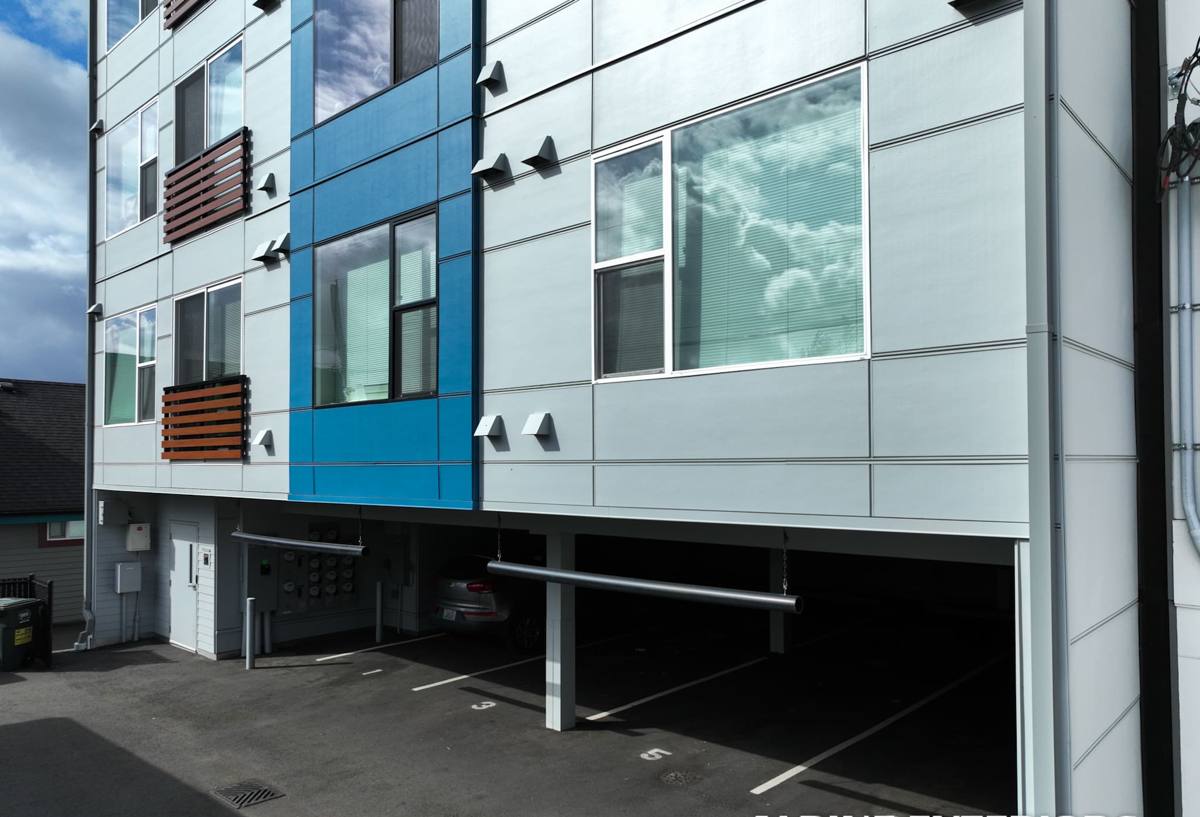
What Laurel's Climate Does to Siding Over Time
Salt Air and Coastal Moisture
Proximity to the coast means a steady low dose of salt-laden moisture in the air. Over years, this accelerates corrosion on fasteners, flashing, and any exposed metal trim, and it keeps humidity levels around the home's exterior slightly higher than you'd see further inland. Siding materials and finishes that aren't built for that combination of moisture and salinity age faster — fasteners rust, caulking breaks down sooner, and paint or coatings lose adhesion at the edges first.
Driving Rain and Wind-Driven Water
Whatcom County storms don't always drop rain straight down. Wind pushes it sideways into lap joints, butt seams, and anywhere trim meets siding. If a wall's water-resistive barrier, flashing, or lap spacing was installed even slightly wrong, driving rain finds it. That's why so many of the repair calls we get in Laurel aren't random damage — they're the predictable result of water finding one weak seam and working on it, storm after storm, until it finally shows up as a soft spot, a stain, or a section that's visibly failing.
The Long Moss Season
Shaded lots, damp ground, and mild temperatures for much of the year add up to a moss and algae season that's longer here than in drier parts of the state. Moss holds moisture against the siding surface far longer than open air would, which softens caulking, breaks down paint film, and — on materials sensitive to sustained dampness — can lead to swelling or deterioration at the point of contact. A repair that doesn't also address nearby moss growth is treating the symptom while leaving the cause in place.
Signs Your Laurel Home Needs Siding Repair
Most siding problems give warning signs well before they become structural. Walking your home's exterior once or twice a year and knowing what to look for catches small problems while they're still small.
- Soft, spongy, or bubbling sections when pressed gently — usually a sign of moisture trapped behind the siding
- Visible cracking, splitting, or warping in individual boards or panels
- Persistent moss, algae, or mildew staining that returns quickly after cleaning
- Gaps opening up at seams, corners, or where siding meets window and door trim
- Peeling or bubbling paint, especially concentrated on one wall or elevation
- Rust streaks running down from fasteners or metal flashing
- Rising utility bills or noticeably drafty rooms along an exterior wall
- Visible daylight, insect activity, or soft wood at the base where siding meets the foundation
Repair or Replace? How We Make That Call
Not every problem area needs a full re-side, and we're not going to tell a Laurel homeowner they need to replace a whole wall when a targeted repair will hold up. The right call depends on how much of the wall is affected, what's causing the damage, and how much of the underlying structure and moisture barrier is still sound.
| Factor | Leans Toward Repair | Leans Toward Replacement |
|---|---|---|
| Extent of damage | Isolated to one or a few boards/panels | Spread across multiple walls or elevations |
| Underlying sheathing | Dry, solid, no rot found | Soft, water-stained, or rotted sheathing |
| Cause of failure | Isolated impact damage or a single flashing gap | Systemic issue — bad original installation, failed house wrap |
| Age of existing siding | Newer siding, otherwise in good shape | Near or past its expected service life |
| Material match available | Profile and finish can be closely matched | Discontinued profile with no reasonable match |
We walk every one of these factors with the homeowner before recommending a direction, and we'll always tell you plainly if a repair is patching over a bigger problem versus genuinely solving it.
What a Correct Siding Repair Actually Involves
Diagnosing the Cause, Not Just the Symptom
Before any board comes off, we look at why that section failed. Is water tracking down from a gutter or roof valley above it? Is a flashing detail missing or installed short? Is moss holding moisture against the wall long enough to matter? Replacing a damaged board without fixing the water path behind it just buys you a year or two before the same spot fails again.
Checking What's Behind the Siding
Once the damaged section is removed, we check the sheathing and water-resistive barrier underneath. If there's rot, soft wood, or a compromised barrier, that gets addressed before any new siding goes back on — patching over a wet wall assembly is exactly the kind of shortcut that leads to repeat calls.
Matching Material and Finish
A repair should be close to invisible once it's done. That means matching board width, exposure, texture, and finish color as closely as the original product allows. On homes with factory-finished siding, this is far more consistent and predictable than trying to hand-match a field-painted material years after the original job.
Flashing, Trim, and Water Management
Every repair is an opportunity to correct a detail that was wrong from the start. If a butt joint was never flashed, if kick-out flashing is missing at a roof-to-wall intersection, or if trim was installed tight against siding with no drainage gap, we fix that as part of the repair — not as an upsell, but because leaving it wrong guarantees the repair won't last.
Why We Only Work With James Hardie Fiber Cement
We install and repair James Hardie fiber cement siding exclusively. We don't install vinyl, LP SmartSide, Cemplank, Allura, primed spruce, or cedar, and that standard shapes how we approach repair work too. Vinyl is easy to patch, but it's also a thin material that expands and contracts significantly with temperature swings, and matching a faded panel from years ago is often impossible — you end up with a visibly different patch. Engineered wood products like LP SmartSide use wood strand cores that are more sensitive to sustained moisture exposure at cut edges and repair seams, which matters in a climate with as much wind-driven rain and moss-related dampness as Laurel sees.
Fiber cement is non-combustible, dimensionally stable, and holds up to sustained moisture exposure far better than wood-based alternatives. James Hardie's ColorPlus factory finish also means a repaired section can be matched more reliably than field-painted materials, since the color is baked on at the factory rather than mixed and brushed on-site years apart. Hardie's HZ5 product line is engineered specifically for climates like ours — freeze-thaw cycles, sustained rain, and humidity. When we repair Hardie siding, we're working with a material built for exactly the conditions Laurel deals with, and when a repair calls for replacing a full wall section instead of patching, Hardie is the product we recommend and install.
Our Siding Repair Process in Laurel
- Inspection and diagnosis — we walk the full exterior, not just the reported problem area, since related issues often show up nearby
- Written assessment — a clear explanation of what's causing the damage and whether repair or replacement is the right fix
- Moisture and structural check — confirming the condition of sheathing and the water-resistive barrier before closing anything back up
- Repair work — removing damaged material, correcting any flashing or drainage issues found, and installing matched material
- Finish and cleanup — matching paint or factory finish as closely as possible and leaving the site clean
- Follow-up guidance — practical notes on what to watch for and how to keep the repaired area from becoming a repeat problem
Why Hiring a Crew That Already Works Laurel Matters
Siding repair done by a crew unfamiliar with this specific stretch of Whatcom County tends to miss the local patterns — which elevations take the worst of the wind-driven rain, how quickly moss re-establishes on shaded lots, how salt air accelerates fastener corrosion compared to more inland parts of the county. A crew that already works in and around Lynden and Laurel has seen these failure patterns repeatedly and knows what to check for beyond the obvious damaged board. That local pattern recognition is often the difference between a repair that solves the actual problem and one that just covers it up.
Maintaining Your Siding Between Repairs
A good repair lasts longer when it's paired with basic seasonal upkeep. None of this requires special tools or professional help — it's mostly about catching small issues before Laurel's weather turns them into bigger ones.
- Rinse siding gently once or twice a year to keep moss and algae from establishing, especially on shaded, north-facing walls
- Keep gutters clear so overflow doesn't run directly down exterior walls
- Trim back trees and shrubs so foliage isn't holding moisture against the siding
- Re-caulk small gaps at trim and seams before they widen and let water in
- Walk the exterior after major storms and note any new staining, soft spots, or loose sections
- Address minor damage promptly rather than waiting — small repairs stay small when caught early
Ready for a Straight Answer on Your Siding?
If you're seeing soft spots, moss buildup, cracked boards, or water staining on a Laurel home, we're happy to take a look and give you an honest read on whether it's a repair or something bigger. There's no pressure and no obligation — just a clear assessment from a crew that already knows what this climate does to siding. Use the form below to request your free estimate.