 Lynden Roofing
 Siding Built for Laurel's Corner of Whatcom County
Homes in the Laurel area outside Lynden sit in a stretch of Whatcom County where weather doesn't take a season off. Marine air moves in off the Salish Sea, rain settles into the region for weeks at a time, and shaded, tree-lined lots stay damp long after a storm has passed. Siding here isn't just a cosmetic layer — it's the first line of defense against moisture that wants to work its way into wall assemblies year-round.
We install fiber cement siding for homeowners throughout Lynden and the surrounding rural neighborhoods, and Laurel comes with its own set of conditions worth planning around: mature tree cover that keeps siding wet longer after rain, farmland-adjacent wind patterns that drive moisture sideways into wall faces, and the kind of quiet, spread-out lots where a siding problem can go unnoticed for a season before anyone spots it up close.
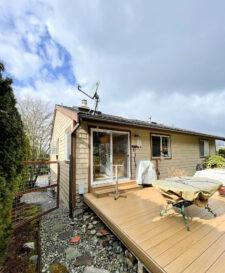
What Laurel's Climate Actually Does to Siding
Salt Air and Moisture Load
Whatcom County sits close enough to Puget Sound and the Strait of Georgia that salt-laden air reaches inland neighborhoods like Laurel, especially during winter storm systems. Salt air accelerates corrosion on fasteners, flashing, and any exposed metal trim, and it compounds the effects of ordinary rain exposure on wood-based products.
Driving Rain
Storms coming off the water don't just fall straight down — they arrive at an angle, driven by wind, and push water into laps, seams, and butt joints that a calmer rain would never reach. Siding installed with tight, correctly shingled laps and properly integrated flashing handles this; siding installed loosely or with gaps becomes a moisture entry point within a few wet seasons.
Long Moss Season
Shaded lots and consistent moisture give moss and algae a long growing window in this part of Whatcom County — often eight months or more of conditions favorable to growth. Moss holds water against a wall surface far longer than open air would allow, and on softer or unsealed materials that trapped moisture eventually finds a way in.
Why We Only Install James Hardie Fiber Cement
We standardized on James Hardie fiber cement siding and don't install LP SmartSide, vinyl, Cemplank, Allura, primed spruce, or cedar. That's not a marketing position — it's a decision built around what actually holds up in Whatcom County's specific mix of salt air, driving rain, and extended moss season.
- Non-combustible core — fiber cement doesn't feed a fire the way wood-based siding can, which matters for insurance conversations and long-term peace of mind.
- ColorPlus factory finish — baked-on color that resists fading and chipping far better than field-applied paint, which matters when moss and moisture are constantly working against a painted surface.
- Climate-engineered HZ product lines — Hardie's HZ5 formulation is engineered for wetter, colder climates like ours, rather than a one-size-fits-all product.
- Strong transferable warranty — Hardie backs its product with a warranty that survives a change in ownership, which adds real resale value.
- Proven longevity when installed to spec — the material performs for decades, but only when installation details (clearances, fastening, flashing) are done correctly the first time.
Products like LP SmartSide use an engineered wood substrate that, however well-treated, still relies on an intact outer coating to keep moisture out — a coating that has to survive years of driving rain and moss growth without a single breach. Vinyl siding can warp and doesn't offer the same fire performance. Cedar and primed spruce require ongoing maintenance — repainting, resealing, moss treatment — that most homeowners underestimate until they're several years in. Fiber cement asks less of the homeowner over time, and in a climate like Laurel's, that difference compounds.
What a Correct Fiber Cement Install Involves
Fiber cement is only as good as its installation. A large share of the siding problems we get called out to inspect trace back to shortcuts taken during the original install, not a failure of the material itself.
Clearances and Drainage
Hardie siding needs proper clearance from grade, roof lines, decks, and other horizontal surfaces so water has somewhere to go besides straight into the wall. On wooded Laurel lots, this also means keeping siding clear of built-up leaf litter and debris that traps moisture against the bottom courses.
Fastening
Fasteners have to be the correct type, driven at the correct depth, and located per Hardie's published fastening pattern. Overdriven or underdriven nails are one of the most common defects we find on re-siding jobs, and they quietly compromise the whole wall system.
Flashing and Water Management
Window and door flashing, kick-out flashing at roof-to-wall intersections, and proper house wrap integration all have to work together as a system. In a driving-rain climate, a missed flashing detail is often the single point of failure behind an otherwise sound install.
Joints and Laps
Butt joints need to be treated correctly — caulked and back-primed or fitted with H-jamb trim as specified — and horizontal laps need the correct overlap. These are small details that are easy to rush and expensive to fix once the siding is up.
Our Process for Laurel Homes
- On-site assessment — we walk the property, check existing siding and sheathing condition, and note site-specific factors like tree cover, drainage, and sun exposure.
- Moisture and substrate check — before anything goes up, we confirm what's underneath is sound. Siding installed over compromised sheathing just hides a bigger problem.
- Product and color selection — we walk through Hardie's lines and ColorPlus options so the choice fits the home and holds up to local moss and algae growth.
- Install to manufacturer spec — correct clearances, fastening pattern, flashing integration, and joint treatment, done in the sequence Hardie specifies.
- Final walkthrough — we review the completed job with the homeowner before we consider it done.
Why a Crew That Already Works Laurel Matters
Siding installation isn't identical from region to region, and it isn't even identical block to block within Whatcom County. A crew that already works the Laurel area understands which lots hold moisture longest, which exposures take the worst of the driving rain, and how much clearance and drainage planning a shaded, tree-heavy lot actually needs versus a more open one closer to town. That local pattern recognition shows up in details a visiting crew might miss — the extra care around a north-facing wall that never fully dries out, or the fastening adjustments that make sense once you've seen how wind behaves across open farmland toward a property line.
It also means faster response if something needs a look after the job is done. A local crew isn't scheduling a special trip from out of the area to check a concern — they're already working nearby.
Comparing Siding Options for a Laurel Home
| Factor | James Hardie Fiber Cement | Vinyl | Wood / Engineered Wood |
|---|---|---|---|
| Fire performance | Non-combustible | Can melt/deform under heat | Combustible |
| Moisture resistance (moss season) | High, with correct install | Moderate, seams can trap moisture | Requires ongoing sealing/maintenance |
| Finish durability | Factory-baked ColorPlus finish | Can fade, brittle over time | Needs repainting on a cycle |
| Warranty | Strong, transferable | Varies by manufacturer | Limited or product-dependent |
| Maintenance over 10 years | Low | Low to moderate | High (paint, sealant, moss treatment) |
What to Ask Before Hiring Anyone for Fiber Cement Work
- Are they certified or specifically trained in James Hardie installation, not just general siding work?
- Will they show you the planned fastening pattern and clearance details before work starts?
- How do they handle flashing at windows, doors, and roof-to-wall intersections?
- Do they inspect and address sheathing condition before covering it with new siding?
- Can they explain, in plain terms, why they chose the specific Hardie product line for your home?
Cost Factors Worth Understanding
Every Laurel property is different, and an accurate number only comes from seeing the home, but a few factors consistently move the price on any fiber cement project: the condition of the existing sheathing and whether repairs are needed before new siding goes on, the amount of trim and detail work (corners, window surrounds, transitions), the home's overall square footage and story count, and the specific Hardie product and finish selected. A straightforward, one-story home in good structural shape will run differently than a home needing sheathing repairs or extensive custom trim work.
If you're weighing siding options for a home in the Laurel area, we're happy to take a look and talk through what your specific property needs — no pressure, no obligation. A free estimate gets you a straight answer on condition, scope, and product fit before you decide anything.