 Lynden Roofing
 Siding Replacement Built for Kendall's Climate
When siding on a Kendall home starts to fail, it's rarely one dramatic event. It's years of salt-tinged air working on fasteners and finishes, wind-driven rain finding its way into seams and laps that were never quite sealed right, and a long, damp moss season settling into shaded walls and staying there for months at a time. By the time a homeowner notices soft trim, peeling paint, or green staining that won't wash off, the siding has usually been losing the fight for a while. Replacement, at that point, isn't just about appearance — it's about closing off a wall assembly that's been slowly taking on moisture and getting it back to dry, protected, and built to hold up under the next decade of the same weather.
This page covers siding replacement specifically for Kendall homes — what the local climate demands from a replacement project, what a correct tear-off and reinstall actually involves, and how our process works from first inspection to final walkthrough. It's written for homeowners weighing whether it's time, not for a general audience anywhere in the state.
Signs Your Kendall Home's Siding Needs Replacing
Siding failure is usually gradual, which means most homeowners live with early warning signs for a while before deciding to act. It's worth knowing what those signs look like so a small problem doesn't quietly become a bigger one:
- Panels or boards that are cupping, warping, or visibly separating at the seams
- Paint that keeps failing or peeling no matter how recently it was redone
- Soft spots or slight give when pressing near the bottom edge of a wall or around window trim
- Persistent moss or dark green staining on shaded or north-facing walls that won't stay clean
- Rust streaking below fasteners or visible corrosion on hardware and trim
- A musty smell or noticeable draft near exterior walls from inside the home
- Siding that's more than 20-25 years old, especially wood-based or lower-grade products
Any single item on that list doesn't automatically mean full replacement is the answer — some of it can be repaired if it's caught early enough. But in this climate, moisture problems behind siding tend to compound rather than stay static, which is why it's worth having a professional actually look rather than assuming it'll hold for another season.
What Kendall's Climate Demands From Replacement Siding
Salt Air and Fastener Corrosion
Salt-tinged air moving through this part of Whatcom County accelerates corrosion on exposed fasteners, hardware, and lower-grade flashing metal faster than it would in a drier inland climate. On a replacement project, that means specifying corrosion-resistant fasteners and flashing from the start rather than discovering years later that budget hardware has started rusting and staining the siding above it.
Driving Rain and Water Management
Rain here rarely falls straight down. Wind pushes it sideways into laps, seams, and fastener points that a calmer climate's siding job would never need to account for as carefully. On old siding, this is often exactly where the failure started — a lap that wasn't overlapped enough, a seam that relied on caulk instead of proper shingling, a butt joint with no flashing behind it. A replacement is the chance to correct all of that with proper clearances and lapping rather than repeating the same shortcuts.
A Long Moss Season
Shaded walls and anything under tree cover stay damp for extended stretches through fall, winter, and much of spring here, which is exactly the condition moss and mildew need to establish. On wood-based or wood-look siding, that ongoing dampness isn't just cosmetic — sustained moisture against an absorbent material eventually leads to swelling, softening, and rot at edges and seams. A replacement that swaps in a genuinely moisture-resistant material at those same shaded walls solves the problem at the source instead of buying a few more years before it resurfaces.
Why We Install Only James Hardie Fiber Cement
We don't install vinyl siding, LP SmartSide, primed spruce, cedar, or other fiber cement brands. That's a professional standard we've chosen to hold ourselves to, not a limitation on what we're capable of installing. In a climate like Whatcom County's, the products that tend to struggle over the long run share a common thread: they either absorb moisture directly, depend on a field-applied or factory coating to keep water out indefinitely, or expand and contract enough with temperature and humidity swings that seams and joints gradually work themselves open. On a replacement project, we're not going to install the same category of product that just failed, even if it's a different brand name.
James Hardie fiber cement is engineered specifically to resist that kind of exposure. It's non-combustible, it doesn't swell, rot, or feed moss the way wood-based products can, and its ColorPlus factory finish is baked on under controlled conditions and warrantied against the fading and chalking that constant moisture and UV cycling cause over time. Hardie also builds climate-specific HZ product formulations rather than one generic board for every region, which matters in an area that sees this much sustained dampness. Paired with a strong transferable warranty and installation carried out to the manufacturer's actual specifications, it's the system we trust to perform through a full Whatcom County year, not just look good the week it goes up.
What We Ask Homeowners to Weigh Before Choosing Anything Else
Cheaper alternatives aren't dishonest products — vinyl, engineered wood, and primed wood all have legitimate uses in the right climate and price point. But in a salt-air, high-rain, long-moss environment, the maintenance burden and moisture risk on those materials tends to land back on the homeowner within a decade or two, often as repainting, caulking, or panel replacement that a fiber cement system simply doesn't require nearly as often. For a replacement project specifically, where you're already paying for tear-off and labor, it's worth putting that money into a material that won't put you back in this same position in 12 years.
What a Correct Siding Replacement Involves
Replacing siding is not a matter of stripping the old material and fastening on the new. The wall behind the old siding tells you something, and skipping the inspection step is how new siding ends up going over problems it was supposed to solve.
Tear-Off and Sheathing Inspection
Full removal down to the sheathing is the only way to find hidden rot, soft spots, or moisture damage that's been developing unseen behind the old siding, sometimes for years. Any damaged sheathing or framing gets repaired before anything new goes on — covering it up with fresh siding only hides the problem a little longer.
Weather-Resistive Barrier
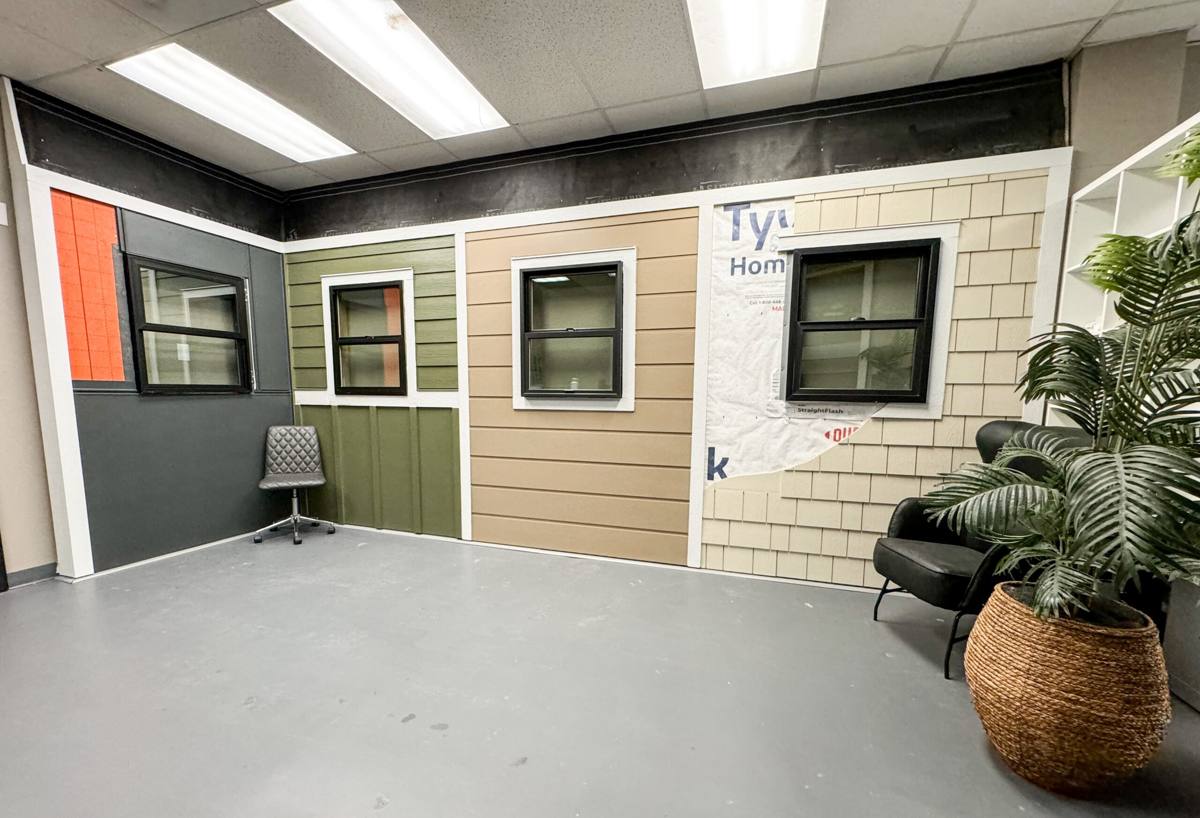
A new, properly lapped weather-resistive barrier (WRB) goes over the sheathing before siding starts, forming the drainage plane that directs any water that gets past the cladding back out and away from the wall rather than letting it sit against the sheathing.
Flashing at Windows, Doors, and Penetrations
Most siding-related leaks in this region trace back to flashing details, not the field of the wall itself. Every window, door, and penetration needs flashing integrated with the WRB in the correct shingle-lap order, so wind-driven rain is directed out rather than trapped behind the new siding.
Fastening and Clearance
Correct fastener type, spacing, and depth matter for both wind resistance and long-term panel performance, and clearance above grade, roofing, and hardscape keeps the bottom courses from sitting in standing moisture. These are exactly the details that get rushed on a corner-cutting job and exactly the ones that determine whether new siding lasts.
Comparing Siding Materials for a Kendall Replacement
Most homeowners planning a replacement have already come across several material options, so it's worth being direct about how they actually compare in this specific climate.
| Material | Moisture Behavior Here | Typical Long-Term Maintenance |
|---|---|---|
| James Hardie fiber cement | Non-combustible, doesn't absorb moisture or feed rot the way wood-based products can | Low — factory finish holds up well against sustained damp and salt exposure |
| Vinyl | Doesn't rot, but can warp, crack, or blow off under wind-driven rain and temperature swings over time | Low upfront, but replacement rather than repair when panels fail |
| LP SmartSide / engineered wood | Wood-based core is more moisture-sensitive at cut edges and seams than fiber cement | Moderate — edge sealing and coating upkeep matter more in sustained damp conditions |
| Primed spruce or cedar | Natural wood absorbs moisture readily and is a preferred surface for moss growth | Highest — regular repainting, caulking, and moss treatment needed to hold up |
This isn't a claim that every alternative material fails outright — it's why our own standard, for the climate we work in every day, is fiber cement installed correctly rather than a material that trades a lower upfront cost for a heavier maintenance load down the road.
Cost Factors in a Kendall Siding Replacement
Two bids for what looks like the same job can vary significantly, and the gap usually comes down to real differences in scope rather than one contractor simply padding the price.
| Factor | What It Affects |
|---|---|
| Sheathing repair | Whether hidden rot or moisture damage found during tear-off is actually fixed before new siding goes on |
| WRB and flashing scope | How thoroughly the drainage plane and window/door details are addressed, not just the field of the wall |
| Siding profile and trim complexity | Lap vs. panel vs. board-and-batten, plus how much custom trim work the home's architecture requires |
| Home size and wall area | Total material and labor volume for the project |
| Story height and access | Staging, scaffolding, and safety requirements on taller or harder-to-access walls |
| Paint or finish selection | Factory-applied ColorPlus finish vs. field-applied paint after installation |
A detailed written estimate that itemizes these components tells you far more than a single lump-sum number. It's worth asking any contractor to walk through exactly what's included before comparing prices side by side.
How Our Process Works
- In-person inspection: We walk the exterior and take a close look at trouble spots you've flagged, not just a drive-by estimate from a photo.
- Written estimate: You get a clear, itemized bid covering tear-off, sheathing repair allowance, WRB, flashing, material, and finish — no vague single-line pricing.
- Scheduling around weather: We build reasonable flexibility into the timeline, since wet-season delays are a normal part of exterior work in this region rather than an excuse.
- Tear-off and sheathing repair: Old siding comes off completely, and any damage found underneath is repaired before anything new goes up.
- WRB, flashing, and siding installation: Each layer goes on to manufacturer specification, with extra attention at every window, door, and penetration.
- Final walkthrough and cleanup: We review the completed exterior with you and do a full site cleanup before calling the job done.
Why Hiring a Crew That Already Works Kendall Matters
A crew that regularly replaces siding in and around Kendall has already seen how salt air corrodes underspecified hardware, how wind-driven rain finds its way through a poorly lapped seam, and which walls hold moss longest through the wet season. That's practical knowledge that shows up in small decisions throughout the job — decisions a crew unfamiliar with this specific climate might not think to make at all. It also matters after the job is done: a workmanship warranty is only as good as the company standing behind it, and a contractor with an ongoing presence in the area is the one you can actually reach years later if a question comes up.
A Practical Checklist Before You Choose a Siding Contractor
- Do they perform a full tear-off with sheathing inspection, not just siding over the old wall?
- Does the estimate specify WRB and flashing scope, not just "new siding"?
- Are corrosion-resistant fasteners and flashing metal specified for this climate?
- Do they carry current WA contractor licensing, liability insurance, and workers' compensation?
- Can they point to recent, real local work in or near Kendall?
- Does the bid separate material warranty coverage from their own workmanship warranty?
If your Kendall home's siding is showing its age, or you'd just like an honest, no-pressure opinion on whether replacement makes sense yet, we're glad to take a look and walk you through what we find. Use the form below to request a free estimate.