 Lynden Roofing
 Siding Repair Built for Kendall's Wet, Wooded Climate
Kendall sits out in the foothill country east of Lynden, in the shadow of the Nooksack River valley, where tree cover is heavier and lots tend to stay shaded and damp longer than the open farmland closer to town. That matters for siding. Whatcom County's marine-influenced weather pushes driving rain and salt-tinged coastal air up the valley for much of the year, and on tree-lined Kendall properties that moisture doesn't dry out the way it would on an open, sun-exposed lot. The result is a long moss season — moss and algae get a foothold on north-facing walls and lower courses and simply don't let go until late spring.
None of that damages siding in one dramatic event. It's slow. Paint dulls, seams open a hair, moisture works behind a board a little at a time, and a few years later you've got a soft spot, a stain, or a section that's clearly failing while the rest of the wall looks fine. That's the kind of damage that calls for a repair, not a full re-side — but only if the repair is done right.
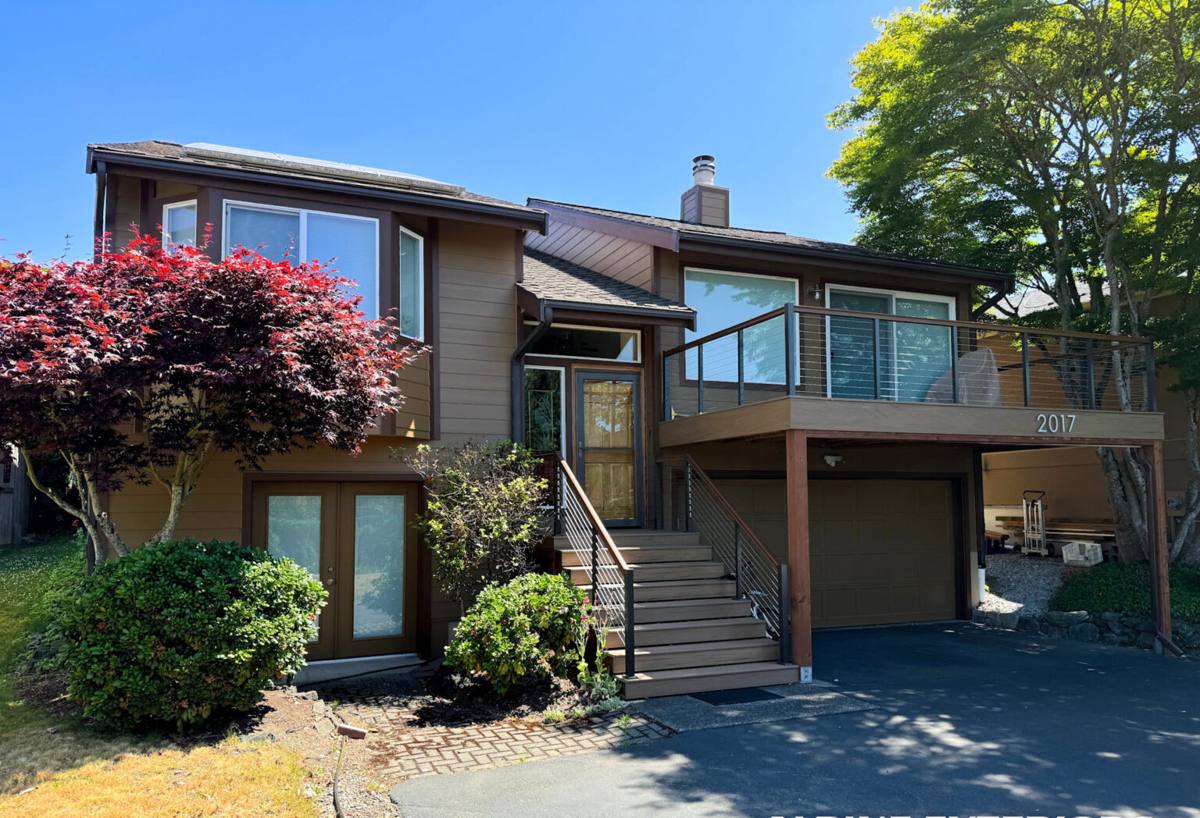
Signs a Kendall Home Needs Siding Repair
Most siding repair calls we get in this area start with a homeowner noticing one specific problem, not a house that looks bad everywhere. Here's what typically points to a repair job worth scheduling before it spreads:
- Soft or spongy spots when you press on a board, especially near the bottom courses or around window trim
- Persistent moss or dark algae staining that keeps coming back on the same wall section every year
- Cracked, buckled, or bowed boards near ground level, where splash-back and sprinkler overspray hit repeatedly
- Gaps opening up at butt joints or corner trim that weren't there a year or two ago
- Paint or finish peeling in patches rather than uniformly across the wall
- Staining or discoloration running down from below a window or door head
- Siding pulling slightly away from the wall or fascia at one edge
- Visible rot, soft wood, or crumbling material at corners or board ends
Any one of these, caught early and isolated to a section of wall, is usually a repair. Left alone through another wet season, several of them stop being a repair and start being a replacement.
What a Correct Repair Actually Involves
Diagnosing the Real Cause, Not Just the Symptom
A stained or soft board is a symptom. The cause is almost always water getting somewhere it shouldn't — a gap in flashing, a caulk joint that failed, siding installed too close to grade or a deck surface, or a house wrap detail that was never lapped correctly in the first place. A repair that just swaps the damaged board without addressing why it failed is a repair that fails again on the same schedule. Before we cut anything out, we're checking what's happening behind it: the condition of the water-resistive barrier, how the flashing is lapped, and whether the grade or a hard surface nearby is keeping that section wetter than the rest of the wall.
Matching Material and Finish
This is where a lot of siding repairs go wrong, and it's largely about the material already on the house. Fiber cement with a factory-applied finish — what we install exclusively — can be color-matched with the correct touch-up system because the finish is a known, consistent product. Field-painted materials like primed spruce or cedar can usually be matched with enough care since you're just matching paint. Vinyl is the hardest to match well once it's aged a few years in the sun; the replacement piece is often visibly newer and a shade off, because vinyl fades unevenly and older profiles get discontinued. We'll tell you honestly what to expect on the match before we start, not after.
Proper Flashing and Water Management
Every patch or board replacement is an opportunity to fix a flashing detail that was wrong to begin with — kick-out flashing at roof-to-wall intersections, proper head flashing above trim, and a clear drainage path behind the cladding so any moisture that does get in can get back out. Repairing the visible board without correcting the water path behind it is the single most common reason a homeowner calls us back for the same spot two years later.
Repair vs. Replacement: How We Decide
Not every damaged section needs a full re-side, and we're not going to tell you it does. The honest answer usually comes down to a handful of factors:
| Factor | Points Toward Repair | Points Toward Replacement |
|---|---|---|
| Extent of damage | Isolated to one wall or a few boards | Recurring across multiple elevations |
| Age and general condition | Siding otherwise sound and mid-life | Siding near or past its expected service life |
| Moisture intrusion | Surface-level, caught early | Evidence of sheathing or framing damage behind it |
| Material match availability | Matching product/profile still available | Discontinued profile, poor color match likely |
| Cost over the next 10 years | Repair cost is a small fraction of full re-side | Repeated repairs are approaching replacement cost |
We'll walk the whole exterior, not just the section you called about, and give you a straight answer on which side of that table your house falls on.
Why the Siding Material Matters Once You're Repairing
On repair calls we see the full range of what's out on Kendall homes — vinyl, LP SmartSide, cedar, primed spruce, and older cement board products like Cemplank or Allura. We'll repair what's already on your house; we're not going to tell you every wall needs to become fiber cement to fix one bad section. But it's worth understanding why we only install James Hardie fiber cement on the jobs where we're doing the choosing.
Vinyl is low-maintenance day to day, but it doesn't take a repair gracefully — it fades unevenly, warps in heat, and a replacement panel rarely disappears into the wall the way a painted or factory-finished product can. LP SmartSide performs reasonably well when it's intact, but its wood-strand substrate is more sensitive to sustained moisture once a seam or edge fails, which matters in a climate with a moss season this long. Cedar and primed spruce look great and can be repaired cleanly, but they carry an ongoing refinishing burden that never really stops. Cement board products like Cemplank and Allura are engineered similarly to Hardie in concept, but we've standardized on Hardie specifically for its ColorPlus factory finish, its climate-engineered HZ product lines, and a warranty structure we're comfortable standing behind. When we do full re-sides in this area, that's what goes up — and it's also why, on a house that already has Hardie, we can usually get a repair to disappear into the wall instead of standing out as a patch.
Our Siding Repair Process in Kendall
- On-site inspection of the damaged section and the rest of the exterior, not just the spot you flagged
- Moisture check behind accessible boards to see whether the problem is surface-level or has reached the sheathing
- A written scope explaining exactly what's being repaired, why, and what it will look like when we're done
- Sourcing matched material and finish before any cutting starts, so there's no guessing mid-job
- Repair work with corrected flashing and fastening, not just a board swap
- Site cleanup and a walk-through so you can see the finished repair before we call it done
Why Hiring a Crew That Already Works Kendall Matters
Kendall's foothill lots behave differently than the open farmland closer to Lynden or the drier lots toward Bellingham. A crew that's already worked the area knows which properties hold shade and moisture longest, how tree cover changes the moss pressure on north walls, and what access looks like on the kind of rural, tree-lined driveways common out here. That's not a small thing on a repair job — it affects everything from where we expect to find the worst damage before we even walk the wall to how we stage material on a property without a lot of flat, open yard space. It also means we're not learning the local climate at your expense; we already know what a Kendall winter does to an exterior wall.
Keeping Repaired Siding Sound Through Whatcom County Winters
A good repair only stays good with a bit of upkeep, especially given how long the wet season runs here. A few things go a long way:
- Keep gutters and downspouts clear so runoff isn't sheeting down the wall face
- Trim back trees and shrubs so shaded walls get more airflow and dry out faster after rain
- Have moss and algae growth treated before it re-establishes on north-facing or shaded sections
- Check caulk joints at trim and penetrations once a year, before the wet season sets in, not after
If you're seeing a soft spot, a stain that won't go away, or a section of siding that just doesn't look right, it's worth having someone look at it before another Whatcom County winter goes by. We're happy to come take a look and give you a straightforward, no-pressure estimate on what it would actually take to fix it — use the form below to get started.