 Lynden Roofing
 Roof Repair Built for Kendall's Conditions
Kendall sits in the wooded, semi-rural stretches of Whatcom County northeast of Lynden, where tree cover, valley moisture, and long stretches of wet weather put more wear on a roof than most homeowners realize until something starts leaking. This isn't a climate that punishes a roof all at once. It's a slow grind — months of damp air, driving rain that comes in sideways during winter storms, and shaded, tree-lined lots that stay wet longer after every system that passes through. A roof repair out here has to account for all of that, not just patch the spot where water showed up inside the house.
We work on homes throughout the Lynden and Kendall area regularly, so we're not guessing at what holds up. We know which roof types in this area tend to fail first, where moss and debris cause the most damage, and how the region's wind-driven rain finds its way past flashing and underlayment that would be perfectly fine somewhere drier. This page is about roof repair specifically — not a full tear-off — and what a correct repair looks like for a home in Kendall's conditions.
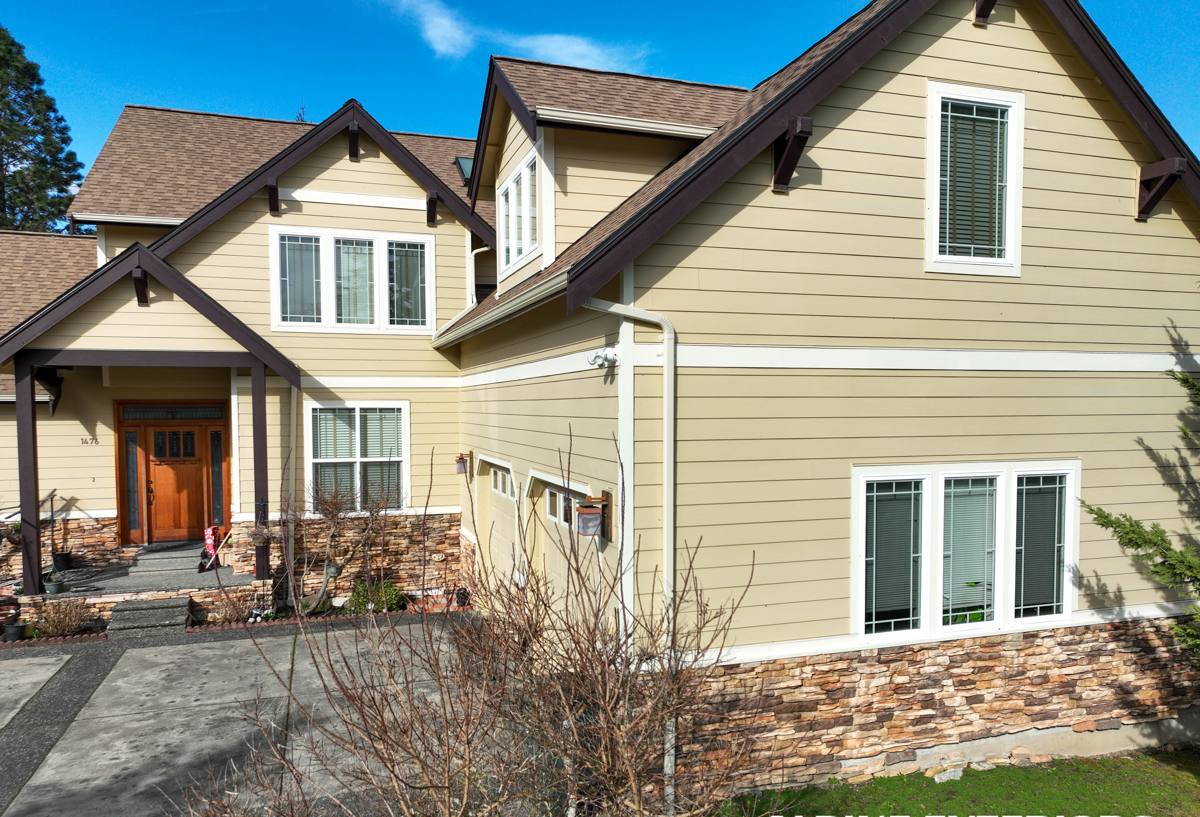
What Whatcom County Weather Does to a Roof Over Time
The Pacific Northwest's marine-influenced climate means Whatcom County roofs deal with near-constant low-grade moisture for much of the year, punctuated by heavier winter storm systems that bring real wind alongside the rain. Add in the tree cover common around Kendall properties, and you get a few specific stress patterns:
- Extended moss season. Shaded roof sections, especially north-facing slopes and areas under conifers, stay damp long enough for moss and algae to establish and spread across most of the year, not just a few weeks.
- Wind-driven rain intrusion. Storms moving through the valley don't just fall straight down — rain gets pushed sideways and upward under shingle edges, around vents, and into flashing laps that aren't sealed correctly.
- Debris load. Needles, leaves, and small branches collect in valleys and behind chimneys and dormers, holding moisture against the roofing material and clogging the drainage paths that are supposed to move water off the roof.
- Freeze-thaw cycling. Kendall sees more cold snaps than areas right along the water, and repeated freezing and thawing of trapped moisture stresses shingles, flashing seams, and any spot where water has already started to pool.
None of these show up as dramatic, sudden damage. They show up as a slow leak that gets worse every winter, a soft spot in the decking nobody noticed until a repair crew got up there, or moss that's been quietly lifting shingle edges for two or three seasons.
The Roof Problems We See Most Often Around Kendall
Moss and Algae Damage
Moss doesn't just look bad — it holds water directly against the roofing surface and works its root structure under shingle tabs, lifting them and breaking the seal that keeps wind-driven rain out. Left long enough, it accelerates granule loss on composition shingles and can trap enough moisture to rot the decking underneath.
Flashing Failures
Flashing around chimneys, skylights, vent pipes, and roof-to-wall transitions is where most leaks actually originate, even when the shingles themselves look fine. Sealant breaks down, metal corrodes or shifts, and gaps open up that are nearly invisible from the ground.
Clogged or Damaged Valleys
Roof valleys concentrate a lot of water in a short amount of time. When they're full of needles and debris, or the valley material itself has worn through, water backs up under the surrounding shingles instead of running off.
Nail Pops and Wind Lift
Storm winds work fasteners loose over time. A popped nail or a shingle that's lost its seal is a small problem that becomes a real leak the next time rain comes in at an angle.
Gutter and Edge Damage
Where gutters overflow or pull away from the fascia, water gets pushed back up under the roof edge instead of away from the house — a common issue on tree-covered lots where gutters fill faster than they're checked.
What a Correct Roof Repair Actually Involves
A roof repair that lasts starts with finding the real source of the problem, not just the spot where the ceiling stain showed up. Water travels — a leak that appears in a bedroom might originate ten feet away at a chimney flashing or a valley. Here's what we account for on every repair:
- Full roof inspection, not just the reported spot. We check the whole roof plane, not only where the homeowner noticed a problem, because moss damage and flashing wear are rarely isolated to one location.
- Tracing the actual water path. Interior stains, attic moisture, and exterior wear don't always line up in a straight line. We follow the path water actually takes before deciding where to open the roof.
- Checking the decking underneath. If shingles have been compromised long enough, the plywood or plank decking underneath can be soft or delaminated. Repairing over damaged decking just hides the problem.
- Matching materials correctly. Shingle color, profile, and weight vary by manufacturer and by production run. We match as closely as the market allows and are upfront when an exact match isn't possible, especially on older roofs.
- Rebuilding flashing details properly. Where flashing is the culprit, we rebuild the detail — not just re-caulk over it. Sealant is a backup, not the primary defense.
- Clearing and correcting drainage. A repair that doesn't address why moss or debris built up in the first place is a repair that fails again on the same schedule.
Our Process, Start to Finish
Homeowners in Kendall generally want the same thing: a straight answer about what's actually wrong and what it costs to fix it right, without a sales pitch for a full replacement they don't need. Here's how we handle a repair call:
- Initial contact and scheduling. We ask what you're seeing — where, how often, and under what weather conditions — because that narrows down the likely cause before we're even on site.
- On-site inspection. We physically get on the roof (not just a ground-level look) to check shingles, flashing, valleys, vents, and any visible decking issues, along with a look in the attic where access allows.
- Written explanation and estimate. You get a clear description of what's actually wrong, why it's happening, and what the repair involves — in plain language, not vague line items.
- Repair work. We do the work with matched materials and proper flashing and fastening technique, cleaning up debris and moss growth in the affected area as part of the job.
- Follow-up. We stand behind the repair and want to hear from you if anything doesn't perform the way it should.
Repair or Replace? How We Help You Decide
Not every roof problem needs a full replacement, and not every roof is a good candidate for another repair. We look at a few honest factors before recommending either direction:
| Factor | Leans Toward Repair | Leans Toward Replacement |
|---|---|---|
| Roof age | Roughly under 15-18 years, within expected material lifespan | At or past the manufacturer's expected service life |
| Extent of damage | Isolated to one section, valley, or flashing point | Widespread granule loss, multiple failure points, or repeated leaks in different spots |
| Decking condition | Solid, no soft spots found during inspection | Soft, delaminated, or water-stained decking over a broad area |
| Moss/algae history | Recent growth, surface-level, not yet lifting shingles | Long-term moss damage that's compromised shingle seals across large areas |
| Material availability | Close match available for the existing shingle or metal profile | Discontinued product with no reasonable match |
When a repair is the right call, we'll tell you that directly. When the roof is genuinely past the point where another patch makes financial sense, we'll explain why in terms of what we actually found — not a general scare tactic about roof age.
Materials and Methods We Use
For repairs, we match the existing roofing material wherever a reasonable match exists — composition shingle, architectural shingle, or metal panel — rather than pushing a different system onto a roof that doesn't need one. For flashing work, we use corrosion-resistant metal step and counter-flashing details rather than relying on sealant alone to do the job long-term, since sealant is the first thing to fail under repeated freeze-thaw cycling. Underlayment repairs in valleys and around penetrations use materials rated for the wind-driven rain this area sees, not just a minimum-code product.
We're straightforward about trade-offs when they exist. Some lower-cost repair shortcuts — like surface caulking over a flashing gap instead of rebuilding it, or leaving moss in place instead of treating and clearing it — save money today but tend to bring the homeowner back to the same problem within a season or two. We'd rather explain the more durable option and let you decide than take the shortcut and not mention it.
Moss Prevention and Maintenance Between Repairs
A repair holds up longer when the conditions that caused the original damage are addressed too. Between service visits, a few habits make a real difference on tree-covered Kendall properties:
- Clear valleys, gutters, and roof-to-wall transitions of needles and leaves at least twice a year — more often on heavily treed lots.
- Trim back branches that overhang the roofline to reduce shade, debris drop, and physical abrasion during wind.
- Address moss while it's still light growth rather than waiting until it's visibly lifting shingle edges.
- Check attic ventilation — poor airflow traps moisture from the inside and accelerates decking and shingle wear from underneath.
- Have a professional look at flashing points every few years, since flashing failure is rarely visible from the ground until water's already gotten in.
Why a Crew That Already Works Kendall Matters
Kendall's mix of wooded lots, longer driveways, and rural access points isn't the same as repairing a roof in a dense in-town subdivision. Knowing the area means knowing what to expect before we arrive — how tree cover typically affects a given roof orientation, what moss patterns look like on the shingle types common in this area, and how to plan access on properties that aren't set up like a standard in-town lot. It also means we're not learning Whatcom County's weather patterns on your roof for the first time. We've seen how wind-driven rain behaves in this valley and what it does to flashing and shingle seals over multiple winters, and that experience shapes how we diagnose and repair every job.
Being based in Lynden also means we're a short drive away if a repair doesn't hold up the way it should, or if a storm reveals a problem that wasn't visible during the original inspection. That's a real advantage over a crew traveling in from outside the county for a one-time job.
Get a Straight Answer on Your Roof
If you're dealing with a leak, visible moss damage, or just want a second opinion on a roof problem in Kendall, we're happy to take a look and give you a clear, honest assessment. There's no pressure and no obligation — just a straightforward evaluation and a written estimate so you know exactly what you're dealing with before you decide anything. Use the form below to request your free estimate.