 Lynden Roofing
 Siding That Has to Work Year-Round in Kendall
Kendall sits in a part of Whatcom County where the weather doesn't give siding much of a break. Winters bring long stretches of driving rain that hits walls at an angle instead of just falling straight down, spring and fall stay damp enough that moss and algae get a running start on any surface that holds moisture, and the marine air that moves through this part of Western Washington carries enough salt and humidity to slowly break down materials that aren't built for it. None of that is dramatic on its own. It's the accumulation over years that separates siding that still looks good at year fifteen from siding that's cupping, staining, or rotting at the seams by year eight.
This page is about one job done right in one area: fiber cement siding installation for homes in and around Kendall. Not a general overview of siding options, not a sales pitch — just what this climate actually demands, what a correct installation looks like, and why the details matter more here than they would in a drier part of the state.
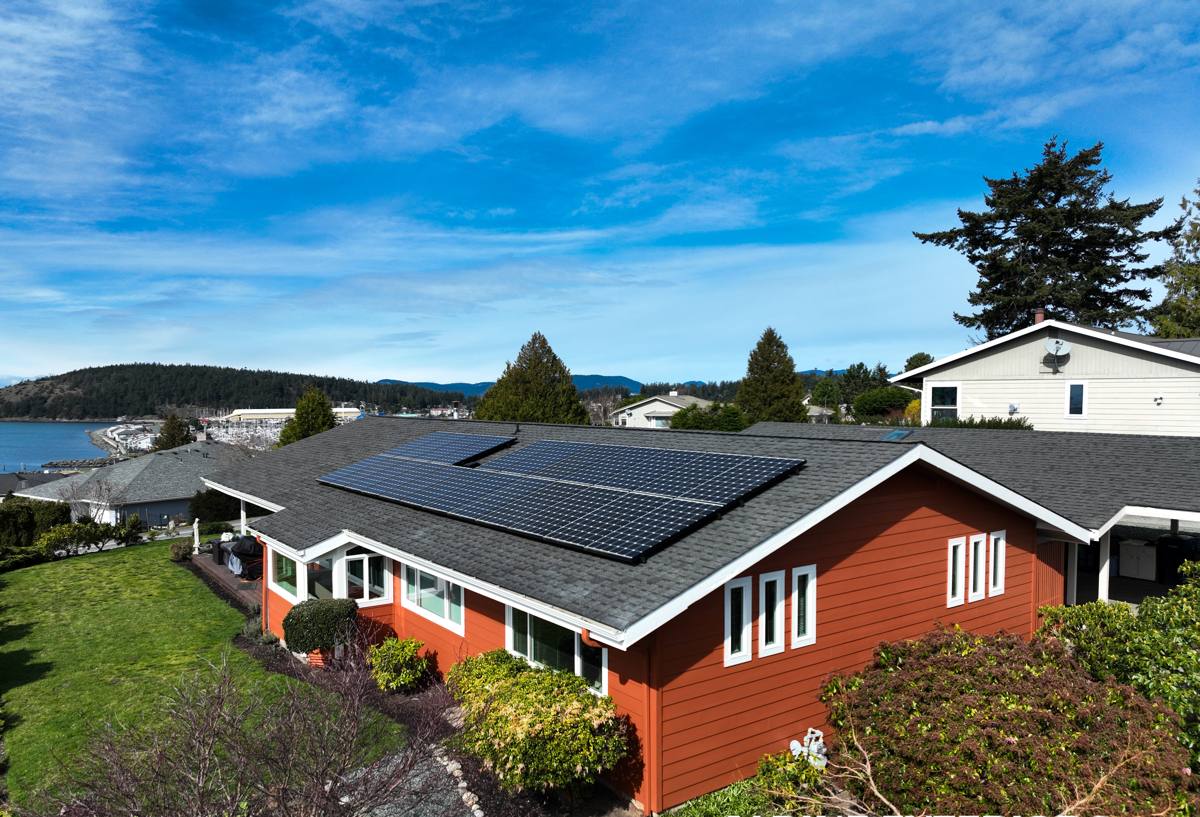
What This Climate Does to Siding Over Time
Every siding material eventually shows its weaknesses, but the Kendall climate speeds that timeline up in specific ways:
- Driving rain pushes water sideways into seams, laps, and fastener points that would stay dry in calmer weather — this is where poor flashing and caulking-as-a-crutch installations fail first.
- Long moss season means anything with a rough or absorbent surface — bare wood, some composites, poorly primed panels — stays damp longer and gives moss and algae more time to take hold, which traps even more moisture against the wall.
- Salt-influenced air accelerates corrosion on fasteners, flashing, and trim that isn't rated for it, and it slowly degrades paint films that weren't engineered for coastal-adjacent exposure.
- Temperature swings between summer heat and winter cold cause expansion and contraction that stresses joints, caulk lines, and any material prone to warping.
The takeaway isn't that siding is doomed here — it's that the material and the installation both have to be matched to these conditions on purpose, not as an afterthought.
Why We Install Only James Hardie Fiber Cement
We made a decision a long time ago to install one siding system: James Hardie fiber cement. We don't offer LP SmartSide, vinyl, Cemplank, Allura, primed spruce, or cedar, and that's a deliberate standard, not a limitation in what we're capable of installing.
Each of those alternatives has real strengths — cedar looks the way a lot of homeowners want a house to look, vinyl is inexpensive, engineered wood products install quickly. But every one of them asks a homeowner to accept a trade-off that shows up specifically in a climate like this one: wood-based products need more diligent moisture management and repainting, vinyl can become brittle and doesn't stand up to physical impact or extreme temperature swings as well as fiber cement, and lower-cost fiber cement alternatives don't always match Hardie's factory-applied finish or the depth of its warranty coverage. We'd rather stand behind one product system we know performs, than offer several and let a homeowner unknowingly pick the one that struggles most in this specific climate.
Hardie fiber cement is non-combustible, dimensionally stable in wet-dry cycling, and available with a factory-applied ColorPlus finish that's baked on rather than field-painted — which matters directly here, since field-applied paint is exactly what salt air and driving rain wear down fastest.
What "Climate-Engineered" Actually Means
James Hardie makes region-specific formulations — HZ5 and HZ10 among them — engineered for different combinations of moisture and freeze-thaw exposure. For Kendall and the surrounding Whatcom County area, we specify the product line built for wetter, cooler climates, not a generic national product. That distinction is easy to miss but it's the difference between siding engineered for the conditions it's actually facing and siding that just happens to be installed here.
What a Correct Fiber Cement Installation Involves
Fiber cement siding's reputation is only as good as its installation. Most of the failures we get called out to inspect on other contractors' work trace back to a handful of shortcuts, not the material itself. A correct installation includes:
- A continuous water-resistive barrier behind the siding, lapped and taped correctly at every seam and penetration.
- Proper flashing at windows, doors, and any horizontal trim or transition — not caulk substituting for flashing.
- Manufacturer-specified gaps at butt joints, corners, and where siding meets trim, so the assembly can expand and contract without cracking finish or trapping water.
- Fasteners installed at the correct depth and location — over-driven or misplaced nails are one of the most common causes of early failure and are almost invisible until the siding starts to fail around them.
- Correct clearance between the bottom of the siding and grade, decks, patios, and roof lines, so splash-back and standing water don't sit against the material.
- Caulking used where the manufacturer specifies it — as a seal, not as a fix for a gap that should have been flashed instead.
None of this is unique to Kendall — it's simply what correct installation requires everywhere. What changes here is the margin for error. A flashing detail that's "close enough" might survive years in a drier climate before it leaks; in a climate with this much driving rain and sustained dampness, the same shortcut tends to show up much sooner.
Choosing the Right Product Line and Finish
James Hardie's lineup gives us room to match the look a homeowner wants to the performance the house needs. The main decisions for a Kendall home usually come down to plank style, texture, and color line.
| Decision | Common Options | What to Weigh |
|---|---|---|
| Profile | Lap siding, shingle-style panels, vertical board-and-batten | Architectural style of the home, plus how each profile sheds water at laps and joints |
| Texture | Smooth, cedar-grain | Personal preference — both hold the ColorPlus finish equally well |
| Finish | ColorPlus factory finish vs. field-applied paint over primed siding | Factory finish holds up longer against salt air and UV; field paint requires earlier repainting |
| Trim | HardieTrim boards vs. mixed materials | Matching trim material reduces mismatched weathering and maintenance schedules down the road |
Most Kendall homeowners do best with the factory ColorPlus finish specifically because it removes one of the highest-maintenance parts of siding ownership in this climate — repainting a large exterior every several years to keep ahead of sun and moisture damage.
Our Process for Kendall Siding Projects
The steps don't change from house to house, but how carefully each one is handled does:
- On-site assessment — we look at existing siding condition, moisture damage, trim, flashing, and anything specific to the home's exposure to weather and drainage patterns.
- Product and color selection — matched to the home's style and the performance needs of this climate, not just what's popular.
- Removal and inspection — once old siding comes off, we check sheathing and framing for hidden moisture damage before anything new goes on. This step catches problems that are invisible until the wall is opened up.
- Water-resistive barrier and flashing — installed and inspected before a single piece of siding goes up, since this layer is what actually keeps water out long-term.
- Siding installation — installed to Hardie's fastening, gapping, and clearance specifications, not shortcuts that speed up the schedule.
- Trim, caulking, and final detailing — the finishing work that determines how clean the result looks and how well it seals.
- Final walkthrough — reviewing the finished work with the homeowner before calling the job done.
Maintaining Fiber Cement Siding in This Climate
Fiber cement is low-maintenance compared to wood, but "low-maintenance" doesn't mean "no maintenance," especially with this much moss pressure and salt-laden moisture moving through the area. A simple annual routine keeps siding performing for decades:
- Rinse siding annually to remove built-up grime, pollen, and early moss or algae growth before it takes hold.
- Keep gutters clear so overflow doesn't run down the face of the siding repeatedly.
- Trim back vegetation and tree cover that keeps siding shaded and damp longer than it needs to be.
- Inspect caulking at trim joints and penetrations every year or two, and recaulk as needed.
- Address any impact damage or chipped finish promptly, since exposed edges are where moisture intrusion tends to start.
Why Local Experience in Kendall and Whatcom County Matters
Siding installation isn't identical everywhere, and a crew that's used to installing in drier or milder climates can bring habits that don't hold up here. A crew that already works homes in Kendall and the rest of Whatcom County has already seen how driving rain finds weak flashing details, how long moss season actually lasts, and how salt-influenced air wears down finishes and fasteners that weren't chosen with that exposure in mind. That experience shows up in the small decisions — where extra flashing gets added, which fastener spec gets used, how clearances get set at grade — that aren't always obvious from a spec sheet but make a real difference in how the siding performs ten and twenty years out.
If you're weighing a siding replacement or new construction siding for a home in Kendall, we're happy to walk the property, look at what's there now, and talk through what correct installation looks like for your specific house — no pressure, no obligation, just a straightforward estimate.