 Lynden Roofing
 Siding Built for Kendall's Rural, Wet Climate
Kendall sits in the rural stretch of Whatcom County northeast of Lynden, closer to the foothills and further from the moderating influence of open water — which changes how a house takes weather compared to town. Homes out here still get the same salt-tinged marine air moving up the valley, the same driving rain through fall and winter, and often a longer moss season than in-town properties because more lots sit under tree cover with less direct sun on at least one wall. Siding installed here has to handle all three at once, and it has to do it with less regular attention than a house on a tighter in-town lot might get from a passing eye.
We install James Hardie fiber cement siding exclusively, and Kendall is one of the areas we work in regularly enough to know the pattern: which walls fail first, which details get skipped on a rushed install, and what actually holds up over twenty-plus years of this climate. This page is specifically about Hardie siding for Kendall properties — not a general siding overview, but what matters for this material in this area.
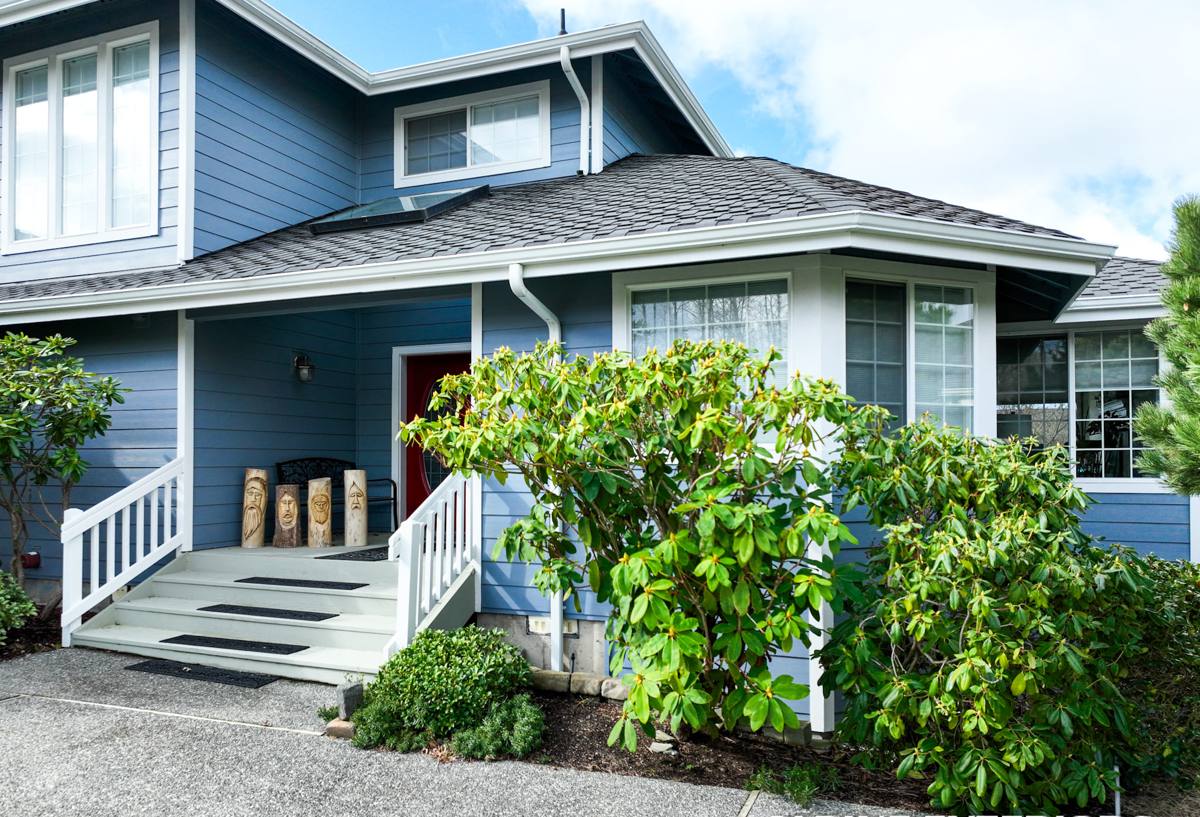
What Kendall's Climate Does to Siding Specifically
Salt Air Reaches Further Than People Expect
Whatcom County's marine air moves inland further than most homeowners assume, and Kendall isn't far enough from that influence to be exempt. Salt in the air accelerates corrosion on fasteners, flashing, and any exposed metal trim, and it degrades a weak paint finish faster than a drier climate would. Siding materials and hardware here need corrosion resistance built in, not added as an afterthought.
Driving Rain on Exposed, Tree-Sheltered Walls
Rain in this part of Washington rarely falls straight down. Wind pushes it sideways into wall assemblies, and on rural lots with more open exposure between tree lines, some walls take a harder direct hit than they would on a tighter in-town street. That sideways-driven moisture finds its way into any gap in flashing, caulking, or panel overlap — which is why installation detail matters as much as the material itself.
A Long Moss Season Under Tree Cover
Kendall properties often sit closer to mature trees and more shaded ground than in-town lots, and that combination of shade and consistent moisture stretches the moss and mildew season out for much of the year on north-facing and tree-shaded walls. Any siding material that's porous, or that holds moisture against its own substrate, becomes a growth surface. That's a slow, cosmetic problem at first and a structural one if it's ignored for years.
Why Hardie Fiber Cement Fits This Specific Setting
We don't install LP SmartSide, vinyl, Cemplank, Allura, primed spruce, or cedar. That's a standard we hold everywhere we work, but it matters more in a setting like Kendall, where a house might not get looked over as often as one on a busy in-town block. A siding system that needs regular caulk touch-ups, repainting, or moisture monitoring to stay ahead of problems is a harder ask on a rural property than a downtown one.
- Non-combustible core: Fiber cement doesn't feed a fire the way wood-based siding products can — a real consideration for properties further from town with longer emergency response distances.
- Factory-applied ColorPlus finish: The color and topcoat are baked on in a controlled factory process, not brushed on in the field, so it holds up longer against UV fade and moisture than a site-painted finish — especially useful on a property that doesn't get repainted on a tight schedule.
- HZ5 formulation: Hardie's climate-engineered HZ5 line is built for regions with sustained moisture exposure and freeze-thaw cycling, which fits Kendall's mix of wet winters and cold snaps off the foothills.
- Dimensional stability: Fiber cement doesn't swell, cup, or warp the way engineered wood siding can after repeated wet-dry cycles — a real difference on walls that stay damp longer under shade.
- Strong transferable warranty: When installed to Hardie's spec, the product carries a warranty that transfers with the home, which matters for resale value on rural properties that tend to hold owners longer.
None of that means the other products are bad materials in every setting. It means we've made a professional call, based on what we see on service calls and tear-offs in this exact climate, to stand behind one system rather than sell whichever product fits a lower bid.
What a Correct Hardie Installation Involves
The material is only half the job. Most of the siding failures we get called out to inspect in this area trace back to installation shortcuts, not the product itself. A correct install includes:
- A weather-resistant barrier installed and lapped correctly behind the siding, with no gaps at seams or penetrations
- Proper flashing at every window, door, and roof-to-wall transition — the spots where wind-driven rain actually gets in
- Correct fastener type, spacing, and depth per Hardie's published installation guide, not a generalized siding spec
- Minimum clearance from grade, decks, and roof lines so the bottom edge of the siding isn't sitting in standing moisture
- Factory-cut or properly sealed field cuts, since an unsealed cut edge is one of the more common points where moisture gets into the panel
- Correct caulking at trim and butt joints — sized and placed per spec, not just filled in wherever it looks tidy
Skip any one of these and the siding can still look right for a few years before a problem shows up. That's exactly the trap in a rural setting where a wall might not get a close look for a while — a small flashing gap has time to do real damage before anyone notices.
Our Process for a Kendall Siding Project
1. On-Site Assessment
We walk the property, check the current siding condition (or, for new construction, the sheathing and wall assembly), and look specifically at shaded walls, grade clearance, and any existing moisture or moss patterns. This is where we flag issues that a quick estimate over the phone would miss.
2. Scope and Material Plan
We put together a plan that specifies the Hardie product line, panel or lap style, color, and trim details for the home, along with what needs to happen underneath — weather barrier, flashing, any sheathing repair.
3. Installation
Installation follows Hardie's published spec for fastening, clearance, flashing, and joint treatment. We don't treat those specs as optional guidance — they're the difference between a job that holds up and one that doesn't.
4. Final Walkthrough
We walk the finished job with the homeowner, cover basic care (what to look for, what not to worry about), and make sure trim, caulking, and finish details are clean before we call it done.
Cost Factors for a Kendall Siding Project
| Factor | Why It Matters Here |
|---|---|
| Home size and wall complexity | More corners, gables, and trim details mean more cutting, flashing, and labor time |
| Current siding removal | Tear-off and disposal of old siding adds cost versus new construction |
| Substrate condition | Rural homes with longstanding moisture exposure sometimes need sheathing repair before new siding goes on |
| Access and site conditions | Tree cover, slope, or distance from the road can affect staging and scaffolding needs |
| Product line and finish | Panel versus lap siding, and standard versus premium ColorPlus finishes, carry different material costs |
| Trim and detail work | Corner boards, window trim, and fascia detailing add labor beyond flat wall coverage |
We don't publish blanket pricing because these factors genuinely change the number from one Kendall property to the next — a straightforward rectangular home and a home with multiple gables and heavy tree-line access aren't the same job. An on-site walkthrough gets you a real number, not a guess.
Signs a Kendall Home May Need New Siding
- Visible moss or dark staining on shaded or north-facing walls that keeps coming back after cleaning
- Soft spots, cracking, or delamination on existing wood-based or engineered siding
- Paint that's peeling or bubbling rather than fading evenly, which often points to moisture trapped behind the finish
- Gaps at trim, corners, or butt joints where caulking has failed or pulled away
- Visible warping, cupping, or bowing in panels, especially near grade or under downspouts
- Increased pest activity around siding edges, which can indicate softened or damp material underneath
Any one of these on its own might be minor. Several at once, especially on a home that's had the same siding for fifteen-plus years, usually means it's worth a real inspection rather than another round of spot repairs.
Why a Crew That Already Works Kendall Matters
Kendall isn't downtown Lynden, and a crew that only works in-town jobs can miss things that are specific to more rural, tree-lined properties — grade and drainage patterns that differ from a flat in-town lot, longer shade exposure on certain walls, and site access that isn't always a simple driveway pull-up. Working this area regularly means we've already seen how Hardie siding performs on Kendall's mix of open and tree-covered lots, and we plan installation details — flashing, clearance, ventilation behind the siding — around what actually happens here, not a generic install checklist.
It also means fewer surprises during the project itself. We know what site access typically looks like out here, what to expect from existing construction on older rural homes, and how to sequence a job around Whatcom County's wetter months so materials aren't sitting exposed to weather they shouldn't be.
Get an Estimate for Your Kendall Property
If you're weighing new siding for a home in or around Kendall, we're glad to walk the property, look at what your current siding is telling us, and put together a straightforward plan and estimate — no pressure, no upsell to a product we don't stand behind. Use the form below to get started.