 Lynden Roofing
 Siding That Has to Work Harder in Acme
Homes out in Acme deal with a different combination of stress than a house in town. You're far enough into the Whatcom County foothills to get heavier, longer rain events off the Nooksack valley, close enough to open air corridors to pick up salt-laden moisture on the wind, and shaded enough by tree cover on many lots that moss and algae get a real foothold on north- and east-facing walls. That combination — driving rain, airborne salt, and a moss season that can stretch most of the year — is exactly what siding material and installation quality either handle well or don't handle at all.
A lot of the siding problems we get called out to inspect in this area aren't caused by one dramatic event. They're the slow result of a wall assembly that was never built to shed water fast, resist organic growth, or hold paint through repeated wet-dry cycles. By the time a homeowner notices soft trim, bubbling paint, or dark streaking, the damage has usually been building for a few seasons already.
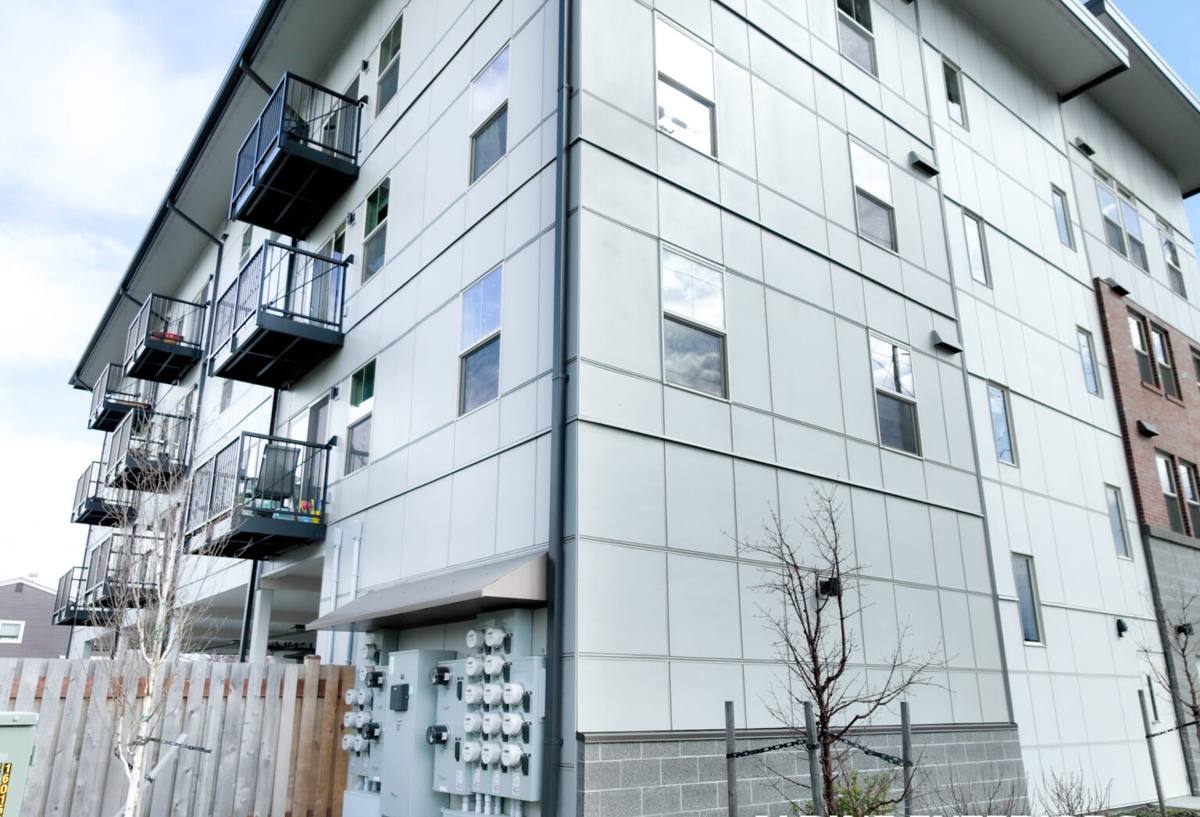
Why We Install Fiber Cement Here — and Nothing Else
We install James Hardie fiber cement siding exclusively. We don't install vinyl, LP SmartSide, primed spruce, cedar, or other fiber cement brands like Cemplank or Allura. That's not a marketing position — it's a decision based on what actually holds up under Acme conditions over a 20-30 year span.
Fiber cement is a mix of cement, sand, and cellulose fiber, engineered to be dimensionally stable in wet climates. It doesn't swell, cup, or rot the way wood-based products can when moisture gets behind the surface. It doesn't soften or warp in heat the way vinyl can, and it doesn't require the same level of ongoing sealing and repainting that wood-based siding demands once the factory finish is compromised. For a property that's going to see extended damp periods and moss pressure every year, that stability matters more than upfront cost.
James Hardie specifically engineers its HardieZone products by climate region, and our region calls for the HZ5 formulation, built for the freeze-thaw and moisture cycling common to the Pacific Northwest. The ColorPlus factory finish is baked on in a controlled environment rather than field-applied, which gives it better adhesion and UV resistance than a job-site paint job — a real advantage when a wall is going to stay damp and shaded for long stretches, which is common on tree-covered Acme lots.
What Moss and Salt Air Actually Do to a Wall
Moss doesn't just sit on the surface — it holds moisture against whatever it's growing on. On wood-based or poorly sealed siding, that trapped moisture works into seams, fastener holes, and butt joints, and the wood underneath starts to soften long before it looks bad from the ground. On siding installed without proper clearance and drainage, moss growth accelerates because the wall never fully dries between rain events.
Salt-laden air adds a corrosive element on top of that. Fasteners, flashing, and trim details that aren't rated for coastal-influenced exposure corrode faster, and corroding fasteners eventually loosen or stain the face of the siding. This is why we spec stainless or coated fasteners and proper flashing details on every job in this area, not just where a house sits directly on the water.
None of this is solved by material alone. A high-quality fiber cement board installed with the wrong clearances, caulked seams instead of proper flashing, or fasteners driven too tight will still trap moisture and fail early. Installation quality and material quality have to both be right.
What a Correct Fiber Cement Job Involves
There's a real difference between siding that's nailed up to cover a wall and siding that's installed as a water-management system. For Acme homes specifically, we treat these as non-negotiable:
- A code-compliant weather-resistive barrier installed and lapped correctly before any siding goes up
- Rainscreen or minimum-required drainage gap so the wall can dry between storms instead of staying saturated
- Proper head and window flashing integrated with the barrier — not just caulk over the joint
- Correct fastener type, spacing, and depth per Hardie's published installation instructions
- Minimum clearance from siding bottom edge to grade, decks, and roof lines so splashback and standing water don't sit against the board
- Factory-primed or ColorPlus-finished cut edges sealed before installation, not left raw
- Caulking limited to the joints Hardie specifies, using a product rated for the assembly — not used as a substitute for flashing
Skipping any one of these doesn't usually cause an immediate problem. It causes a problem in year three or four, when moisture has had time to find the gap. Because we work in this area regularly, we build every job to this list as a baseline, not as an upsell.
Our Process for an Acme Project
The approach is the same whether it's a single wall replacement after storm damage or a full re-side, scaled to the scope:
1. On-site assessment
We look at the existing wall assembly, moisture and moss patterns, trim and window condition, and any soft spots before quoting anything. This tells us whether sheathing repair is needed before new siding goes on — a step some quotes skip to look cheaper up front.
2. Product and profile selection
We walk through Hardie's plank, board-and-batten, and shingle profiles and ColorPlus palette options based on the home's style and the amount of shade and moisture exposure on each elevation.
3. Tear-off and substrate check
Old siding comes off down to the sheathing so we can confirm what's underneath rather than siding over hidden rot or an outdated barrier.
4. Barrier, flashing, and rainscreen installation
This is the part of the job that doesn't show once the siding is up, and it's the part that determines whether the wall stays dry for the next few decades.
5. Hardie installation to spec
Fastener pattern, clearances, and seam treatment follow Hardie's published requirements, which is also what keeps the manufacturer warranty valid.
6. Final walk-through
We go over caulking lines, trim details, and touch-up needs with the homeowner before calling the job done.
James Hardie Product Lines and Where They Fit
| Product | Common Use | Why It Fits Acme Conditions |
|---|---|---|
| HardiePlank Lap Siding | Primary wall covering | Most common profile; HZ5 formulation resists the moisture cycling typical of shaded, damp lots |
| HardieShingle | Accent gables, dormers | Adds texture without the moisture sensitivity of real wood shingles |
| HardiePanel (board-and-batten) | Modern or farmhouse-style facades | Clean vertical lines with the same fiber cement stability |
| HardieTrim | Corners, window and door trim, fascia | Matches siding durability so trim doesn't fail years before the field siding |
| ColorPlus Technology finish | All of the above | Factory-cured finish holds up better than field-applied paint under repeated damp/shade cycles |
What We Find When We Replace Other Products
When we're called to re-side a home in this area that currently has vinyl, LP SmartSide, or unfinished wood siding, a few patterns show up often enough to be worth mentioning honestly:
Vinyl siding tends to show gaps and bowing at seams after years of temperature swings, and it doesn't stop moisture from tracking behind it if the underlying barrier was installed poorly — the vinyl just hides the problem longer. LP SmartSide and other engineered wood products can perform well when the factory sealant on cut edges and joints stays intact, but a single missed edge-seal in a wet climate is often enough to start swelling at that spot, and repairs are visible against the surrounding panels. Primed spruce and unfinished cedar require the most ongoing maintenance of any option we see — repainting and caulk maintenance on a cycle that's hard to keep up with when moss and moisture pressure are constant.
We're not saying these products fail on every home. We're saying that after years of doing exterior work in a climate like this one, fiber cement with a factory finish gives homeowners the best combination of low maintenance and long-term moisture resistance, which is why we standardized on it rather than offering several options.
Why a Crew That Already Works Acme Is Worth Choosing
Installation quality is the single biggest variable in how long siding lasts, more than the brand printed on the board. A crew that regularly works in this part of Whatcom County already understands which elevations on a typical lot see the most shade and moss growth, how much rain exposure to plan for on the windward walls, and where salt-influenced air makes fastener choice and flashing detail non-negotiable rather than optional. That local pattern recognition shows up in small decisions — where to add extra flashing, which walls need tighter attention to drainage gap — that a crew unfamiliar with the area might not think to prioritize.
It also matters for warranty support. James Hardie's product warranty and our own workmanship coverage both depend on installation done to spec. A local crew that's still around and reachable years later is worth more than the lowest bid from a company with no ongoing presence in the area.
Maintenance Homeowners Can Actually Expect
Fiber cement with a ColorPlus finish is low-maintenance, not zero-maintenance. A realistic yearly routine for an Acme property includes rinsing off moss and debris buildup on shaded walls before it accumulates, checking caulked joints at trim and penetrations for cracking, and keeping vegetation and sprinklers from holding moisture against the bottom courses of siding. None of this compares to the repainting and edge-sealing schedule that wood-based or field-painted products require, but it's not a "never touch it again" product either.
If you're weighing a full re-side against patch repairs, it's worth having someone look at the whole wall assembly rather than just the visible damage — moisture problems on one elevation are often a sign of a barrier or flashing issue that affects the rest of the house too, even if it hasn't shown up everywhere yet.
If you're dealing with moss buildup, soft trim, or aging siding on an Acme property and want a straight answer on what it would take to fix it right, we're happy to come take a look. The estimate is free, there's no pressure, and you'll get a clear explanation of what we find — use the form below to get started.