 Lynden Roofing
 Storm Damage Roofing Built for Ferndale's Conditions
Ferndale sits close enough to Bellingham Bay and the Strait of Georgia that its roofs deal with a different mix of stress than homes further inland in Whatcom County. Salt-laden air off the water accelerates corrosion on fasteners, flashing, and metal roofing components. Driving rain off winter storms pushes water sideways under shingles and around penetrations instead of simply running off. And the long, wet moss season here keeps roofs damp for months at a stretch, which is exactly the environment moss, algae, and slow rot need to take hold. When a storm comes through and does visible damage, it's rarely just cosmetic — it's usually exposing weaknesses that salt air and moisture had already been working on quietly for years.
We're a Lynden-based crew that works Ferndale regularly, so we're not guessing at what your roof has been through. We know which parts of a roof system tend to fail first out here, and we build our repairs to hold up against the next storm, not just patch what's visible today.
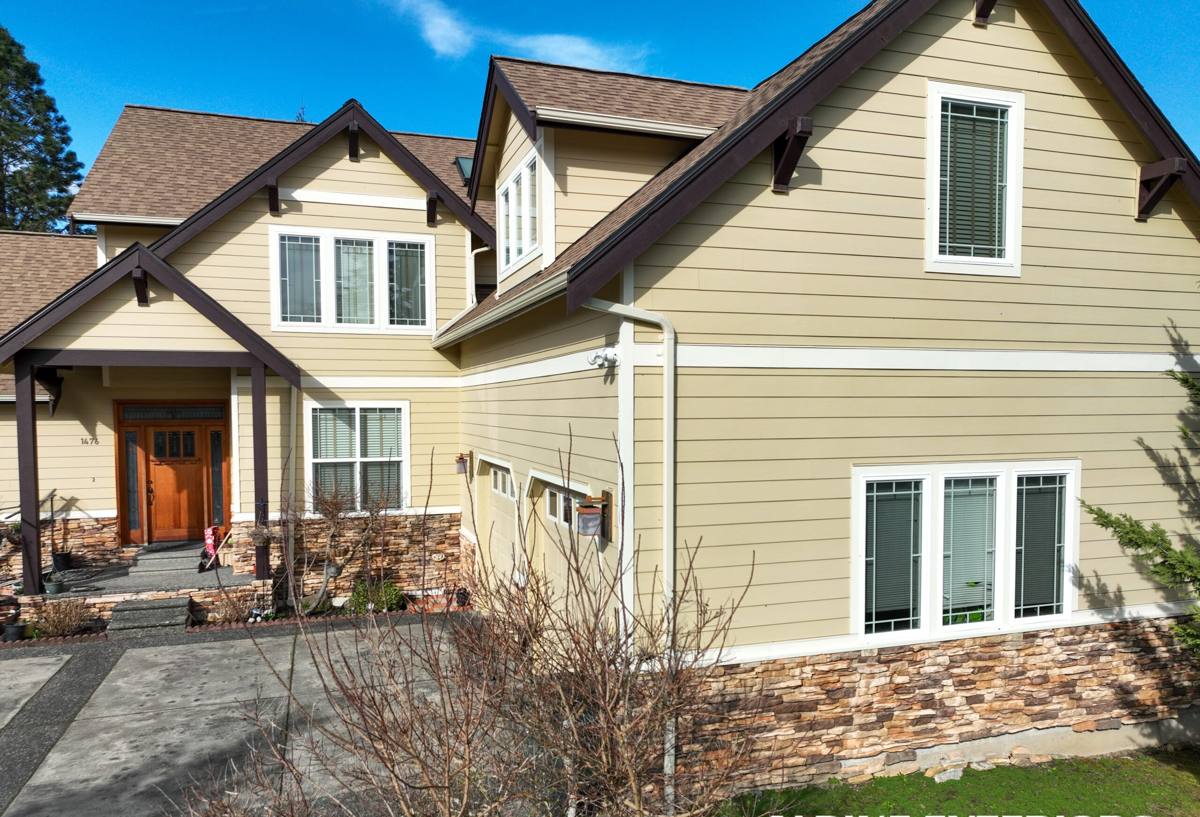
What Storm Damage Actually Looks Like on a Ferndale Roof
Storm damage isn't always a dramatic hole or a pile of shingles in the yard. Around here it's more often subtle, and homeowners miss it until a leak shows up inside.
Wind Damage
Coastal gusts lift shingle edges and tabs, breaking the seal strip underneath even when the shingle doesn't visibly move. Once that seal is broken, wind-driven rain gets underneath on the next storm, even if nothing looks obviously wrong from the ground.
Wind-Driven Rain Intrusion
This is the one that catches people off guard. Rain that comes in nearly sideways during a Puget Sound storm can be pushed up and under flashing, around chimneys, and past vent boots that would be perfectly fine in a normal vertical rain. Homes near the water see this more than homes inland.
Debris Impact
Falling branches and wind-thrown debris can crack shingles, dent metal flashing, or puncture underlayment in a spot that looks minor from below but opens a direct path for water.
Granule Loss
High wind and heavy rain strip protective granules off asphalt shingles. This isn't always visible as a leak right away, but it shortens the life of the shingle and shows up later as a granule buildup in gutters.
Compromised Flashing and Sealant
Flashing around chimneys, skylights, and roof-to-wall transitions relies on sealant and proper laps to stay watertight. Storm movement, freeze-thaw cycles, and salt air corrosion all work against those seals over time.
Why Salt Air and Moss Season Make Repairs More Than Cosmetic
A roof repair in Ferndale has to account for two things a repair inland might not: corrosion and organic growth.
Salt Air and Metal Components
Nails, flashing, vent stacks, and any exposed metal fastener are all vulnerable to accelerated corrosion this close to the water. A repair that uses the wrong fastener material, or reuses corroded flashing instead of replacing it, will fail again — often faster than the original damage took to develop. We use corrosion-resistant fasteners and flashing on every repair out here, not as an upsell but because anything less doesn't hold up.
Moss, Algae, and Trapped Moisture
Whatcom County's wet season runs long, and a roof that stays damp for weeks at a time is a roof where moss and algae get established. Moss isn't just unsightly — its root structure lifts shingle edges and holds moisture directly against the roof deck, which is how a small storm crack turns into rot underneath. Any storm repair that doesn't address existing moss growth nearby is treating the symptom, not the cause.
What a Correct Storm Damage Repair Involves
A proper repair isn't just replacing the shingles you can see from the driveway. It's a sequence, and skipping steps is how "fixed" roofs leak again in the next storm.
- Full roof inspection — not just the storm-damaged area. Wind and rain damage often extends beyond the obvious spot, and we check the whole roof plane, valleys, and penetrations while we're up there.
- Interior check — attic and ceiling inspection for water staining, damp insulation, or signs the leak has already traveled beyond the roof line.
- Underlayment assessment — if water got past the shingles, the underlayment beneath may be compromised and needs to be evaluated, not just covered back up.
- Deck inspection — any soft, delaminating, or rotted decking has to be replaced before new roofing goes down. Repairing over bad decking just hides the problem.
- Matching materials — shingles, flashing, and fasteners that match the existing roof system in type and, where possible, appearance and warranty compatibility.
- Corrosion-appropriate fasteners and flashing — given the salt air here, we don't cut corners on metal components.
- Proper flashing and sealant work — redone correctly at chimneys, vents, and transitions, not just re-sealed over old, failed material.
- Final walkthrough — with photos of the completed work and a plain explanation of what was found and what was done.
Repair vs. Replacement: How We Help You Decide
Not every storm-damaged roof needs a full replacement, and not every roof can be safely patched. The honest answer depends on the roof's age, how much of it is affected, and what condition the rest of the roof is in.
| Factor | Leans Toward Repair | Leans Toward Replacement |
|---|---|---|
| Roof age | Under 10-12 years, otherwise sound | Nearing or past expected lifespan |
| Extent of damage | Isolated to one section or feature | Widespread across multiple roof planes |
| Underlying decking | Solid, no rot found | Soft spots or rot discovered during inspection |
| Moss/algae history | Minimal, well-maintained roof | Long-term growth already degrading shingles broadly |
| Prior repairs | Few or none | Multiple past patches, especially in the same area |
We'll walk you through where your roof falls on this before recommending anything. If a repair is the honest answer, that's what we'll propose — a storm repair recommendation should never default to "replace everything" just because it's a bigger job.
Our Process for Ferndale Storm Repairs
We keep the process straightforward because storm damage is stressful enough without a confusing repair timeline.
1. Assessment
We come out, inspect the roof and attic, and document what we find. If the damage may be storm-related for insurance purposes, we take the photos and notes that documentation typically requires.
2. Clear Explanation and Estimate
We explain what's damaged, what's causing it, and what it will take to fix correctly — in plain language, with an honest cost range. No pressure to upsell into a full replacement if a repair will genuinely hold.
3. Scheduling
Storm damage that's actively leaking gets prioritized. Less urgent repairs get scheduled around Whatcom County's weather windows so the work can be done properly rather than rushed between rain systems.
4. The Repair
We do the work to the standard described above — full inspection, correct materials, corrosion-appropriate hardware, and proper flashing detail.
5. Walkthrough and Documentation
You get a clear rundown of what was found and fixed, with photos, so there's a record if you need it for insurance or for your own files.
What to Check After a Storm — Homeowner Checklist
You don't need to get on the roof yourself, and we'd rather you didn't. But there are signs from the ground and inside the house worth checking after any significant wind or rain event.
- Shingle pieces, granules, or flashing fragments in the yard or gutters
- Visible sagging or an uneven roofline from the street
- New water stains on interior ceilings, especially near chimneys or skylights
- A musty smell in the attic or top-floor rooms
- Damp insulation or daylight visible through the attic roof deck
- Gutters pulling away from the fascia or overflowing during rain
- Visible moss buildup that seems to have expanded after a wet stretch
If you notice any of these, it's worth getting a roof inspected before the next storm system rolls through — small issues found early are almost always cheaper and simpler to fix than the same issue after two more storms have worked on it.
Why a Local Lynden Crew Matters for This Job
Storm damage repair is one of the areas where local experience actually changes the outcome, not just the convenience. A crew that works Ferndale and the surrounding Whatcom County area regularly already knows which roof details tend to fail first in this specific climate — the flashing styles that hold up to driving rain, the fastener specs that resist salt air corrosion, and how aggressive moss growth gets on north-facing slopes that stay shaded and damp most of the year. That knowledge shapes how we inspect, what we flag as a risk even when it isn't the storm's obvious damage, and how we detail the repair so it isn't back on our schedule — or yours — after the next storm.
Being based in Lynden also means we can respond promptly when a storm-damaged roof is actively leaking. We're not traveling in from out of the area to look at a Ferndale roof; this is our regular service area.
Insurance and Storm Damage: What to Know
Many storm damage repairs are covered under homeowner's insurance, depending on your policy and the cause of the damage. We're not your insurance adjuster and we won't promise a claim outcome, but we can provide the documentation — photos, a written description of the damage, and our assessment of likely cause — that most insurers ask for when you file a claim. If you're unsure whether damage is storm-related or wear-related, that's exactly the kind of question a proper inspection should answer honestly, since the two are treated very differently by most policies.
If your roof took a hit in a recent storm — or you just want a professional set of eyes on it before the next one — we're happy to come out and give you a straightforward, no-pressure assessment. Fill out the form below and we'll get you scheduled.