 Lynden Roofing
 Ferndale's Climate Asks More of Your Siding Than Most Places
Ferndale sits close enough to Bellingham Bay and the Salish Sea that salt-laden air is a regular part of the weather here, not an occasional event. Add in the driving rain that rolls off the water through fall and winter, plus a moss season that can stretch for months on north-facing walls and shaded exteriors, and you've got a combination that wears down siding faster than homeowners expect. Wood fibers swell and split. Vinyl chalks, warps in temperature swings, and gives moss an easy foothold in its seams. Cheaper fiber cement products without a real climate-engineered formulation can absorb moisture at the edges and fail from the inside out, long before the surface shows a problem.
None of this means Ferndale is a uniquely brutal place to own a home — it means the siding has to be matched to the job. That's the whole reason we install James Hardie exclusively and nothing else.
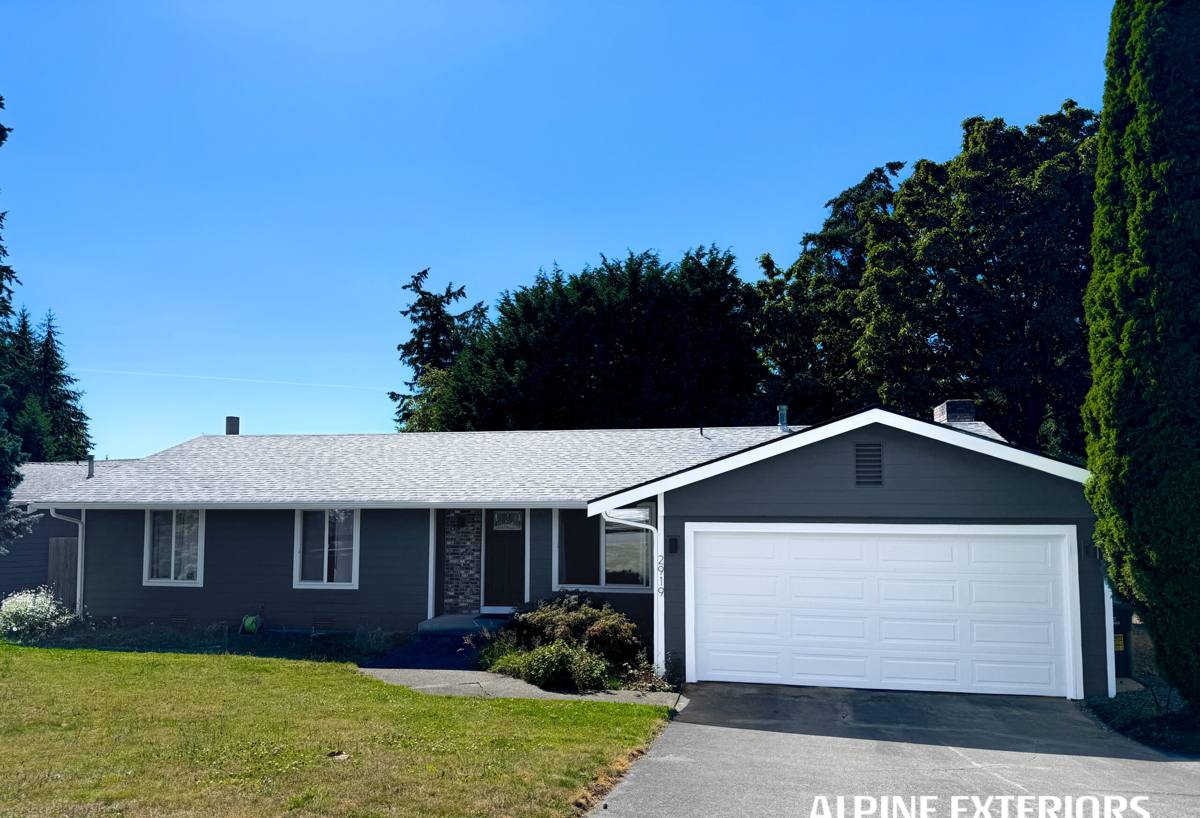
What James Hardie Siding Is Actually Built to Handle
James Hardie fiber cement is a mix of cement, sand, and cellulose fibers, cured into a dense, stable board. It doesn't rot, it doesn't feed insects, and it doesn't ignite — none of which can be said for wood or wood-based siding products. For a coastal-influenced climate like Ferndale's, three things matter most:
- Moisture management: Fiber cement doesn't swell, cup, or delaminate the way wood-based sidings can when exposed to repeated wetting and drying cycles.
- Dimensional stability: It holds its shape through temperature and humidity swings, so seams and caulk lines stay tight instead of opening up gaps for wind-driven rain.
- Surface durability: The ColorPlus factory finish is baked on under controlled conditions, giving it far better resistance to fading, chalking, and moisture intrusion at the surface than a field-applied paint job.
James Hardie also builds region-specific product lines. The HZ5 formulation is engineered for climates with more moisture exposure and freeze-thaw cycling — which describes western Washington well. Using the correct HZ line, rather than a generic version of the product, is one of the first places a job can go right or wrong before a single board is ever cut.
Why Moss Season Matters More Than People Think
Moss doesn't just grow on roofs. On shaded, north- or west-facing walls in and around Ferndale, moss and algae can take hold on siding surfaces that stay damp for extended stretches — especially where a poor installation traps moisture behind the cladding or leaves gaps that never fully dry. James Hardie's factory finish resists this far better than raw wood or unfinished fiber cement, but the real defense is proper drainage and airflow behind the siding, which comes down to installation, not just the product.
Where a Standard Installation Falls Short
James Hardie siding is only as good as the installation behind it. This is the part most homeowners never see, and it's exactly where problems start in a climate like this one:
- Missing or incorrect weather-resistive barrier and rain-screen gap, which traps moisture against the back of the boards.
- Flashing installed without proper laps and sealant at windows, doors, and roof-to-wall transitions — the first places wind-driven rain finds its way in.
- Butt joints and corners caulked instead of properly flashed, which looks fine for a year or two and then fails.
- Fastener placement and clearances that don't match Hardie's published installation instructions, which can void manufacturer warranty coverage even if the product itself is sound.
- Panels installed tight to grade, decks, or roof lines with no clearance, giving splash-back moisture nowhere to go.
Every one of these is avoidable. None of them show up on day one. They show up two, five, or ten years later as moisture stains, soft trim, or moss colonizing a seam that should have stayed dry.
Our Installation Process for Ferndale Homes
We install to the manufacturer's specifications, not a shortcut version of them, because that's what keeps the warranty valid and the wall assembly dry underneath. On a typical Ferndale project that looks like:
- Tear-off and inspection: Removing the old siding down to the sheathing and checking for any existing moisture damage, soft spots, or rot before anything new goes on.
- Repair of the substrate: Replacing any compromised sheathing or framing — covering a damaged wall with new siding just hides the problem.
- Weather-resistive barrier and drainage plane: Installing house wrap and, where called for, a rain-screen or drainage gap so any moisture that gets behind the siding has a path out.
- Flashing at every penetration: Windows, doors, hose bibs, light fixtures, and roof intersections all get properly lapped flashing before siding goes over them.
- Hardie panel or plank installation: Fastened, spaced, and clearanced to James Hardie's published specs for the specific product line and climate zone.
- Trim, caulking, and touch-up: Factory-matched caulk and touch-up paint at cut ends and joints, so the ColorPlus finish stays consistent and sealed.
- Final walk-through: Checking clearances, sealant lines, and finish quality before we call the job done.
Comparing Siding Options for a Whatcom County Home
| Material | Moisture Performance | Maintenance | Fire Resistance | Typical Lifespan |
|---|---|---|---|---|
| James Hardie Fiber Cement | Engineered HZ formulation for wet climates | Low — occasional wash, factory finish holds up | Non-combustible | Decades with correct install |
| Vinyl | Prone to warping, gaps at seams | Low but replacement-prone in impacts | Melts/deforms with heat | Variable, shorter in harsh weather |
| Cedar or Primed Spruce | Absorbs moisture, needs sealing | High — repainting, sealing, rot checks | Combustible | Shorter without diligent upkeep |
| LP SmartSide / Other Composites | Varies by product and edge-sealing | Moderate to high | Combustible | Depends heavily on installation quality |
We don't install vinyl, LP SmartSide, Cemplank, Allura, primed spruce, or cedar. That's not a knock on every use case for those products — it's that after years in this climate, we standardized on the one system we're confident holds up on a Whatcom County exterior without asking the homeowner to babysit it.
Maintenance in a Salt Air, Moss-Prone Environment
James Hardie siding is low-maintenance, not no-maintenance. A short seasonal routine keeps it performing the way it should:
- Rinse the exterior once or twice a year with a garden hose to clear salt residue and airborne grime — avoid high-pressure washing directly at seams and caulk lines.
- Check caulk at trim, window, and door joints annually; recaulk with a matching sealant at the first sign of cracking or gaps.
- Keep gutters clear so overflow doesn't run down the face of the siding repeatedly in one spot.
- Trim back vegetation and tree cover that keeps a wall section shaded and damp longer than the rest of the house — this is where moss gets its start.
- Watch north- and west-facing walls specifically; they dry slower and are the first place moss or algae will show up.
- Touch up any chips or cuts at trim with matching paint promptly, since exposed cut edges are more absorbent than the factory-finished face.
Cost Factors on a Ferndale Project
| Factor | How It Affects the Project |
|---|---|
| Home size and wall complexity | More corners, dormers, and transitions mean more flashing detail and labor time |
| Existing siding removal | Tear-off and disposal of old material adds time versus a bare wall |
| Substrate condition | Hidden sheathing or framing repair from past moisture intrusion adds cost but is not optional |
| Product line and profile | Lap siding, panel systems, and shingle-style profiles carry different material and labor costs |
| Trim and accessory work | Window and door trim, corner boards, and fascia detailing affect both look and price |
We won't quote a number without seeing the house, but we're upfront about these variables during the estimate so there are no surprises once work starts.
Why Hiring a Crew That Already Works in Ferndale Matters
A crew that regularly works Ferndale and the surrounding Whatcom County area already knows which wall orientations take the worst weather, where moss shows up first, and how to detail flashing for driving rain off the water rather than a drier inland climate. That local pattern recognition shows up in the small decisions — where to add extra flashing lap, which walls need a drainage gap most, how tight to run clearances at grade — that a generic out-of-area install often misses. It also means a contractor who's still around next year and the year after, which matters for warranty support and any follow-up questions once the siding is on.
What Correct James Hardie Installation Protects Long-Term
Done right, James Hardie siding backed by proper flashing and drainage detailing is one of the lowest-hassle exteriors you can put on a home in this climate. The product carries a strong transferable warranty from James Hardie itself, but that warranty depends on installation meeting their published specifications — which is exactly why we don't cut corners on the parts nobody sees once the siding is up. The goal is a wall assembly that sheds Ferndale's rain, shrugs off the salt air, and doesn't give moss anywhere easy to grow.
If you're weighing a siding replacement or new construction project in Ferndale, we're happy to take a look and walk you through what your home specifically needs. Use the form below to request a free, no-pressure estimate.