 Lynden Roofing
 Windows Built for Everson's Weather, Not Just Its Style
Everson sits in the Nooksack Valley, close enough to the water and the farmland around it that homes here take a specific kind of beating: salt-tinged air moving in off the Sound, driving rain that comes in sideways more often than straight down, and a wet season that stretches long enough to grow moss on anything that holds moisture. Windows are one of the first places that weather shows up. A window that would hold up fine in a dry inland climate can fail early here if it wasn't built, or installed, with this specific combination of conditions in mind.
This page is about one job, done right, in one area: replacing windows on homes in and around Everson and greater Lynden. Not a general overview of every window on the market — just what actually matters for houses in this corner of Whatcom County.
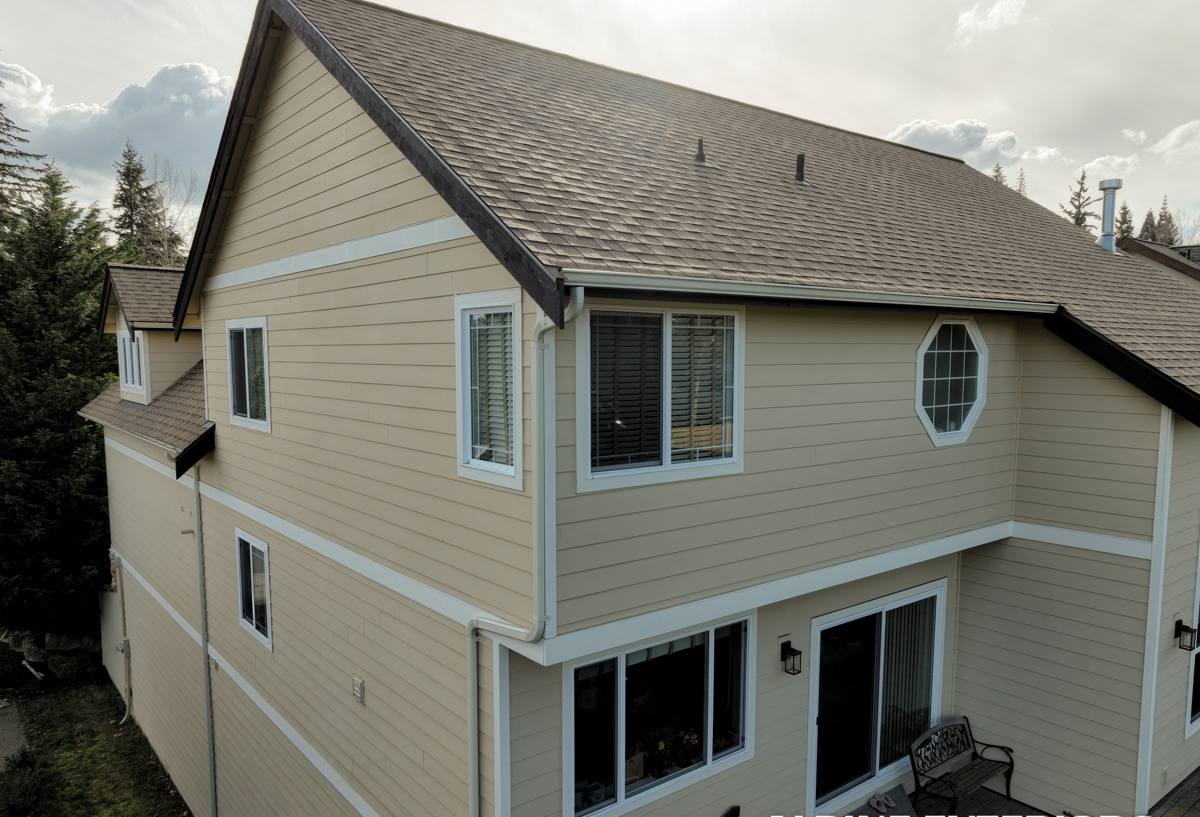
What Whatcom County Weather Does to Windows Over Time
Salt Air and Hardware Corrosion
Homes closer to the water deal with airborne salt that settles on window hardware, screen frames, and exposed fasteners. Over years, that accelerates corrosion on lower-grade hinges, locks, and balance systems — especially on aluminum components that weren't specified for coastal exposure. It's rarely dramatic; it shows up as a lock that gets stiff, a crank that starts to bind, or a screen frame that pits and discolors faster than it should.
Driving Rain and Wind-Driven Water
Rain that falls straight down is easy to shed. Rain that's being pushed sideways by wind is a different problem — it tests every seam, every joint, and every point where the window meets the wall. This is where most window failures actually start: not through the glass, but around it, where flashing, sealant, and trim either do their job or don't.
The Long Moss and Damp Season
Whatcom County's extended wet stretch means wood sills, trim, and framing stay damp longer than they would in a drier climate. Moss and mildew find a foothold on anything that doesn't dry out between rain events, and once wood trim starts holding moisture, rot follows — often hidden behind paint or caulk until a window starts feeling soft or a sash won't seat right anymore.
Signs a Window Is Losing the Fight
Most window problems in this area develop slowly. Here's what we tell homeowners to watch for between now and when they're ready to replace:
- Fogging or a permanent haze between panes — the seal has failed and the gas fill (if any) is gone
- Soft, spongy, or darkened wood at the sill or lower frame corners
- Drafts you can feel with a hand near the frame on a windy day
- Visible moss, black staining, or persistent mildew on the sill or exterior trim
- Locks, cranks, or balances that stick, grind, or no longer hold the sash shut tight
- Paint that bubbles or peels specifically around the window opening, not the rest of the wall
- Condensation forming on the inside of the glass regularly, even with normal ventilation
One or two of these on a single window is a repair conversation. Several of these across multiple windows, especially on the same exposure, usually means it's time to talk replacement.
What a Correct Window Replacement Actually Involves
Swapping the visible window is the easy part. The work that determines whether it lasts fifteen years or fails in five happens in the opening itself.
Checking the Opening Before Anything Goes In
Once the old window is out, we look at the rough opening, the sheathing, and the framing around it. This is often the first real look anyone's had at that part of the wall in decades, and in a climate like this, it's common to find some degree of moisture staining or soft wood at the sill — especially on older homes with original single-pane wood windows. Any of that gets addressed before a new window goes in. Installing a new window into a compromised opening just hides the problem for a while.
Flashing and Sealing, Not Just Caulk
Given how much wind-driven rain this area sees, the flashing detail matters as much as the window itself. That means a proper sill pan to catch and direct any water that gets past the exterior seal, flashing tape integrated correctly with the house's weather-resistive barrier, and backer rod and sealant sized and placed to actually flex with the building — not just a bead of caulk smeared around the trim. Done right, water that reaches the opening has somewhere to go besides into your wall.
Fit, Insulation, and Interior Finish
Gaps between the new window frame and the rough opening get filled with a low-expansion insulating foam or backer material — not packed too tight, not left hollow — then trimmed out to match the rest of the room. A window that's air-sealed properly around the frame performs better than a marginally more expensive window installed with gaps.
Choosing the Right Window for This Climate
Frame material and glass package both affect how a window holds up to salt air, driving rain, and a long damp season. There's no single right answer for every home, but here's how the common options compare for this area:
| Frame Material | How It Handles This Climate | Maintenance | Typical Lifespan |
|---|---|---|---|
| Vinyl | Won't rot or corrode; performs well in salt air and rain; quality varies a lot by manufacturer | Low — occasional cleaning | 20–30+ years, product-dependent |
| Fiberglass | Very stable in temperature swings and moisture; strong seal retention over time | Low | 30+ years |
| Wood-clad | Good insulator and classic look, but the cladding seams are a moisture-entry point to watch | Moderate — exterior clad needs periodic inspection | 20–30 years with upkeep |
| Bare Wood | Best historic match but least forgiving of this area's wet season without diligent upkeep | High — regular painting/sealing | Varies widely with maintenance |
We don't install every product on the market, and that's a deliberate choice on our part — some lower-tier lines use hardware or corner-weld construction that doesn't hold up well once salt air and constant moisture cycling get involved. We'll walk you through what we do stand behind and why, including trade-offs on cost, appearance, and long-term maintenance, so you're choosing with full information rather than a sales pitch.
Glass Packages Worth Considering Here
Double-pane with a Low-E coating and argon fill is the baseline we recommend for this climate — it cuts down on condensation risk and keeps heating costs reasonable through a long wet, cool season. Triple-pane adds another layer of insulation and sound dampening and can be worth it on north- or west-facing walls that take the brunt of the weather, though it comes at a higher cost and added weight that not every frame or opening needs.
Our Window Replacement Process
- On-site assessment — we look at the actual windows, the exposure of each wall, and the condition of the openings before recommending anything
- Honest product recommendation — matched to your budget, the home's age and style, and how exposed that side of the house is to wind and rain
- Clear, written estimate — no vague allowances, so you know what's included before work starts
- Careful removal and opening inspection — addressing any rot or moisture damage found before the new window goes in
- Proper flashing, insulation, and sealing — the part that determines how the window performs in a driving rain, not just how it looks
- Interior and exterior finish work — trim, caulking, and cleanup so the job looks finished, not just functional
- Walkthrough — we go over operation, care, and warranty coverage before we consider the job done
Why Hire a Crew That Already Works in Everson
A window installer who mostly works drier, more sheltered areas can still do competent work — but they may not default to the sill pan flashing, corrosion-resistant hardware choices, or drainage details that a home exposed to salt air and driving rain actually needs. We work this specific stretch of Whatcom County regularly, which means we've seen how these houses age, what tends to fail first on which exposures, and what it actually takes for a window to hold up through another twenty Everson winters.
It also means faster response if something needs a warranty follow-up, a straightforward conversation about permitting for the City of Everson or Whatcom County when a job requires it, and a crew that isn't guessing at what "local conditions" means for your house.
Timing and Permits
Most straightforward window swaps — same size opening, no structural changes — don't require a separate building permit, but that depends on the scope of the job and local jurisdiction rules, which can differ between the City of Everson and unincorporated Whatcom County. We'll tell you upfront if your project needs one and handle that conversation rather than leaving you to sort it out. As for timing, late spring through early fall tends to be the most predictable window for exterior work here, simply because there are more dry stretches to work with — but replacement can happen year-round when the job is planned around the weather.
If your windows are drafty, fogged, hard to operate, or just showing their age, we're happy to take a look and give you a straight answer about what's actually going on — no pressure, no upsell. Use the form below to request a free estimate for your Everson home.