 Lynden Roofing
 Custom Deck Building for Everson Homes
Everson sits along the Nooksack River in the northern stretch of Whatcom County, a few minutes from Lynden, and the outdoor living season here is real — plenty of homeowners want a deck they can actually use through spring and summer without it turning into a maintenance headache the rest of the year. The catch is that this corner of Washington puts decking materials, fasteners, and structural connections through a lot: salt-tinged marine air moving in off the Sound, long stretches of driving rain through fall and winter, and a moss season that can stretch on for most of the year on anything shaded or north-facing. A deck built without those conditions in mind can look fine for a season or two and then start showing problems — soft boards, rusting hardware, slick moss buildup, ledger rot — well before it should.
We build custom decks for homes in Everson and the surrounding Lynden area, and we treat the climate as part of the design brief, not an afterthought. That means material selection, structural detail, and drainage all get worked out up front, not patched in after the fact.
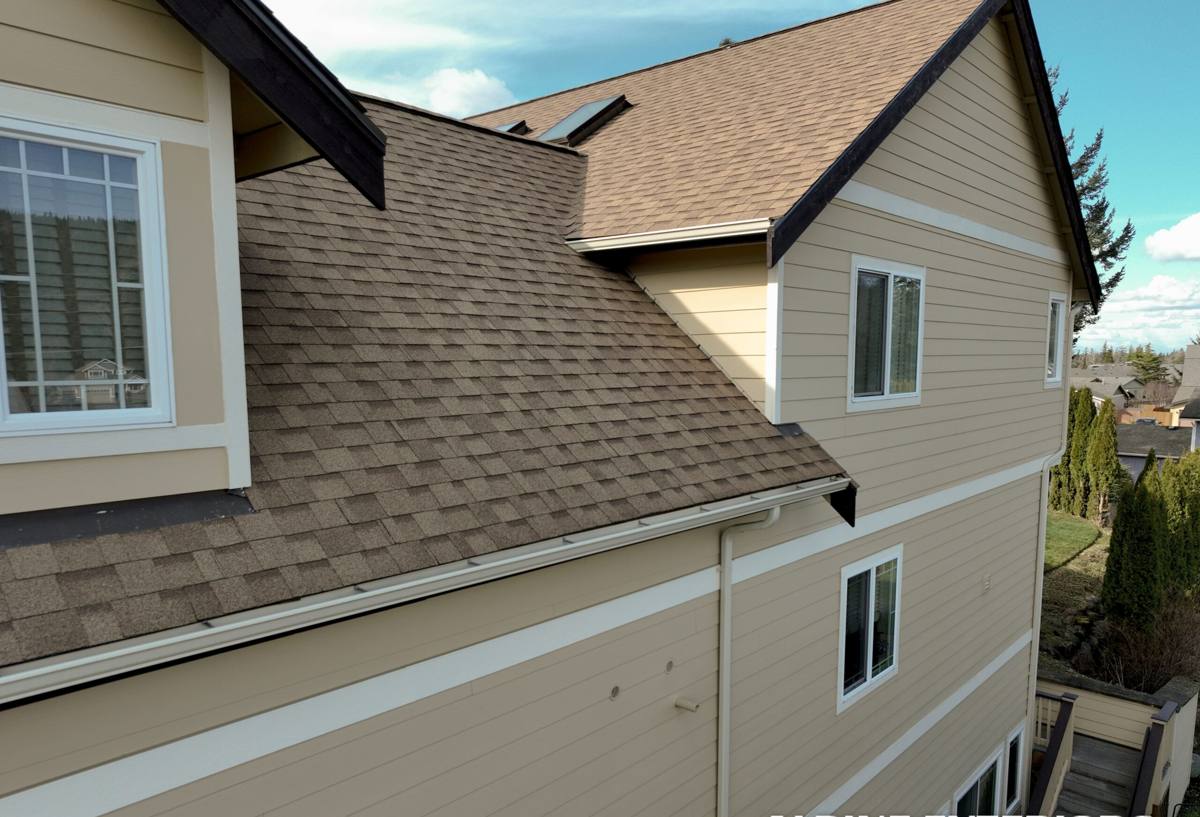
What Whatcom County Weather Does to a Deck
Salt Air and Corrosion
Even away from the immediate shoreline, homes in this part of the county get a steady dose of salt-laden marine air. Salt accelerates corrosion in fasteners, joist hangers, post bases, and any exposed metal hardware. A deck built with the wrong grade of fastener can start showing rust streaks and weakened connections years before the decking itself wears out — and by the time it's visible on the surface, the structural hardware underneath may already be compromised.
Driving Rain and Standing Moisture
Rain in this region rarely falls straight down. Wind-driven rain gets pushed into ledger connections, under railings, and into any gap where water can collect instead of shed. Decks that don't account for this end up with trapped moisture at the house connection — one of the most common places we find rot and structural damage on older decks in this area.
Moss, Algae, and a Long Wet Season
Shaded decking, north-facing runs, and anything under tree cover in Everson can stay damp for weeks at a stretch. That's exactly the environment moss and algae need to take hold, and once they do, a deck surface gets slick and starts holding moisture against the boards instead of letting it dry. Material choice, board spacing, and site orientation all affect how bad this gets and how much upkeep it takes to stay ahead of it.
Choosing the Right Decking Material for This Climate
There's no single "best" decking material for every project — the right call depends on budget, how much upkeep you want to do, and how exposed the deck is to shade and moisture. Here's how the common options actually perform in a Whatcom County climate:
| Material | Moisture / Moss Resistance | Maintenance | Notes |
|---|---|---|---|
| Pressure-treated wood | Good if properly sealed and maintained | Annual cleaning and re-sealing recommended | Lowest upfront cost; needs consistent upkeep to avoid moss and graying |
| Cedar | Naturally moisture-resistant, but surface still needs care | Periodic cleaning and staining/sealing | Attractive natural look; softer than composite, dents more easily |
| Composite decking | Very good; won't rot, resists moss buildup on the board itself | Occasional washing, no sealing or staining | Higher upfront cost; consistent long-term appearance |
| PVC decking | Excellent moisture resistance | Low; occasional washing | Highest upfront cost; very stable in wet conditions |
We'll walk through these trade-offs with you honestly rather than pushing whatever's easiest to install. If you want the lowest-maintenance option and the budget works, composite or PVC decking makes sense in a climate like this. If you prefer the look and feel of real wood and are willing to keep up with cleaning and sealing on a schedule, cedar or pressure-treated lumber is still a solid choice — it just needs more attention than the alternatives.
Fasteners and Hardware
Whatever decking material you choose, the hardware underneath matters just as much. In a salt-air, high-moisture climate, we use corrosion-resistant fasteners and structural connectors rated for exterior and coastal exposure — not standard-grade hardware that's fine in a drier inland climate but won't hold up here over the life of the deck.
What a Correctly Built Deck Actually Involves
A deck is a structure, not just a surface to walk on, and most of what determines whether it lasts is buried underneath the boards. A correct build includes:
- Footings sized and set to local frost depth and soil conditions, not guessed at
- A properly flashed ledger board connection to the house, so water is directed away from the structure instead of trapped against it
- Joist spacing and beam sizing matched to the decking material and expected load
- Corrosion-resistant structural hardware — joist hangers, post bases, and fasteners rated for exterior exposure
- Proper drainage and airflow underneath the deck so moisture doesn't sit and stagnate
- Railings and stairs built to current code requirements for height, spacing, and load
Skipping or shortcutting any one of these doesn't usually show up on day one. It shows up two or three years later as soft framing, a wobbly railing, or a ledger connection that's been slowly taking on water. Building it right the first time costs less than fixing it later.
Railings, Stairs, and Local Code
Whatcom County and the local jurisdictions around Lynden and Everson have permit and code requirements for new deck construction, including guardrail height, baluster spacing, and stair geometry once a deck reaches a certain height off the ground. We handle the permitting conversation as part of the project rather than leaving it for the homeowner to sort out, and we build railings and stairs to meet current code from the start — not just to pass a rough inspection.
Our Process, Start to Finish
Every custom deck project follows roughly the same sequence, though the details shift with the site and the design:
- On-site assessment. We look at the site, discuss how you plan to use the deck, and talk through material options given the exposure — sun, shade, wind, and how close it is to the house.
- Design and estimate. We put together a layout and a clear scope of work, including material selection, so you know what you're getting before anything is built.
- Permitting. Where a permit is required, we handle the application and inspection scheduling.
- Site prep and footings. Footings are dug and set to proper depth before any framing goes in.
- Framing and structure. Ledger, beams, joists, and posts go in with corrosion-resistant hardware throughout.
- Decking, railing, and stairs. Surface material and rail systems are installed to spec and to code.
- Final walkthrough. We go over the finished deck with you, including any maintenance recommendations specific to the material you chose.
Keeping a Deck Ahead of Moss and Moisture
Even a well-built deck needs some seasonal attention in a climate like this, especially if it's shaded or wood-surfaced. A basic maintenance routine goes a long way toward keeping moss and moisture damage from getting a foothold:
- Clear leaves and debris off the deck surface regularly, especially in fall
- Sweep or rinse away moss and algae buildup before it has a chance to spread and get slick
- Check that gaps between boards stay clear so water can drain through rather than pool
- Inspect railings and stair connections once a year for movement or loose hardware
- For wood decking, plan on periodic cleaning and re-sealing or staining on a schedule
- Keep an eye on the ledger board area at the house connection, since that's where trapped moisture tends to cause problems first
Composite and PVC decking cut down on most of this list, but even those materials benefit from an occasional wash to keep organic buildup from taking hold in shaded spots.
Why a Crew That Already Works Everson Matters
Deck problems in this part of Whatcom County tend to follow the same patterns — trapped moisture at the ledger, moss taking over a shaded run, hardware corroding faster than expected. A crew that already builds and repairs decks in Everson and the surrounding Lynden area has seen those failure points firsthand and builds around them from the start, rather than learning the hard way on your project. It also means straightforward, local accountability if a question comes up after the job is done — no chasing down an out-of-area contractor for a warranty issue or a follow-up question.
If you're planning a new deck or replacing one that's showing its age, we're happy to walk the site with you and put together a straightforward estimate — no pressure, no obligation. Use the form below to get started.
```