 Lynden Roofing
 Why Everson Windows Wear Out Faster Than You'd Expect
Everson sits in the Nooksack Valley, close enough to Puget Sound and the Strait of Georgia that homes here deal with a damp, salt-tinged marine climate most of the year, on top of the driving rain and long gray stretches that define a Whatcom County winter. Old single-pane or early-generation double-pane windows weren't built for that combination. Aluminum frames pit and corrode. Wood sashes swell, stick, then crack when they finally dry out in the brief summer window. Seals fail quietly, and by the time you notice fog between the panes or a draft along the sill, the glass unit has usually been degrading for a year or more.
Moss and algae add their own slow damage. Whatcom County's long moss season means anything that stays damp — a window sill, a poorly flashed head jamb, a low corner that never quite dries — becomes a growth surface. That moisture doesn't stay put. It works into wood trim, migrates behind poorly sealed frames, and rots sill plates from the inside out long before it's visible from the yard.
None of this means Everson homeowners need to replace windows more often than anyone else. It means the windows and the installation both have to be matched to this specific climate, not a generic one. A window rated for a dry inland climate, installed the way it would be installed in Spokane, will underperform here. A window and installation matched to a wet, wind-driven coastal-influenced climate will do the job for decades.
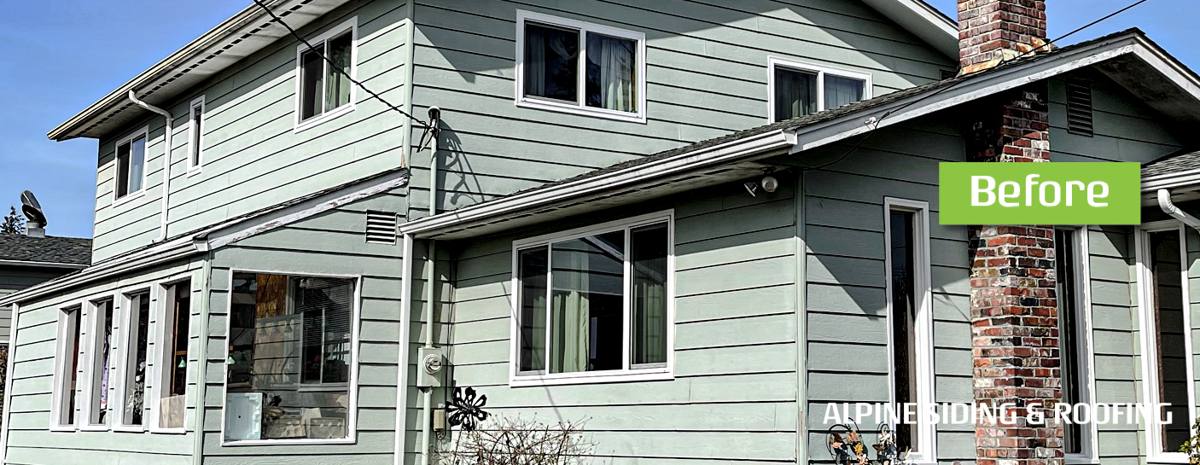
Signs It's Time to Look at Replacement
Most Everson homeowners don't wake up one day and decide to replace windows — they notice a pattern of small annoyances that add up. Worth checking for:
- Visible fog, haze, or moisture trapped between panes (a failed seal — this cannot be fixed, only replaced)
- A noticeable draft you can feel with a hand near the frame on a windy, rainy day
- Wood trim or sills that feel soft, discolored, or have visible rot at corners
- Windows that are hard to open, close, or lock — swelling and warping from repeated wet/dry cycles
- Condensation forming on the inside of the glass regularly through fall and winter
- Moss or dark staining building up on sills and lower sashes faster than you can keep up with
- A jump in heating costs that isn't explained by anything else in the house
Any one of these on its own might just need a repair. Several at once, especially on the same wall or the weather-facing side of the house, usually means the windows themselves have reached the end of their service life.
What "Energy-Efficient" Actually Means Here
The term gets used loosely, so it's worth being specific about what actually matters for a home in this part of Whatcom County. Three things drive real-world performance: the glass package, the frame material, and how well the unit is sealed against wind-driven rain — not just still-air drafts.
Glass and Gas Fill
Double-pane glass with a low-emissivity (Low-E) coating and an argon gas fill is the practical baseline for this climate. Triple-pane glass offers a further step up in insulation value and sound dampening, which matters more on exposed or wind-facing walls than on sheltered ones. The coating does more day-to-day work than most people expect — it's what keeps summer heat gain down and winter heat loss down at the same time.
Frame Material
Frame choice affects how the window handles constant moisture exposure over the years, not just its insulation number. We'll get into the trade-offs by material below.
Water Management
A window can have excellent glass and still perform poorly if it's not flashed and sealed correctly for wind-driven rain — which is the dominant weather pattern here more than straight-down rainfall. This is an installation detail, not a product spec sheet number, and it's where a lot of the real performance difference actually comes from.
Comparing Frame Materials for Everson's Climate
| Frame Material | How It Handles This Climate | Maintenance | Typical Trade-Off |
|---|---|---|---|
| Vinyl | Won't rot or corrode; handles constant moisture well | Low — occasional cleaning | Limited color/finish options; can look utilitarian on older or historic homes |
| Fiberglass | Very stable in wet/dry and hot/cold cycling; strong moisture resistance | Low | Higher upfront cost than vinyl |
| Wood (unclad) | Beautiful but the most vulnerable to our wet winters if any seal or paint fails | High — repainting/sealing on a regular cycle | Ongoing maintenance commitment, especially on rain-exposed walls |
| Wood-clad (wood interior, metal/vinyl exterior) | Exterior shell resists moisture; interior keeps traditional look | Moderate | Cladding seams need correct detailing or they become the new failure point |
| Aluminum (older style, uninsulated) | Poor — conducts cold, prone to condensation and corrosion here | Moderate | Generally not something we'd recommend for this climate today |
For most Everson homes, vinyl or fiberglass frames paired with a Low-E, argon-filled double-pane unit hit the right balance of upfront cost, energy performance, and low long-term maintenance. Wood and wood-clad remain a legitimate choice where the look matters and the homeowner is committed to the maintenance schedule — we'll walk through that honestly rather than talk anyone out of it.
What a Correct Installation Actually Involves
The window unit itself is maybe half the job. The other half is how it gets flashed, sealed, and integrated with the wall assembly around it — and this is where wind-driven rain either gets stopped or finds its way in.
- Removing the old unit and inspecting the rough opening for hidden rot or water damage before anything new goes in
- Repairing or replacing any damaged sheathing or framing found during that inspection — not covering it up
- Installing proper flashing at the head, jambs, and sill so water sheds outward and down, not into the wall
- Setting the window level, plumb, and square, then securing it per manufacturer fastening specs
- Sealing with appropriate sill pan and weatherproofing membrane, plus exterior caulking rated for our climate
- Insulating the gap between the window frame and rough opening correctly — not overpacked, not left empty
- Reinstalling or replacing interior and exterior trim, matched to the surrounding siding or trim profile
Skipping the inspection step is the single most common shortcut that causes problems later. A brand-new, high-performance window installed over rotted sheathing or a missing sill pan will still leak — the failure just gets hidden behind new trim until it reappears as a stain or soft spot a year or two down the road.
Our Process for an Everson Window Project
- On-site assessment. We look at each window opening individually — sun exposure, wind exposure, current condition of trim and sheathing — rather than quoting a blanket number for the whole house.
- Product selection. We walk through frame material and glass package options based on that specific wall's exposure, your budget, and how the window needs to look from the street.
- Written estimate. Clear scope, clear pricing, and a realistic timeline before any work begins.
- Install day. Old units removed, openings inspected and repaired as needed, new units set, flashed, and sealed to spec.
- Final walkthrough. We check operation, seals, and trim with you before calling the job done.
Because we're already working in and around Everson regularly, scheduling tends to be straightforward and we're not guessing at what the local weather window for exterior work looks like season to season.
Cost Factors to Expect
| Factor | Why It Moves the Price |
|---|---|
| Number and size of windows | The most direct driver — more openings and larger glass area cost more in both material and labor |
| Frame material | Vinyl is generally the most budget-friendly; fiberglass and wood-clad cost more upfront |
| Glass package | Triple-pane and specialty coatings add cost over a standard Low-E double-pane unit |
| Condition of the rough opening | Hidden rot or water damage found during removal adds repair scope beyond the window itself |
| Access and height | Second-story or hard-to-reach openings take more time and equipment |
| Trim and finish work | Matching existing exterior trim or siding profiles can add labor depending on complexity |
We don't quote in vague ranges pulled from a national average — every estimate is based on your actual windows and openings, so you know what you're paying for and why.
Why Hiring a Crew That Already Works in Everson Matters
Window performance in this climate isn't just about the product — it's about whether the person installing it understands how wind-driven rain actually behaves against a wall here, how long the moss season runs, and where water tends to find its way in on homes built during particular decades in this area. A crew that works Everson and the surrounding Whatcom County communities regularly has already seen how the local weather stresses different frame materials, flashing details, and trim types over time. That experience shows up in the small decisions made on install day — the ones that don't appear on a spec sheet but determine whether the window is still performing well in fifteen years.
It also means straightforward scheduling and follow-up. If a question comes up after the job — a trim detail, an operation issue, anything — you're calling a crew that's still working in the area, not chasing down a company that only passed through once.
After Installation: What Keeps Windows Performing
Energy-efficient windows are close to maintenance-free compared to older wood units, but a few habits extend their life in this climate:
- Clear moss, algae, and debris from sills and tracks a couple of times a year, especially going into and coming out of the wet season
- Check exterior caulking annually for cracking or separation, particularly on wind- and rain-exposed walls
- Operate locks and hardware periodically through the winter so mechanisms don't seize from disuse
- Watch for condensation between panes — that's a seal failure, not a cleaning issue, and won't resolve on its own
If you're noticing drafts, fogged glass, rot around the frames, or you're just ready to stop fighting old windows through another Whatcom County winter, we're happy to come take a look. We offer free, no-pressure estimates for Everson homeowners — walk the property with us, get straight answers about what your windows actually need, and decide from there.