 Lynden Roofing
 Storm Damage Roof Repair for Deming Homes
Deming sits in the Nooksack River valley, tucked against the foothills that lead up toward Mount Baker. That geography means a lot of tree cover, a lot of shade, and weather that funnels through the valley with more force than you'd expect from a "quiet" inland community. When a windstorm rolls through Whatcom County, Deming roofs take a different kind of beating than roofs out in the open flats around Lynden proper — more falling limbs, more debris impact, more standing shade that keeps everything wet longer after the wind dies down.
This page covers what storm damage repair actually means for a roof in Deming specifically: what tends to go wrong here, how a correct repair is done, and how our process works from the first phone call to the final nail.
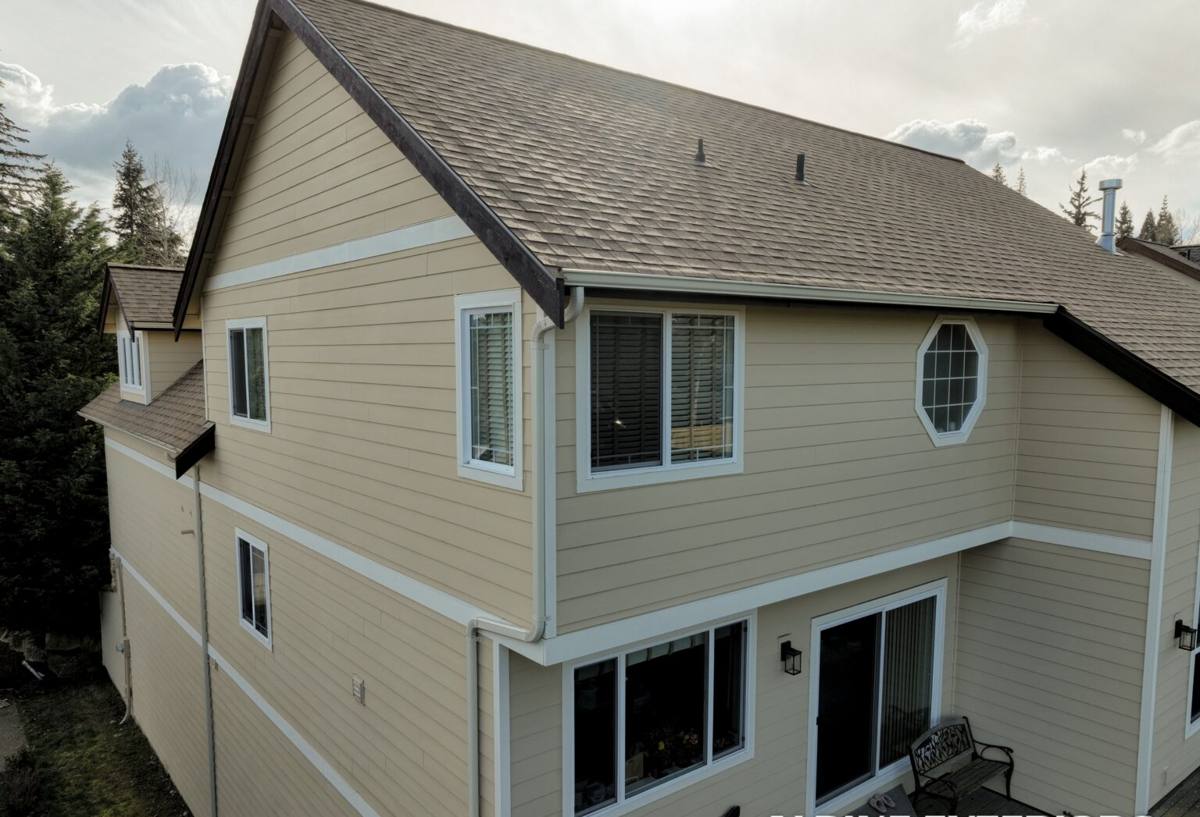
Why Storm Damage Hits Deming Roofs Differently
Whatcom County weather moves in off the Salish Sea and pushes east into the foothills, picking up moisture and losing very little of it before it reaches the Nooksack valley. That means Deming gets long stretches of driving rain rather than short, hard downpours — the kind of weather that doesn't just soak a roof, it finds every weak seam and works into it over hours, not minutes.
Combine that with the tree canopy that surrounds most Deming properties and you get two compounding problems during a storm:
- Wind-driven branches and limbs strike the roof directly, which open roads and subdivisions with less tree cover simply don't deal with as often.
- The same shade that drops branches also keeps roof surfaces damp for days afterward, which is exactly the environment moss needs to take hold in the newly damaged areas.
None of this means a Deming roof is doomed — it means the repair has to account for both the impact damage and the ongoing moisture exposure, not just patch the visible hole.
What Actually Counts as Storm Damage
Homeowners often assume storm damage means a dramatic hole or a shingle blown clean off. In practice, most of what we find is quieter and easier to miss.
Wind Damage
Wind rarely rips shingles off in one clean motion. More often it lifts the tab edge repeatedly during a storm, breaking the seal strip underneath without tearing the shingle itself. The shingle can look intact from the ground and still be loose, which lets wind-driven rain get underneath it on the next storm.
Impact Damage
Falling branches, pinecones, and debris carried by wind can bruise or crack shingles, dent metal flashing, and knock granules loose without punching all the way through. Bruised asphalt shingles lose their protective granule layer in that spot, and that spot ages and fails faster than the rest of the roof — sometimes not showing a leak until months later.
Hidden vs. Visible Damage
The damage you can see from the driveway — a missing shingle, a dented vent cap, a sagging gutter — is usually the smaller part of the story. The bigger question is always what's happening at the flashing, the underlayment, and the deck underneath. That's why a proper storm inspection goes past what's visible from ground level.
How Moss and Driving Rain Complicate a Storm Repair
A storm repair in Deming isn't just "replace what broke." Two local factors change how the repair has to be done:
Moss. A shaded roof that's already carrying moss growth is more vulnerable during a storm, because moss holds moisture against the shingle surface and can lift tab edges even before the wind does. After a storm, any repaired section next to established moss growth needs that moss addressed — otherwise the new material is sitting right next to the moisture source that caused problems in the first place.
Driving rain. Wind-driven rain doesn't fall straight down — it pushes sideways and works its way under flashing, around vent boots, and into any gap that a straight-down rain would never reach. A repair that would hold up fine in a calm rain can still fail in the next windstorm if the flashing laps and fastening pattern aren't done correctly for wind-driven conditions.
This is the difference between a repair that looks fixed and a repair that's actually fixed for Deming's weather pattern, not just for a photo.
Our Storm Damage Repair Process
1. Inspection and Documentation
We walk the roof (not just look at it from the ground) and document what we find — impact points, lifted or missing shingles, flashing condition, and any signs of moisture already working into the deck. If you're planning to file an insurance claim, this documentation is written and photographed in a way that supports your claim rather than a vague verbal description.
2. Temporary Protection
If there's an active leak path or exposed decking, we get it covered before we leave — a tarp or temporary seal is not a fix, but it stops the damage from getting worse while a permanent repair is scheduled.
3. Repair Plan
We give you a straight answer on whether the damage calls for a targeted repair or points to a bigger issue — worn underlayment, aged flashing, or a roof that was already near the end of its service life before the storm hit. We'd rather tell you a repair is sufficient than upsell a replacement you don't need.
4. The Repair Itself
Damaged shingles, flashing, and any affected underlayment are removed back to sound material — not just the piece that's obviously broken — and replaced with matching or compatible materials, properly lapped and fastened for wind-driven rain.
5. Final Check
We check the repair area and the surrounding roof for anything we missed on the first pass, including gutters and downspouts that often take secondary damage during the same storm.
Repair or Replace: What Actually Determines the Call
Not every storm-damaged roof needs a full replacement, and not every roof is worth repairing. The honest answer depends on a few factors working together, not any single one.
| Factor | Favors Repair | Favors Replacement |
|---|---|---|
| Age of roof | Under 10-12 years, otherwise in good condition | Already near or past expected service life |
| Extent of damage | Isolated to one or two areas | Spread across multiple slopes |
| Underlying deck | Dry, solid wood underneath | Soft spots, rot, or long-term moisture staining |
| Moss history | Light, recently treated | Heavy, established growth affecting the whole roof |
| Material availability | Matching shingle still produced or close match available | Discontinued product with no reasonable match |
We'll walk you through where your roof lands on this list before recommending either option — and we'll explain the reasoning, not just hand you an estimate.
What a Correct Storm Repair Actually Involves
A lot of storm repairs done quickly — by any contractor, not just around here — cut corners that don't show up until the next storm. Here's what we consider non-negotiable on a correct repair:
- Removing damaged material back to sound, dry decking rather than patching over it
- Replacing underlayment in the repaired section, not just the visible shingle layer
- Using flashing details (step flashing, valley metal, vent boot seals) rated for wind-driven rain, not just standard exposure
- Matching the nailing pattern and fastener type the manufacturer specifies for the shingle, not whatever's fastest
- Checking and clearing gutters and downspouts near the repair so water has somewhere to go
- Addressing any moss growth adjacent to the repair area so the new material isn't compromised immediately
Skipping any one of these usually doesn't cause an immediate problem — it causes a problem eighteen months from now that looks like a "new" leak but is really the same storm damage that was never fully addressed.
Materials We Use for Storm Repairs
Where possible, we match your existing roofing material so the repair blends in and performs the same way the rest of your roof does. When an exact match isn't available — which happens with older or discontinued shingle lines — we'll show you the closest realistic option and explain the trade-offs honestly, including how it may look next to the existing roof and how its warranty differs.
For flashing and underlayment, we lean toward materials built for sustained wet exposure rather than the minimum code requirement, because Deming's tree cover and rain pattern mean flashing spends more time wet than it would in a drier, more open part of the county. That's a judgment call based on how this specific area weathers, not a brand preference.
Why a Crew That Already Works Deming Matters
Storm damage repair isn't a generic service — the right approach depends on knowing how a specific area's roofs actually behave. A crew that regularly works Deming knows which roof styles and ages are common here, how the tree cover in a given part of the valley tends to affect moss growth and debris impact, and what a storm-driven leak typically looks like on this side of the county versus the more open areas near Lynden's center.
That local familiarity shows up in small but meaningful ways: knowing to check specific valleys and flashing points first, recognizing when moss is masking older damage versus new storm impact, and giving you a realistic timeline that accounts for how weather in the valley tends to move.
Get a Straight Answer on Your Roof
If a recent storm left you with missing shingles, a new leak, or just some peace-of-mind questions about what's going on up there, we're happy to take a look. We offer a free, no-pressure estimate — we'll tell you honestly whether you're looking at a simple repair, a bigger fix, or nothing urgent at all. Use the form below to get started.