 Lynden Roofing
 Building Decks for Kendall's Wet, Wooded Conditions
Kendall sits back from Lynden proper, closer to the foothills and the Nooksack River corridor, and that changes what a deck has to put up with year-round. Homes out here tend to sit on bigger, more heavily treed lots than in-town Lynden properties, which means more shade, more falling debris, and more standing moisture on horizontal surfaces for more of the year. Add in Whatcom County's long, gray stretch of driving rain and the marine-influenced air that moves up the valley from the Sound, and you've got a climate that's genuinely hard on outdoor wood structures — not because any one factor is extreme, but because the combination rarely lets a deck fully dry out between storms.
A deck built for this area needs to handle sustained dampness, resist moss and algae growth in shaded spots, and keep its fasteners and connectors from corroding over time. None of that is exotic engineering — it's mostly about material selection, drainage, and getting the details right the first time so you're not fighting rot or a spongy board five years in.
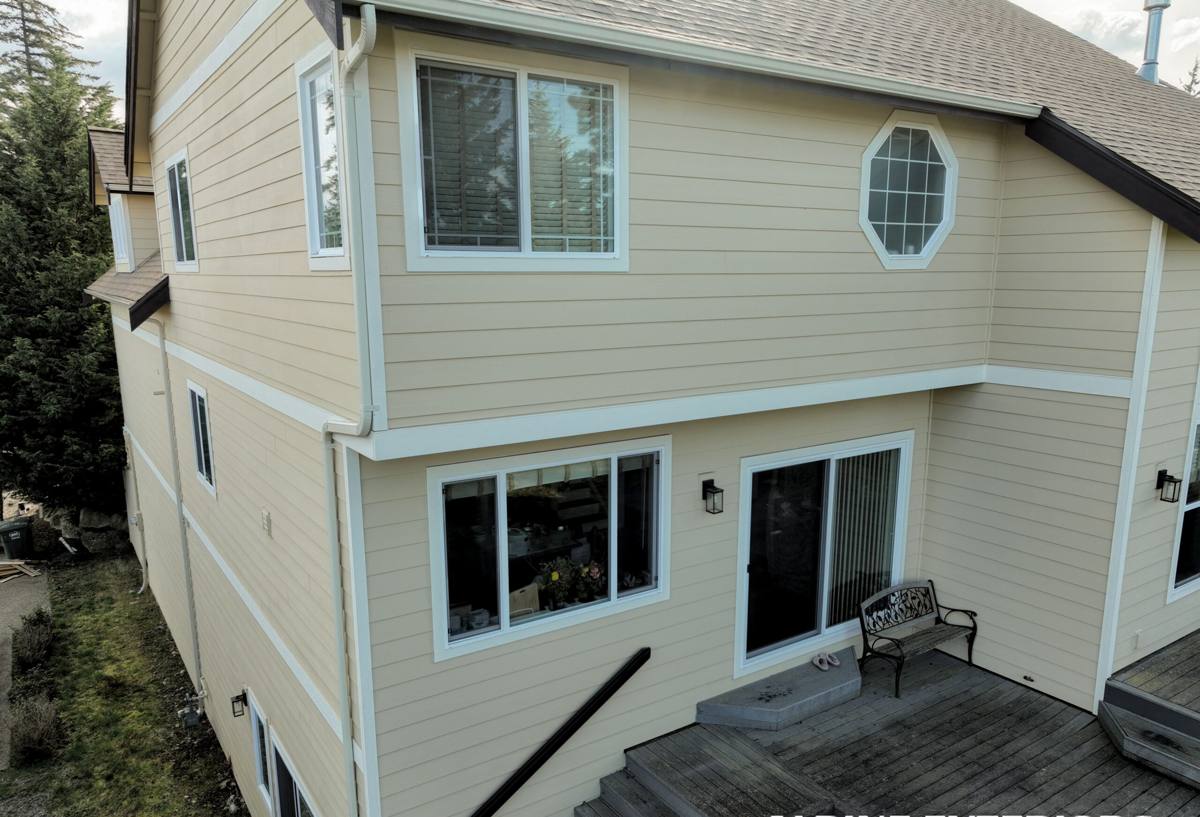
What Kendall Properties Typically Need From a Deck
Softer, Wetter Ground
Rural and semi-rural lots around Kendall often have less compacted, more organic-rich soil than in-town building sites, and many sit closer to seasonal wet areas tied to the Nooksack drainage. That affects footing design — how deep the footings go, how wide they're poured, and whether the soil under them needs extra preparation before we pour. Skipping this step is one of the most common reasons a deck starts to feel uneven or "bouncy" within a few years.
Septic Systems and Setbacks
A fair number of Kendall homes are on septic rather than sewer. Before we finalize a deck footprint, we check where the septic tank, lines, and drain field sit relative to the proposed deck location — both to protect the system and because footings generally can't be placed on top of it. This is a simple step, but it's easy for an out-of-area contractor to miss if they're not used to working septic lots.
Shade From Mature Trees
Tree cover keeps a home cooler in summer, but it also means less sun exposure to dry the deck surface after rain. Needles and leaf litter collect between boards and in corners, holding moisture against the decking and accelerating both moss growth and wood decay. Board spacing, gap width, and how a deck is oriented relative to the tree line all matter more here than they would on an open, sunny lot.
Choosing a Decking Material for This Climate
There's no single "right" decking material — the right call depends on budget, how much upkeep you're willing to do, and how shaded the site is. Here's how the common options compare for a Kendall property:
| Material | Moss & Moisture Resistance | Maintenance | Typical Cost Tier | Expected Lifespan |
|---|---|---|---|---|
| Pressure-treated lumber | Fair — needs regular cleaning and sealing to keep moss from taking hold in shaded areas | Highest — annual cleaning, periodic staining/sealing | Lower | 15–20 years with upkeep |
| Cedar | Good natural resistance to rot, but still grows algae/moss in deep shade without upkeep | Moderate to high — needs sealing to hold its color and resist weathering | Mid | 15–25 years with upkeep |
| Capped composite | Very good — the cap layer sheds moisture and resists staining better than wood | Low — occasional washing, no sealing or staining | Mid to higher | 25–30+ years |
| PVC decking | Excellent — fully synthetic, doesn't absorb moisture | Lowest | Higher | 30+ years |
For heavily shaded Kendall lots specifically, we lean toward recommending capped composite or PVC in the areas that stay damp longest — under tree canopy, on the north side of the house, or anywhere airflow is limited. Pressure-treated and cedar still work fine in sunnier spots on the same property if you want to mix materials to control cost.
Framing and Fasteners: Where Decks Actually Fail First
Almost every deck failure we get called out to inspect traces back to one of a few spots, not the decking boards themselves:
- Ledger board attachment — where the deck ties into the house is the single most common point of water intrusion. Flashing has to be installed correctly, in the right order, with proper drainage behind it — not just caulked and hoped for.
- Fasteners and hardware — in a marine-influenced, damp climate, standard fasteners corrode faster than they would inland. We use hot-dip galvanized or stainless connectors and coated fasteners rated for ground contact and treated lumber, which matters more here than in a drier region.
- Footings below frost depth — footings need to sit below the local frost line, generally around 12 to 18 inches in this part of Whatcom County, and bear on undisturbed or properly prepared soil — not backfill.
- Joist protection — capping joists with a self-adhering flashing tape before decking goes down keeps rainwater from soaking into end grain, which is where rot typically starts on an otherwise sound frame.
- Drainage under the deck — for lower decks close to grade, we grade and drain the area underneath so water doesn't pool against posts and footings.
None of this is visible once the deck is finished, which is exactly why it's worth asking a contractor about before you sign anything — not after.
Permits and Code for Decks in Unincorporated Kendall
Kendall is unincorporated, so deck permits go through Whatcom County rather than Lynden City Hall — a distinction that trips up contractors who mostly work inside city limits. The permit process, inspection schedule, and setback rules can differ from what applies just a few miles away in town, and we handle that paperwork as part of the job rather than leaving it for the homeowner to sort out.
A few code basics that generally apply regardless of jurisdiction:
- Decks more than about 30 inches above grade typically require guardrails, usually 36 inches minimum height, with baluster spacing that keeps a 4-inch sphere from passing through.
- Stairs need consistent rise and run and, in most cases, a graspable handrail once there are more than a few steps.
- Most jurisdictions require a permit and inspection for any deck attached to the house, and often for larger or elevated freestanding decks as well.
We pull the permit, schedule the required inspections, and build to what the county actually requires — not just what looks right.
Our Deck Building Process
- On-site visit. We walk the property, check drainage, tree cover, septic locations if applicable, and talk through how you actually want to use the space.
- Design and material selection. We lay out size, layout, railing style, and decking material based on your budget and how much sun or shade the spot gets.
- Permit and engineering. We handle the Whatcom County permit application and any structural details it requires.
- Footings and framing. Footings poured to depth, ledger flashed properly, frame built with corrosion-rated hardware.
- Decking and railing installation. Boards and railing installed to spec, with attention to spacing and drainage.
- Inspection. Final county inspection scheduled and passed before we call the job done.
- Walkthrough. We go over care and maintenance specific to the material you chose and the shade conditions on your lot.
Keeping a New Kendall Deck Ahead of Moss Season
Even the right material and the right build won't stay maintenance-free forever in this climate. A simple seasonal routine keeps a deck looking good and lasting as long as it should:
- Sweep needles and leaves out of gaps and corners regularly through fall, before they compost in place and hold moisture.
- Rinse or lightly scrub shaded areas in late winter/early spring, when moss growth is at its worst, before it gets a foothold.
- Check that gaps between boards haven't closed up from swelling or debris buildup — closed gaps trap water instead of draining it.
- Re-seal or re-stain wood decking on the schedule recommended for the product — skipping a year in a wet climate shows up fast.
- Look underneath the deck once a year for standing water or debris buildup against posts and footings.
- Trim back overhanging branches where practical to let more light and airflow reach the deck surface.
Why Hire a Crew That Already Works in Kendall
A deck built without accounting for Kendall's shade, ground moisture, and county permitting process tends to show problems earlier than it should — moss taking over a north-facing section, a ledger board that was never flashed correctly, fasteners rusting ahead of schedule. We've built and repaired decks throughout this area long enough to know which details matter here specifically, from septic setbacks to the county's inspection process, and we build to that standard from the start rather than treating it as an afterthought.
If you're thinking about a new deck, or replacing one that's past its best years, we're happy to come out, take a look at your property, and give you a straight assessment of what it needs. Reach out for a free, no-pressure estimate using the form below.