 Lynden Roofing
 Roof Repair Built for Deming's Conditions, Not a Generic Climate
Deming sits in a different microclimate than a lot of the roofs we work on closer to town. You're tucked closer to the foothills, ringed by more tree cover, and exposed to a mix of driving rain, damp valley air, and the kind of shade that keeps a roof wet long after the sun comes out in town. Add in the salt-tinged marine air that moves through all of Whatcom County off the Sound, and you've got a combination that ages roofing materials faster than most manufacturers' warranty literature accounts for. A roof repair here has to account for all of that, not just patch what's visible from the ground.
Lynden Roofing Co has worked on homes throughout this stretch of the county long enough to know that a repair that looks fine in July can fail by the following winter if it doesn't account for how this specific area behaves. That's the difference between a repair that lasts and one that's a temporary fix you'll pay for twice.
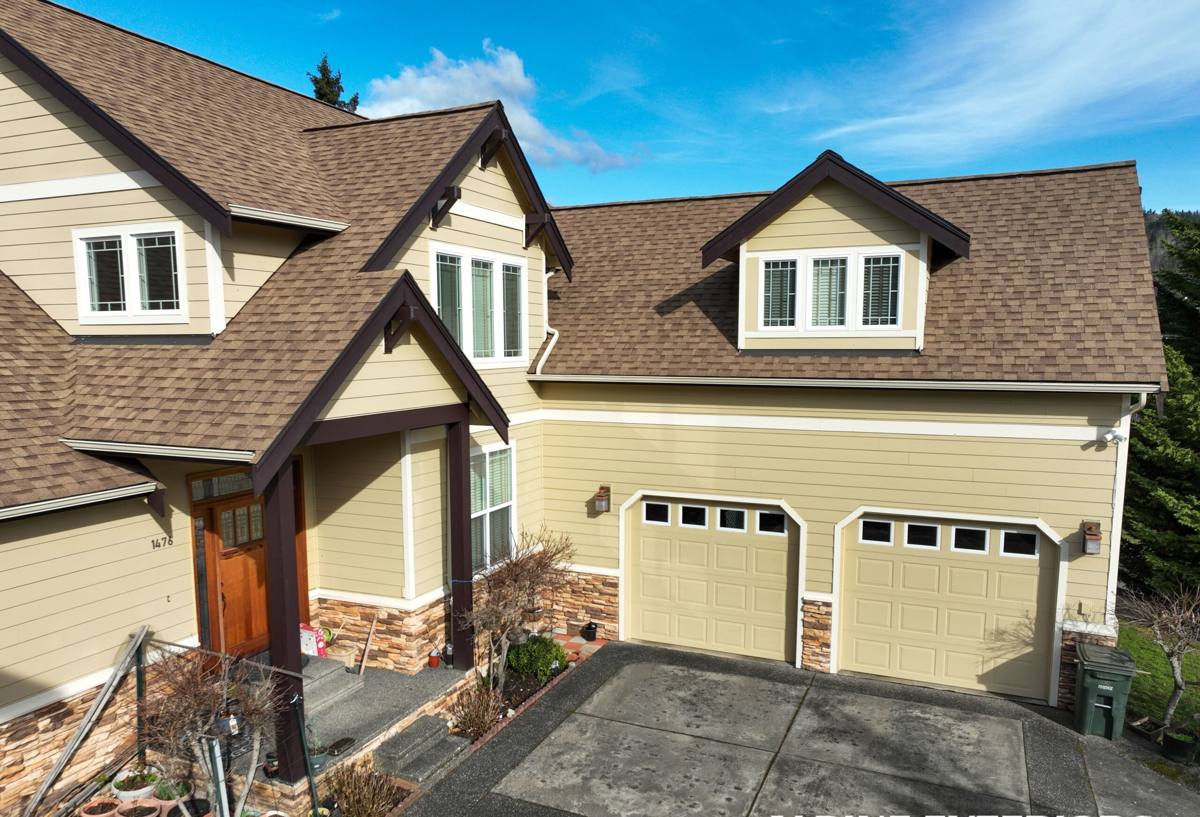
Signs a Deming Roof Needs Repair, Not a Full Replacement
Most homeowners call us because of a symptom — a stain on a ceiling, a draft in an upstairs room, a shingle they found in the yard after a windstorm. The trick is figuring out whether that symptom points to a contained, repairable problem or something that signals the whole roof system is failing. Here's what usually falls into the "repair" category:
- A single active leak with a clear, traceable source — flashing, a boot, a valley, or a small area of damaged shingles
- Wind or storm damage limited to one section or slope of the roof
- Moss or organic growth causing localized moisture intrusion, but the decking underneath is still sound
- A skylight, chimney, or vent penetration that was never flashed correctly and is now letting water in
- Isolated granule loss or cracking on shingles that are otherwise within their service life
If instead you're seeing widespread curling or bald shingles across most of the roof, soft or spongy decking in multiple spots, or a roof that's already past its expected lifespan for the material it's made of, repair becomes a short-term patch rather than a real fix. Part of our job on every visit is telling you honestly which category your roof falls into — even when that means recommending less work, not more.
Why the Diagnosis Matters More Than the Patch
A leak rarely shows up directly above where the water is entering. Water travels along decking, follows a rafter, and drips somewhere downstream of the actual failure point. Repairing drywall or slapping sealant where a stain appears, without tracing the leak back to its source, is the single most common reason a "fixed" roof leaks again within a season. We start every repair by finding the actual entry point, not just the visible symptom.
What a Correct Roof Repair Actually Involves
A roof repair sounds simple from the outside — replace some shingles, seal a gap, done. Done right, it's more deliberate than that. Correct repair work means matching the fix to how the rest of the roof is built and behaving, not just covering the hole.
Diagnosing the Real Source of a Leak
This starts on the roof itself, not just in the attic. We look at flashing around chimneys, skylights, and wall intersections; check valleys where two roof planes meet and water concentrates; and examine vent boots, which are one of the most common failure points on any roof in this region because the rubber collar degrades faster than the shingles around it. We also check the attic side when accessible, since staining patterns, insulation condition, and any signs of past moisture tell us how long a problem has actually been developing.
Matching Materials and Techniques to the Existing Roof
A repair should be close to invisible in both appearance and performance. That means using compatible materials — matching shingle profile and, where possible, color; using the correct underlayment and flashing metal for the application; and fastening and sealing the way the original installation should have been done, not just however is fastest. Cutting corners on a repair — using the wrong sealant instead of proper flashing, for example — tends to fail again within a year or two, which is a maintenance burden and cost you shouldn't have to carry twice.
Moss, Moisture, and Tree Cover: Deming's Particular Problem
Roofs in more open, exposed parts of Whatcom County dry out between rain events. Roofs shaded by conifers and set back from open wind — which describes a lot of Deming properties — don't get that same drying window. Moisture sits longer, moss and organic debris accumulate faster, and a long moss season becomes a near-constant one on north-facing slopes and anywhere shade lingers into the afternoon.
Why Moss Is More Than a Cosmetic Problem
Moss holds water against the shingle surface instead of letting it run off. Over time, its root structure lifts shingle edges and granules, which accelerates wear in exactly the spots moss tends to colonize first — ridges, valleys, and shaded slopes. Left alone long enough, moss growth doesn't just shorten shingle life; it creates the damp micro-environment that leads to decking rot underneath, which is a much bigger and more expensive repair than the moss itself.
Safe Moss and Debris Removal
Pressure washing a roof is one of the fastest ways to strip granules and shorten a shingle's life, so we don't do it. Proper moss removal means low-pressure methods, hand tools where needed, and treatments that kill moss at the root without damaging the roofing material or running off into landscaping. Combined with keeping gutters and valleys clear of needle and leaf debris — which accumulates quickly under tree cover — this is the single most effective thing a Deming homeowner can do to extend a roof's life between actual repairs.
How Our Repair Process Works
We keep the process straightforward because most homeowners calling about a roof repair are already dealing with a stressful situation — a leak, a storm, or a surprise during a home sale inspection. Here's what to expect:
1. Inspection and Honest Estimate
We walk the roof, check the attic when accessible, and identify the actual cause of the problem — not just the symptom you called about. You get a written estimate that explains what we found and what it will take to fix it, in plain language, before any work starts.
2. The Repair Itself
Most Deming repairs are completed in a single visit. We remove damaged material back to sound decking, replace what's compromised, correct any flashing or ventilation issues that contributed to the problem, and install matching materials fastened and sealed to hold up against this area's driving rain and wind.
3. Cleanup and Follow-Up
We clear debris, old materials, and any nails or fasteners from the property, including a magnetic sweep of the ground below the work area. If the repair was tied to a leak, we're available to check back after the next significant rain to confirm it's holding — a roof repair isn't done until it's actually kept water out through real weather, not just looked finished on a dry day.
Roof Repair vs. Roof Replacement: What Actually Drives the Decision
Homeowners often assume any roof problem means a full replacement is coming. That's frequently not true, but it's worth understanding what factors push a roof from one category into the other.
| Factor | Points Toward Repair | Points Toward Replacement |
|---|---|---|
| Roof age | Well within expected material lifespan | At or beyond expected lifespan for the material |
| Extent of damage | Localized to one area or slope | Spread across most or all of the roof |
| Decking condition | Sound, no soft spots | Soft, rotted, or delaminated in multiple areas |
| Leak history | First occurrence, clear single cause | Repeated leaks in different spots over time |
| Moss/moisture damage | Surface-level, caught early | Long-term growth with underlying rot |
Cost is obviously part of this conversation too, and it's fair to ask about it up front. A contained repair is a fraction of the cost of a full roof, while a roof nearing the end of its life that keeps generating new leaks can end up costing more in repeated repair visits than a planned replacement would have. We'll tell you honestly which side of that line your roof is on rather than defaulting to whichever answer is more profitable for us.
Materials We Repair
Deming has a mix of roofing types across older farmhouses, newer builds, and everything in between. We work on the common residential roofing materials found throughout Whatcom County, including composition (asphalt) shingles, architectural shingles, metal roofing, and cedar shake. Each material fails differently and needs a different repair approach — a metal roof leak is almost always a fastener or seam issue, while a shingle roof leak more often traces back to flashing or wind-lifted material. Knowing the difference is why a generalist handyman patch job and a proper roofing repair often produce very different results a year later.
Why a Crew That Already Works Out Here Matters
A roofing contractor based out of Lynden who regularly works Deming and the surrounding foothill communities has already seen how tree cover, valley moisture, and this area's rain patterns actually behave on roofs — not in theory, but on real jobs. That matters for a few practical reasons: we know which failure points tend to show up first on shaded, wooded lots; we're not learning the drive or the terrain on your dime; and we're a known, reachable crew if a repair needs a follow-up check after the next storm rather than a company that did one job in the area and moved on. For a repair — where getting the diagnosis right the first time is most of the job — that local familiarity isn't a nice-to-have, it's the difference between a fix that holds and one that doesn't.
Between-Visit Checklist for Deming Homeowners
You don't need to get on your own roof to stay ahead of most problems. A few habits catch small issues before they become repair calls:
- Check gutters and valleys after major windstorms for needle and leaf buildup, especially under mature trees
- Look for streaking, dark patches, or visible moss from the ground after the wet season sets in
- Scan ceilings and upper closets periodically for new staining, even faint or small
- Note any shingle pieces or granules found in gutters or on the ground after storms
- Have the roof inspected before a known long stretch of heavy rain, not just after a leak appears
- Keep tree limbs trimmed back from the roofline to reduce shade, debris, and abrasion
If you're seeing any of these signs, or it's just been a while since anyone looked at your roof from up close, we're happy to come take a look. Get in touch for a free, no-pressure estimate — we'll tell you plainly what we find and what, if anything, it actually needs.