 Lynden Roofing
 Deming's Climate Is Hard on a Roof — Here's Why
Deming sits in the Nooksack River valley, in the foothills that climb toward Mt Baker, and that location matters when you're picking a roof. Moisture-laden marine air pushes up the valley from Bellingham Bay and stalls against the rising terrain, which means Deming properties often see more rain, more standing damp, and longer stretches of shade under fir and cedar canopy than homes closer to the water. Add in the elevation gain toward the mountain and you get heavier snow loads in a hard winter than most of lowland Whatcom County ever sees.
None of that is exotic weather. It's just persistent, and persistent is what wears out a roof. A shingle roof that would hold up fine in a drier part of the state can start showing moss, granule loss, and soft spots years earlier in a valley like this one.
Moss, Moisture, and Shade
Moss needs three things to take hold: shade, moisture, and something to grip onto. Deming's tree cover and long wet season supply the first two automatically, and a rough shingle surface supplies the third. Once moss establishes itself, it holds water against the roof deck, and that's when rot starts — usually invisible from the ground until it's already a repair, not a maintenance item.
Wind-Driven Rain and Valley Weather
Storms funneling through the valley don't always come straight down. Wind-driven rain finds its way under poorly lapped flashing, around chimney and vent penetrations, and along ridge lines that weren't detailed correctly the first time. On a roof with twenty years of exposure to that pattern, small installation shortcuts eventually become the reason for a leak.
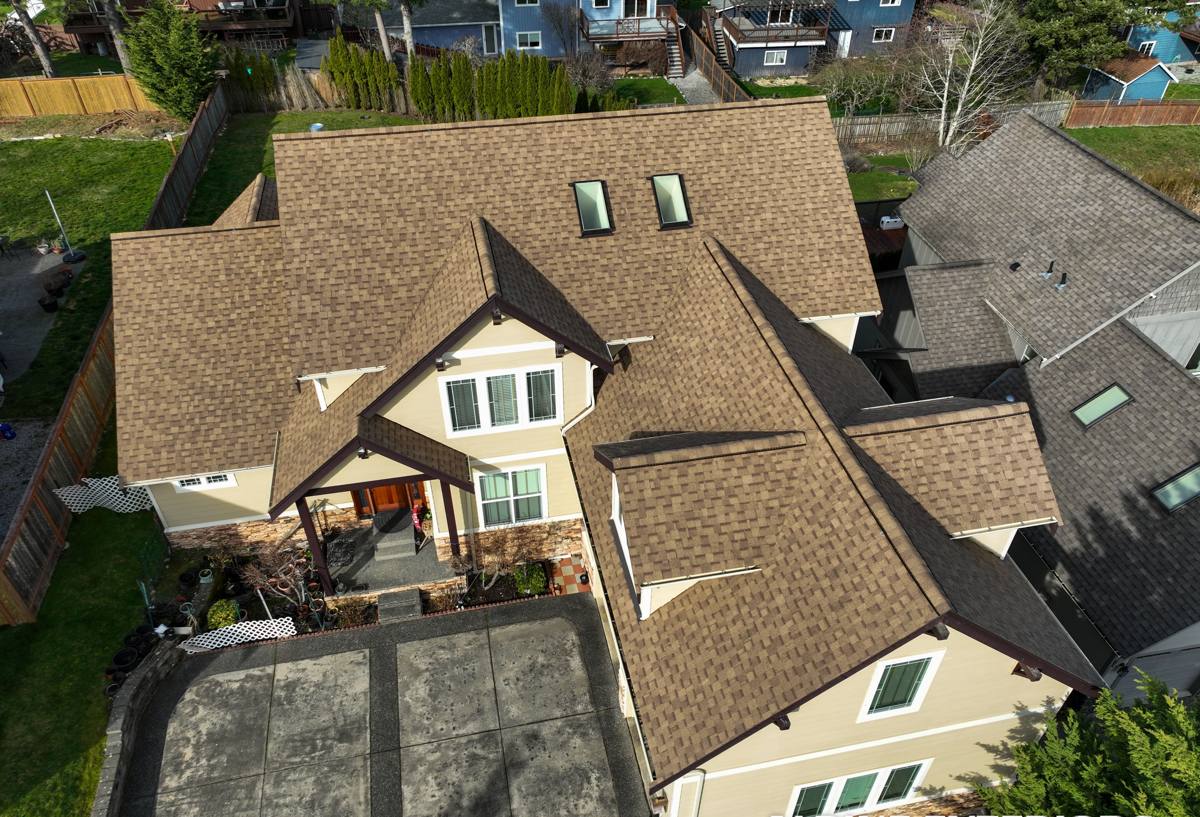
Why Metal Roofing Makes Sense Here
Metal isn't the right choice for every home or every budget, and we'll say so plainly if it isn't right for yours. But for a lot of Deming properties — steep, tree-shaded roofs in a wet valley — it solves problems that asphalt shingles struggle with:
- Moss resistance: a smooth metal surface gives moss far less to grip, and steep-slope metal sheds water and debris faster than a shingle roof of the same pitch.
- Snow shedding: metal's low-friction surface lets snow slide off instead of building up in a heavy load event, which matters more here than in the lowlands.
- Longevity: a correctly installed metal roof commonly outlasts two or more shingle roofs, which matters on rural acreage where re-roofing access and driveway conditions can add real cost each time.
- Fire exposure: metal roofing carries a Class A fire rating, worth factoring in on wooded, tree-lined properties.
The trade-off is upfront cost and installation sensitivity — metal punishes a sloppy install far more visibly and more expensively than shingles do, which is really the whole argument for hiring carefully. More on that below.
What a Correct Metal Roof Installation Actually Involves
Metal roofing looks simple from the ground — panels, seams, done. The part that actually determines whether it performs for thirty-plus years happens underneath and at the details, not in the panel itself.
Deck Prep and Underlayment
We check the roof deck for soft spots and rot before anything goes down — common on older Deming roofs that have been holding moss or moisture longer than the homeowner realized. Then comes a synthetic underlayment rated for the panel system, plus a self-adhered ice-and-water barrier at eaves, valleys, and around every penetration. In a valley climate with driving rain, that barrier is not optional trim; it's the layer that keeps wind-driven water out when it gets under the panels.
Fastening and Flashing
Exposed-fastener panels rely on screws with rubber washers that compress correctly and are spaced to the manufacturer's pattern — under-torqued or over-torqued screws are the single most common cause of a metal roof leak we see on inspections. Standing seam systems use concealed clips instead, which avoids that failure point entirely but costs more to install. Either way, flashing at chimneys, skylights, ridges, and valleys has to be formed and lapped correctly — this is where water actually gets in, far more often than through the panel field.
Ventilation
Metal roofs need a properly vented attic or roof assembly to manage condensation. Skipping this is how you end up with moisture problems inside a roof that's doing a fine job of keeping rain outside.
Choosing a Metal System for Your Deming Home
There isn't one "best" metal roof — there's a best fit for your roof's pitch, your budget, and how long you plan to own the home. Here's how the common options actually compare:
| System | Typical Lifespan | Best Fit | Trade-offs |
|---|---|---|---|
| Standing seam (concealed fastener) | 40-60+ years | Steep, visible roofs; long-term owners | Higher upfront cost; requires experienced crew |
| Exposed-fastener panel | 25-40 years | Budget-conscious projects, outbuildings, simpler rooflines | Fasteners need periodic inspection/tightening over time |
| Stone-coated steel | 30-50 years | Homeowners who want a shingle or shake look with metal performance | More installation detail at coating edges; higher material cost |
For most Deming homes with real pitch and tree exposure, we lean toward standing seam or a well-installed exposed-fastener system depending on budget — we'll walk your specific roof and give you a straight recommendation rather than push whatever earns the highest margin.
Our Process, Start to Finish
- On-site assessment: we walk the roof, check the deck condition, and look at drainage, tree exposure, and existing moss or rot before quoting anything.
- Written estimate: a clear scope — tear-off, deck repair if needed, underlayment, panel system, flashing detail, and a firm price, not a range that grows once we start.
- Tear-off and deck inspection: old roofing comes off and we confirm the deck underneath is sound before covering it back up.
- Underlayment and flashing installation: ice-and-water barrier at vulnerable points, synthetic underlayment across the field, new flashing formed to the roof's actual geometry.
- Panel installation: installed to manufacturer fastening and spacing specs, not shortcuts.
- Final walkthrough: we go over the finished roof with you, including what maintenance (if any) it actually needs going forward.
Maintenance: What to Actually Expect
One of metal roofing's real advantages in this climate is how little upkeep it needs compared to shingles — but "little" isn't "none." A short annual check catches small issues before they're expensive ones:
- Clear needles, leaves, and debris from valleys and gutters, especially after fall storms.
- Check exposed fasteners (if that's your system) for backing out or loose washers every few years.
- Look at flashing around chimneys, vents, and skylights for gaps or sealant wear.
- Trim back overhanging branches that keep sections of roof shaded and damp.
- Confirm attic ventilation isn't blocked by insulation or debris.
Why Hire a Crew That Already Works in Deming
Roofing crews that mostly work in-town don't always think about the things that matter on rural, wooded Whatcom County properties: longer driveways that affect material staging and equipment access, septic and well locations that need to stay clear during tear-off, heavier tree debris load in gutters and valleys, and the reality that a foothill roof sees more weather exposure than one a few miles closer to town.
A crew that's already done roofs in and around Deming also knows the local permitting process, understands what county inspectors look for, and isn't guessing about how a given roof pitch and tree cover combination is going to behave over a wet winter. That's not a marketing point — it's the difference between a roof that's installed correctly for its actual environment and one that's installed correctly for a textbook.
What Affects the Cost of a Metal Roof in Deming
| Factor | Why It Matters |
|---|---|
| Roof pitch and complexity | Steeper, multi-plane roofs take longer to flash correctly and use more material at valleys and hips. |
| Tear-off vs. overlay | Full tear-off costs more upfront but lets us inspect and repair the deck — important on a roof that's been holding moisture. |
| Panel system chosen | Standing seam costs more per square than exposed-fastener panel, offset by a longer service life. |
| Deck repair needed | Rot from long-term moss or moisture exposure means replacing sheathing before the new roof goes on. |
| Access and site conditions | Long driveways, steep grades, and heavy tree cover on rural lots can affect staging and labor time. |
We give a firm number after seeing the actual roof, not a phone estimate — too many of these factors only show up once we're standing on the deck.
If you're weighing metal roofing for a home in Deming, we're glad to come take a look, walk you through what your specific roof needs, and give you a straightforward, no-pressure estimate — no obligation either way. The form below is the easiest way to get that started.