 Lynden Roofing
 Deck Replacement Built for Deming's Conditions
Deming sits back in the trees along the Mount Baker Highway corridor, and that setting cuts both ways. The tree cover and river-valley humidity that make the area beautiful also make it hard on an exposed wood structure. Marine air moving inland off the Salish Sea, combined with heavy shade from fir and cedar canopy, means decks here stay damp longer after every storm than a deck out in open sun would. Add a moss season that can stretch from fall through spring, and you've got a structure that's fighting moisture almost year-round.
A deck replacement done right in this area isn't just about swapping old boards for new ones. It's about building in drainage, airflow, and fastener choices that account for how slowly things dry out here. That's the difference between a deck that needs attention again in five years and one that holds up for decades.
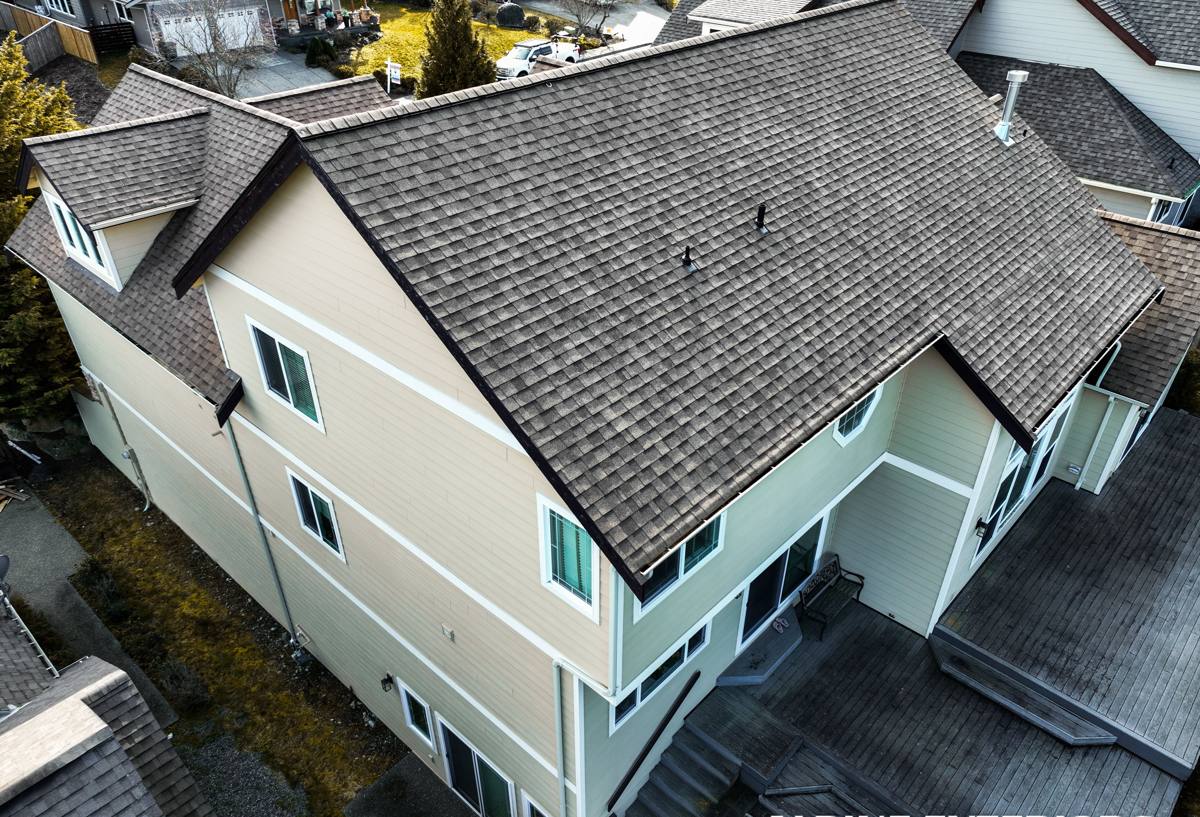
Why Decks in This Area Wear Out Faster Than Expected
Most of the deck failures we see in Deming trace back to the same root causes:
- Shade and slow drying — decks tucked under tree canopy or on the north side of a house can stay wet for days after a rain, which accelerates rot in wood framing and decking.
- Moss and algae buildup — moss holds moisture directly against the board surface, and on wood decking it works into the grain and speeds up decay from the top down, not just underneath.
- Ledger board and joist rot — the connection point where a deck attaches to the house is the single most common failure point we find, especially on older decks that were never properly flashed.
- Ground-contact posts — support posts set directly in soil or sitting flush on concrete without a proper base connector wick up moisture and rot from the bottom up, often invisibly until the deck starts to feel spongy.
- Fastener corrosion — older nails and non-rated screws rust and lose their grip faster in a consistently damp environment, which is why boards start to lift or squeak long before they visibly rot.
Signs It's Time to Replace, Not Just Repair
Repair makes sense when the problem is isolated — a few boards, a loose railing baluster, a stair tread. Replacement makes sense once the damage is structural or widespread. Walk your deck and check for these:
- Soft, spongy, or bouncy spots in the decking or framing underneath
- Visible gaps or dark staining where the deck meets the house (a sign of ledger board separation or water intrusion)
- Posts that feel soft when you press a screwdriver into them near ground level
- Railings that wiggle or flex when leaned on
- Rust streaks bleeding from fastener heads across multiple boards
- A wood deck older than 15-20 years that's never been re-sealed or maintained on a regular schedule
- More than roughly a quarter of the decking boards showing rot, cupping, or splitting
If you're only checking one or two boxes, a repair may buy you real time. If you're checking several, especially anything involving the framing or posts, replacement is usually the more honest recommendation — patching structural problems tends to cost more over time than doing it right once.
What a Correct Deck Replacement Actually Involves
Framing and ledger attachment
The ledger board — where the deck bolts into the house rim joist — has to be flashed properly so water sheds away from the house rather than pooling behind the board. This is the part of a deck that's completely hidden once the project is done, and it's also the part that causes the most expensive damage when it's skipped or done poorly. We use structural lag screws or through-bolts rated for exterior use, not nails, and joist hangers rated for outdoor exposure.
Footings and posts
Posts need a proper concrete footing set below frost depth, with a post base connector that holds the wood up off the concrete surface — never wood buried in soil or resting flat on a slab. This single detail is the biggest predictor of how long a deck's structure will actually last in a wet climate.
Decking, fasteners, and airflow
Boards should be spaced to allow drainage and air movement underneath, with corrosion-resistant fasteners matched to the decking material. On shaded lots we also pay attention to how the joist layout affects standing water and moss growth on the framing itself, not just the visible surface.
Choosing a Decking Material for This Climate
There's no single "best" decking material — it depends on how much maintenance you want to take on versus what you're willing to spend up front. Here's how the common options actually behave in a shaded, wet, moss-prone setting like Deming:
| Material | Moisture Behavior | Maintenance | Typical Lifespan |
|---|---|---|---|
| Pressure-treated wood | Resists rot chemically, but absorbs water and can cup or warp if not sealed regularly | Annual cleaning + re-sealing recommended, especially in shade | 10-15 years with upkeep |
| Cedar | Naturally rot-resistant but softer; still needs sealing to fight moss and graying | Regular cleaning and periodic sealing | 15-20 years with upkeep |
| Capped composite | Doesn't absorb water into the core; moss and algae can still grow on the surface film and need washing off | Occasional washing, no sealing or staining | 25-30+ years |
| PVC decking | Fully synthetic, essentially waterproof; least prone to moss taking hold since there's no organic material to feed on | Lowest maintenance of the group | 25-30+ years |
For heavily shaded Deming lots specifically, we lean toward recommending composite or PVC when budget allows, simply because the maintenance burden of keeping wood sealed on a schedule in a low-sun, high-moisture spot is a lot to ask of a homeowner. That said, plenty of well-maintained wood decks in this area last for decades — it comes down to whether you're willing to stay on top of the upkeep.
Our Deck Replacement Process
- On-site assessment — we check the framing, ledger, posts, and footings, not just the decking surface, so you know exactly what's driving the failure.
- Honest scope discussion — we tell you plainly whether you need a full structural rebuild or whether the framing is sound and only the decking needs replacing.
- Tear-out — full removal of old decking, railings, and any compromised framing or posts.
- Structural rebuild — new or reinforced framing, properly flashed ledger connection, and footings/posts brought up to a durable standard.
- Decking and railing install — installed per the manufacturer's spacing and fastening specs for whichever material you choose.
- Final walkthrough — we go over the finished deck with you, including any maintenance recommendations specific to your site's sun and shade exposure.
Permits and Code Basics
Most deck replacements that involve structural work — new footings, ledger reattachment, or railing changes — require a building permit in Whatcom County. Guardrail height, stair rise and run, and footing depth all have to meet current code, and those requirements exist for real safety reasons, not paperwork for its own sake. Skipping the permit might save a little time up front, but it can create real problems later at resale or with insurance if the work isn't documented. We handle the permit process as part of the job rather than leaving it for the homeowner to sort out.
Why a Crew That Already Works This Area Matters
Deming properties tend to be different from a typical in-town lot — longer driveways, more tree cover to work around, wells or septic systems to be careful of, and access that can get tricky during the wet season. A crew that's worked in and around Lynden and the surrounding Whatcom County communities already knows to plan for these things: staging materials so equipment isn't tearing up a soaked yard, protecting root zones near mature trees, and scheduling around the wettest stretches of the year when possible. That local familiarity isn't a luxury — it's what keeps a project on schedule and keeps your property intact when it's done.
What Affects the Cost of a Deck Replacement
| Factor | Why It Matters |
|---|---|
| Deck size and layout | More square footage, multiple levels, or built-in features (benches, planters) add material and labor |
| Decking material | Wood costs less up front; composite and PVC cost more initially but less over the deck's lifespan |
| Structural condition | Rotted framing, posts, or footings found during tear-out add to the scope — this is common on older decks in shaded spots |
| Site access | Tree-covered or hard-to-reach lots can mean more hand-carrying material and slower staging |
| Railings and stairs | Style and material choice for railings and stair systems affect both cost and long-term maintenance |
| Permit requirements | Structural changes typically require a permit, which adds a modest cost but protects you long-term |
We won't quote a number without seeing the deck in person — too much of the real cost depends on what's underneath the surface, and guessing at that isn't fair to you or to us.
Get a Straight Answer About Your Deck
If your deck is showing signs of trouble, the most useful next step is having someone look at the framing, not just the boards on top. We offer free, no-pressure estimates for deck replacement in Deming and the surrounding area — use the form below to get one scheduled.