 Lynden Roofing
 Building a Deck That Actually Holds Up in Deming
Deming sits back from the coast, tucked into the foothills along the Mt. Baker corridor in Whatcom County, but it doesn't escape the weather pattern that shapes every outdoor structure in this part of Washington. Homes here deal with a long wet season, moss that finds a foothold on anything horizontal, and enough driving rain to test every joint and fastener a deck has. A deck built for a drier climate, or built by a crew that hasn't worked this area before, tends to show its age fast here: soft spots near the house, mossy boards that stay slick into June, and railings that loosen before the warranty paperwork is even filed away. A deck built right for Deming should still be solid a decade or two from now, not just good-looking in the first summer.
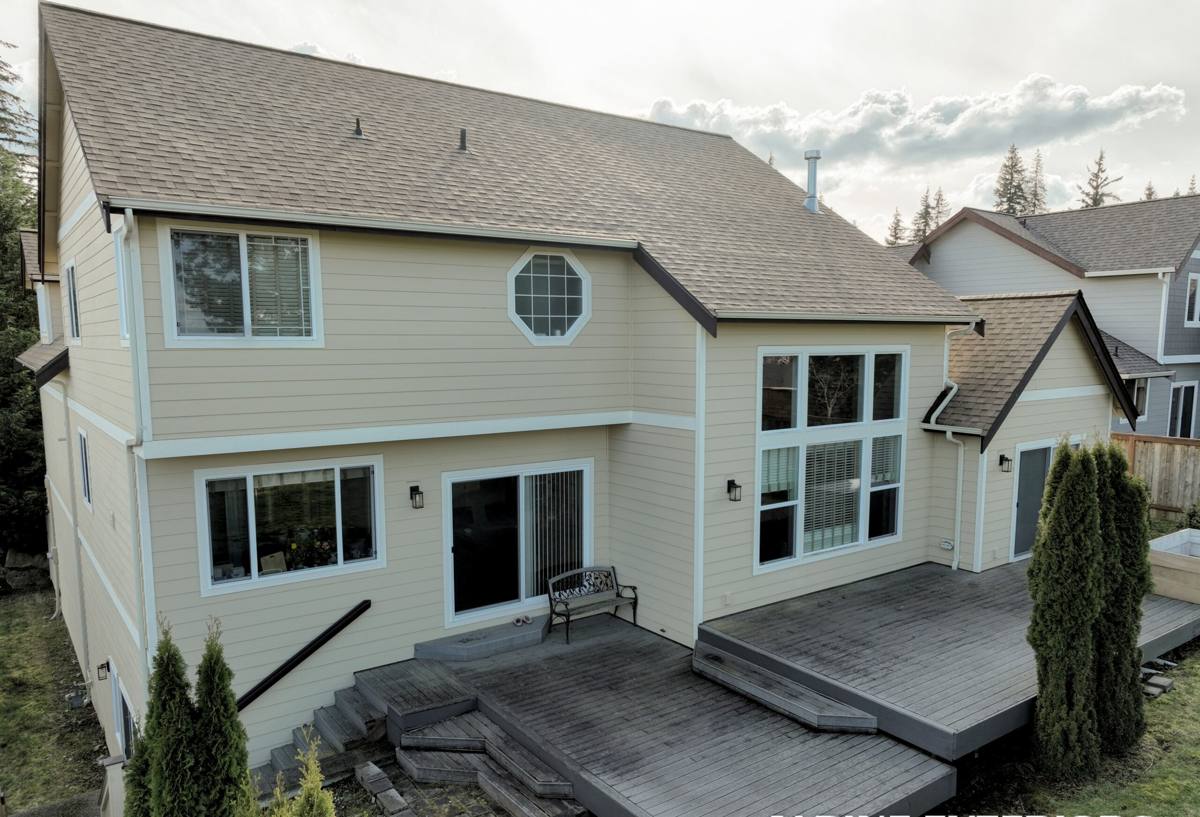
What This Climate Actually Does to a Deck
It helps to understand the specific ways Whatcom County weather works against an outdoor structure, because it changes almost every decision in the build — not just the decking boards on top.
Moisture that never fully leaves
The long stretch of overcast, wet months means wood, fasteners, and framing rarely get a chance to dry out completely between rains. Any spot where water can pool, wick, or sit against wood — a poorly flashed ledger board, a joist without an air gap, decking laid tight with no drainage path — becomes a slow rot problem instead of a fast one. Slow rot is worse in a way, because it's invisible until a board fails underfoot.
Moss and algae growth
Constant dampness plus shade from trees or the house itself gives moss and algae exactly what they need. On the wrong surface, that's not just cosmetic — moss holds moisture against the board, and a deck surface with a moss carpet on it turns dangerously slick the moment it rains, which in Deming is often.
Salt air and driving rain
Even away from the immediate shoreline, this region gets weather systems that carry salt-laden air and wind-driven rain that hits horizontal and vertical surfaces alike, not just the ones facing straight up. That means fasteners, hardware, and any exposed metal need to be rated for it — regular coated screws and generic brackets corrode faster than homeowners expect, and once a fastener starts to go, the connection it's holding gets weaker every season.
Freeze-thaw cycling
Whatcom County doesn't get deep, sustained freezes most winters, but it does get enough freeze-thaw swings to matter. Water that's worked its way into a crack, a post base, or an under-sized footing expands when it freezes and works the damage a little further every cycle. Footings poured too shallow or without proper drainage are the most common casualty.
Getting the Structure Right, Not Just the Surface
A deck is a structure first and a surface second. The decking boards are what a homeowner sees and touches, but the framing underneath is what determines whether the deck is safe and long-lived. We treat the structural work as the non-negotiable part of the job.
Footings and posts
Footings need to go below frost depth and bear on undisturbed, well-draining soil — not fill dirt or a shallow pour that looked fine on a dry day. Post bases should hold the post above the concrete, never buried in it, so water has nowhere to sit against the wood or wick upward.
Ledger board and flashing
Where a deck attaches to the house is the single most common failure point we see on older decks in this climate, because it's the one spot where the structure meets the building envelope. Proper flashing — installed in the right sequence, lapped correctly, and sealed where it needs to be — keeps water from working its way behind the siding and into the rim joist. A deck can look perfect from the yard and still be rotting the house behind it if this step was rushed.
Joist spacing and hardware
Joist spacing should match the decking material's actual span rating, not just a generic on-center number. Composite and PVC boards often need tighter spacing than wood to avoid flexing or long-term sagging. All structural hardware — joist hangers, hurricane ties, post caps — should be corrosion-resistant hardware appropriate for coastal-influenced, wet climates, not the cheapest box on the shelf.
Choosing Decking Material for Deming Conditions
There's no single right answer for every homeowner — budget, maintenance appetite, and how the space gets used all factor in. What matters is picking with the local climate in mind rather than picking on looks alone.
| Material | How it handles moss & moisture | Maintenance | Typical lifespan here |
|---|---|---|---|
| Pressure-treated wood | Resists rot chemically but surface still holds moisture and grows moss if not cleaned | Annual cleaning, periodic staining/sealing | 15-20 years with upkeep |
| Cedar | Naturally rot-resistant, but surface still needs attention in constant damp | Regular cleaning and re-oiling to hold color and resist moss | 15-25 years with upkeep |
| Composite | Doesn't rot, but can grow surface algae/moss in shaded, wet spots without cleaning | Occasional washing, no staining or sealing needed | 25-30+ years |
| PVC/vinyl decking | Fully moisture-resistant, least hospitable surface for moss buildup | Lowest maintenance — washing only | 25-30+ years |
We'll walk through these trade-offs honestly during an estimate rather than steering every homeowner toward the highest-margin product. Wood costs less up front and can look great, but it asks for a maintenance commitment every year in this climate. Composite and PVC cost more initially but hand back a lot of that maintenance time, especially in the shaded, damp yards common around Deming's tree-covered lots.
How We Approach a Deck Build in Deming
The process is straightforward, but we don't skip steps to move faster, because the steps we'd be tempted to skip are exactly the ones that cause problems five years down the road.
- Site walk and design conversation — we look at drainage, sun/shade exposure, tree cover, and how the deck ties into the house before talking materials.
- Permit and code check — Whatcom County and local jurisdiction requirements around footing depth, guardrail height, and attachment method get confirmed before we start, not discovered mid-build.
- Footings and framing — proper depth footings, corrosion-resistant hardware, and correctly flashed ledger connection.
- Decking installation — spacing and fastening matched to the chosen material's specifications, with attention to drainage gaps so water doesn't sit on the surface.
- Railings and finish details — code-compliant railing height and baluster spacing, with hardware rated for the salt-air exposure common in this region.
- Final walkthrough — we go over care and maintenance expectations specific to the material chosen, so there are no surprises the first wet season.
Guardrails, Code, and the Details Homeowners Don't Always Think About
Deck failures that make the news are almost always guardrail or connection failures, not decking board failures. Whatcom County building code sets minimum standards for guardrail height, baluster spacing, and structural attachment for a reason — these aren't paperwork requirements, they're the difference between a deck that's safe for a family gathering and one that isn't. We build to code as the floor, not the ceiling, and we handle the permit process as part of the job rather than leaving homeowners to sort it out.
Maintenance That Actually Matters in This Climate
Every deck material benefits from some upkeep, but in a climate with this much moss pressure and driving rain, a few habits make an outsized difference in how long the deck stays safe and good-looking.
- Sweep or blow off leaves and debris regularly, especially in fall — trapped organic matter is what feeds moss growth.
- Wash the surface at least once a year with a deck-safe cleaner, more often in heavily shaded spots.
- Check and clear gaps between boards so water has somewhere to drain instead of pooling.
- Inspect railing connections and structural hardware annually for corrosion or loosening.
- Re-stain or re-seal wood decking on the schedule the product calls for — skipping a cycle in this climate shows up fast.
- Look underneath the deck occasionally for signs of moisture damage near the ledger board connection to the house.
Why a Crew That Already Works Deming Makes a Difference
A deck built by a crew unfamiliar with this specific climate often looks the same as one built by a local crew — for the first year. The difference shows up in how it ages. Knowing to spec tighter joist spacing for a shaded, damp lot, knowing which hardware actually holds up against the salt-air influence this region gets, and knowing what Whatcom County inspectors expect on footing depth and railing details all come from doing this work here repeatedly, not from a general contractor's manual. We've built and repaired decks throughout the Lynden area and the surrounding Whatcom County communities, and Deming's mix of tree cover, rural lot sizes, and damp-season exposure is a pattern we recognize rather than something we're learning on a homeowner's project.
What a Straightforward Deck Project Involves
Every property is different — lot slope, tree cover, how the deck ties into the house, and the material a homeowner chooses all affect scope and cost. Broadly, homeowners should expect a range that reflects deck size, decking material, and any structural work needed to tie into an existing house safely, rather than a flat per-square-foot number that ignores those factors. We'll give a clear, itemized estimate before any work starts, so there's no ambiguity about what's included.
If you're planning a new deck or replacing an aging one in the Deming area, we're glad to come take a look and talk through what your specific lot and house need. There's no pressure and no cost to get an honest assessment and a written estimate — just fill out the form below to get started.