 Lynden Roofing
 Windows Built for Deming's Weather, Not Just Its Style
Deming sits in a part of Whatcom County where the weather doesn't ask permission. Homes here take on a steady diet of driving rain off the water, damp marine air that never fully dries out, and a moss season that can stretch for months. Ordinary windows — the kind built for a drier, milder climate — start showing their age fast under these conditions. Seals fail early, frames swell or rot, and glass fogs between panes years before it should.
Custom windows aren't just about matching a home's architecture, though that matters too. In Deming, "custom" also means sized, sealed, and specified correctly for a house that sits under tree cover, catches wind-driven rain on certain elevations, and deals with humidity that ordinary big-box windows were never tested against. A window that works fine in Spokane can fail in five years out here.
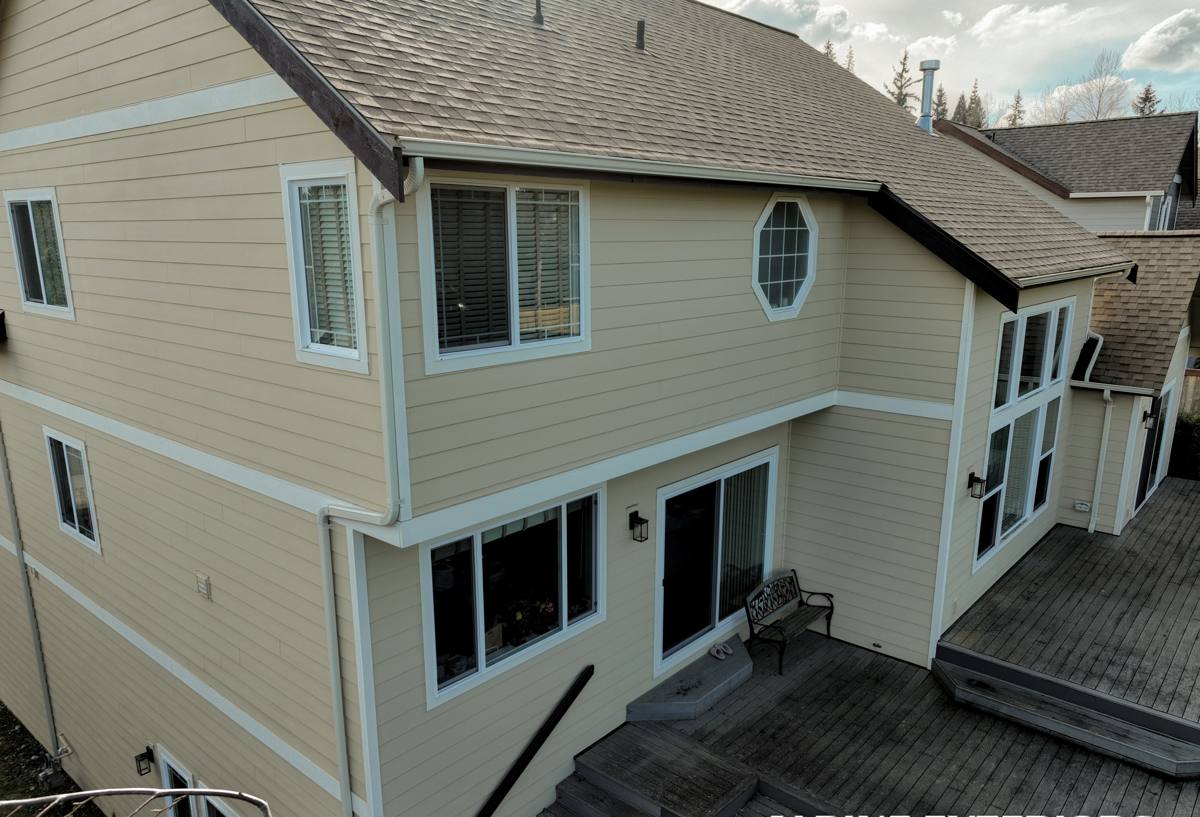
What Salt Air, Rain, and Moss Actually Do to a Window
It helps to understand the specific ways Whatcom County's climate attacks a window system, because it explains why we make the choices we do.
Salt-Influenced Marine Air
Even away from the immediate shoreline, the marine air that moves through this part of the county carries moisture and mineral content that's harder on exposed metal hardware, fasteners, and unprotected finishes than dry inland air. Cheap hinges, latches, and screws corrode faster. Anodized or powder-coated finishes hold up; bare or lightly coated metal doesn't.
Driving Rain
Rain in this region doesn't just fall — wind pushes it sideways into wall assemblies, especially on west- and south-facing elevations. A window that isn't flashed and sealed correctly at the rough opening will let water track behind the frame, where it soaks sheathing and framing long before anyone notices a stain inside. By the time you see a soft spot on the interior sill, the damage has usually been building for a year or more.
Moss and Sustained Damp
A long moss season means prolonged periods where wood surfaces, sills, and even glazing beads stay damp for days at a time. Moss and algae hold moisture against the surface they grow on, which accelerates rot in any wood component that isn't properly sealed or clad. Window sills and lower frame sections are especially exposed because they collect standing water and organic debris.
Signs a Deming Home's Windows Are Losing the Fight
- Foggy or hazy glass between panes — the seal has failed and the gas fill is gone
- Soft, spongy, or discolored wood at the sill or lower frame corners
- Visible moss or dark streaking on the exterior frame or trim
- Drafts or cold spots near the window even when it's fully latched
- Difficulty opening, closing, or latching — a sign the frame has swelled or shifted
- Condensation forming on the interior glass regularly during cooler months
- Paint or finish that's peeling or bubbling on the exterior frame
Any one of these on its own isn't necessarily an emergency, but several together usually mean the window system — not just the glass — needs attention.
What a Correct Custom Window Job Actually Involves
A lot of window "replacements" are really just glass swaps dropped into an old, possibly compromised opening. That approach can work for a straightforward job, but it doesn't address the underlying issue if the original installation was ever the weak point. A proper custom job in this climate covers more ground:
Assessing the Opening, Not Just the Glass
Before we talk product, we look at the rough opening itself — the condition of the framing, sheathing, and any existing flashing. If there's evidence of past water intrusion, that gets addressed before a new window goes in. Installing a beautiful new window into a wet or rotted opening just hides a problem that will resurface.
Correct Flashing and Water Management
Every window needs a flashing sequence that sheds water down and out, never letting it pool or wick back into the wall assembly. This includes sill pan flashing, properly lapped house wrap or building paper, and head flashing that directs runoff clear of the opening. This step is invisible once the job is done, but it's the single biggest factor in whether a window stays dry for twenty years or leaks in five.
Sizing and Fit
Custom means the window is built or ordered to the actual dimensions of the opening — not the closest stock size with shims and extra caulk making up the difference. A tight, accurate fit reduces the amount of sealant doing structural work and gives the window a cleaner, tighter seal from day one.
Sealing and Insulating the Gap
The perimeter gap between the window frame and the rough opening gets insulated and air-sealed properly — not just stuffed with fiberglass, which can hold moisture, but with a method appropriate to the gap size and location. This is where a lot of drafts and energy loss actually originate, more than through the glass itself.
Choosing the Right Frame Material for This Climate
Frame material is one of the biggest decisions in a custom window project, and it has real consequences for how the window holds up under Deming's conditions.
| Frame Material | How It Handles Sustained Moisture | Maintenance Burden | Best Fit |
|---|---|---|---|
| Vinyl | Doesn't rot; welded corners resist water intrusion if installed correctly | Low — occasional cleaning | Most Deming homes wanting durability without upkeep |
| Fiberglass | Excellent — dimensionally stable, resists warping in damp/cold swings | Low | Homes wanting a premium, long-term option, especially larger openings |
| Wood-clad | Good if the exterior cladding is fully intact; interior wood still needs protection from condensation | Moderate — cladding needs periodic inspection | Homes prioritizing an interior wood look with exterior protection |
| Bare wood | Poor without diligent, ongoing maintenance in this climate | High — regular refinishing required | Historic restoration only, with owner committed to upkeep |
| Aluminum (uninsulated) | Conducts cold and condenses heavily; corrodes faster in marine air without proper coating | Moderate to high | Rarely recommended for residential use here |
We won't put an owner into a frame material that we know is a poor match for the exposure their home actually gets. That's a professional judgment call, not a sales pitch — a west-facing wall that catches driving rain and afternoon sun needs a different answer than a sheltered, tree-covered north wall on the same house.
Glass Packages Worth the Upgrade
Beyond frame material, the glass package matters for both comfort and moisture control:
- Dual-pane with argon fill — the standard baseline for energy performance in this region
- Low-E coatings — help manage heat loss during our long cool, damp stretches
- Warm-edge spacers — reduce condensation risk at the glass edge, which matters given how often interior humidity runs high here
- Triple-pane — worth considering for north-facing rooms or homes with persistent condensation issues, though it adds cost and weight
Our Process, Start to Finish
- On-site assessment — we look at every opening being replaced, checking framing condition, exposure, and existing water damage before quoting anything
- Honest recommendation — we walk through frame material, glass package, and any repair work the opening needs, with real trade-offs explained plainly
- Accurate measurement and ordering — custom sizing so the fit is tight and correct, not shimmed to fit a stock size
- Removal and opening prep — old windows come out carefully, and any compromised sheathing or framing gets repaired before anything new goes in
- Flashing and installation — sill pan, house wrap integration, and head flashing installed in the correct sequence, then the window set, leveled, and fastened
- Insulation and air sealing — the perimeter gap sealed properly, inside and out
- Exterior trim and finish work — trim, caulking, and paint or finish matched to the home
- Final walkthrough — every window operated, checked for square, level, and smooth function before we call it done
Maintenance That Actually Extends Window Life Here
Even a well-installed window benefits from basic seasonal attention in a climate like this one. A short checklist goes a long way:
- Clear moss, needles, and organic debris off sills and tracks each fall
- Check exterior caulking annually for cracks or gaps, especially after a hard winter
- Wipe down and inspect hardware for early corrosion, particularly on west- and south-facing windows
- Watch for condensation patterns on interior glass — a change can signal a ventilation or seal issue
- Keep gutters and downspouts clear so roof runoff isn't sheeting down over window heads
- Repaint or refinish wood-clad exteriors before the finish fully breaks down, not after
When Repair Makes More Sense Than Replacement
Not every window problem means a full replacement. Failed hardware, minor seal issues caught early, or isolated trim rot can sometimes be repaired without pulling the whole unit. We'll tell you honestly when repair is the more sensible option — replacement is the right call when the frame or opening itself has been compromised, not just because a window is a certain age.
Why a Crew That Already Works in Deming Makes a Difference
Window installation done wrong doesn't usually fail on day one — it fails two or three winters later, after the flashing wasn't lapped correctly or the sill wasn't sloped to shed water. A crew that already installs windows throughout Whatcom County has seen how homes in this specific area age, which elevations take the worst of the driving rain, and which shortcuts show up as callbacks. That experience shows up in the details that don't get photographed: how the flashing is sequenced, how the sealant is chosen and applied, how the sill is sloped.
We treat every custom window job as a long-term water management project first and a cosmetic upgrade second. Both matter, but only one of them protects the house.
Get a Straight Answer About Your Windows
If your Deming home has windows that are drafty, fogged, sticking, or just past their prime, we're happy to take a look and give you an honest read on what's going on — repair, replacement, or just routine maintenance. Reach out for a free, no-pressure estimate using the form below.