 Lynden Roofing
 Why Maple Falls Decks Wear Out Faster Than Homeowners Expect
A deck in Maple Falls doesn't fail the same way a deck in a dry climate does. Out here, the damage is slow, quiet, and mostly hidden until a board flexes underfoot or a railing post wobbles more than it should. Whatcom County's weather pattern — long stretches of overcast, moisture-laden air moving in off the Puget Sound and Georgia Strait, and a wet season that can stretch from October well into spring — means a deck's structural wood spends most of the year damp, not dry. That's the real enemy: not a single storm, but months of low-grade moisture exposure repeated year after year.
Add in the tree cover common around Maple Falls properties and you get a longer moss and algae season than a more open, sun-exposed lot would see. Moss holds moisture against the decking surface long after the rain has stopped, which accelerates rot in untreated wood and turns painted or stained surfaces slick and dark. Driving rain — the kind that comes in at an angle instead of straight down — also finds its way into ledger connections, post bases, and stair stringers that a sunnier climate would never stress the same way. None of this means a deck is doomed. It means the materials, fasteners, and drainage details matter more here than they would somewhere drier, and a replacement built without those details in mind will be back on the repair list within a few seasons.
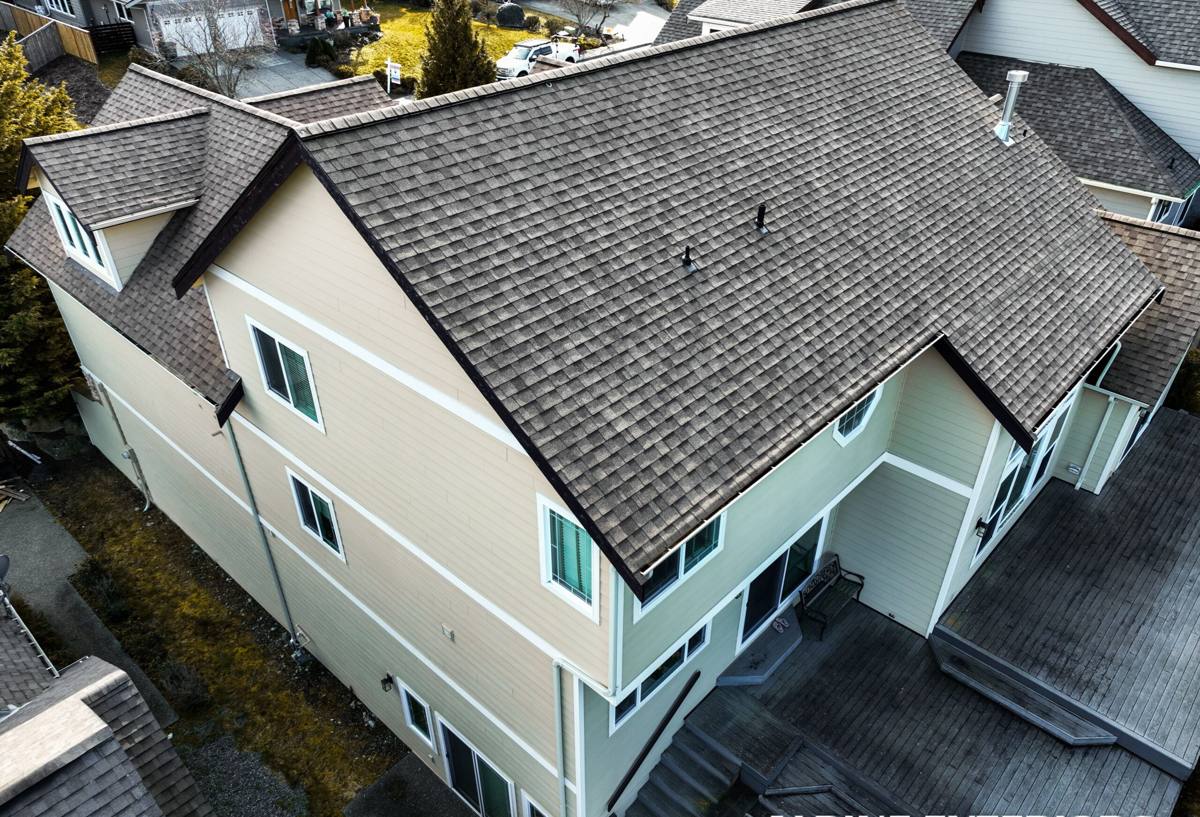
Signs a Deck Needs Replacement, Not Another Repair
Homeowners often ask us to "just fix the bad boards." Sometimes that's genuinely the right call. Other times, patching individual boards is treating a symptom while the framing underneath is already compromised. A few signs tell us the deck has crossed the line from repairable to due for full replacement:
- Soft or spongy spots in the decking that give slightly underfoot, especially near the house or around post locations
- Visible rot, splitting, or crumbling at the ledger board where the deck attaches to the house
- Rust streaking or corroded fasteners, which usually means the metal connectors are failing faster than the wood around them
- Railings or stair stringers that flex or wobble more than they used to
- Persistent black or green staining that keeps coming back within weeks of cleaning, a sign moisture is trapped rather than just sitting on the surface
- A deck more than 15–20 years old built without proper flashing at the ledger, which was common practice years ago and is a known failure point today
If two or more of these show up at once, the framing has usually taken on more damage than a board-by-board repair can fix, and a full replacement ends up costing less over time than repeated patch jobs.
What a Correct Deck Replacement Actually Involves
It Starts Below the Decking, Not Above It
The decking boards are the part everyone sees, but they're the least important part of getting a deck right. What determines whether a new deck lasts 10 years or 30 is the framing, the footings, and the connection to the house. A rebuild done correctly in this climate includes:
- Concrete footings sized and set below frost depth, checked for settling or cracking on older decks and replaced if undersized
- Pressure-treated framing lumber rated for ground contact where posts meet the soil, with joists sized to current code span tables
- Proper ledger flashing where the deck ties into the house — a step-flashed, water-shedding detail rather than caulk alone, which is one of the most common failure points we find on decks built before current code updates
- Joist tape or flashing along the tops of joists to keep water from wicking into the wood through fastener holes
- Stainless steel or coated structural fasteners and joist hangers rated for treated lumber, since standard hardware corrodes faster under the county's damp conditions
- Proper drainage and airflow underneath the deck so moisture doesn't pool or get trapped against framing
A deck that looks great on top but skips these details is a deck that will need major structural work again within a decade — sometimes sooner if it sits in a shaded, moss-prone spot.
Choosing Decking Material for a Maple Falls Property
There's no single "best" decking material — there's a best fit for a given budget, sun exposure, and how much upkeep a homeowner actually wants to do. Here's how the common options compare under the moisture and moss conditions typical of this area:
| Material | Upfront Cost | Maintenance | Moisture / Moss Performance |
|---|---|---|---|
| Pressure-treated wood | Lowest | Annual cleaning and re-staining recommended | Good if sealed regularly; untreated surfaces trap moss faster |
| Cedar | Mid-range | Periodic staining or sealing to preserve color and resist checking | Naturally rot-resistant, but still needs airflow and drainage to avoid surface staining |
| Composite / capped composite | Higher | Occasional washing, no staining or sealing | Very good — resists moisture absorption and rot, though moss can still grow on the surface if shaded and left uncleaned |
| PVC | Highest | Lowest — washing only | Excellent moisture resistance; performance depends heavily on correct installation and expansion gaps |
We don't push one product over another as a rule — we walk through the trade-offs honestly. Composite and PVC cost more upfront but cut down on the maintenance homeowners in a wet, shaded climate get tired of doing every spring. Wood costs less to install but only performs well if someone stays on top of cleaning and sealing on a real schedule. If that schedule slips for a year or two — which happens — wood decks in shaded, moss-prone spots show it fast.
Our Deck Replacement Process
We keep the process straightforward and communicate at each stage so there are no surprises partway through:
- On-site assessment — we inspect the existing deck, footings, and ledger connection to determine what's salvageable versus what needs full replacement
- Written estimate — a clear breakdown of material options, scope, and timeline before any work begins
- Permit and code check — we confirm what Whatcom County or the local jurisdiction requires for the size and height of the deck before demolition starts
- Demolition and disposal — the old structure comes down and materials are hauled off, with footings inspected once exposed
- Framing and footings — new or reinforced footings, treated framing, and proper ledger flashing installed to current code
- Decking, railings, and stairs — installed per manufacturer spacing and fastening specs, which matters most for composite and PVC products where improper gapping causes buckling
- Final walkthrough — we go over the finished deck together, including what maintenance (if any) the chosen material needs going forward
Permits and Code Considerations in Lynden and Whatcom County
Most deck replacements that involve new footings, structural framing changes, or a deck height above a certain threshold require a permit through the local jurisdiction. This isn't a formality to skip — it's what confirms the footings, framing, and railing heights meet current building code, and it protects a homeowner if the property is sold later and the buyer's inspector checks for permit history. We handle the permit process as part of the job rather than leaving it for the homeowner to sort out, and we build to the code requirements that apply in Lynden and unincorporated Whatcom County, including guardrail height and baluster spacing rules that are easy to get wrong on a DIY or unpermitted rebuild.
Keeping a New Deck Performing Long-Term
A correctly built deck still needs some seasonal attention, especially in a climate with this much moss pressure. The good news is that the upkeep is manageable if it's done on a schedule instead of reactively:
- Sweep debris and needles off the deck surface regularly through fall, since trapped organic material is what feeds moss growth
- Rinse or gently wash the surface at least once or twice a year to interrupt moss and algae before it takes hold
- Check and clear gaps between boards so water can drain instead of pooling
- Inspect railings and stair connections once a year for any looseness
- For wood decks, re-seal or re-stain on the schedule recommended for the specific product — skipping a year is usually when moisture damage gets a foothold
- Keep gutters and downspouts near the deck clear so runoff isn't draining directly onto or under the structure
Why a Crew That Already Works Maple Falls Matters
Deck work in this part of Whatcom County isn't identical to deck work in a drier region, and it isn't identical to deck work in downtown Bellingham either. Lot layouts around Maple Falls tend to have more tree cover and grade changes than in-town lots, which affects footing placement, drainage planning, and how much sun a deck surface will realistically get once it's built. A crew that's already worked properties in this area knows to plan for shade-driven moss buildup on the north or tree-covered side of a deck, knows how the local frost line and soil conditions affect footing depth, and knows what the permitting process actually looks like for this jurisdiction rather than guessing.
That familiarity also shows up in smaller, practical ways — showing up with the right fastener spec for the moisture conditions here, not defaulting to whatever a supplier stocks; recommending gapping and airflow details that account for a shaded lot instead of a generic sunny-climate spec sheet. It's the difference between a deck that's technically built to code and one that's actually built for how this specific area weathers a structure over time.
Getting Started
If your deck is showing soft spots, rot at the ledger, or just isn't holding up the way it used to, it's worth getting an honest look before deciding between repair and full replacement. We offer free, no-pressure estimates for homeowners in Maple Falls and the surrounding Lynden area — use the form below to get a time on the calendar.