 Lynden Roofing
 Why Kendall Decks Wear Faster Than You'd Expect
Kendall sits in a stretch of Whatcom County where decks rarely get a break from moisture. Long stretches of driving rain soak into any gap in the finish, salt-laden air off the coast accelerates corrosion on fasteners and hardware, and a moss season that can run half the year turns flat or shaded deck boards into a slip hazard almost overnight. None of that is unusual for this part of Washington, but it does mean a deck built or repaired the same way you'd see in a drier climate is going to fail early — soft boards, rusted screws, and a slick green film that keeps coming back no matter how many times you scrub it off.
We repair decks in Kendall on a regular basis, and the pattern is consistent: the wood itself is often fine. What fails first is the stuff holding it together and the surfaces that never get a chance to dry out between storms. A correct repair addresses both, not just the boards you can see.
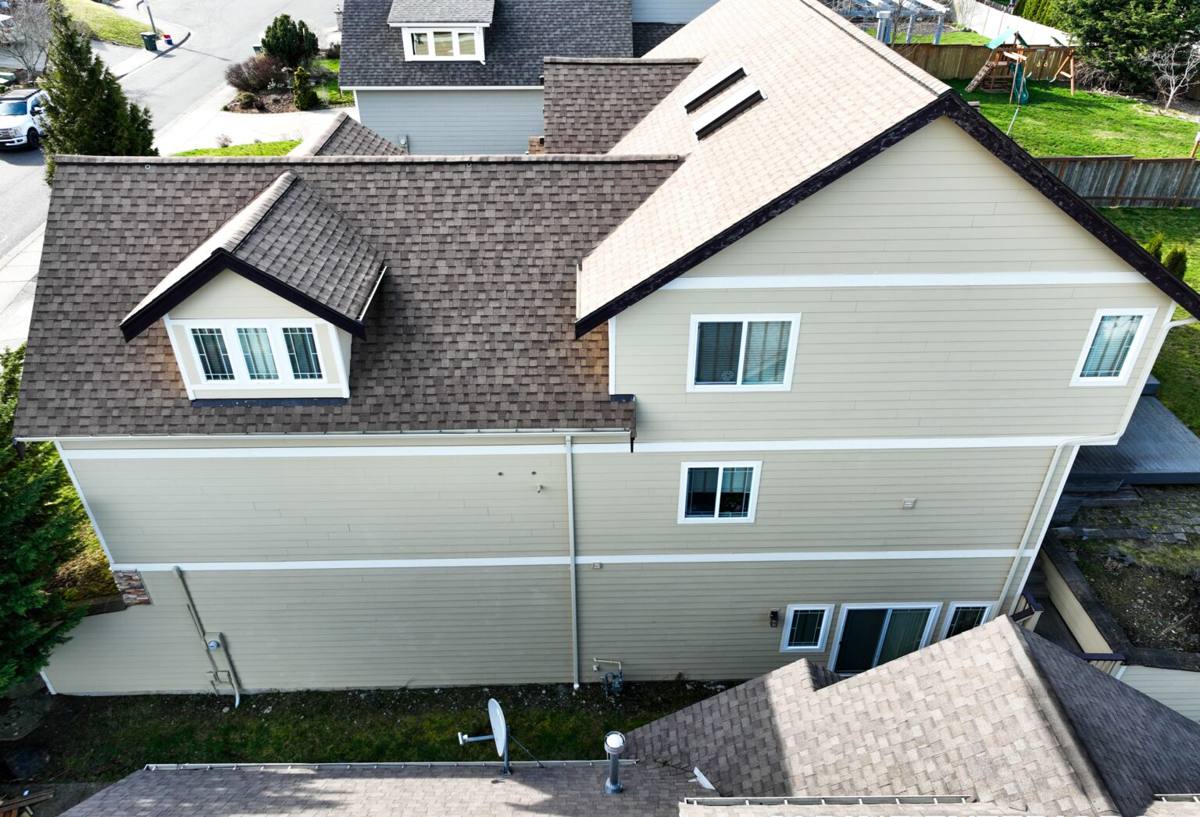
What a Correct Deck Repair Actually Involves
A lot of deck repair work is cosmetic — swap a bad board, sand it down, call it done. That approach can leave real problems underneath untouched. A repair done right starts with a structural check, not just a visual one.
Structural first, cosmetic second
Before we touch a single board, we check the ledger board connection (where the deck attaches to the house), the posts and footings, joist condition, and the flashing that's supposed to keep water from running behind the siding at the attachment point. This is the part of a deck most homeowners never see and most quick fixes skip entirely. If the ledger flashing has failed, you can replace every board on the surface and still have a deck that's rotting from the inside.
Then the wearing surface
Once the frame is sound, we address decking boards, railings, stair stringers, and fasteners — the parts that take direct weather exposure and the parts you actually walk on and lean against.
Common Deck Problems We See in Kendall
Rot at the ledger board and rim joist
This is the most serious issue we find and the easiest to miss. Water gets behind the flashing where the deck meets the house, and by the time it shows on the surface — a soft spot near the door threshold, a slight sag — the framing underneath has often been wet for a season or more. Whatcom County's rain volume makes this a matter of when, not if, on older or improperly flashed decks.
Moss, algae, and surface staining
Shaded decks or ones with poor drainage stay damp long enough for moss and algae to establish, especially through the fall and winter months. Beyond looking bad, it's a genuine fall hazard on stairs and ramps, and it holds moisture against the wood surface, which shortens the life of the finish and the boards underneath.
Fastener corrosion
Salt air speeds up corrosion on any hardware that isn't rated for coastal exposure — deck screws, joist hangers, post bases, railing brackets. We regularly find older decks fastened with standard-grade hardware that's rusted, weakened, or staining the wood around it. Once a fastener starts to go, it's rarely an isolated problem; the rest of the same batch is usually close behind.
Railing and stair movement
Loose railings and stairs with play in them are usually a sign of failed fasteners or a post base that's taken on water. This is a safety issue as much as a maintenance one, and it's one of the most common repair calls we get.
Repair vs. Replace: What Actually Drives the Decision
Homeowners often assume any deck problem means a full rebuild. That's frequently not true — but sometimes it is. The honest answer depends on a handful of factors.
| Factor | Leans toward repair | Leans toward replacement |
|---|---|---|
| Framing condition | Solid, dry, no soft spots | Rot at ledger, joists, or posts |
| Extent of surface damage | Isolated boards or sections | Widespread soft or split boards |
| Age of the structure | Under 15-20 years, built to code | Older, undersized framing, or unpermitted work |
| Fastener condition | Localized corrosion | Systemic rust across hardware |
| Design issues | None — drainage and flashing are sound | Poor drainage or flashing baked into original build |
In many Kendall repair calls, the framing is salvageable and the fix is targeted — new ledger flashing, a handful of boards, hardware upgraded to corrosion-resistant fasteners. We'll tell you plainly if we think replacement is the better long-term value; there's no upside to patching a deck that's going to need the same repair again in two years.
Our Deck Repair Process
- Full inspection — framing, ledger connection, footings, fasteners, and surface boards, not just what's visible from the top.
- Written scope — what needs to be replaced, what can be repaired, and why, before any work starts.
- Structural repairs first — ledger flashing, joists, posts, and footings brought back to solid condition.
- Hardware upgrade — corrosion-resistant fasteners and connectors suited to this climate, replacing anything undersized or rusted.
- Surface repair or replacement — boards, railings, and stairs addressed to match the existing deck or upgraded as agreed.
- Finish and drainage check — confirming water sheds away from the house and off the deck surface instead of pooling.
- Walkthrough — we go over what was done and what to watch for going forward.
Materials We Use and Why
Material choice on a deck repair isn't just about looks — it's about how the material handles constant wetting and drying cycles, which is what this climate puts it through.
| Material | Strengths | Trade-offs |
|---|---|---|
| Pressure-treated lumber | Cost-effective, widely available, easy to match existing decks | Needs regular sealing to resist moisture and moss |
| Cedar | Naturally rot-resistant, attractive grain | Softer wood, still needs finish maintenance in wet climates |
| Composite decking | Low maintenance, resists rot and moss buildup | Higher upfront cost, requires correct fastening to avoid warping |
We don't push one material as universally "better" — each has a real trade-off, and the right call depends on your budget, how much upkeep you want to do, and whether you're repairing a section of an existing wood deck or planning ahead for lower maintenance. We'll walk through the honest pros and cons for your specific deck rather than steering you toward whatever's easiest for us to install.
Fastener and hardware standards
Given the salt air and rain exposure in this area, we install fasteners and structural connectors rated for coastal or ground-contact use as standard practice on repairs, not as an upsell. Using standard-grade hardware here is a common shortcut that shows up as premature rust and staining within a few years.
Maintenance Checklist for Kendall Homeowners
Between repairs, a few habits go a long way toward keeping a deck ahead of this climate instead of behind it.
- Sweep debris and standing leaves off the deck regularly, especially in fall — trapped moisture is what feeds rot and moss.
- Check for moss or algae buildup each winter and treat it early, before it spreads across the whole surface.
- Inspect railings and stair treads for movement or looseness a couple of times a year.
- Look at the ledger board area where the deck meets the house for staining, gaps, or soft wood.
- Re-seal or re-stain wood decking on the manufacturer's recommended schedule — this region's rain shortens the effective life of most finishes.
- Confirm gutters and downspouts near the deck aren't dumping extra water onto or under the structure.
Why Hire a Crew That Already Works in Kendall
Deck repair done by a crew unfamiliar with Whatcom County conditions tends to under-spec the hardware, skip the flashing detail at the ledger, or use a finish schedule that doesn't hold up against this much rain. We work on decks in and around Kendall regularly, so we're not guessing at what this climate does to a deck over time — we're seeing it firsthand, repair after repair, and building the fix around it. That means correct flashing details, hardware rated for the conditions, and a straight answer about whether a repair will actually last or whether you're better off putting that money toward a longer-term fix.
If you've got a deck in Kendall that's showing soft spots, loose railings, rust stains, or moss that won't quit, we're glad to take a look. We offer free, no-pressure estimates — walk us through what you're seeing, and we'll give you a straight assessment of what it needs and what it'll cost, using the form below.