 Lynden Roofing
 Decks in Acme Face a Different Set of Problems
Acme sits in the part of Whatcom County where the valley starts climbing toward the foothills, and that changes what a deck has to deal with compared to a deck in town. You get more tree cover, more shade that never fully burns off, and long stretches where the wood or composite surface just doesn't dry out between rain events. Add in the driving rain that comes through this corridor most of the fall and winter, and a deck built with generic, one-size-fits-all specs will show problems years before it should.
We're not talking about exotic engineering here. We're talking about getting the ordinary things right — drainage, fastener choice, ledger flashing, material selection — in a way that actually accounts for how wet this area stays. A deck built the same way you'd build one in a dry climate is a deck that's already behind before the first winter hits.
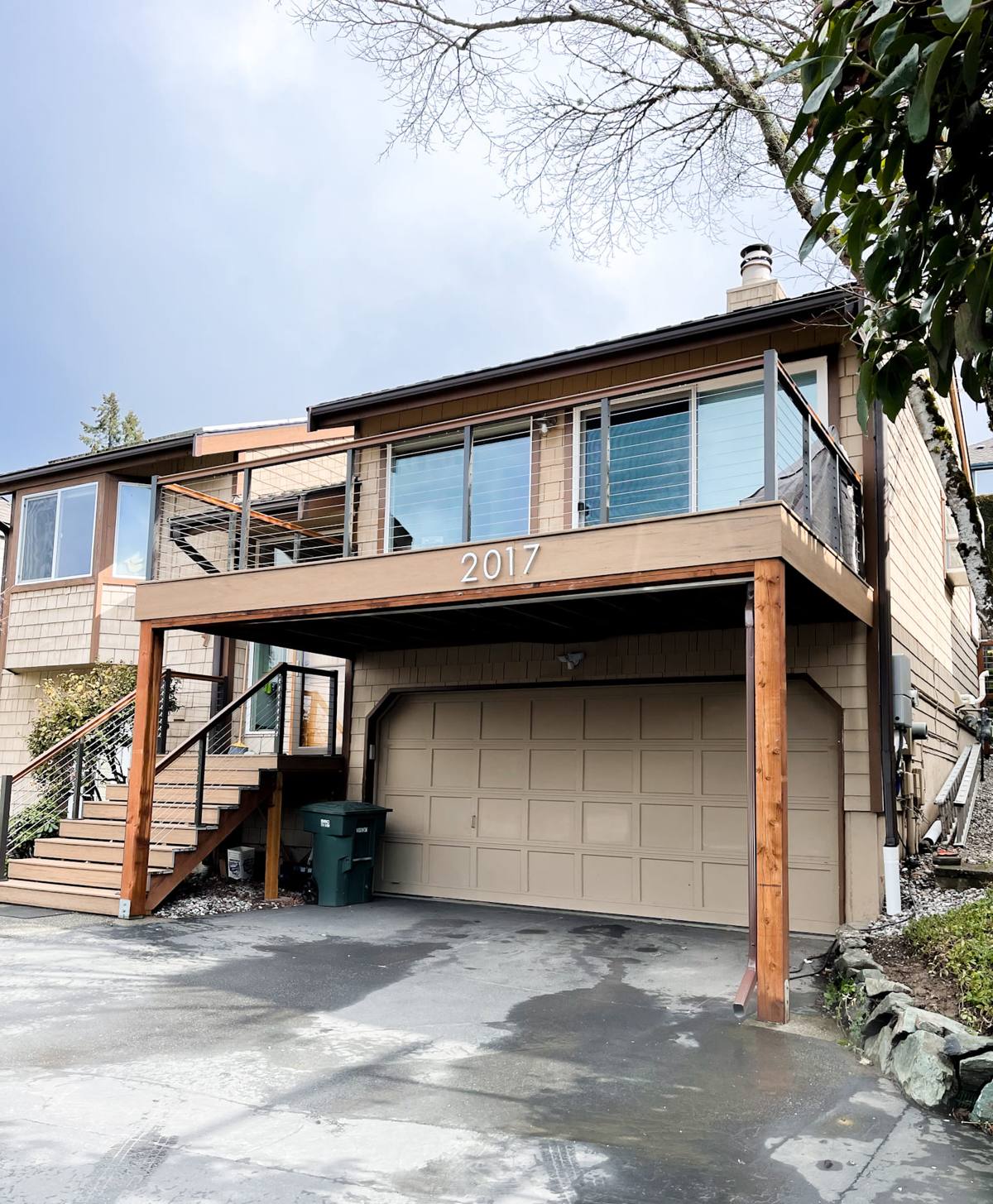
What Driving Rain and a Long Moss Season Actually Do
Moss doesn't just look bad. It holds moisture against whatever it's growing on, which means a mossy deck board is a wet deck board for far more of the year than a clean one. On horizontal wood or composite surfaces that get shaded part of the day, that moisture retention accelerates rot in real wood and can lead to surface staining and slip hazards on lower-grade composite. Driving rain compounds this because it doesn't just fall straight down — wind-driven rain gets pushed sideways and up under rail caps, into fastener heads, and into any gap where end grain is exposed.
Over a few seasons, the failure points we see most often on decks in this kind of climate are:
- Ledger board rot where flashing was skipped or installed incorrectly against the house
- Fastener corrosion staining and loosening on lower-grade screws and nails
- Soft or delaminating boards where moss and debris sat against the surface for months
- Undersized or poorly vented substructures that trap moisture beneath the deck
- Stair stringers and post bases rotting from ground contact and splashback
None of these are exotic failures. They're the predictable result of building a deck without accounting for how much water this area actually sees and how long it stays wet.
Choosing Decking Material for This Climate
There's no single right answer for every homeowner — budget, maintenance tolerance, and how much sun the deck actually gets all matter. But in a shaded, wet environment like Acme, some trade-offs matter more than they would somewhere drier.
| Material | How It Handles This Climate | Maintenance | Typical Lifespan Here |
|---|---|---|---|
| Pressure-treated wood | Affordable, but needs consistent sealing to resist moss and moisture in shaded areas | Annual cleaning, re-sealing every 1-2 years | 10-15 years with upkeep |
| Cedar | Naturally rot-resistant but still needs finish maintenance in constant shade/moisture | Cleaning and finish renewal every 1-2 years | 15-20 years with upkeep |
| Composite (capped) | Resists rot and moisture absorption; can still support surface moss/algae growth if never cleaned | Periodic washing, no sealing needed | 25+ years |
| PVC / vinyl decking | Fully moisture-resistant surface, good in heavy-shade areas prone to standing damp | Occasional washing | 25-30+ years |
We'll walk through this trade-off with you honestly rather than steering you toward whatever has the best margin. If a homeowner wants real wood for the look and is willing to keep up with sealing, that's a legitimate choice. If a family wants to spend a Saturday on the deck instead of maintaining it, composite or PVC in a heavier-shade lot usually makes more sense. What we won't do is put an untreated or under-spec material into a shaded, damp application and let the homeowner find out the hard way.
A Note on "Maintenance-Free" Claims
No exterior decking material in this climate is truly maintenance-free. Even capped composite and PVC need occasional washing to keep moss and algae from taking hold in shaded spots. We tell homeowners the real maintenance expectation up front for whatever material they choose, rather than letting a marketing term set expectations we know won't hold up.
Framing and Footings: The Part That Determines How Long It Lasts
The decking surface is what you see, but the framing underneath decides whether the deck is still solid in fifteen years. In this area, that means:
- Footings sized and set below frost depth per local code, not just "deep enough"
- Ledger flashing installed as a system — flashing, house wrap integration, and proper fastening — so wind-driven rain can't track behind it into the house framing
- Joist tape or equivalent protection on framing lumber to slow moisture absorption at the cut ends and top edge, where most rot starts
- Enough clearance and airflow underneath the deck so the substructure can actually dry out between rain events instead of staying damp for weeks
- Post bases set on proper hardware, off the ground, rather than embedded directly in soil or concrete where they'll wick moisture
This is also where permits and inspections matter. Whatcom County and local jurisdictions require permits for most attached and elevated decks, and that process exists specifically to catch the footing, ledger, and structural details that are invisible once the decking is down. We pull permits and build to pass inspection — not because it's required paperwork, but because those inspection points line up with exactly the failure modes we see on decks that skipped them.
Railings, Stairs, and Hardware
Railings and stairs take the most direct hit from foot traffic and weather combined, and they're also the components with the most safety consequence if they're done wrong. A few specifics we hold to on every custom deck:
- Stainless or coated exterior-rated fasteners throughout — not just at the surface, but in the framing where corrosion isn't visible until it's already a problem
- Post attachment hardware rated for the actual code-required lateral load, not just toe-screwed posts
- Stair stringers protected from ground contact and splashback, since stairs sit lowest and catch the most runoff
- Rail cap details that shed water outward instead of trapping it in a flat-top joint
These are the details that separate a deck that looks fine at handoff from one that's still tight and safe a decade later.
How We Approach a Custom Deck Build
Every deck we build in the Acme area follows the same basic sequence, adjusted for the specific lot and house:
- On-site assessment — we look at sun/shade exposure, drainage patterns on the lot, existing structure condition if we're replacing a deck, and how the deck ties into the house.
- Design and material selection — we walk through material trade-offs honestly based on your budget and how much maintenance you actually want to do, not a default upsell.
- Permitting — we handle the permit application and coordinate inspections so the structural work is verified at the right stages.
- Framing and structural work — footings, ledger, joists, and hardware installed to the specs above, built for this climate rather than a generic standard.
- Decking, railing, and finish work — surface material installed with attention to drainage and gap spacing so water moves off the deck instead of sitting on it.
- Final walkthrough — we go over the finished deck with you, including what maintenance it actually needs and on what schedule.
Deck Maintenance Checklist for This Area
Whatever material you choose, a few habits make a real difference in how long a deck lasts in a shaded, rainy environment like this:
- Sweep leaves and debris off the deck surface regularly through fall, especially in shaded corners
- Wash the surface at least once a year to remove early moss and algae growth before it takes hold
- Check and clear gaps between boards so water and debris don't build up and hold moisture against the wood or composite
- Inspect fasteners and railing connections annually for corrosion staining or looseness
- Reseal wood decking on the schedule the product actually requires, not just when it looks dry
- Keep vegetation trimmed back from the deck edges to improve airflow and sun exposure where possible
Why It Matters That We Already Work in Acme
A crew that only occasionally works this part of Whatcom County will build to a generic spec and hope it holds up. A crew that regularly works the Acme area already knows how shaded lots here behave through the wet season, which framing details actually matter given the local rain patterns, and which materials hold up versus which ones need more attention than homeowners expect. That local pattern recognition is the difference between a deck that's designed for this specific climate and one that's designed for climate conditions somewhere else and hopes for the best here.
We also know the local permitting process and inspection expectations for Whatcom County, which keeps the project moving instead of stalling on paperwork or failed inspections from missed structural details.
If you're planning a new deck or replacing one that's showing its age in Acme, we're happy to come take a look and give you a straightforward, no-pressure estimate — including an honest read on what material and build approach actually makes sense for your specific lot. Use the form below to get started.