 Lynden Roofing
 Window Installation Built for Custer's Coastal Climate
Custer sits close enough to the water that salt air is a fact of life, not an occasional nuisance. Add Whatcom County's long wet season, driving rain off the Strait, and months of low sun that keep moss and moisture around longer than in drier parts of the state, and you have a climate that is genuinely hard on window systems. Frames, seals, flashing, and glazing all take more punishment here than they would twenty miles inland, and a window installation that ignores that reality tends to show problems within a few years instead of a few decades.
This page is about one thing: installing windows correctly in Custer homes, given what this specific stretch of Whatcom County throws at a house. Not a generic rundown of window types, but what actually matters when the job is done here.
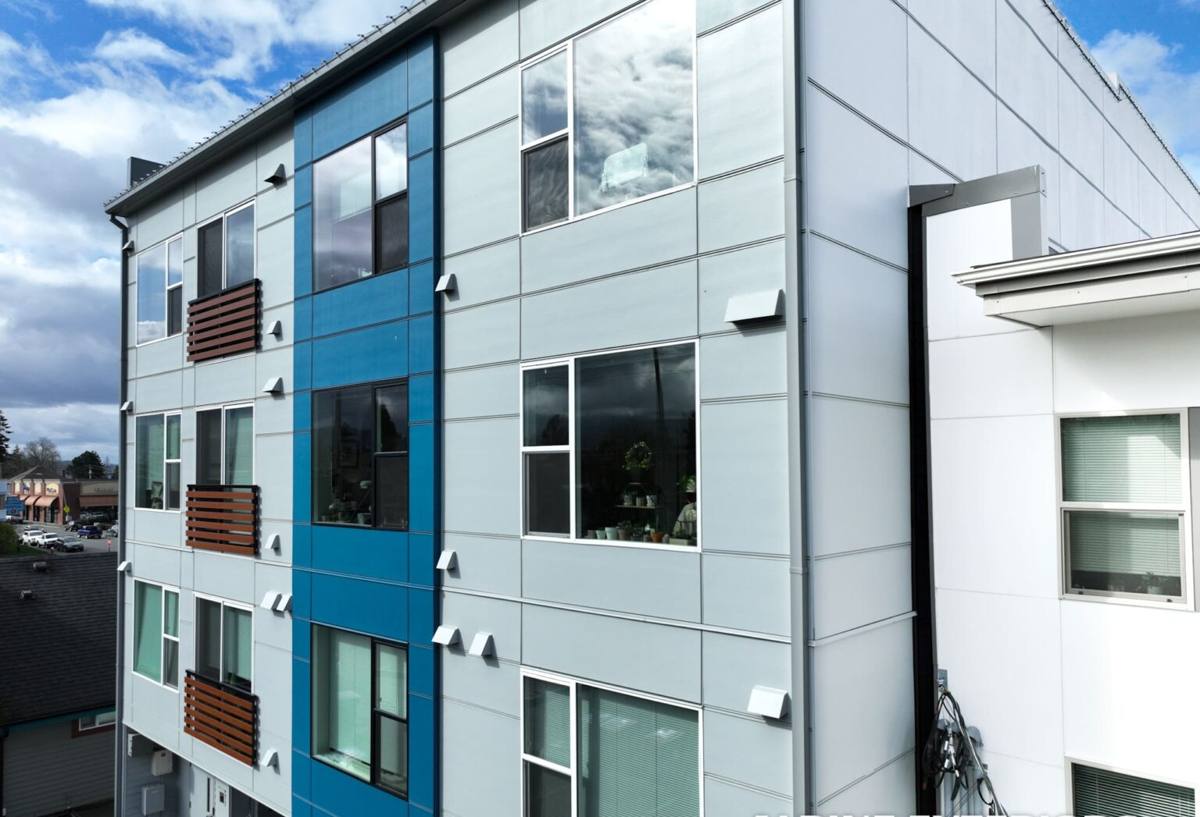
What Salt Air, Rain, and Moss Actually Do to a Window
Salt Air
Airborne salt is corrosive to exposed metal fasteners, hardware, and some frame finishes. On a house close to the coast, it also settles into fine cracks and joints, where it holds moisture against the frame longer than plain rainwater would. Over time this accelerates corrosion on lower-grade hardware and can dull or pit finishes that aren't rated for coastal exposure.
Driving Rain
Lynden and the surrounding lowlands get wind-driven rain that comes in sideways during winter storms, not just straight-down rain. That matters because a window installation that only accounts for vertical water shedding will let wind-driven moisture find its way behind trim and into the wall cavity. The flashing and sealing details around the window opening matter as much as the window unit itself.
Moss and Prolonged Dampness
Whatcom County's moss season isn't limited to roofs. Moss and algae take hold anywhere wood or fiber-cement trim stays damp for extended stretches — often on the north and west-facing sides of a house, and around window sills and trim boards that don't drain or dry quickly. Once moss establishes itself against a sill or trim joint, it holds water against that surface almost permanently, which is exactly the condition that leads to rot underneath a perfectly good-looking window.
Signs a Custer Home Needs New Windows
Not every drafty window needs full replacement, and not every old window is actually failing. Here's what we actually look for during an inspection:
- Soft or spongy wood at the sill, jamb, or trim when pressed with a fingertip
- Persistent fogging or a visible haze between panes on double-pane units (a sign the seal has failed)
- Visible gaps between the frame and siding, or trim that has pulled away from the wall
- Moss or dark staining concentrated around the window rather than spread evenly across the wall
- Noticeable cold draft at the frame edge during winter storms, even with the window latched
- Difficulty opening, closing, or latching a window that used to operate smoothly
- Paint that bubbles or peels specifically around the window opening, not elsewhere on the wall
Any one of these can be minor. Several together, especially on the same wall, usually point to moisture that's already gotten past the original installation.
What a Correct Installation Actually Involves
The window unit itself is often the least important variable in how long an installation lasts. Most premature failures we're called out to fix in this area trace back to installation shortcuts, not bad windows. A correct job includes:
Opening Inspection and Prep
Before a new window goes in, the existing opening gets inspected for hidden rot, especially at the sill, since that's where standing water and prior sealant failures tend to concentrate damage. Any compromised framing gets addressed before the new unit goes in — installing a new window into a soft opening just resets the clock on the same failure.
Flashing, Not Just Sealant
Sealant alone is not a flashing system. A correct installation builds in a drainage path — flashing tape and a sill pan detail that directs any water that does get behind the trim back out, rather than trapping it against the framing. This is the single detail that matters most for driving-rain performance, and it's also the detail that gets skipped most often on rushed jobs.
Air and Water Sealing at the Frame
The gap between the window frame and the rough opening needs to be sealed with a product suited to that specific gap — typically a low-expansion foam or backer rod and sealant, not just caulk smeared around the trim. Over-filling with standard expanding foam can bow a frame out of square; under-sealing leaves a path for both air infiltration and wind-driven water.
Hardware Suited to Coastal Exposure
Given the salt air here, we pay attention to fastener and hardware material, not just the window's advertised specs. Standard hardware that would be fine forty miles east can corrode noticeably faster this close to the water.
Exterior Trim and Drainage Detail
The trim around the window needs a way to shed water and dry out, rather than holding moisture flat against the wall. This is also where moss tends to get its start, so we pay attention to how trim meets the sill and where water is actually meant to go once it hits the window.
Our Window Installation Process
- On-site assessment — we look at existing windows, framing condition, and any signs of past water intrusion before quoting anything.
- Measurement and product selection — exact opening measurements and a frame/glass recommendation suited to the specific wall's sun and rain exposure.
- Removal and opening repair — old units come out carefully, and any rotted or compromised framing is repaired before a new window goes in.
- Flashing and sill pan installation — the drainage path gets built before the window is set, not patched afterward.
- Window setting and shimming — the unit is set level, plumb, and square, then shimmed and fastened per the manufacturer's requirements.
- Sealing and insulation — the perimeter gap is sealed and insulated correctly, avoiding both gaps and over-filling.
- Interior and exterior trim — trim is reinstalled or replaced with attention to drainage, not just appearance.
- Final operation check — every window is opened, closed, and latched to confirm smooth operation before we call the job done.
Choosing Frame and Glass Options for a Custer Property
There's no single "best" window for every house — the right choice depends on which side of the house it's on, how exposed it is to weather, and what the homeowner wants to maintain long-term. Here's an honest comparison of common frame materials for this climate:
| Frame Material | Coastal/Moisture Performance | Maintenance | Notes |
|---|---|---|---|
| Vinyl | Good — won't rot or corrode | Low | Most common choice locally; quality varies significantly by manufacturer |
| Fiberglass | Very good — dimensionally stable in temperature swings | Low | Higher upfront cost, holds paint well if a custom color is wanted |
| Wood (clad exterior) | Depends entirely on cladding and sealing quality | Moderate to high | Interior warmth appeals to some owners; exterior wood exposure is a liability here |
| Aluminum | Prone to corrosion and condensation in salt air/coastal moisture | Moderate | We generally steer Custer homeowners away from bare aluminum frames given local exposure — thermal and corrosion trade-offs outweigh the upfront savings |
On glass, a dual-pane, low-E unit is the practical standard for this region — it manages both the winter heat loss and the summer sun without needing anything exotic. Argon-filled units offer a modest efficiency bump; triple-pane is rarely necessary here unless a specific wall has unusual noise or exposure demands.
What Affects the Cost of a Window Installation
We don't post fixed prices because every house and opening is different, but these are the real cost drivers we walk through with homeowners:
| Factor | Why It Matters |
|---|---|
| Number and size of windows | Larger openings and specialty shapes cost more in both unit price and labor |
| Frame material and glass package | Vinyl, fiberglass, and glass upgrades (low-E, argon) each shift unit cost |
| Condition of the existing opening | Hidden rot or framing repair adds labor beyond the window swap itself |
| Full-frame vs. insert replacement | Full-frame replacement addresses flashing and drainage properly but costs more than an insert; inserts are appropriate only when the existing frame is sound |
| Trim and exterior finish work | Replacing or rebuilding damaged trim adds to the scope but matters for long-term drainage |
| Access and site conditions | Second-story or hard-to-access windows take more time and staging |
We'll give a written, itemized estimate that breaks these out, so a homeowner can see exactly what's driving the number rather than a single lump figure.
Why Hire a Crew That Already Works in Custer
A lot of window problems we get called to fix weren't caused by a bad window — they were caused by an installer who treated the job the same way they would forty miles inland, where wind-driven rain and salt exposure aren't factors. A crew that already works this stretch of Whatcom County knows which walls take the worst weather, which trim details tend to fail first, and where moss actually starts versus where it just shows up cosmetically. That's not something you can get from a manufacturer's install manual alone — it comes from having done the work on houses like this one, in this weather, repeatedly.
We're a Lynden-based crew, and Custer is part of our regular service area, not an occasional stretch. That means we're familiar with the exposure conditions specific to this area and we stand behind the work with a crew that isn't hard to find again if a question comes up down the road.
A Practical Checklist Before You Hire Anyone
- Ask specifically how they handle flashing and sill pan drainage — not just "do you seal it"
- Confirm whether the quote is full-frame replacement or an insert, and why they're recommending one over the other
- Ask what happens if they find rot once the old window is out
- Get the warranty terms in writing — both the manufacturer's window warranty and the installer's labor warranty
- Ask whether they've worked on homes in your specific area and what climate-specific adjustments they make
- Request an itemized estimate rather than a single bottom-line number
If you're weighing whether your windows need attention or you're ready to plan a replacement, we're happy to take a look and walk through what we find. The estimate is free, there's no pressure, and you'll get a straight answer about what your home actually needs — just fill out the form below to get started.