 Lynden Roofing
 Why Siding in Custer Takes a Different Kind of Beating
Custer sits close enough to the Salish Sea that homes here deal with a mix of weather most inland siding jobs never have to plan for. You get the marine influence — salt-laden air drifting in off the water — layered on top of the same driving rain and long gray stretches that soak all of Whatcom County. Add the shade from mature trees and the damp, low-light winters typical of this part of Washington, and you've got a recipe for moss, algae, and slow moisture intrusion that will find every weak point in a siding system over time.
None of that means siding here is doomed to fail early. It means the material and the installation both have to be matched to the conditions. A siding system that's fine in a dry inland climate can struggle within a decade in Custer if it wasn't built and installed with salt air, standing moisture, and moss growth in mind.
What "Coastal-Adjacent" Really Means for a House
Homes in Custer aren't beachfront, but they're close enough to the water that airborne salt is a real factor, especially on the sides of a house facing prevailing weather. Salt air accelerates corrosion on fasteners, flashing, and any metal trim that isn't properly rated or protected. It also tends to hold moisture against surfaces longer than dry inland air does, which is part of why moss and algae get such a strong foothold on north-facing and shaded walls throughout this region.
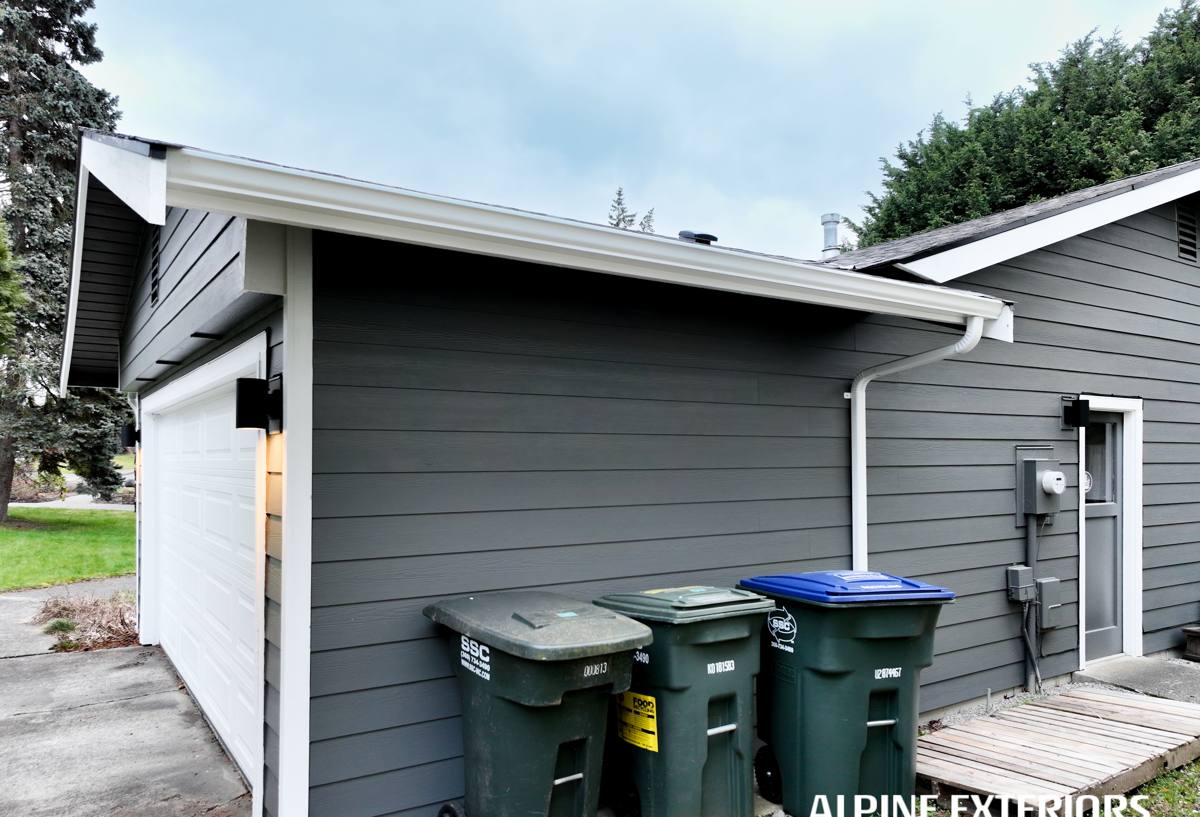
What Custer Homes Actually Need From Their Siding
Strip away the marketing language and every siding decision in this climate comes down to three practical questions: does it manage water well, does it resist rot and moss, and does it hold up physically to years of wind-driven rain and freeze-thaw cycling. Everything else — color, texture, warranty terms — matters, but only after those three boxes are checked.
Moisture Management
Whatcom County gets sustained wet seasons, not just occasional storms. Siding needs to shed water fast and dry out fast when it does get wet. That depends as much on the weather-resistive barrier and flashing behind the siding as it does on the siding material itself — a common point missed on lower-bid jobs.
Moss and Algae Resistance
Shaded, damp exteriors in this area grow moss and algae readily, especially on north- and east-facing walls that don't get much direct sun. Some siding materials feed that growth by staying damp longer or by being porous enough for organic material to take hold in surface texture. Others resist it because the material itself doesn't hold moisture the same way.
Standing Up to Wind-Driven Rain
Rain in this part of Washington rarely falls straight down. Wind pushes it sideways into wall assemblies, which is why lap coverage, flashing at penetrations, and proper fastening matter more here than they would in a calmer climate. A siding job that looks fine on a dry day can still leak during a sustained winter storm if those details were rushed.
Why We Only Install James Hardie Fiber Cement
We made a deliberate decision to install one siding system — James Hardie fiber cement — rather than offer a menu of options. That's not a marketing gimmick; it's because we've seen what the alternatives cost homeowners in maintenance and premature failure in exactly this kind of climate, and we'd rather stand behind one system we trust completely than split our attention across several.
| Factor | Vinyl | LP SmartSide (engineered wood) | Cedar | James Hardie Fiber Cement |
|---|---|---|---|---|
| Moisture behavior | Doesn't absorb water, but can warp and gap, letting water behind it | Wood-based core can swell or delaminate if moisture gets past the coating | Absorbs and releases moisture constantly; needs consistent sealing | Non-combustible cement composition; engineered to resist moisture-related swelling and rot |
| Moss/algae resistance | Textured surfaces can trap growth | Wood fiber content can support organic growth if coating is compromised | Naturally prone to moss and mildew without regular treatment | Factory ColorPlus finish resists moss and algae adhesion better than raw or lightly coated surfaces |
| Maintenance burden | Low, but cracks and fades with UV/temperature swings | Requires vigilant caulking and repainting to protect the wood core | High — regular staining/sealing and moss treatment needed | Low; factory finish is warranted and doesn't require repainting on the same cycle as wood |
| Fire performance | Can melt or deform under heat | Combustible wood-based product | Combustible | Non-combustible material |
| Typical lifespan when installed to spec | 20-30 years | 15-25 years, heavily dependent on maintenance | 20-30 years with diligent upkeep | Multi-decade performance with a strong transferable warranty |
We're not saying vinyl, engineered wood, or cedar are bad products in every application — they all have honest use cases elsewhere. But for the moisture load, salt air, and moss pressure this area puts on an exterior, we don't think they're the right long-term bet, and we'd rather not install something we can't fully stand behind. James Hardie's fiber cement is non-combustible, holds its factory-applied ColorPlus finish far longer than field-painted alternatives, and Hardie engineers specific HZ product lines for different climate zones — which matters in a region that swings between soaking wet winters and dry summer heat.
What a Correct Installation Actually Involves
Fiber cement siding is only as good as the installation behind it. Hardie publishes detailed installation specifications, and skipping steps to save time is exactly how a good product ends up with early moisture problems.
Weather-Resistive Barrier and Flashing
Before a single piece of siding goes up, the wall needs a properly lapped weather-resistive barrier and correctly integrated flashing at every window, door, and penetration. In a climate with sustained wind-driven rain, this layer is what actually keeps water out of the wall assembly — the siding is the first line of defense, not the only one.
Clearances and Fastening
Hardie specifies minimum clearances from grade, roof lines, decks, and other surfaces so water has somewhere to go instead of wicking into the bottom edge of the siding. Fasteners need to be corrosion-resistant and driven to the correct depth — over-driven nails crack the board's factory finish and create a spot for moisture to creep in, which is a bigger issue near salt air than it would be further inland.
Joint and Seam Treatment
Butt joints, corners, and trim intersections are where most siding failures start. Correct caulking, flashing tape, or manufacturer-approved joint treatment at these points is what keeps water from tracking behind the siding over years of exposure.
Our Process for a Custer Siding Installation
- On-site assessment — we look at existing siding, wall sheathing condition, moisture staining, and moss patterns to understand what the current exterior is telling us before we plan the new one.
- Product and color selection — walking through Hardie's plank, panel, and shingle options along with ColorPlus finish choices suited to the home's exposure and style.
- Tear-off and substrate check — removing existing siding and inspecting sheathing for hidden rot or moisture damage before anything new goes up.
- Weather barrier and flashing install — the step that does the real waterproofing work, done to Hardie's specification and local code.
- Siding installation — fastening, clearances, and joint treatment done to manufacturer spec, not shortcuts.
- Final walkthrough — checking trim, caulking, and finish work with the homeowner before we call the job done.
Signs a Custer Home May Need New Siding
- Persistent moss or algae streaking that comes right back after cleaning
- Soft spots, bubbling, or visible warping anywhere on the siding
- Paint that's peeling or bubbling faster than it should, which often points to moisture trapped behind the surface
- Visible gaps at seams, corners, or trim that let daylight or drafts through
- Rising energy bills that suggest the wall assembly isn't sealing the way it used to
- Wood rot or soft sheathing discovered during any other exterior work
Cost Factors to Expect
Every siding project is priced around the same core variables. Knowing them ahead of time makes it much easier to compare estimates apples-to-apples.
| Factor | Why it moves the price |
|---|---|
| Home size and wall complexity | More square footage and more corners, gables, and dormers mean more material and labor |
| Substrate condition | Rotted sheathing found during tear-off adds repair work before new siding can go on |
| Product line and profile | Lap, panel, and shingle styles, plus ColorPlus finish options, carry different material costs |
| Trim and detail work | Window and door trim, corner treatments, and fascia detailing add labor time |
| Access and site conditions | Steep lots, tight setbacks, or extensive landscaping can affect staging and labor |
Why a Crew That Already Works in Custer Matters
Siding installed by a crew that hasn't worked this specific stretch of Whatcom County can still turn out fine — but a crew that already knows how salt air, shade patterns, and driving rain behave on homes in and around Custer and Lynden isn't guessing at flashing details or clearance decisions. That familiarity shows up in fewer callbacks and a better sense of which parts of a house need the most attention before problems start.
If you're weighing a siding replacement or new installation in Custer, we're happy to take a look at your home and walk you through what we're seeing — no pressure, no obligation. Use the form below to request a free estimate.