 Lynden Roofing
 Custer's Climate Is Harder on Roofs Than Most Homeowners Realize
Custer sits close enough to the water that salt-laden air is a real factor in how roofing materials age here, not just an abstract concern. Add in Whatcom County's long wet season, driving rain that comes in sideways during winter storms, and a moss season that can stretch from fall through spring, and you have a combination that wears out roofing systems faster than the manufacturer's glossy brochure suggests. A roof that would last decades in a dry inland climate can show real wear in Custer well before that, if it wasn't installed with this specific environment in mind.
This page is about one thing: replacing a roof correctly on a Custer home, given what this area actually does to roofing materials year after year. Not a generic overview of roof replacement, but what changes when the job is done here.
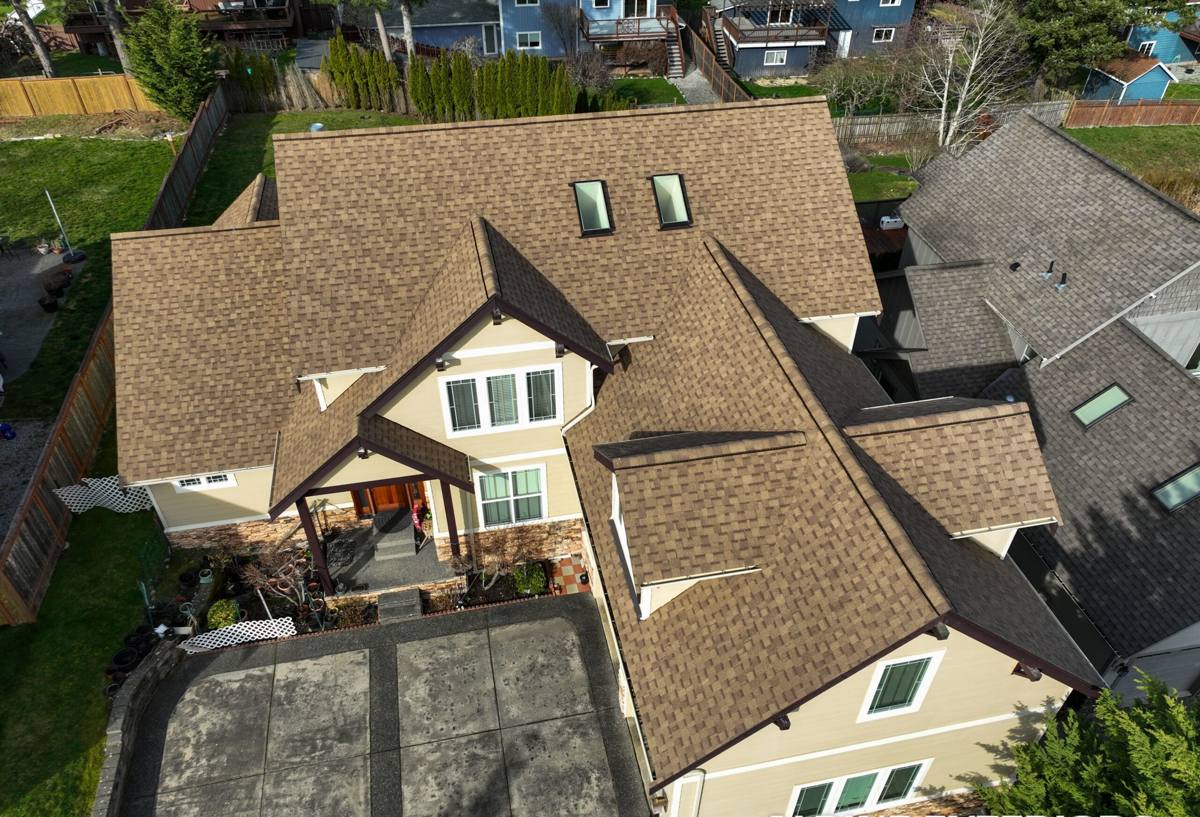
How Salt Air, Rain, and Moss Actually Damage a Roof
Salt Air and Metal Components
Salt-laden air accelerates corrosion on exposed metal — flashing, fasteners, gutters, and any exposed hardware. It's not that every metal component fails quickly, but cheaper or improperly coated fasteners and thin flashing can start showing rust and pitting well ahead of schedule when they're regularly exposed to moist, salty coastal air. This is a material selection issue as much as an installation one.
Driving Rain and Wind-Driven Water
Whatcom County storms don't always drop rain straight down. Wind-driven rain gets pushed sideways and upward under shingle edges, around vents, and into any gap in flashing that a calmer climate might tolerate. Roofs here need underlayment and flashing details that assume water will find the smallest weakness, because eventually it will try.
Moss and Sustained Moisture
Moss doesn't just look bad — it holds moisture against the roofing surface for extended periods, which accelerates granule loss on asphalt shingles and can work its way under shingle edges and tabs over time. A long moss season means more months where a roof surface stays damp instead of drying out between rains, which is exactly the condition moss and mildew thrive in.
Signs a Custer Home Needs Replacement, Not Another Repair
Repairs make sense when the damage is isolated and the roof underneath is still sound. Replacement becomes the honest recommendation when the underlying system — decking, underlayment, and flashing — has been compromised broadly enough that patching one area just shifts the problem elsewhere. Common indicators we look for on Custer homes include:
- Granule loss heavy enough that shingles look patchy or bald in large sections, not just one spot
- Moss growth that has spread across multiple slopes rather than one shaded corner
- Soft or spongy decking felt underfoot during inspection, especially near valleys and eaves
- Repeated leaks in different locations rather than one recurring spot
- Shingles curling, cupping, or losing their seal across a large portion of the roof
- Visible daylight or water staining in the attic along multiple rafters
- A roof approaching or past the upper end of its material's realistic service life in this climate
If only one or two of these apply and they're contained, a repair is usually the right call and we'll say so. Replacement is for when the whole system is compromised, not just the shingles on top of it.
What a Correct Roof Replacement Involves Here
Full Tear-Off and Decking Inspection
We don't recommend layering new shingles over old ones on this coast. A full tear-off lets us see the decking underneath, which is where moisture damage actually shows up first. Any soft, rotted, or delaminated sheathing gets replaced before anything new goes down — skipping this step is how a new roof ends up with old problems underneath it.
Underlayment and Ice-and-Water Barrier
Given how much wind-driven rain this area sees, underlayment isn't a place to cut corners. Synthetic underlayment holds up better to wind and moisture exposure during the install window than older felt products, and self-adhered ice-and-water barrier belongs at eaves, valleys, and around every roof penetration — the exact spots where wind-driven rain and ice dams put the most pressure on a roof.
Flashing at Every Transition
Flashing around chimneys, skylights, vents, and roof-to-wall transitions is where most leaks actually originate, not out in the middle of a shingle field. Given the salt air here, we pay close attention to the metal itself, not just the installation, since corroded flashing eventually leaks regardless of how well it was installed originally.
Ventilation That Matches the Climate
Balanced intake and exhaust ventilation keeps the attic space closer to outdoor temperature and humidity, which reduces condensation buildup during our wet months and helps shingles last through their expected lifespan instead of failing early from trapped moisture underneath.
Comparing Roofing Materials for a Custer Home
There's no single "best" roofing material for every home — it depends on budget, roof pitch, architectural style, and how much maintenance a homeowner wants to take on. Here's how the common options actually perform in this specific climate:
| Material | Performance in Salt Air / Rain | Moss Resistance | Typical Maintenance |
|---|---|---|---|
| Architectural asphalt shingle | Good with proper flashing and fasteners; widely used and proven locally | Moderate — benefits from periodic cleaning and copper/zinc strips | Low to moderate |
| Metal roofing | Very good when properly coated fasteners and finishes are used | Good — sheds moisture quickly, less surface for moss to grip | Low |
| Cedar shake | Requires careful ventilation; natural material reacts to moisture cycles | Lower — needs more frequent treatment and cleaning in wet climates | Higher |
| Synthetic/composite shingle | Good; engineered for moisture resistance | Moderate to good depending on product | Low to moderate |
We install based on what the home and homeowner actually need, not a one-size-fits-all default. For most Custer homes, a quality architectural asphalt shingle with proper flashing and ventilation is a solid, cost-effective choice — but we'll talk through metal or other options honestly if that's a better fit for the roof pitch or your long-term maintenance preferences.
Our Roof Replacement Process
- On-site inspection and estimate — we walk the roof (or use appropriate access), check the attic where possible, and give you a written scope, not a verbal guess.
- Material selection — we go over the tradeoffs for your specific roof and budget, without pushing a single default product.
- Scheduling around weather — given how much rain Whatcom County gets, we plan installs for dry windows and protect the home if conditions shift mid-project.
- Full tear-off and decking check — old materials come off completely, decking gets inspected and repaired as needed.
- Underlayment, ice-and-water barrier, and flashing installation — the parts that actually keep water out long-term.
- New roofing material installation — installed to manufacturer specs so warranties stay valid.
- Ventilation check — intake and exhaust confirmed balanced for the attic space.
- Cleanup and final walkthrough — magnetic sweep for nails, debris removal, and a walkthrough so you know exactly what was done.
What Actually Drives Roof Replacement Cost in Custer
Every roof is different, so we won't quote a number without seeing the job — but these are the factors that move the price up or down on most Custer homes:
| Factor | Why It Matters |
|---|---|
| Roof size and pitch | Steeper roofs take longer and require more safety setup, increasing labor cost |
| Decking condition | Rotted or soft sheathing found during tear-off adds material and labor |
| Material choice | Asphalt, metal, cedar, and synthetics have different material and labor costs |
| Number of penetrations | Chimneys, skylights, and vents each need individual flashing work |
| Layers to remove | Multiple existing layers mean more tear-off labor and disposal |
| Access and site conditions | Steep driveways, tight lots, or difficult staging affect setup time |
As a broad range, most full asphalt shingle replacements on homes in this area land somewhere in the low-to-mid five figures, with metal or more complex rooflines running higher. The only way to get an accurate number is a real inspection, which is what we start with.
Why a Crew That Already Works in Custer Matters
Roofing crews that only pass through Whatcom County occasionally tend to install to a generic standard rather than one built for this specific coastal climate. A crew that regularly works homes in and around Custer already knows which flashing details actually hold up to local wind-driven rain, which fastener types resist the salt air, and how much attic ventilation this climate actually calls for versus what a spec sheet from a drier region assumes. That familiarity shows up in the small decisions made on every job — the kind that don't get noticed until years later, when a roof either has held up or hasn't.
Local presence also means we're reachable if something comes up after the install, without a long drive or a call center in between.
Protecting Your New Roof Through Whatcom County's Moss Season
A correctly installed roof still benefits from basic maintenance in a climate like this one. A few habits go a long way toward getting the full service life out of a new roof:
- Have gutters cleared before the fall rains and again mid-winter if overhanging trees are nearby
- Keep an eye on moss growth and address it early rather than letting it spread across a slope
- Trim back overhanging branches that keep sections of the roof shaded and damp
- Schedule a periodic visual inspection, especially after major windstorms
- Watch for granule buildup in gutters, which can signal accelerated shingle wear
- Address any small leak or stain immediately rather than waiting for it to spread
None of this replaces a correct installation, but it protects the investment once the new roof is on.
Get a Straightforward Look at Your Custer Roof
If your roof is showing its age, or you just want an honest opinion on whether repair or replacement makes sense for your Custer home, we're glad to take a look. There's no pressure and no sales script — just a real inspection, a clear explanation of what we find, and a written estimate you can take your time with. Use the form below to request your free estimate.