 Lynden Roofing
 Why Birch Bay Windows Wear Differently Than Windows Inland
Birch Bay sits right on the water, and that changes what your windows deal with day to day compared to a home a few miles inland in Lynden. The combination of salt-laden air, wind-driven rain coming straight off the water, and a long, damp moss season means window systems here take a different kind of beating. It's not just about age — it's about exposure. Two windows installed the same year, one in Birch Bay and one in central Whatcom County, can be in very different condition ten years later simply because of where they sit.
This page is specifically about window replacement for Birch Bay homes. We're not going to give you a generic rundown of window types — we're going to walk through what actually matters when your house sits close to saltwater and takes on that much moisture over the course of a year.
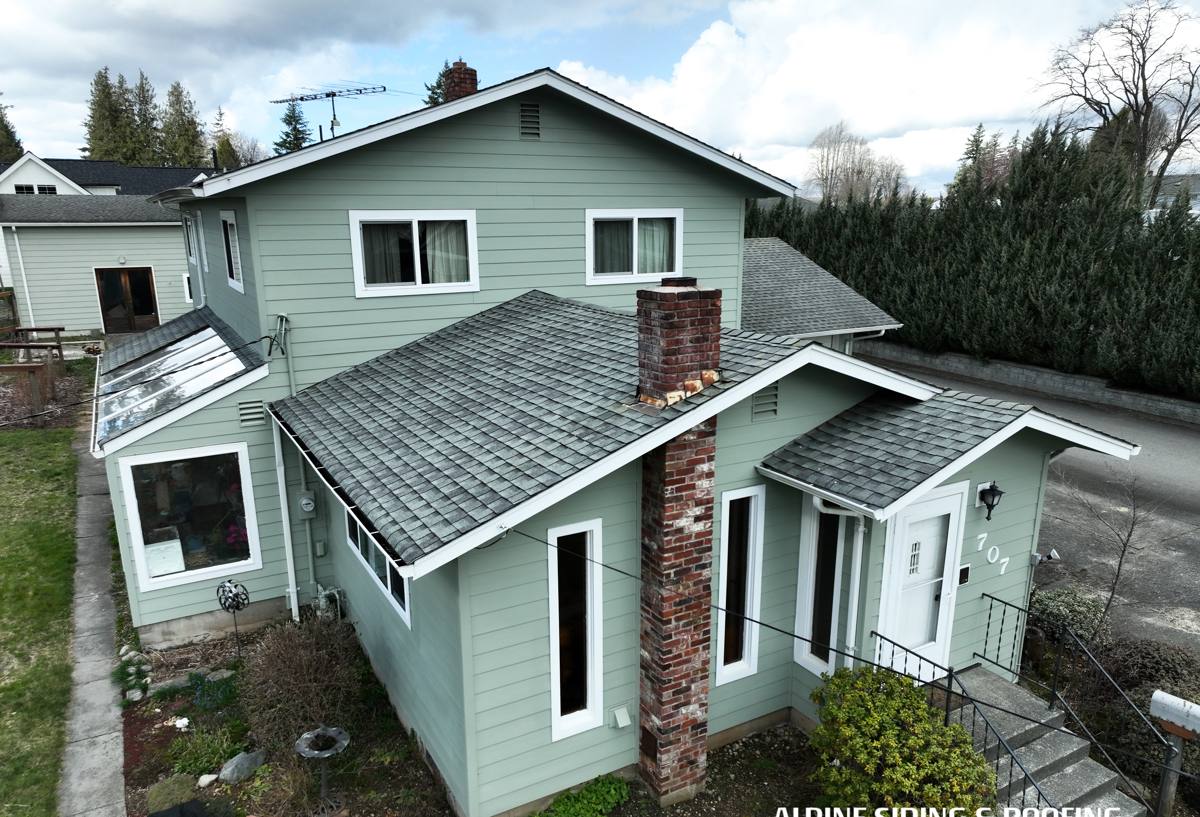
What the Local Climate Actually Does to a Window
Salt Air and Hardware
Salt in the air settles on everything, including window frames, locks, hinges, and screen hardware. Over years, it accelerates corrosion on lower-grade metal components and can dull or pit finishes that would otherwise hold up fine a few miles away. This is one of the biggest differences between a coastal install and an inland one — hardware and finish choices that are perfectly adequate in Lynden may not hold up as well right on Birch Bay.
Driving Rain and Water Intrusion
Wind off the water doesn't just bring rain — it pushes it sideways and up under trim, sills, and poorly sealed joints. A window that would stay dry in a calm, straight-down rain can still take on water during a driving coastal storm if the flashing and sealant details aren't done right. This is usually where old, failing installs show their weaknesses first: water finds its way behind the trim rather than through the glass itself.
Moss, Algae, and Prolonged Dampness
Western Whatcom County's moss season runs long, and Birch Bay's humidity keeps wood trim, sills, and caulk lines damp for extended stretches. That constant moisture is what feeds moss and algae growth on horizontal surfaces and encourages wood rot in sills and frames that aren't well protected. It's also what causes seals on older insulated glass units to fail early, showing up as fogging or condensation between the panes.
Signs Your Windows Are Due for Replacement
- Fogging or a hazy film between the panes of double-pane glass (a failed seal, not a cleaning issue)
- Soft, spongy, or visibly rotted wood at the sill or lower frame corners
- Drafts you can feel near the frame even when the window is fully latched
- Corroded, stiff, or hard-to-operate locks and cranks
- Visible daylight or gaps around the trim from the outside
- Paint or finish that keeps failing in the same spot no matter how often it's touched up
- Noticeably higher heating bills compared to similar-sized homes nearby
- Moss or dark staining building up on the sill or lower trim faster than the rest of the house
Any one of these on its own might just need a repair. Several at once, especially on the water-facing side of the house, usually points to windows that are past the point where patching makes sense.
What a Correct Window Replacement Job Actually Involves
Window replacement looks simple from the outside — old window out, new window in — but the parts that determine whether it lasts in a place like Birch Bay happen in the details most homeowners never see.
Assessment Before Removal
Before anything comes out, the opening needs to be checked for hidden rot in the framing, condition of the existing flashing, and whether the wall assembly behind the window has already taken on water damage. Skipping this step means a brand-new window can end up sealed against a compromised opening.
Flashing and Water Management
This is the single most important part of a coastal install. Proper flashing directs any water that gets past the window itself back out, rather than letting it pool behind the trim or soak into framing. Given how much driving rain a Birch Bay home takes on, this step gets more attention here than it might on a sheltered inland lot.
Sealant and Hardware Choices
Sealants and gaskets suited to constant damp-dry cycling hold up better than standard-grade products near the water. Hardware — locks, hinges, cranks — should be chosen with corrosion resistance in mind, since replacing a window only to have the lock seize up in a few years defeats the purpose.
Fit and Insulation
A correctly sized window with proper insulation around the frame does two jobs at once: it keeps conditioned air in, and it removes the gaps where wind-driven rain likes to find a way through. Loose-fitting or improperly shimmed installs are a common source of both drafts and leaks.
Choosing Materials for a Coastal Whatcom County Home
There's no single "best" window material for every home — it depends on exposure, budget, and how the house is built. Here's how the common options stack up specifically for a salt-air, high-moisture setting like Birch Bay.
| Material | Coastal Performance | Maintenance | Typical Trade-Off |
|---|---|---|---|
| Vinyl | Good resistance to salt corrosion; won't rot | Low — occasional cleaning | Can flex or discolor under extreme temperature swings over many years |
| Fiberglass | Very good; dimensionally stable in damp, salty air | Low | Higher upfront cost than vinyl |
| Aluminum | Prone to corrosion and condensation near saltwater unless thermally broken | Moderate | Conducts cold, which shows up as interior condensation in our climate |
| Wood (unclad) | Attractive but vulnerable to rot in prolonged damp/moss conditions | High — regular refinishing needed | Best reserved for sheltered elevations, not the water-facing side |
| Wood with exterior cladding | Good — cladding shields the wood from moisture | Low to moderate | Higher cost; relies on the cladding seal staying intact |
For homes with direct water exposure, we generally steer homeowners toward vinyl or fiberglass for the weather-facing elevations, and reserve unclad wood for sheltered sides of the house where it's not taking the brunt of the salt air and rain. This isn't a knock on wood windows — it's about matching the material to the exposure so you're not fighting maintenance every year.
Our Window Replacement Process
- On-site assessment — we check each window opening, framing condition, and current flashing before recommending anything
- Measuring and material selection — sizes are confirmed and materials chosen based on which side of the house the window sits on
- Careful removal — old windows and trim come out without unnecessary damage to surrounding siding or wall material
- Framing repair if needed — any rot or water damage found behind the old window is addressed before the new one goes in
- Installation with proper flashing — new flashing and weather barrier details are built for wind-driven rain, not just installed to a minimum standard
- Sealing and insulation — gaps are insulated and sealed with materials suited to a damp, salt-air environment
- Final check and cleanup — operation, seal, and finish are checked before we consider the job done, and the site is cleaned up
What Affects the Cost of a Window Replacement in Birch Bay
| Factor | Why It Matters |
|---|---|
| Number and size of windows | Larger openings and full-house jobs have different labor and material needs than a single replacement |
| Material chosen | Vinyl, fiberglass, and clad-wood options carry different price points, as shown above |
| Condition of the existing opening | Hidden rot or water damage found during removal adds repair work before the new window can go in |
| Which side of the house | Water-facing elevations often call for more robust flashing and sealing work than sheltered sides |
| Glass package | Double-pane versus upgraded glass options affects both cost and long-term energy performance |
Costs vary enough from house to house that we'd rather give you an honest, specific number after looking at your windows than a broad estimate that doesn't reflect your actual home.
Why It Matters to Hire a Crew That Already Works in Birch Bay
A contractor who mostly works inland may not think twice about hardware corrosion, flashing detail for driving rain, or how fast moss builds up on a sill near the water. Those aren't things you learn from a manual — they're things you learn by doing installs in this exact environment, season after season. A crew already familiar with Birch Bay's conditions knows to spend extra attention on flashing and hardware choices without being asked, because they've seen what happens when that step gets shortchanged on a coastal home.
There's also a practical side to hiring local: a Whatcom County-based crew based out of Lynden can respond quickly if something needs a follow-up look, and understands the permitting and inspection expectations that apply to homes in this part of the county.
Get a Straight Answer on Your Windows
If your windows are fogging, drafty, or showing wear that seems faster than it should, it's worth having someone take a look before small problems turn into framing repairs. We offer free, no-pressure estimates for Birch Bay homeowners — use the form below to get started.