 Lynden Roofing
 Birch Bay's Waterfront Climate Is Hard on Exterior Siding
Birch Bay sits right on the Salish Sea in northwest Whatcom County, and that waterfront location changes what siding has to deal with compared to a home just a few miles inland in Lynden. Salt-laden air blows off the water almost year-round, wind-driven rain rides in sideways during winter storms instead of falling straight down, and the mix of shade from tall firs and near-constant moisture keeps a lot of exterior walls damp far longer than they'd stay dry inland. That combination is exactly what wears down the wrong siding material fastest.
Salt air is corrosive to exposed metal fasteners and trim over time. Persistent dampness and shade feed moss and algae growth on north- and west-facing walls. And wind-driven rain doesn't just hit siding head-on, it gets pushed up under laps and into seams that a home a mile inland might never have to deal with. Siding for a Birch Bay home has to be chosen and installed with all three of those factors in mind, not just the first two.
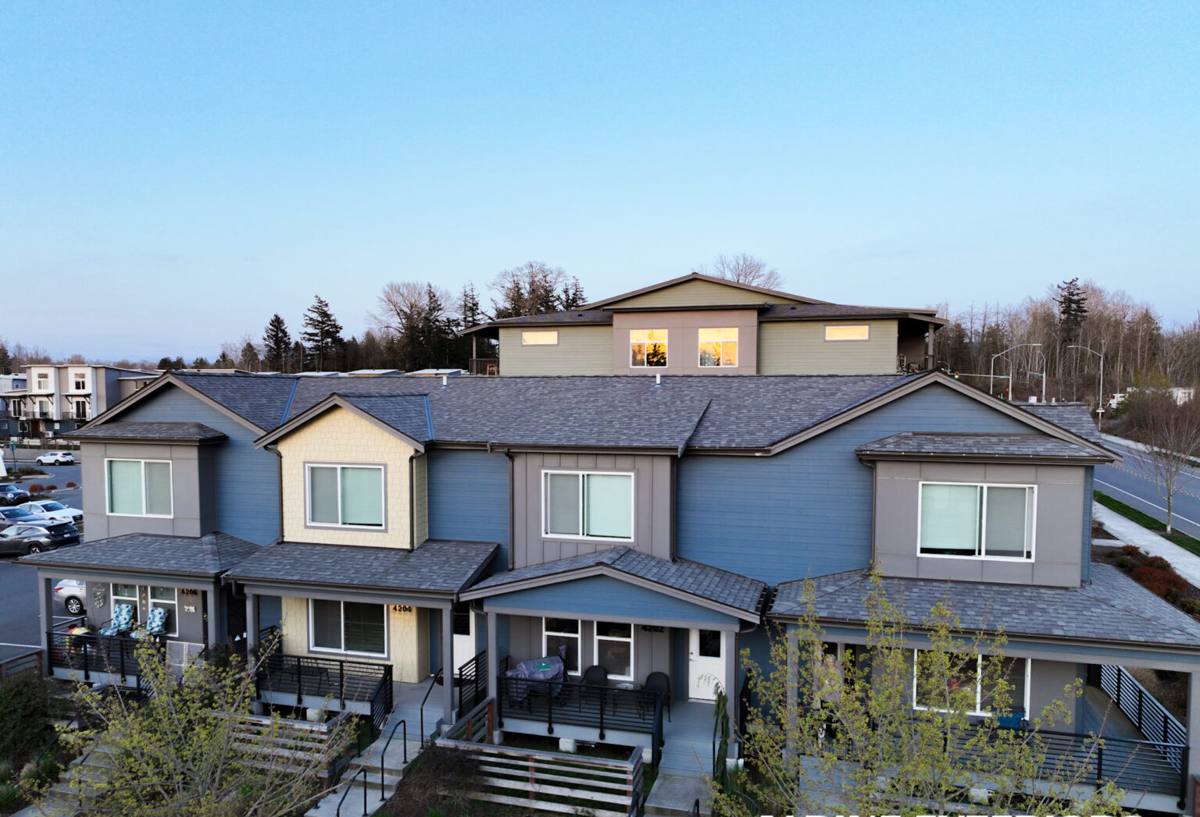
Why We Install James Hardie Fiber Cement Here
We stopped installing vinyl, LP SmartSide, and other alternatives years ago and standardized on James Hardie fiber cement for every siding job we do, including Birch Bay. That's not a marketing position, it's a practical one based on what actually holds up in this specific climate.
A Non-Combustible, Moisture-Stable Core
Hardie's fiber cement is made from cement, sand, and cellulose fibers, not wood or wood byproducts. That means it doesn't absorb and swell with moisture the way engineered wood siding can, and it won't feed mold or rot the way a wood-based product will if water does get behind it. In a place where damp shade and salt humidity are a year-round condition rather than an occasional problem, that stability matters a lot more than it does in a drier climate.
Engineered for This Climate Zone
James Hardie makes climate-specific product formulations, and the HZ5 line is engineered for colder, wetter regions like the Pacific Northwest. It's built to perform through repeated freeze-thaw cycles and sustained moisture exposure rather than being a one-size-fits-all product. For a coastal Whatcom County home, that's the right formulation for the job.
A Factory Finish That Doesn't Give Up to Salt Air
ColorPlus factory-applied finish is baked on under controlled conditions and backed by its own finish warranty, which holds up better against salt air and UV exposure than field-applied paint typically does. Field-painted siding on a waterfront property tends to need repainting sooner because salt air breaks down paint film faster than it does inland. A factory finish built for this is one less maintenance cycle for the homeowner to manage.
What a Correct Installation Involves in a Marine Environment
Buying the right siding material is half the equation. The other half is installing it correctly, and in a coastal environment the details that get skipped on a rushed job are exactly the details that cause problems fastest.
Water Management Behind the Siding
Wind-driven rain finds gaps. A correct install includes a drainage plane or rain screen gap behind the siding, proper flashing at every window and door opening, kick-out flashing where rooflines meet walls, and a starter strip set to the right reveal. These details exist specifically to give water that gets past the surface a way out instead of a place to sit.
Fastening Built for Corrosion Resistance
Fasteners matter more near salt water. We follow Hardie's fastening schedule and use corrosion-resistant fasteners appropriate for coastal exposure, not whatever is cheapest or fastest to run through a nail gun. Fasteners that start rusting a few years in leave streaks, weaken their hold, and create small entry points for moisture.
Clearances That Keep Moisture Away From the Board
Hardie specifies minimum clearances from grade, roof lines, decks, and other surfaces for a reason: siding held too close to standing water, dirt, or a roof deck stays wet longer and is more likely to develop problems, including moss growth, at that contact point. We hold these clearances even when it means more careful trim work.
How Siding Options Compare in a Salt Air, Heavy-Moss Climate
Homeowners considering a siding replacement in Birch Bay often ask how James Hardie stacks up against other common products in this specific environment. Here's an honest comparison based on how each material actually behaves near salt water and shade, not on price alone.
| Material | Salt Air / Moisture Behavior | Moss & Algae Resistance | Long-Term Maintenance |
|---|---|---|---|
| James Hardie fiber cement | Non-combustible, dimensionally stable, doesn't swell or rot | Cleanable surface, doesn't feed organic growth | Low; factory finish holds color, no repainting cycle |
| Vinyl siding | Can warp or crack with UV and temperature swings; seams can allow water intrusion | Moss and algae can still grow on the surface in shade | Low cost but shorter realistic lifespan on exposed elevations |
| LP SmartSide (engineered wood) | Wood-based core is more vulnerable to sustained moisture exposure | Susceptible to moss and rot if moisture gets behind panels | Requires diligent caulking and finish upkeep to prevent moisture entry |
| Cedar or primed spruce | Natural wood; absorbs moisture, prone to cupping and checking near water | Highly susceptible to moss, algae, and rot without frequent treatment | Highest; needs regular refinishing, sealing, and moss removal |
None of these products are unusable everywhere. But in a shaded, salt-exposed, high-rainfall setting like Birch Bay, the trade-offs stack up fastest against the wood-based options, which is why we don't offer them.
Our Process for Birch Bay Siding Projects
Assessment
We start by walking the exterior and checking for the signs of climate-driven wear covered below, along with the condition of the sheathing underneath the existing siding. Trapped moisture behind old siding is common on shaded, waterfront homes, and it needs to be found and addressed before new siding goes up, not after.
Removal and Prep
Old siding comes off, damaged sheathing gets repaired, and the drainage plane goes on correctly the first time. This is the stage where the water management details from earlier get built in, and it's the stage that's easiest to shortcut if a crew is trying to move fast.
Installation to Spec
Panels and trim go up following Hardie's published installation instructions for fastening, clearances, and flashing, adjusted for the specific exposure of each elevation. A wall that takes the brunt of the wind off the water gets treated differently than a sheltered wall on the same house.
Final Walk-Through
We review the finished job with the homeowner, check caulking and trim lines, and make sure everything meets both Hardie's specifications and our own standard before calling it done.
Signs Your Birch Bay Home May Need New Siding
- Persistent moss or algae staining on shaded or north-facing walls that keeps coming back after cleaning
- Soft spots, bubbling, or peeling paint that suggest moisture trapped behind the siding
- Cupped, warped, or separating boards, especially on wood or engineered wood siding
- Rust streaks running down from fastener heads or trim
- Gaps or failing caulk at trim and window edges where wind-driven rain can get in
- Noticeably higher heating bills that could point to compromised insulation behind failing siding
Why a Crew That Already Works Birch Bay Matters
A siding crew that regularly works in Birch Bay knows which elevations of a waterfront lot take the worst of the wind and rain, which properties need extra attention to flashing because of shade and tree cover, and how Whatcom County's permitting process applies to exterior work in the area. That local familiarity shows up in decisions a homeowner might never notice directly, like which side of the house gets extra sealant detail or how installation gets scheduled around the wetter stretches of the year. A crew installing siding here for the first time is learning those lessons on your house. A crew that already works Birch Bay isn't.
Caring for James Hardie Siding in a Salt Air Environment
James Hardie siding is low-maintenance, not zero-maintenance, and waterfront properties benefit from a little extra attention. Rinsing salt spray and grime off the siding periodically keeps the factory finish looking its best. Checking caulking at trim and penetrations once a year catches small gaps before wind-driven rain can exploit them. Keeping nearby vegetation trimmed back improves airflow and sunlight on shaded walls, which is one of the simplest ways to slow moss growth before it starts. None of this is complicated, but it's worth doing on a Birch Bay property more than it would be a few miles inland.
If you're weighing a siding replacement for a Birch Bay home, we're happy to take a look and walk you through what your specific property and exposure would need. Reach out for a free, no-pressure estimate using the form below.