 Lynden Roofing
 Deck Building in Birch Bay: Built for a Waterfront Climate
Birch Bay sits right on the water in northern Whatcom County, and a deck out there takes a different kind of beating than one a few miles inland. Salt-laden air moves off the bay and works on fasteners and framing hardware year-round, wind-driven rain gets under railings and between boards instead of just falling on top of them, and a long, mild moss season keeps shaded or low-airflow decking damp for months at a stretch. A deck built without those specific conditions in mind tends to show corrosion, rot, or slick moss growth well before its expected lifespan is up.
We're based in Lynden and work Birch Bay regularly, alongside roofing, siding, and window work across the same stretch of Whatcom County. Deck building gets treated the same way we treat the rest of the building envelope: the goal is a structure that's still solid and safe a couple decades out, not just one that looks good the day it's finished. This page covers what a Birch Bay deck actually needs, how we build to that standard, and what to expect if you're planning a new deck or replacing one that's past its prime.
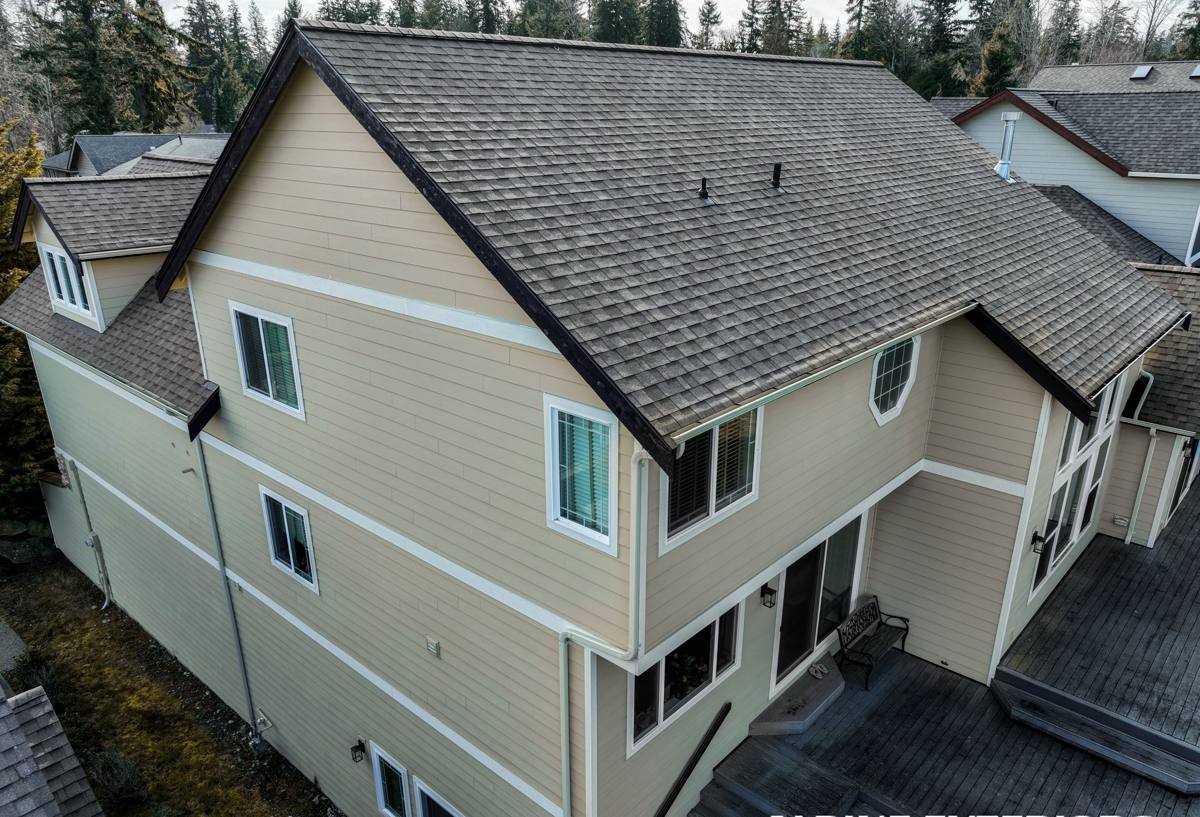
What Birch Bay's Climate Does to a Deck
Salt Air and Hardware Corrosion
Direct exposure to marine air is the biggest difference between building a deck in Birch Bay and building one further inland. Salt accelerates corrosion in screws, joist hangers, post bases, and bolts, and a fastener that's only rated for general outdoor use can start rusting and staining the wood around it within a few years on a bay-facing lot. Every piece of metal on a Birch Bay deck needs to be chosen for that exposure specifically, not just picked because it's rated "exterior" on the box.
Driving Rain and Trapped Moisture
Rain here doesn't fall straight down most of the time — wind off the water pushes it sideways, into railing joints, under top rails, and behind ledger boards where a deck attaches to the house. That sideways load is where a lot of deck failures actually start: water gets behind a poorly flashed ledger connection or into an end-grain cut that wasn't sealed, and rot sets in from the inside where nobody sees it until a board or post has already gone soft.
A Long Moss and Algae Season
Mild temperatures and near-constant moisture mean moss and algae have a long growing season on any deck surface that doesn't dry out quickly. Shaded decks, ones built low to the ground, or ones with tight board spacing tend to stay damp longer and grow moss faster — and moss on a deck surface isn't just cosmetic, it's a slip hazard and it holds moisture against the wood underneath it.
Decking Material Options for Birch Bay
There's no single right answer for every home — it depends on budget, how much shade the deck gets, and how much upkeep you actually want to do. What matters is going in with a clear picture of the real trade-offs for a bay-facing lot.
| Material | Moisture & Moss Behavior | Typical Maintenance | Realistic Lifespan Here |
|---|---|---|---|
| Pressure-treated lumber | Resists rot with proper sealing; end cuts and fastener holes need field treatment | Annual cleaning and re-sealing or staining | 15-25 years with consistent upkeep |
| Cedar | Naturally moisture-resistant but still absorbs water without regular treatment | Regular sealing; moss removal on shaded boards | 15-20 years with consistent upkeep |
| Composite decking | Doesn't absorb moisture the way wood does; smoother surface sheds moss buildup better | Low; periodic washing | 25-30+ years |
| Tropical hardwood (e.g. ipe) | Very dense and naturally rot-resistant; heavy and harder to work with | Periodic oiling to maintain color; low structural maintenance | 30+ years |
We'll walk through which option makes sense for your specific lot — a sun-exposed deck on an open bay-facing lot and a shaded deck tucked under trees don't call for the same recommendation, even on the same street.
Framing and Hardware: The Part That Actually Determines Lifespan
Decking gets the attention, but most deck failures we see start below the boards, in the framing and hardware nobody looks at after installation. On every Birch Bay deck, that means:
- Stainless steel or hot-dip galvanized fasteners and connectors rated for coastal, high-corrosion exposure — not standard exterior-grade hardware
- Flashing tape or membrane at the ledger board where the deck attaches to the house, so water can't work its way into the rim joist
- Joist tape or protective coating on top of framing lumber to keep standing water from sitting directly on cut wood
- Post bases that hold posts above grade and away from standing water, rather than posts set directly in concrete
- Proper board spacing and airflow underneath the deck so the structure can actually dry out between rain events
None of this adds much to the overall cost of a deck relative to the decking material itself, but skipping it is exactly what turns a deck that should last 25 years into one that needs structural repairs in 10.
Design Details That Matter on a Bay-Facing Lot
Height and Drainage
A deck built low to the ground with poor airflow underneath will stay damp far longer after a storm than one with proper clearance. Where the site allows it, we build in enough height and ventilation for the underside of the deck to dry out, and we make sure water draining off the deck surface moves away from the house rather than pooling against the foundation.
Railings and Fasteners
Railings take direct wind and salt exposure, and they're also where hands and moisture meet most often. We use hardware and connection details rated for that exposure, and we're careful about horizontal surfaces on top rails and post caps, since those are where standing water sits longest and where rot and corrosion tend to show up first.
Stairs and Landings
Stair stringers and landing surfaces near grade see more splash-back moisture and are more likely to sit in shade. We pay extra attention to fastener choice and board spacing in those areas specifically, since a slick or rotting stair tread is a safety issue, not just a maintenance one.
Signs an Existing Birch Bay Deck Needs Attention
- Moss or algae buildup that returns quickly after cleaning, especially on shaded sections
- Rust staining around fasteners, joist hangers, or post bases
- Soft or spongy spots in decking boards, stair treads, or the framing underneath
- Gaps, cracking, or splitting where the ledger board meets the house
- Railings or posts that feel loose or move when pushed
- Standing water that takes more than a day to dry after a normal rain
- Visible daylight or gaps at fastener holes where wood has shrunk or split around the screw
Any one of these is worth a professional look before it turns into a safety issue. Caught early, most of these are a repair. Left through another wet season, several of them add up to a rebuild.
How Our Deck Building Process Works
We start with an on-site look at the lot — grade, sun and shade exposure, how close the build is to the water, and what the house's ledger connection point actually looks like. From there we talk through material options and give a straightforward estimate based on the real scope of the job, not a generic per-square-foot number. Depending on the size and location of the deck, local permitting may apply, and we handle that as part of the project rather than leaving it for the homeowner to sort out. Once the design is set, we build the framing and hardware to the standard described above regardless of which decking material is chosen, then walk the finished deck with you before calling the job done.
Why a Crew That Already Works Birch Bay Matters
A contractor who builds decks across this part of Whatcom County regularly sees how salt air, wind-driven rain, and moss actually play out on real decks over years — not just how a material performs on a spec sheet. That shows up in practical choices: which fastener grade actually holds up on a bay-facing lot, how much airflow a shaded deck needs underneath it, and where a ledger connection is worth the extra time to flash properly so it's not a callback two winters later. Being based in Lynden and working this stretch of the county regularly means we're not learning Birch Bay's conditions on your project — we already know them.
If you're planning a new deck in Birch Bay or need an honest look at one that's showing its age, we're glad to come take a look and walk you through the options. Use the form below to request a free, no-pressure estimate.