 Lynden Roofing
 Birch Bay's Roofing Climate: Salt Air, Driving Rain, and a Long Moss Season
Birch Bay sits close enough to the water that homes there deal with a different set of roofing stresses than a house a few miles inland in Whatcom County. Salt-laden air drifts onshore and slowly works on exposed metal — fasteners, flashing, vent caps, gutter hardware — long before most homeowners notice anything wrong from the ground. Add in wind-driven rain that comes in sideways during winter storms, and a shingle roof here has to do more than just shed water straight down. It has to resist water being pushed sideways and upward under tabs and around penetrations.
Then there's moss. Western Washington's damp, mild winters and shaded tree cover give moss and algae a long growing season, and Birch Bay's marine humidity only extends it. A roof that would stay reasonably clean in a drier inland climate can grow a visible moss line within a couple of seasons here if it wasn't installed or maintained with that in mind. None of this means asphalt shingles are the wrong choice for the area — it means the installation details and the maintenance plan matter more here than they would somewhere drier and further from the coast.
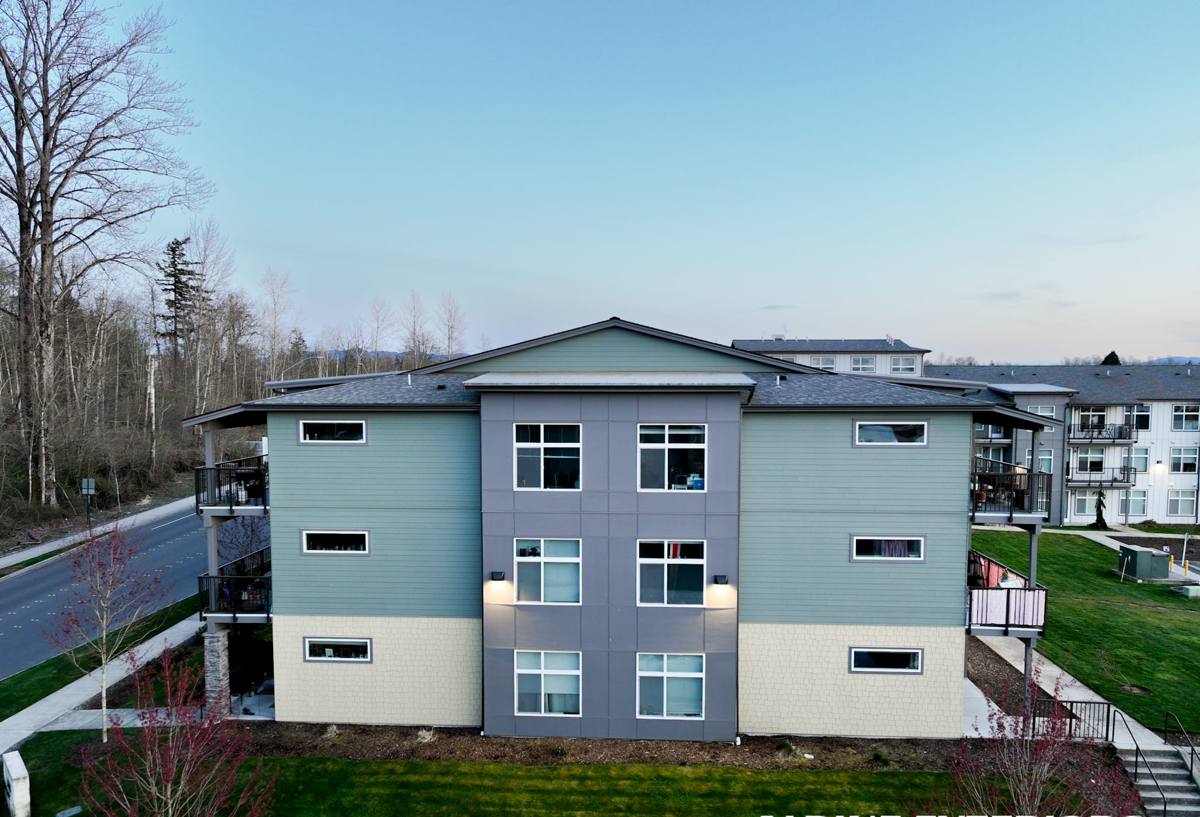
Why Asphalt Shingles Still Make Sense for Birch Bay Homes
Asphalt shingles remain the most common roofing material in this part of Whatcom County for good reason: they're a proven product, reasonably priced, available in a wide range of colors and styles, and — when installed correctly — they perform well in exactly the kind of weather Birch Bay sees most of the year. The key phrase is "installed correctly." A shingle roof's weak points are almost never the shingles themselves; they're the underlayment, the flashing, the ventilation, and the fastening pattern underneath.
Architectural vs. 3-Tab Shingles
Architectural (laminated) shingles are heavier, have a dimensional look, and generally carry a higher wind rating than older-style 3-tab shingles — a meaningful difference on a property exposed to open wind off the bay. 3-tab shingles are lighter, flatter, and less expensive, but they're more prone to tab lift in sustained wind and tend to show algae staining sooner. For most Birch Bay homes, we recommend architectural shingles as the better long-term value, though 3-tab still has a place on secondary structures or tight budgets.
Algae-Resistant Granules
Most major manufacturers now offer shingles with copper- or zinc-infused granules designed to slow algae and moss growth. In a climate like this one, that feature isn't cosmetic — it directly affects how long the roof looks clean and how often it needs cleaning. We treat algae-resistant granules as a standard recommendation for this area rather than an upgrade, because the alternative is a roof that streaks and grows moss noticeably faster.
What a Correct Installation Actually Involves
A shingle roof is a system, not a single layer. Skipping or shortcutting any one part of that system is where most premature failures start — especially in a wet, salt-exposed climate where water finds every gap over time.
Tear-Off and Deck Inspection
We remove the old roofing down to the deck rather than layering over it. That lets us actually see the plywood or plank sheathing underneath, check for soft spots, delamination, or moisture damage, and replace only what's actually bad — not guess at what's hiding under a second layer of shingles.
Underlayment and Ice-and-Water Barrier
Synthetic underlayment goes down over the full deck as the roof's backup waterproofing layer. In vulnerable areas — eaves, valleys, and around penetrations — we install self-adhering ice-and-water barrier, which seals around fastener penetrations and resists the wind-driven rain that's common here. This is one of the details that separates a roof that holds up through a coastal winter from one that starts leaking at the eaves within a few years.
Flashing at Every Transition
Chimneys, skylights, sidewalls, and roof-to-wall transitions all need properly formed and integrated flashing, not just roofing cement smeared over a gap. Salt air accelerates corrosion on lower-grade or improperly lapped metal, so flashing details and material choice matter more on a Birch Bay roof than they would inland.
Ventilation
Balanced intake and exhaust ventilation keeps the attic dry and temperature-regulated. Poor ventilation traps moisture, which shortens shingle life from underneath and contributes to the kind of damp attic conditions that encourage mold and rot — a real concern in a consistently humid coastal microclimate.
Fastening
Correct nail placement, count, and depth affect wind resistance directly. Overdriven or underdriven nails are a leading cause of shingle blow-off in wind events, which is worth taking seriously on a property exposed to open wind off the water.
Cost Factors on a Birch Bay Re-Roof
Every roof is priced based on its own size, pitch, layers, and access — we won't quote a number without seeing the property. But these are the factors that typically move the price on jobs in this area:
| Factor | Why It Matters Here |
|---|---|
| Roof pitch and access | Steeper roofs and limited equipment access near the water add labor time and safety measures |
| Number of existing layers | Full tear-off of multiple old layers costs more but is often the only sound option |
| Shingle tier chosen | Standard vs. algae-resistant vs. higher wind-rated architectural lines vary in material cost |
| Deck condition | Rotten or soft sheathing found during tear-off requires repair before new roofing goes on |
| Flashing and penetration count | Chimneys, skylights, and multiple roof planes add detail work and material |
| Ventilation upgrades | Adding or correcting intake/exhaust vents protects the new roof's lifespan |
As a general guide, most Birch Bay homes fall into a broad mid-range for a full tear-off and asphalt shingle replacement, with the final number shaped heavily by the deck condition and pitch. We'll walk through the actual factors on your roof during the estimate rather than quoting off a square-footage guess.
Living With a Shingle Roof Near the Water: Ongoing Care
Even a well-installed roof needs some attention in this climate. A few habits go a long way toward getting full life out of the investment:
- Keep gutters and downspouts clear so water doesn't back up under the eave edge, especially before the fall storm season
- Trim overhanging branches to reduce shade and debris buildup, both of which feed moss growth
- Have moss physically removed rather than power-washed off — pressure washing strips granules and shortens shingle life
- Schedule a roof check after major wind events to catch lifted or missing tabs early
- Watch for granule buildup in gutters, which signals accelerated wear and is worth a professional look
- Address small flashing or sealant issues promptly — in this climate, small leaks don't stay small for long
Our Process, Start to Finish
We keep the process straightforward because homeowners deserve to know what's happening on their roof and when.
1. On-Site Inspection and Estimate
We walk the roof (or use appropriate equipment when access is limited), check the attic when possible, and give you a written estimate with the reasoning behind it — not just a total.
2. Material Selection
We'll go over shingle tiers, wind ratings, and algae-resistant options so you're choosing based on what actually fits your home and budget, not a sales pitch.
3. Scheduling Around the Weather
Roofing in Whatcom County means working around rain windows. We plan tear-off and dry-in carefully so your home isn't left exposed longer than necessary.
4. Installation
Tear-off, deck repair as needed, underlayment, ice-and-water barrier at vulnerable areas, flashing, shingles, and ventilation — installed in that order, done right the first time.
5. Cleanup and Walkthrough
We magnet-sweep for stray nails, haul away debris, and walk the finished roof with you before we call the job done.
Signs a Birch Bay Roof Needs a Closer Look
- Visible moss lines or dark streaking, especially on north-facing slopes
- Granules collecting in gutters or at downspout outlets
- Curling, cupping, or cracked shingles
- Soft or spongy spots when walked (only assessed by a professional, not something to test yourself)
- Daylight visible through the attic roof deck
- Water stains on interior ceilings, especially near chimneys, skylights, or exterior walls
- Missing or lifted shingles after a windstorm
Why Hiring a Crew That Already Works Birch Bay Matters
A roofing crew that regularly works this part of Whatcom County already knows how to sequence a job around coastal weather windows, which flashing and fastening details actually hold up to salt air over time, and how aggressively moss grows back if the underlying causes — shade, debris, poor drainage — aren't addressed alongside the new roof. That local pattern recognition is hard to replace with a generic install checklist. It shows up in fewer callbacks, roofs that stay cleaner longer, and fewer surprises once the tear-off starts.
If you're weighing a roof replacement or repair on a Birch Bay home, we're happy to take a look and give you a straight answer about what your roof actually needs. Reach out for a free, no-pressure estimate using the form below.