 Lynden Roofing
 Asphalt Shingle Roofing Built for Sumas
Sumas sits at the northern edge of Whatcom County, right against the Canadian border, and it gets the full mix of weather that makes roofing in this corner of the state its own kind of challenge. Homes here deal with salt-laden air moving in off the Strait, long stretches of driving rain, and mild, damp conditions that give moss and algae months at a time to take hold on a roof surface. Asphalt shingle roofing is still the most common and most cost-effective choice for homes in Sumas, but only when it's specified and installed with that specific climate in mind. A shingle roof built for a drier inland town, or installed by a crew that doesn't work this area regularly, tends to show moss, granule loss, and flashing problems years before it should.
Lynden Roofing Co installs and repairs asphalt shingle roofs across Whatcom County, and Sumas is one of the areas we work in regularly. This page is specifically about asphalt shingle roofing for Sumas homes — what the local climate actually does to a shingle roof, what a correct installation includes, and how our process works from first look to finished job.
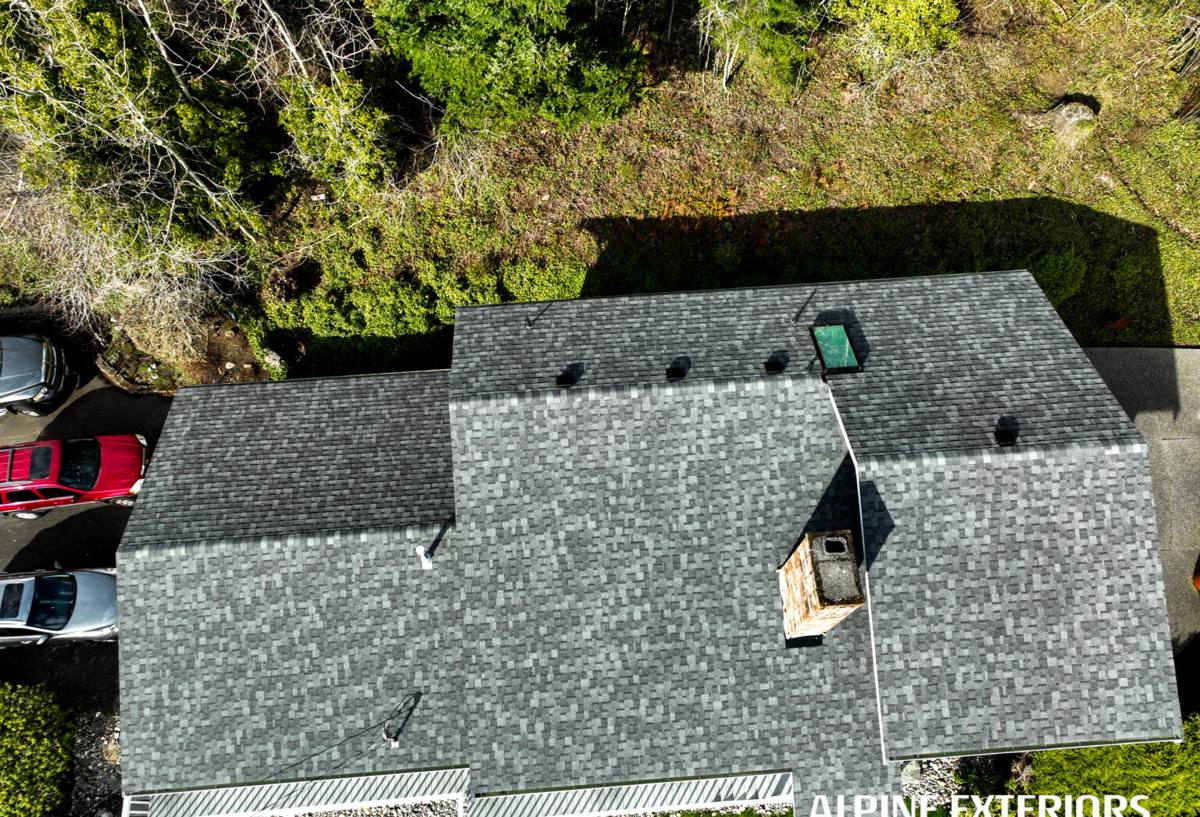
What Salt Air, Rain, and Moss Do to a Shingle Roof Here
Salt-Influenced Air and Metal Components
Sumas is close enough to the Strait of Georgia and Puget Sound weather systems that homes here get some of the same salt exposure as our more coastal service areas, carried inland on prevailing winds. Salt in the air accelerates corrosion on exposed metal — nail heads, flashing, drip edge, and vent stacks all take more of a beating here than they would in a drier, more inland climate. Shingles themselves aren't affected by salt the way metal is, but the metal components that hold a shingle roof together absolutely are, and that's a detail that gets missed on roofs built to a generic spec.
Driving Rain and Wind-Loaded Water
Rain in this part of Whatcom County rarely just falls straight down. Wind pushes it sideways into roof valleys, up under shingle tabs at the eaves, and around chimneys, skylights, and vent penetrations. That's a harder test for a shingle roof's underlayment and flashing than an annual rainfall total suggests, and it's exactly where a roof with thin underlayment or poorly lapped flashing starts leaking first — usually in the first hard windstorm after the underlayment starts to fail.
A Long Moss and Algae Season
Mild temperatures and consistent moisture mean moss and algae have a growing season that runs most of the year in Whatcom County, and Sumas is no exception. Shaded slopes, north-facing roof planes, and anything under mature trees stay damp longer between rains, which is exactly the condition moss needs to establish. Once moss gets a foothold under shingle tabs, it holds water against the roofing material and can lift shingles enough to let water underneath — a slow process, but one that shortens a roof's real service life if it's never addressed.
What a Correct Asphalt Shingle Job Includes
The shingle itself gets most of the attention when homeowners think about a new roof, but in this climate the components underneath and around the shingles are what actually determine how long the roof lasts. On every asphalt shingle job we do in Sumas, that means:
- A synthetic or high-quality underlayment rated for sustained moisture exposure, not a bare code-minimum product
- Ice-and-water shield at eaves, valleys, and other spots where wind-driven rain and debris tend to collect
- Properly lapped, sealed flashing at every valley, chimney, skylight, and roof-to-wall transition
- Corrosion-resistant fasteners and flashing metal, given the salt exposure this area gets
- Balanced attic and roof deck ventilation so moisture escapes instead of condensing under the deck
- Shingles rated for the wind speeds this area actually sees, installed to the manufacturer's nailing pattern rather than a shortcut pattern
None of these add much to the total cost of a shingle roof relative to the shingles themselves. Skipping them is what turns a roof rated for twenty-five to thirty years into one that needs real attention in fifteen.
Choosing the Right Asphalt Shingle for This Climate
Not all asphalt shingles are built the same, and the difference matters more here than it would in a milder, drier region. We generally steer Sumas homeowners toward architectural (laminated) shingles over basic three-tab shingles, and toward products with algae-resistant granules built in.
| Shingle Type | Moss & Algae Behavior | Wind Rating | Realistic Lifespan Here |
|---|---|---|---|
| Standard three-tab shingle | No built-in algae resistance; shows growth sooner | Lower wind rating, more prone to lifting in driving rain | 15-20 years |
| Architectural shingle, standard granules | Moderate; benefits from good ventilation and sun exposure | Higher wind rating than three-tab | 20-25 years |
| Architectural shingle, algae-resistant (copper-infused) granules | Best available resistance to moss and algae staining | Higher wind rating, class 3 or 4 impact options available | 25-30 years |
Algae-resistant granules don't make moss impossible, but they slow it down meaningfully, and on a shaded roof plane in a climate like this that difference is worth having. We'll walk through which option fits your roof's pitch, sun exposure, and budget rather than defaulting to whatever's easiest to sell.
How Our Process Works
1. On-Site Inspection and Honest Assessment
We start with a walk of the roof — or a close visual and attic inspection if walking the roof isn't safe — to check shingle condition, flashing, ventilation, and signs of moisture damage at the deck. We'll tell you plainly whether you're looking at a repair or a full replacement, and why.
2. A Written Scope and Straight Answers
Before any work starts, you get a clear written scope: materials, underlayment and flashing details, ventilation plan, and a real price, not a rough verbal estimate. If you have questions about why we're specifying a particular underlayment or flashing detail, we'll answer them in plain terms.
3. Tear-Off and Deck Inspection
On a full replacement, we tear off down to the deck rather than layering over old shingles. That's the only way to actually see the condition of the roof deck, catch soft spots or hidden moisture damage, and confirm ventilation is set up correctly before anything new goes down.
4. Installation to the Climate, Not Just to Code
Underlayment, ice-and-water shield, flashing, and shingles go in following the manufacturer's specifications and the details this climate actually calls for — not the bare minimum needed to pass inspection. Fasteners and flashing metal are chosen with the area's salt exposure in mind.
5. Final Walkthrough
We walk the finished job with you, cover what maintenance actually matters going forward — mainly gutter and valley checks and periodic moss monitoring — and make sure you know what's covered under warranty and for how long.
Signs a Sumas Shingle Roof Needs Attention
- Moss visible in valleys or on shaded slopes, especially moss that returns quickly after cleaning
- Granules collecting in gutters or at the base of downspouts
- Curling, cupping, or missing shingles, especially after a windstorm
- Rust staining or visibly deteriorated flashing around chimneys, vents, or skylights
- Water staining on interior ceilings near exterior walls or chimneys
- Daylight visible through the roof deck from inside the attic
- Soft spots or noticeable sagging when the roof is walked
Any single item on that list is worth a professional look. Caught early, most of these are a straightforward repair. Left alone through another wet season, several of them turn into a full tear-off.
Repair or Replace: How We Help You Decide
We don't default to recommending replacement just because a roof has a problem. We look at the roof's age, how much surface area is affected, whether the deck underneath shows moisture damage, and how many prior repairs it's already had. A localized leak on an otherwise sound roof is usually a repair — a section of damaged shingles, a flashing detail redone, a valley cleared and resealed. A roof nearing the end of its rated life with moss-related damage spread across multiple slopes, or a deck with soft spots from long-term moisture, is more honestly addressed with a replacement than another round of patchwork. We'll explain what we find and why, and lay out the real trade-offs rather than pushing toward whichever option is more profitable for us.
Cost Factors for an Asphalt Shingle Roof in Sumas
Every roof is different, so we won't quote a number without seeing yours, but a few factors consistently move the price on shingle roofing jobs in this area:
| Factor | Why It Matters Here |
|---|---|
| Roof pitch and access | Steeper roofs and difficult access take more labor and safety setup |
| Number of valleys, chimneys, and penetrations | Each one needs correctly lapped flashing — more of them means more labor and material |
| Existing deck condition | Moisture damage found at tear-off may require deck repair before shingles go down |
| Shingle grade selected | Algae-resistant, higher wind-rated shingles cost more upfront but hold up longer here |
| Ventilation upgrades needed | Older homes sometimes need added intake or exhaust venting to meet current standards |
We'll break down exactly which of these apply to your roof during the inspection, so the estimate you get reflects your actual roof rather than a generic average.
Why a Crew That Already Works Sumas Matters
A roofing crew that works this corner of Whatcom County through every season sees firsthand how salt air, wind-driven rain, and moss actually behave on real houses over years, not just how a shingle performs on a manufacturer's data sheet. That translates into practical decisions on your job: which roof orientations need extra attention because of shade or prevailing wind, how much ice-and-water shield a given valley genuinely needs, and which flashing and fastener choices are worth the extra material cost so you're not dealing with a callback two winters later. It also means working with a crew that already understands local permitting and won't need to relearn this area's conditions on your roof.
Beyond the Roof
Asphalt shingle roofing is a large part of what we do in Sumas, but the same climate that wears on a roof wears on the rest of a home's exterior too. We also handle siding, window replacement, and deck construction, and if an inspection turns up moisture damage at a wall-to-roof transition or aging trim near the roofline, we can address it as part of the same conversation instead of sending you to track down a second contractor.
If your Sumas home needs a shingle roof inspection, a repair, or you're weighing a full replacement, we're glad to take a look and give you a straightforward, honest read on what it actually needs. Reach out using the form below to schedule a free, no-pressure estimate.