 Lynden Roofing
 Asphalt Shingle Roofing Built for Deming's Conditions
Homes out toward Deming face a different mix of stresses than roofs closer to downtown Lynden, even though they're only a short drive apart. Properties here tend to sit on larger, more heavily treed lots, with conifers and big-leaf maple crowding in close enough to shade large sections of roof for most of the day. That shade is exactly what a long moss season needs to take hold and stay put well into the warmer months. Rain also behaves differently as the land rises toward the foothills — storms moving in off the Salish Sea get lifted and wrung out more forcefully here than they are on the flatter valley floor, which means Deming roofs often see more total rainfall and more sustained driving rain over the course of a wet season. And even this far up the valley, marine air still pushes inland on a regular basis, carrying enough salt-tinged moisture to matter for exposed metal and fasteners over the years, even though nobody would call Deming a coastal community.
None of this rules out asphalt shingles as the right roofing material for a Deming home. It just means the installation has to account for heavier tree cover, more moisture exposure, and a longer damp season than a roof going on a more open, sunnier lot closer to town. This page covers what a correct asphalt shingle install actually involves for a property in this part of Whatcom County, what tends to go wrong when it isn't done that way, and how we run the job from first look to final cleanup.
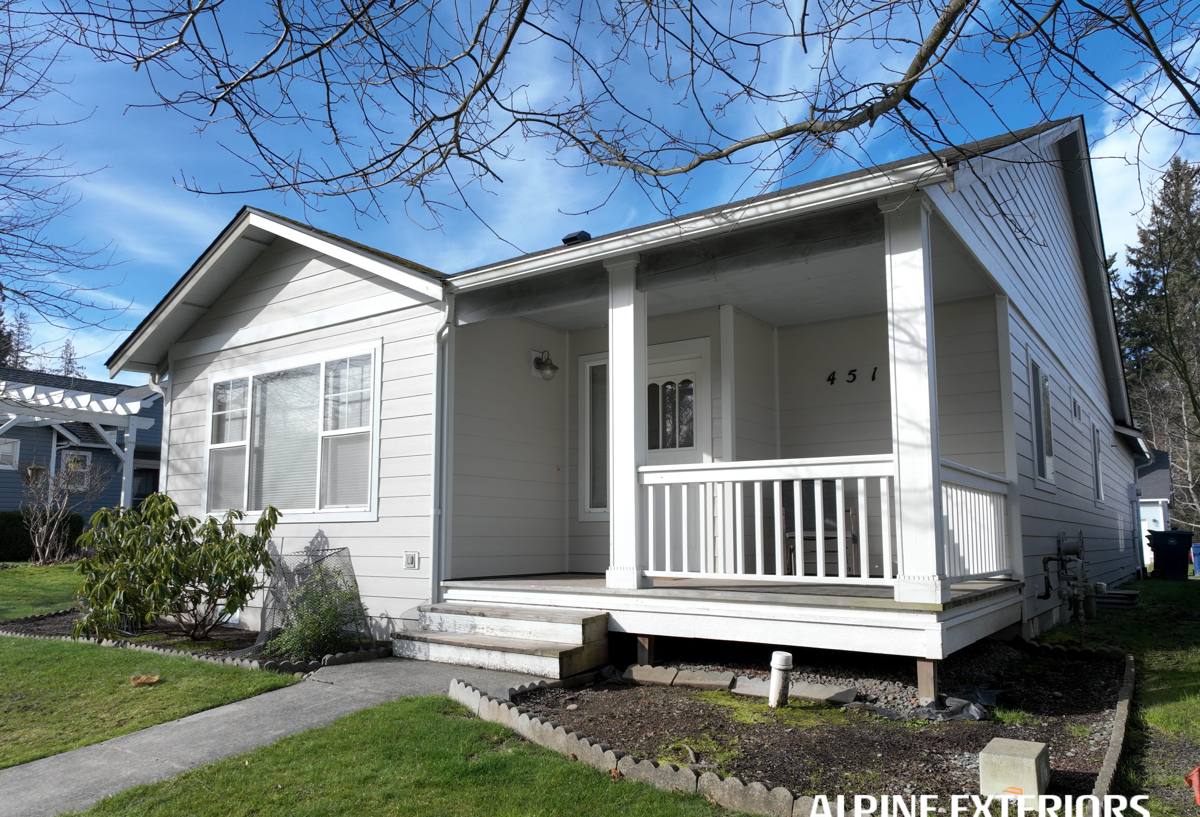
Why Asphalt Shingles Still Make Sense in Deming
Asphalt shingles remain the practical, well-proven choice for the large majority of homes in this area. They're priced reasonably compared to metal or tile, they hold up well under correct installation, they come in enough colors and profiles to suit anything from a modest rambler to a larger property with outbuildings, and if a branch or falling debris ever does damage a section, it can typically be repaired without re-roofing the whole house. What the material itself doesn't tell you is how it was put on, and on a wooded, shaded lot, that gap is where problems start.
In our experience, the shingle rarely fails first on a Deming roof. What fails first is usually a detail around it — a valley that collects needle debris and holds moisture against the shingles, a fastener pattern that wasn't tight enough for a roof plane exposed to wind funneling up the valley, or flashing that was never built to handle the volume of water a heavily shaded, high-rainfall lot actually sees. A well-installed mid-grade shingle roof will consistently outperform a premium shingle roof that was rushed through.
What Deming's Conditions Actually Demand
- Algae-resistant granules on shaded roof planes: Roof sections under heavy tree cover stay damp long enough, long enough into the season, that moss and dark algae streaking will take hold within just a few years on an untreated shingle.
- Underlayment rated for sustained wet weather: With more total rainfall reaching this part of the county than the valley floor sees, a synthetic or self-adhered underlayment gives real backup protection where basic felt starts to fall short over time.
- Wider, better-protected valleys: Valleys on tree-covered lots collect needles, cones, and leaf debris that can dam water if the metal and flashing underneath weren't sized and lapped generously to begin with.
- Corrosion-resistant fasteners and flashing metal: Even well inland, enough salt-tinged marine moisture moves up the valley to accelerate corrosion on lower-grade metal over the life of a roof.
- Ventilation sized for a shaded roof deck: A roof deck that rarely gets direct sun to dry it out needs balanced intake and exhaust airflow working harder from underneath to keep moisture from building up in the sheathing.
What a Correct Asphalt Shingle Install Involves
A roof replacement done right is a layered system, not a single product laid down over the old one. Each layer has a specific job, and skipping or shortcutting any of them shows up later, usually as a leak that's harder to trace than it should be.
Tear-Off and Deck Inspection
A full tear-off down to the plywood or OSB decking is the only reliable way to find rot or soft spots that have been developing quietly, especially under a roof that's stayed damp longer than average because of shade. A layover, where new shingles go directly over the old ones, simply seals whatever is already wrong underneath a fresh surface, and on a heavily shaded Deming lot that's a real risk, not a theoretical one.
Underlayment and Water Barrier
Synthetic or self-adhered underlayment gives the deck a genuine secondary line of defense, which matters directly here given how much more rain a foothill-adjacent lot can see compared to one closer to town. Ice-and-water shield membrane at eaves, valleys, and other vulnerable transitions adds a second layer of protection exactly where debris buildup and standing moisture are most likely to cause trouble.
Valley and Flashing Detail
On a wooded lot, valleys do more work than on an open one — they're where falling needles and leaves collect, and where water concentrates before it drains off the roof. Flashing metal at valleys, chimneys, skylights, and wall intersections needs to be properly sized, lapped, and integrated with the underlayment as part of the water-shedding system, not caulked as an afterthought once the shingles are already down. Most leaks we find on roofs in this area trace back to a flashing detail, not a failure in the open shingle field.
Fastening and Shingle Layout
Nail count and placement need to follow manufacturer specification rather than a faster shortcut pattern, particularly on lots that catch real wind funneling up the valley corridor. That's the difference between shingles that stay locked down through a windy winter storm and ones that start lifting at the edges within a few years.
Ventilation
Balanced intake and exhaust ventilation keeps the underside of the roof deck drying out even when the top side rarely sees direct sun. A roof can look completely fine from the ground and still be losing years off its expected life because of poor attic airflow nobody has thought to check.
Comparing Shingle Options for a Deming Roof
| Shingle Type | Typical Lifespan | Fit for Deming Conditions |
|---|---|---|
| 3-Tab Shingles | 15-20 years | Lowest upfront cost, but a thinner profile handles standing moisture and moss pressure worse over time on shaded lots |
| Architectural (Laminated) Shingles | 25-30 years | Heavier build and better wind resistance; the practical default for most tree-covered, foothill-adjacent properties |
| Premium/Designer Shingles | 30+ years | Stronger algae resistance and heavier construction, worth a look on the shadiest lots or where a roof has struggled with moss before |
For most homes in this area, an architectural shingle with algae-resistant granules is the sensible middle ground between upfront cost and how the roof will actually hold up under heavy tree cover. Whether it's worth stepping up further usually comes down to how much of the roof sits in shade year-round and how long you're planning to stay in the house.
Cost Factors Worth Understanding
Two bids on the same Deming roof can land thousands of dollars apart without either one being dishonest — the difference is almost always in what's actually included. Knowing what drives the number makes it far easier to compare estimates that look nothing alike on paper.
| Factor | What It Affects |
|---|---|
| Tear-off vs. layover | Whether hidden deck damage from prolonged shade and moisture actually gets found and fixed |
| Underlayment grade | How well the roof holds up against sustained, heavier-than-average rainfall |
| Valley and flashing scope | How thoroughly debris-prone valleys and penetrations are protected against standing water |
| Shingle grade | Expected lifespan and resistance to moss and algae under heavy tree cover |
| Ventilation upgrades | Long-term moisture control in a roof deck that rarely dries in direct sun |
| Tree cover and access | Staging, debris cleanup, and labor time on a lot with mature trees close to the house |
Ask any contractor bidding your roof to break out these line items individually rather than handing you a single lump sum. It's the only way to tell whether a lower number reflects real efficiency or simply less roof for the money.
How Our Process Works
We keep the process the same regardless of how remote or wooded a property is, because clear communication matters just as much on a rural Deming lot as it does on a smaller in-town roof.
- In-person inspection: We walk the roof and attic ourselves, checking shaded planes, valleys, and any spots where trees sit close to the roofline.
- Written estimate: You get an itemized bid covering tear-off, underlayment, flashing, ventilation, and material selection — not one vague number.
- Scheduling around weather and access: We build in realistic flexibility for wet-season delays and account for tree cover or driveway access that can affect staging.
- Tear-off and deck repair: Old roofing comes off completely, and any deck damage found underneath gets addressed before anything new goes on.
- Underlayment, flashing, and shingle installation: Every layer is installed to manufacturer specification, with extra attention at valleys and any penetration near overhanging trees.
- Final walkthrough and cleanup: We review the finished roof with you and do a full site and magnetic nail sweep, including around trees and landscaping, before calling the job done.
Why Hiring a Crew That Already Works in Deming Matters
A crew that regularly works roofs out this way already knows how differently a shaded, tree-lined lot behaves compared to an open one in town — where moss actually takes hold first, how much debris a valley collects between cleanings, and how much harder sustained rain hits a roof plane once you're up toward the foothills. That's the kind of knowledge that shows up in dozens of small decisions over a job, not something a crew unfamiliar with this stretch of Whatcom County would necessarily think to plan for.
It matters after the job is finished, too. A workmanship warranty only means something if the company behind it is still around and reachable years later, with an actual local presence in Lynden and the surrounding area rather than a name that showed up for one job and moved on.
A Practical Checklist Before You Choose a Roofer
- Do they perform a full tear-off with deck inspection, not just a layover?
- Does the estimate name the specific underlayment and shingle product, not just "new roof"?
- Is valley and flashing work at chimneys, skylights, and walls spelled out in the bid?
- Do they carry current WA contractor licensing, liability insurance, and workers' compensation?
- Can they show recent work on similarly wooded or rural properties near Lynden?
- Does the bid clearly separate the manufacturer's material warranty from their own workmanship warranty?
Signs Your Deming Roof May Need Attention
Asphalt shingle roofs almost never fail without warning. On a shaded, tree-covered lot, the early signs are often easier to miss because moss and debris can look like a cosmetic issue long before they're a structural one.
- Moss or dark streaking spreading across shaded roof planes, not just collecting at the edges
- Needles, cones, or leaf litter building up in valleys faster than it drains or gets cleared
- Granules collecting in gutters, a sign shingles are wearing thinner than expected for their age
- Curling or lifted shingle edges, especially on planes that catch wind moving up the valley
- Water staining on interior ceilings or in the attic, particularly near valleys or tree-adjacent penetrations
If you're seeing any of this, it's worth having the roof looked at before the next stretch of heavy weather rather than waiting for a leak to force the issue.
If you'd like an honest look at your Deming roof and a written estimate you can compare against anything else you've received, we're happy to come take a look — no pressure, no obligation. Use the form below to request a free estimate.