 Lynden Roofing
 Window Replacement for Aldergrove, BC Homes
Aldergrove sits close enough to the Lynden area that homes here deal with the same weather patterns we see on our side of the border every day — long stretches of driving rain, damp air that never quite dries out between storms, and the kind of moss and mildew growth that comes with a Pacific Northwest fall through spring. Windows take the brunt of that. They're the part of the house with the most seams, the most moving parts, and the most exposure to wind-driven moisture. When a window starts to fail here, it usually isn't dramatic — it's a slow creep of fogging glass, sticky sashes, drafts you can feel with your hand, and trim that stays soft to the touch longer than it should.
We work Aldergrove regularly as part of our normal service area around Lynden and Whatcom County, so we're not guessing at what this climate does to a window over ten or twenty years. We're replacing windows that failed for the same reasons, in the same kind of weather, week after week.
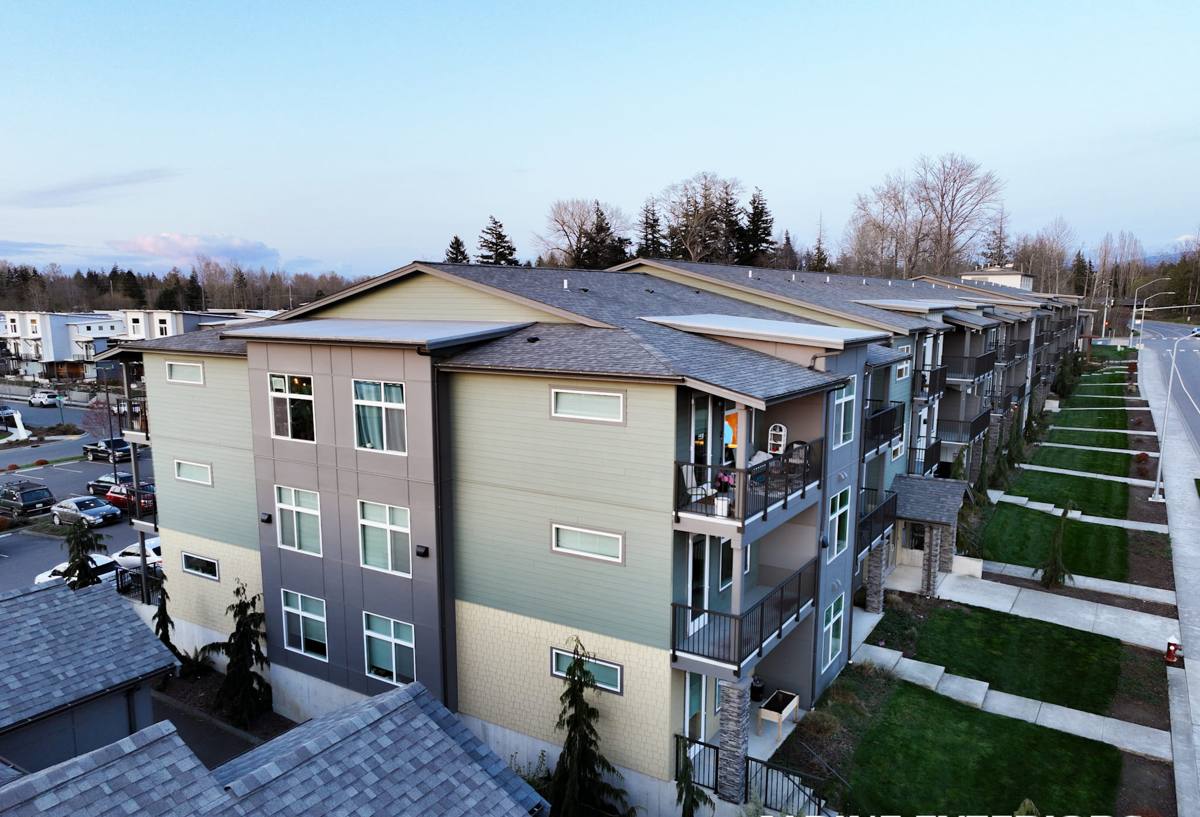
What This Climate Does to Windows Over Time
Driving Rain and Wind-Driven Moisture
Rain that falls straight down is easy on a house. Rain that comes in sideways during a windstorm is a different problem — it gets pushed up under trim, into gaps around the frame, and behind flashing that wasn't lapped correctly to begin with. Older windows, and windows that were installed without proper flashing details, are especially vulnerable to this. Once water gets behind the frame, it doesn't evaporate quickly in this climate. It sits.
Salt Air and Metal Fatigue
Homes closer to open water or exposed to prevailing coastal winds deal with salt-laden air that accelerates corrosion on aluminum frames, hardware, screws, and fasteners. Locks stop locking smoothly, cranks on older casement windows seize up, and aluminum frames pit and discolor faster than they would inland. It's a slow process, but it's a steady one.
Moss, Mildew, and a Long Wet Season
This region doesn't get a short, sharp rainy season followed by months of dry heat — it gets a long, low-grade wet season that keeps wood, caulking, and trim damp for extended stretches. That's ideal conditions for moss and mildew to take hold on sills, in corners, and along any joint where water can collect and sit. Once moss establishes itself around a window, it holds moisture directly against the frame and accelerates whatever rot or corrosion is already starting.
Signs a Window in Aldergrove Needs Replacing, Not Repairing
- Fogging or a visible film between the panes of a double- or triple-glazed unit — this means the seal has failed and cannot be repaired, only the glass unit or the whole window replaced
- Soft, spongy, or discolored wood at the sill, corners, or bottom rail
- Persistent moss or dark staining that returns shortly after cleaning
- Drafts you can feel by hand along the frame, even with the window fully latched
- Windows that are difficult to open, close, or lock — often a sign the frame has shifted or swollen
- Visible daylight or gaps between the sash and frame
- Interior condensation on the glass or frame during cold, damp mornings
- Paint that bubbles or peels repeatedly on the interior or exterior trim around the window
Some of these are cosmetic and can wait. Fogged glass, soft wood, and persistent drafts are not cosmetic — they're signs that moisture has already found a way in, and the longer that continues, the more it costs to fix properly.
What a Correct Window Replacement Involves
A window replacement done right in this climate is about more than swapping the sash. The details around the frame — the flashing, the sealant, the sill pan — matter more here than they would in a dry climate, because any mistake gets tested by weather almost immediately.
Our Process
- Inspection and assessment. We check the condition of the framing, sill, and surrounding wall assembly before quoting anything, since hidden rot changes the scope of the job.
- Removing the old window carefully. This step tells us the real story — what the framing looks like underneath, whether there's existing water damage, and whether the rough opening needs any repair before a new window goes in.
- Repairing damaged framing or sheathing. If we find soft wood or water damage, we address it before installing anything new. Installing a new window into a compromised opening just hides the problem for a few years.
- Installing a sloped sill pan and proper flashing. This is the detail that keeps wind-driven rain from working its way behind the frame over time. It's also the detail that gets skipped most often on rushed jobs.
- Setting and shimming the window plumb, level, and square. A window that isn't set correctly will bind, leak, or wear unevenly no matter how good the unit itself is.
- Sealing and insulating around the frame. Proper backer rod and sealant at the exterior, and insulation in the gap between frame and rough opening, control both air leakage and moisture.
- Finishing trim and touch-up. Interior and exterior trim gets reinstalled or replaced and sealed to match the surrounding siding or wall finish.
Choosing the Right Window Type and Material
There's no single "best" window for every home — the right choice depends on your home's exposure, your budget, and how much maintenance you're willing to keep up with. What we can tell you honestly is how different materials tend to hold up in this specific climate.
| Frame Material | How It Handles This Climate | Maintenance |
|---|---|---|
| Vinyl | Resists moisture and doesn't corrode; performs well in wet, salt-exposed air | Low — occasional cleaning |
| Fiberglass | Very stable in temperature and moisture swings; holds paint well if a custom color is wanted | Low |
| Aluminum | Durable but prone to corrosion and pitting in salt-exposed air over time; conducts cold, which can increase condensation | Moderate — hardware and finish need periodic attention |
| Wood (unclad) | Classic look but the most vulnerable to rot and moss in a long wet season without diligent upkeep | High — regular painting and sealing required |
| Wood-clad (vinyl or aluminum exterior) | Combines a wood interior look with a weather-resistant exterior shell; good middle ground | Low to moderate |
For most homes in this area, we lean toward vinyl or fiberglass frames for the exterior-facing performance, but we'll talk through what actually fits your home rather than pushing one product on every job.
Glass Options Worth Understanding
Glass choice matters as much as frame material, especially with the amount of overcast, low-light weather this region gets.
- Double-pane, low-E glass is the standard baseline now for energy performance and condensation control in this climate.
- Triple-pane adds further insulation and sound reduction, worth considering on north-facing walls or rooms that run cold, though it comes at a higher cost and added weight on the frame and hardware.
- Argon or krypton gas fill between panes improves insulation value and is standard on most quality units today.
- Tempered or laminated glass is required in certain locations by code — near doors, low to the floor, or in bathrooms — and we account for that in the quote, not as a surprise later.
Cost Factors to Understand Before You Get a Quote
| Factor | Why It Affects Price |
|---|---|
| Frame material | Vinyl is generally the most economical; fiberglass and wood-clad cost more |
| Window size and style | Larger units, custom shapes, and operable styles like casements cost more than fixed picture windows |
| Existing damage | Rotted framing or sheathing found during removal adds labor and material beyond a straightforward swap |
| Number of windows | Replacing an entire home's windows at once is typically more cost-efficient per unit than doing them one or two at a time over several years |
| Access and second-story work | Upper-floor windows may require additional setup and labor |
| Glass upgrades | Triple-pane, tempered, or laminated glass adds to the per-unit cost |
We give straightforward, itemized estimates so you can see exactly what's driving the number, rather than a single lump figure.
Why a Crew Familiar With This Area Matters
Window replacement isn't a job you want to hand to whoever's cheapest or closest on a map without checking their track record with this specific climate. A crew that regularly works Aldergrove, Lynden, and the broader Whatcom County area already knows what wind-driven rain does to a poorly flashed sill, how fast moss reestablishes on a shaded north wall, and which corners of a house tend to take the worst weather exposure. That familiarity shows up in details — sill pan slope, flashing laps, sealant choice — that don't get noticed until years later when a rushed job starts leaking.
We also stand behind the work with a clear understanding of manufacturer warranty terms, so you know what's covered by the product itself versus what's covered by our installation.
Timing Your Window Replacement
Window replacement can be done through most of the year here, but there are practical advantages to timing it around the weather rather than against it. Drier stretches in late spring through early fall reduce the number of days a job might get delayed by rain, and they minimize the window of time your home's interior is exposed during the actual swap. That said, we do take on projects through the wetter months when needed — it just requires more careful scheduling and weather-appropriate protection during the work.
Get a Free, No-Pressure Estimate
If your windows are fogging, drafty, sticking, or showing soft wood or persistent moss around the frame, it's worth having a straightforward look before deciding whether to repair or replace. We'll walk the exterior with you, explain what we find in plain terms, and put together an honest estimate — no pressure, no upsell. Use the form below to request a free window replacement estimate for your Aldergrove-area home.