 Lynden Roofing
 Aldergrove's Climate Is Harder on Siding Than It Looks
Aldergrove sits close enough to the water and just north of the Lynden border crossing that homes here deal with a specific combination of weather stress: salt-tinged air moving in off the Strait of Georgia and Boundary Bay, long stretches of driving rain pushed in by Pacific storm systems, and short winter days that leave siding, trim, and roofs damp for weeks at a time. That combination is exactly what wears out the wrong siding material faster than homeowners expect. Paint fails early, seams swell, and moss finds a foothold in shaded corners and north-facing walls before anyone notices a problem.
None of this is unusual for the region — it's the same weather pattern that shapes how we build and repair roofs and exteriors throughout Whatcom County and the lower Fraser Valley. But it does mean siding selection and installation quality matter more here than they would in a drier climate. A product and installation method that would be fine in Eastern Washington can fail within a decade on a home just a few miles from the Aldergrove–Lynden crossing.
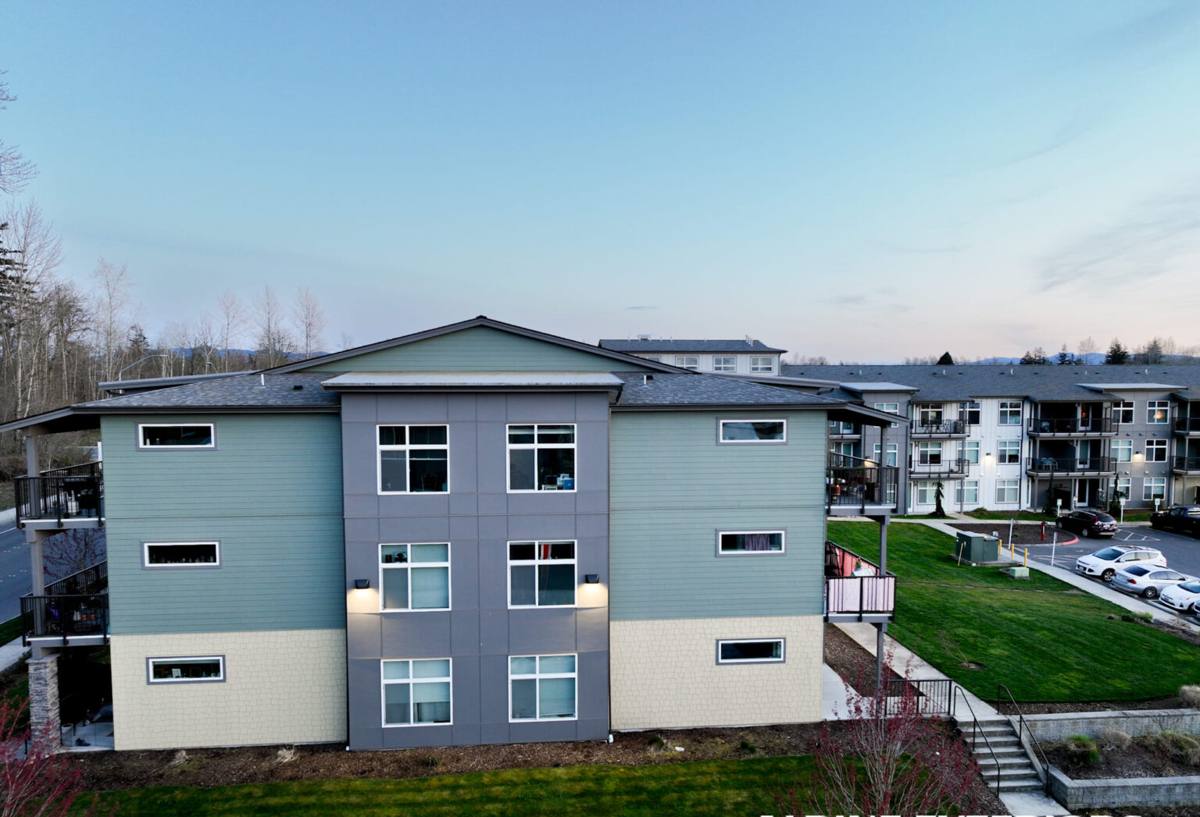
What Aldergrove Homes Actually Need From Their Siding
Moisture management, not just moisture resistance
Every siding product claims to resist water. The real question is what happens when water inevitably gets behind it — through a hairline seam, a nail hole, or a spot where caulking has aged out. In this climate, siding needs a drainage plane behind it, correctly lapped house wrap, and a material that doesn't swell, delaminate, or rot when it stays damp longer than the manufacturer's marketing photos suggest.
Standing up to wind-driven rain
Storms coming off the Pacific don't just fall straight down — they drive rain sideways into wall assemblies, especially on exposed gable ends and second-story walls. Siding with weak lap joints or under-caulked butt seams lets that wind-driven rain in over time, even if it looks fine from the ground.
Resisting moss, algae, and organic staining
The extended damp season in this part of the Fraser Valley and Whatcom County is long enough that moss and algae aren't a cosmetic afterthought — they're a maintenance category all their own. Porous or fibrous siding materials give moss something to grip. Dense, factory-finished fiber cement gives it far less to hold onto, which matters when siding sits in shade for months at a stretch.
Why We Install Only James Hardie Fiber Cement Siding
We don't install vinyl, LP SmartSide, Cemplank, Allura, or primed wood siding, and we're upfront about why: after years of exterior work in this exact climate, James Hardie's fiber cement is the only product we're willing to put our name behind here.
Built for this specific climate zone
James Hardie engineers its HZ5 product line specifically for climates like ours — wet, moderate, with real freeze-thaw cycling in winter. That's a meaningful difference from a one-size-fits-all siding product; the formulation, moisture performance, and installation specs are matched to the weather Aldergrove and Lynden homes actually experience.
A factory-cured finish, not a job-site paint job
Hardie's ColorPlus finish is baked on and cured at the factory under controlled conditions, not brushed or sprayed on site where humidity and temperature swings affect how paint bonds. That factory finish is a major reason Hardie siding holds its color and resists early fading and peeling in a climate where field-applied paint jobs on wood or fiber board often start looking tired within a handful of years.
Non-combustible material
Fiber cement is non-combustible, which matters for wildfire ember exposure and simply for peace of mind. It's not the main reason we standardized on Hardie, but it's a real, practical advantage over wood-based and vinyl products.
What a Correct Fiber Cement Siding Installation Involves
Fiber cement is unforgiving of shortcuts. The material itself is excellent, but a mediocre install will fail early regardless of the brand on the box. Correct installation on an Aldergrove-area home means:
- Inspecting and repairing the sheathing and house wrap underneath before any new siding goes up — covering rot or a compromised moisture barrier is the single most common cause of early siding failure we find on tear-offs.
- Maintaining proper clearances: siding kept clear of grade, decks, and roof lines so water has somewhere to go instead of wicking into the bottom edge.
- Correct fastener type, spacing, and depth — over-driven or under-driven nails are a leading cause of cracking and loosening over time.
- Properly lapped flashing at windows, doors, and any wall penetration, installed in the correct shingle-style sequence so water is always directed outward and down.
- Factory-primed cut edges sealed in the field, since an unsealed cut edge is one of the few places Hardie siding can absorb moisture.
- Caulking only where the manufacturer specifies it — modern Hardie installation actually calls for less caulk than older methods, relying instead on correct laps and flashing.
Any one of these steps skipped can undercut everything the product itself is engineered to do. This is also why James Hardie's stronger warranty terms typically require installation by a trained, factory-trained installer — the product and the installation are meant to work together, not separately.
Our Process, Start to Finish
We keep the process straightforward and communicate at each stage so there are no surprises partway through the job.
- On-site assessment. We walk the exterior, check current siding condition, look for moisture damage or rot at trim and penetrations, and measure for material.
- Written estimate. A clear breakdown of scope, product, and price — no vague allowances.
- Tear-off and inspection. Old siding comes off and we inspect sheathing and house wrap before anything new goes up. Any rot or damage found gets flagged and addressed, not covered over.
- Weather barrier and flashing. House wrap repaired or replaced as needed, flashing installed at every window, door, and penetration.
- Hardie installation. Panels or planks installed to manufacturer spec — clearances, fastening, and sealing done correctly the first time.
- Trim, caulking, and cleanup. Final detailing, thorough site cleanup, and a walkthrough so you can see the finished work before we consider the job done.
Comparing Siding Options for This Climate
Homeowners in Aldergrove and Lynden often ask how fiber cement stacks up against other common siding materials once you factor in the local weather. Here's an honest comparison based on how these materials actually behave in a wet, salt-tinged, moss-prone climate:
| Material | Moisture Behavior | Moss/Algae Resistance | Maintenance | Typical Lifespan Here |
|---|---|---|---|---|
| Vinyl | Doesn't rot, but can warp and gap, letting water behind it unnoticed | Moderate — smooth surface, but seams collect grime | Low, but repairs are limited once faded or cracked | 15–25 years |
| Cedar / wood | Absorbs moisture readily; needs consistent sealing | Poor — organic material feeds moss and algae directly | High — regular refinishing required | 10–20 years with diligent upkeep |
| LP SmartSide (engineered wood) | Wood-strand core is vulnerable if edges or seams fail | Moderate, dependent on coating integrity | Moderate — coating must stay intact | 15–25 years |
| James Hardie fiber cement | Dense, dimensionally stable, resists swelling and rot | Strong — dense factory finish resists organic growth | Low — occasional washing | 30+ years installed to spec |
Cost per square foot for fiber cement typically runs higher up front than vinyl and comparable to or somewhat above engineered wood, but the gap narrows considerably once you account for repainting, repair, and earlier replacement cycles on the alternatives.
Signs Your Current Siding Is Already Losing the Battle
- Green or black staining that returns within months of cleaning, especially on north-facing or shaded walls
- Soft or spongy spots when you press on siding near the base of the wall or below windows
- Visible gaps, warping, or buckling at seams and panel joints
- Paint that's peeling, chalking, or fading unevenly rather than aging uniformly
- Rising energy bills that might point to moisture-compromised insulation behind the siding
- Cracked or missing caulking at trim, windows, and corner boards
Any one of these on its own isn't necessarily urgent. Several at once, especially combined with visible moss buildup, usually means the siding is no longer doing its job as a weather barrier.
Why Hiring a Crew That Already Works Aldergrove Matters
Aldergrove sits right at the border, a short drive from our base in Lynden, and we work this specific stretch of Whatcom County and the lower Fraser Valley regularly. That matters for a few practical reasons. We already know which wall exposures in this area take the worst of the wind-driven rain and which spots stay shaded and damp long enough to grow moss faster than the rest of the house. We're used to scheduling and coordinating material delivery for a cross-border service area so a job here isn't treated as an afterthought squeezed between other work. And because we install Hardie siding regularly in this exact climate, we're not learning the product's quirks on your home — clearances, fastening, and flashing details that are easy to get wrong on a first attempt are routine for us.
A crew unfamiliar with this specific microclimate can install a technically correct product and still miss the details that matter here — how far up a wall moss typically climbs, how much clearance really is needed given the amount of rain this area sees, or how exposed a given elevation actually is to wind-driven weather. Local, repeated experience closes that gap.
Maintenance and Long-Term Care
One of the practical advantages of Hardie fiber cement in this climate is how little ongoing care it needs compared to wood or engineered-wood alternatives. A periodic rinse to keep organic growth from establishing, prompt attention to any caulking that separates at trim or penetrations, and keeping gutters clear so water isn't dumping directly onto a wall section will keep the siding performing for decades. There's no repainting cycle to plan around the way there is with field-finished materials, since the ColorPlus finish is designed to hold its color for the long haul.
If you're weighing a siding project on an Aldergrove-area home, we're happy to take a look and give you a straightforward, no-pressure estimate — no invented urgency, just an honest read on your home's current condition and what it would take to do the job right. Use the form below to get started.