 Lynden Roofing
 Siding Replacement for the Acme Area, Done by a Crew That Already Works Whatcom County
Homes in and around the Acme community share a set of exterior challenges with the rest of Whatcom County: long stretches of wet weather, wind-driven rain that finds every gap in a siding system, and a moss and mildew season that can run most of the year in shaded, tree-lined lots. Add in the salt-influenced marine air that moves through this part of Western Washington, and you have a climate that is genuinely hard on exterior materials. Siding here isn't just a cosmetic choice — it's the first line of defense against moisture intrusion, rot, and the slow cosmetic decline that shows up as mold streaking, peeling paint, and swollen trim.
This page covers what a correct siding replacement looks like for homes in this specific area, why the details matter more here than in drier climates, and how our process is built around getting it right the first time.
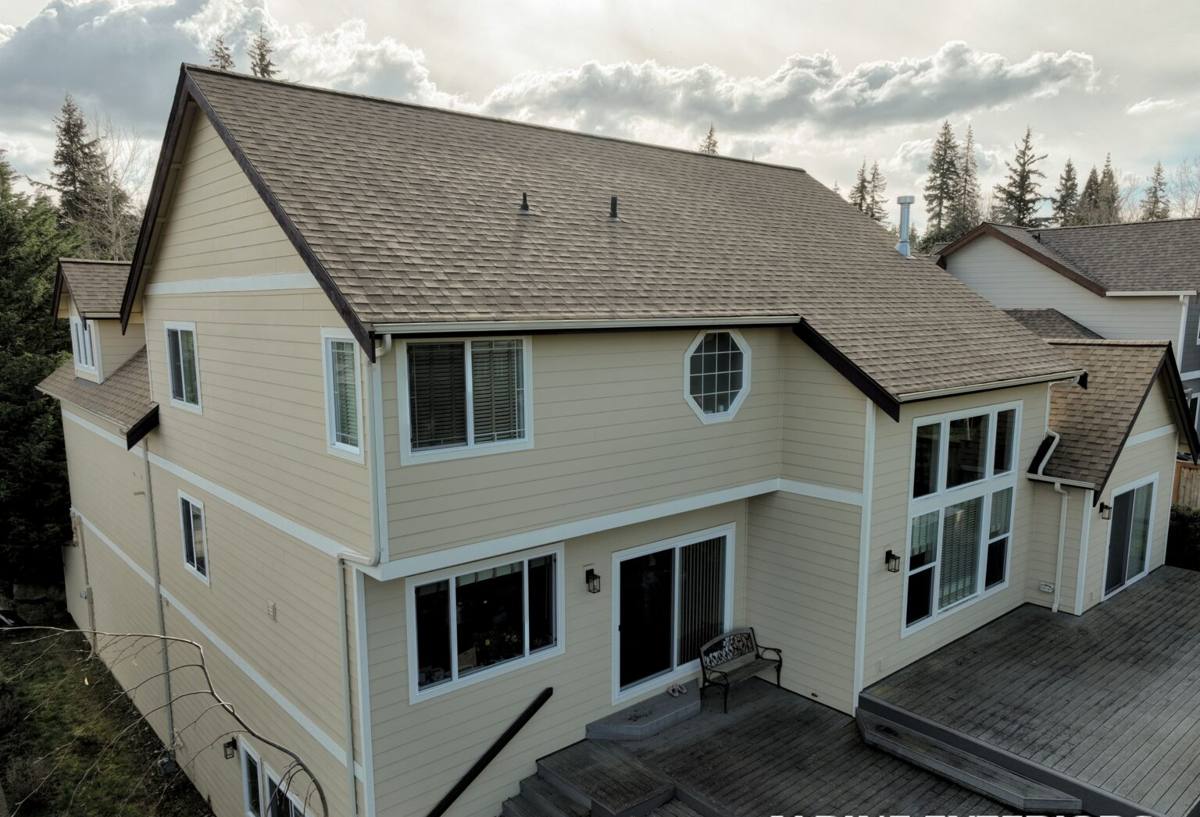
What Acme-Area Homes Actually Need From Their Siding
Constant Moisture Exposure
Whatcom County doesn't get occasional hard rain — it gets sustained, repeated wetting cycles for months at a time. Siding that isn't sealed and flashed correctly doesn't fail dramatically; it fails slowly, as water works into seams, panel edges, and fastener penetrations that were never meant to be a home's only defense. Over a few seasons, that shows up as soft trim, staining at butt joints, and in the worst cases, sheathing rot behind the siding that isn't visible until a wall is opened up.
Shade, Tree Cover, and Moss
Many lots in and around Acme sit close to tree lines or have significant shade coverage, which keeps siding surfaces damp longer after every rain event. That's exactly the environment moss, algae, and mildew need to take hold. Some siding materials tolerate this fine with routine cleaning; others — particularly wood-based or wood-look products with less consistent factory sealing — can trap moisture against the substrate and accelerate deterioration under a layer of growth that looks worse than it actually is, or in some cases is a sign of real moisture retention underneath.
Wind-Driven Rain at Panel Joints and Corners
Rain that comes in sideways during storms tests every horizontal joint, corner detail, and penetration point differently than a straight downpour does. This is where installation quality matters as much as the product itself — correct lap, correct fastening, and correct flashing at windows, doors, and trim transitions are what keep wind-driven rain from finding a way behind the siding plane.
What a Correct Siding Replacement Involves
Replacing siding is not a cosmetic swap. Done right, it's a full reset of the home's weather barrier, not just the visible surface. A correct job includes:
- Removal of old siding down to the sheathing, with an inspection for hidden rot, soft spots, or prior water damage before anything new goes up
- Repair or replacement of any damaged sheathing and framing found during tear-off — not siding over a compromised substrate
- Installation of a code-compliant weather-resistive barrier (house wrap) with correctly lapped and taped seams
- Proper flashing at every window, door, deck ledger, and roof-to-wall transition
- Correct fastening pattern and lap spacing for the specific siding product being installed, per manufacturer specification
- Sealed and caulked joints only where the manufacturer calls for sealant — not as a substitute for correct flashing
- A finished appearance that's consistent panel-to-panel, with clean cuts and matched reveals
Skipping any one of these steps is how a siding job looks fine for a year or two and then starts causing problems. The visible siding is the last 10% of the job; the weather barrier underneath it is the part that actually keeps water out.
Why We Install James Hardie Fiber Cement — and Nothing Else
We standardized on James Hardie fiber cement siding for every home we work on, including in the Acme area, and we don't install vinyl, LP SmartSide, Cemplank, Allura, primed spruce, or cedar. That's a deliberate professional standard, not a sales pitch, and it's worth explaining why in a climate like this one.
Non-Combustible and Dimensionally Stable
Fiber cement doesn't burn, doesn't warp with humidity swings the way wood-based products can, and holds its shape through the wet-to-dry cycles that are constant here. That stability matters directly for weather-tightness — siding that moves less at the joints stays sealed better over time.
Factory-Applied ColorPlus Finish
James Hardie's ColorPlus finish is baked on at the factory under controlled conditions, which gives it more consistent coverage and better long-term adhesion than field-applied paint. In a climate that's damp for much of the year, a finish that resists peeling and fading without needing repainting every few years is a real practical advantage, not just an aesthetic one.
Climate-Engineered Product Lines
Hardie manufactures HZ5 product formulated specifically for cold, wet, freeze-prone climates like the Pacific Northwest. That's not a marketing label — it reflects a formulation and engineering choice suited to exactly the freeze-thaw and moisture conditions Whatcom County sees.
Warranty Backing
James Hardie backs its siding with a strong, transferable limited warranty on the substrate and a separate finish warranty on ColorPlus color, which matters if the home changes hands. That's a meaningful difference from products with shorter or non-transferable coverage.
We're upfront that other products have real strengths — vinyl is inexpensive and low-maintenance in mild climates, cedar has a look some homeowners specifically want, LP SmartSide is engineered wood with genuine improvements over old wood siding. But for the moisture load, temperature swings, and moss exposure typical of this area, we've made fiber cement our standard and stopped installing the alternatives, because we don't want to put our name on a job we don't fully stand behind long-term.
Cost Factors for Siding Replacement in This Area
Every home is different, but the factors that move price up or down are consistent. We give firm numbers only after walking the property.
| Factor | Why It Matters |
|---|---|
| Extent of tear-off and sheathing repair | Hidden rot found during removal adds material and labor before new siding can go up |
| Home size and wall complexity | More corners, dormers, and trim transitions mean more cutting, flashing, and labor time |
| Siding profile chosen | Lap width, shingle-style panels, and board-and-batten each have different material and install costs |
| Trim and accessory scope | Fascia, soffit, and trim board replacement alongside siding affects total project cost |
| Access and site conditions | Steep lots, tree cover, or tight setbacks can affect scaffolding and staging time |
Our Process for Acme-Area Siding Jobs
Assessment
We start with a walk-around inspection of the existing siding, trim, and any visible signs of moisture damage, plus a look at what's driving the need for replacement — age, storm damage, or ongoing maintenance issues.
Scope and Product Selection
We walk through Hardie's plank, shingle, and panel options and colors, and put together a written scope that spells out tear-off, sheathing repair allowances, flashing details, and trim work — so there are no surprises once the job starts.
Tear-Off and Substrate Repair
Old siding comes off, sheathing gets inspected, and any damaged material gets replaced before the weather barrier goes on. We don't cover over rot.
Weather Barrier and Flashing
House wrap and flashing go in first, at every penetration and transition, before a single piece of visible siding is installed. This is the step that actually determines whether the wall stays dry for the next few decades.
Installation to Manufacturer Spec
Hardie siding gets installed to the fastening, lap, and clearance specifications the manufacturer requires to keep the product warranty intact — not shortcuts that happen to look fine from the ground.
Final Walkthrough
We walk the finished job with the homeowner, check reveals and trim lines, and confirm everything matches the agreed scope before calling it done.
Why Hiring a Crew That Already Works This Area Matters
A crew that regularly works in and around Lynden and greater Whatcom County has already seen how the local moisture and shade patterns affect siding — which north-facing walls stay damp longest, where moss tends to establish first, and how storms typically drive rain against a structure. That local pattern recognition shapes real decisions on the job: where to pay extra attention to flashing, which trim transitions need the most careful sealing, and how to sequence work around the area's wet stretches. It's the difference between a generic install and one tuned to how this specific climate actually behaves over time.
Signs Your Current Siding Needs Replacing, Not Just Patching
- Soft or spongy spots when you press on the siding or trim
- Persistent moss or dark staining that returns quickly after cleaning
- Visible warping, buckling, or gaps opening at panel joints
- Paint that's peeling or bubbling rather than just fading
- Rising energy bills that suggest the wall assembly is no longer performing as insulation and weather barrier
- Interior signs like musty odors or staining on walls that share an exterior with visibly aged siding
One or two of these on their own might mean a repair. Several together, especially on a home with older or original siding, usually mean it's time to talk about full replacement before the damage spreads to the framing underneath.
If you're seeing any of these signs on a home in the Acme area, or you're just planning ahead for a siding project, we're happy to take a look and give you a straightforward, no-pressure estimate — use the form below to get started.