 Lynden Roofing
 Roof Repair Built for Acme's Climate
Homes in the Acme area sit at the edge of Whatcom County's foothill country, where marine air off the Pacific mixes with cooler mountain weather to create some of the wettest, mossiest conditions a roof can face in Washington State. Long stretches of driving rain, heavy morning dew, and a moss season that can run eight months or longer all put steady pressure on shingles, flashing, and underlayment. A roof that would last decades in a drier climate can start showing real wear here in half that time if it isn't maintained and repaired correctly.
We work on homes throughout Acme and the surrounding Lynden service area, and the repairs we do here are shaped by what actually fails on roofs in this specific climate — not a generic checklist. That means we look first at moisture intrusion, moss and organic growth, and the flashing details that keep wind-driven rain out, because those are the issues that show up again and again on Whatcom County roofs.
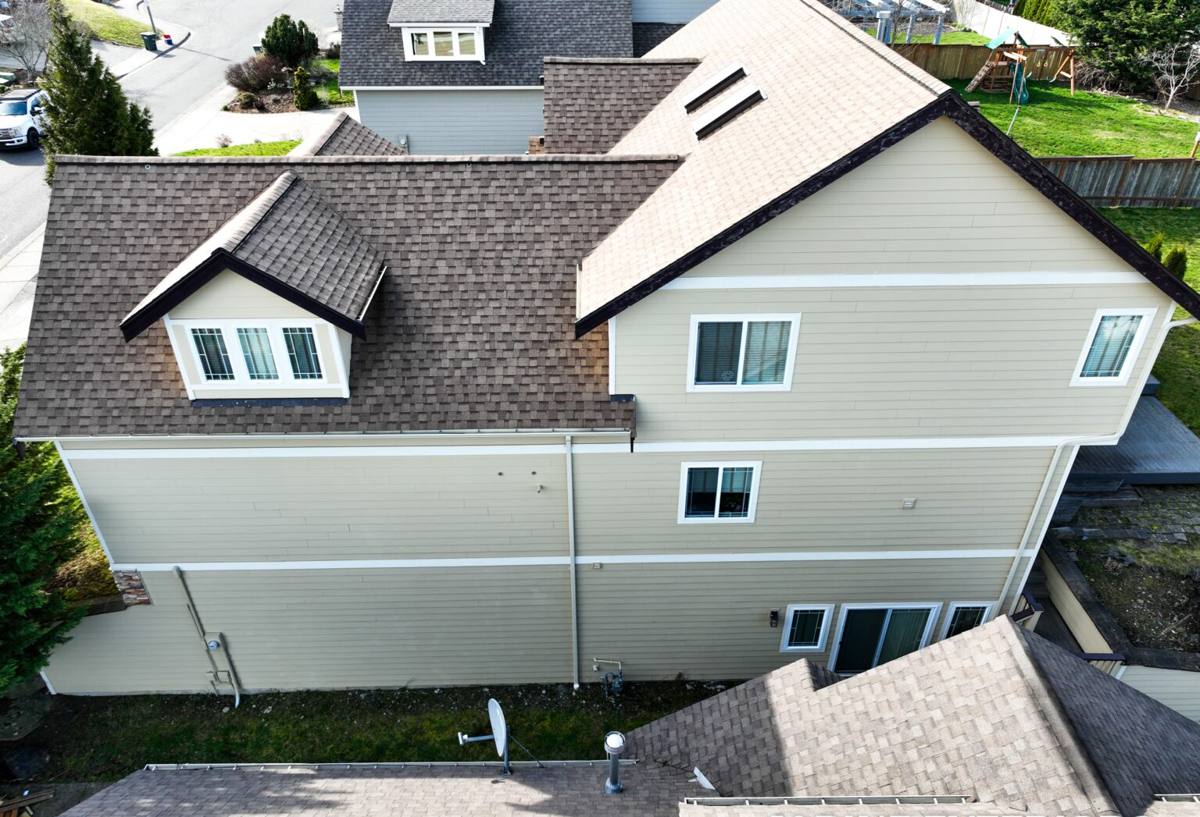
Common Roof Problems We See in Acme Homes
Moss and Organic Growth
Moss doesn't just look bad — it holds moisture against the roof surface, works its way under shingle tabs, and lifts them enough for water to get underneath. Left alone through a few wet seasons, moss growth can turn a simple cleaning job into a repair job, and eventually into premature replacement. North-facing slopes and roofs shaded by trees are usually hit hardest.
Wind-Driven Rain and Flashing Failures
Most leaks we trace back to flashing, not the shingles themselves — around chimneys, skylights, roof-to-wall junctions, and valleys. Driving rain pushes water sideways and upward under conditions that a properly lapped and sealed flashing detail handles fine, but a corroded, undersized, or poorly installed one won't.
Aging Composition Shingles
Composition (asphalt) shingles are the most common roofing material in this area, and they age predictably: granule loss, curling edges, and cracking, usually worse on south- and west-facing slopes that get more sun-and-rain cycling. Once a shingle has lost its seal or its granules, it's more vulnerable to wind lift and water intrusion even if it still looks intact from the ground.
Ridge and Valley Wear
Ridges and valleys concentrate more water flow than any other part of the roof. Ridge cap shingles and valley metal take the brunt of that flow, and they're often the first place we find soft spots, granule loss, or corrosion when we inspect an older roof.
What a Correct Roof Repair Actually Involves
Diagnosis Before Patching
A repair is only as good as the diagnosis behind it. Surface patching over a leak without finding where water is actually entering just delays the problem — and often lets it spread into decking or insulation where it's harder and more expensive to fix. We trace leaks back to their actual entry point before we touch a single shingle.
Matching Materials and Techniques
Repairs need to match the existing roof system in material, weight, and installation method, not just color. Mismatched shingles or flashing metal can create new water paths instead of closing old ones, and can shorten the life of the surrounding roof material.
Addressing the Root Cause, Not Just the Symptom
If moss caused the failure, we deal with the moss and the conditions that let it grow back, not just the shingles it damaged. If a flashing detail failed, we correct the detail, not just re-seal it. A repair that ignores the underlying cause tends to fail again in the same spot within a season or two.
Our Roof Repair Process
- Inspection. We get on the roof (weather permitting) and examine the affected area along with the rest of the roof system — decking, flashing, ventilation, and general condition — so nothing gets missed.
- Written estimate. You get a clear explanation of what's actually wrong, what we recommend, and a written price before any work starts. No surprise add-ons.
- The repair. We complete the work with materials that match your existing roof system, following manufacturer installation specs so the repair holds up and doesn't create warranty issues down the line.
- Cleanup and walkthrough. We clear debris and old materials from the property and walk you through what was done and what to keep an eye on going forward.
Repair vs. Replacement: How We Help You Decide
Not every roof problem calls for a full replacement, and not every leak can be permanently solved with a patch. We give homeowners an honest read on which situation they're in, based on the roof's age, the extent of damage, and how many separate issues are stacking up.
| Factor | Usually Points to Repair | Usually Points to Replacement |
|---|---|---|
| Roof age | Under 15–20 years, in otherwise sound condition | At or beyond the material's expected service life |
| Damage extent | Isolated to one area (flashing, a slope, a valley) | Widespread granule loss, multiple leak points, sagging decking |
| Underlying decking | Solid, no rot found | Soft spots or rot across multiple areas |
| Moss/moisture history | Recent onset, roof otherwise healthy | Years of untreated growth with shingle degradation |
| Cost over time | Repair cost is a small fraction of replacement cost | Repeated repairs are adding up toward replacement cost |
When a repair is the right call, we say so and do the repair. When the numbers and the roof's condition point toward replacement being the better long-term value, we'll explain why — the goal is the right answer for your roof, not the bigger job.
Roofing Materials We See and Work With in Acme
Composition shingle is the dominant roofing material on homes in this area, and for good reason — it performs well against wind-driven rain when installed correctly, it's straightforward to repair in sections, and replacement materials are widely available to match older roofs. Metal roofing shows up on some homes and outbuildings and sheds water and moss buildup differently than shingle, which changes how we approach both maintenance and repair on those roofs.
We're careful about certain low-slope or specialty products in this climate. Anything that depends on a perfect, unbroken membrane or extremely precise installation tolerances carries more risk in a region with this much sustained moisture and moss pressure — a small installation error or a few years of deferred maintenance can turn into a bigger moisture problem than it would in a drier area. That's a maintenance and moisture-management call on our part, not a knock on any manufacturer, and we're glad to walk through the trade-offs for your specific roof.
Why a Crew That Already Works in Acme Matters
A roofer who works this part of Whatcom County regularly already knows how moss behaves on the tree-shaded, foothill lots common around Acme, what flashing details tend to fail first on local roof styles, and how weather windows here affect scheduling repairs around the wet season. That local pattern recognition shortens the diagnosis step and helps avoid repairs that look fine on a dry September afternoon but fail the first time driving rain hits them sideways in November.
It also means we're not guessing at permitting requirements or driving distance when timing a repair — we're already set up to work efficiently in this area, which keeps costs reasonable and repairs scheduled around the weather instead of around us.
Maintenance Checklist: Between-Repair Roof Care
Good repairs last longer when a roof gets basic seasonal attention in between. This is a general guide, not a substitute for a professional inspection if you're already seeing signs of trouble:
- Keep gutters and downspouts clear so water isn't backing up under the roof edge
- Trim back overhanging branches to reduce shade, debris, and moss growth on the roof surface
- Watch for granules collecting in gutters — a sign of shingle wear worth having checked
- Look for moss or dark streaking starting on north-facing or shaded slopes and address it early
- Check attic spaces periodically for water stains, damp insulation, or daylight where there shouldn't be any
- Have flashing around chimneys, skylights, and vents inspected every few years, since it wears faster than the field shingles around it
- Schedule a professional inspection after any major windstorm, even if nothing looks obviously wrong from the ground
Get a Free, No-Pressure Estimate
If you're dealing with a leak, moss buildup, or storm damage on a home in the Acme area, we're happy to take a look and give you a straight answer about what's going on and what it will take to fix it correctly. Use the form below to request a free estimate — no pressure, no obligation, just an honest assessment from a crew that knows what Whatcom County roofs are up against.