 Lynden Roofing
 Windows Built for How Acme Actually Weathers
Acme sits inland from the Sound, tucked closer to the foothills than the water, so it doesn't take the same direct salt exposure that homes closer to Bellingham Bay deal with. What it does get is heavy tree cover, long stretches of shade, and some of the dampest, slowest-drying conditions in Whatcom County. Driving rain still finds its way sideways into window frames during winter storms, and the same moisture that feeds moss on your roof works on window sills, trim, and glazing seals too. A window that's rated well on paper but installed loosely, or that's been slowly failing at the seals for years, is going to show it here faster than it would in a drier part of the state.
Energy-efficient windows done right aren't just about a lower heating bill, though that matters. In a climate like this, they're also about keeping water out of your wall cavities, keeping condensation off your glass in the winter, and not giving moss and mildew a foothold around your frames. We treat those as one job, not two.
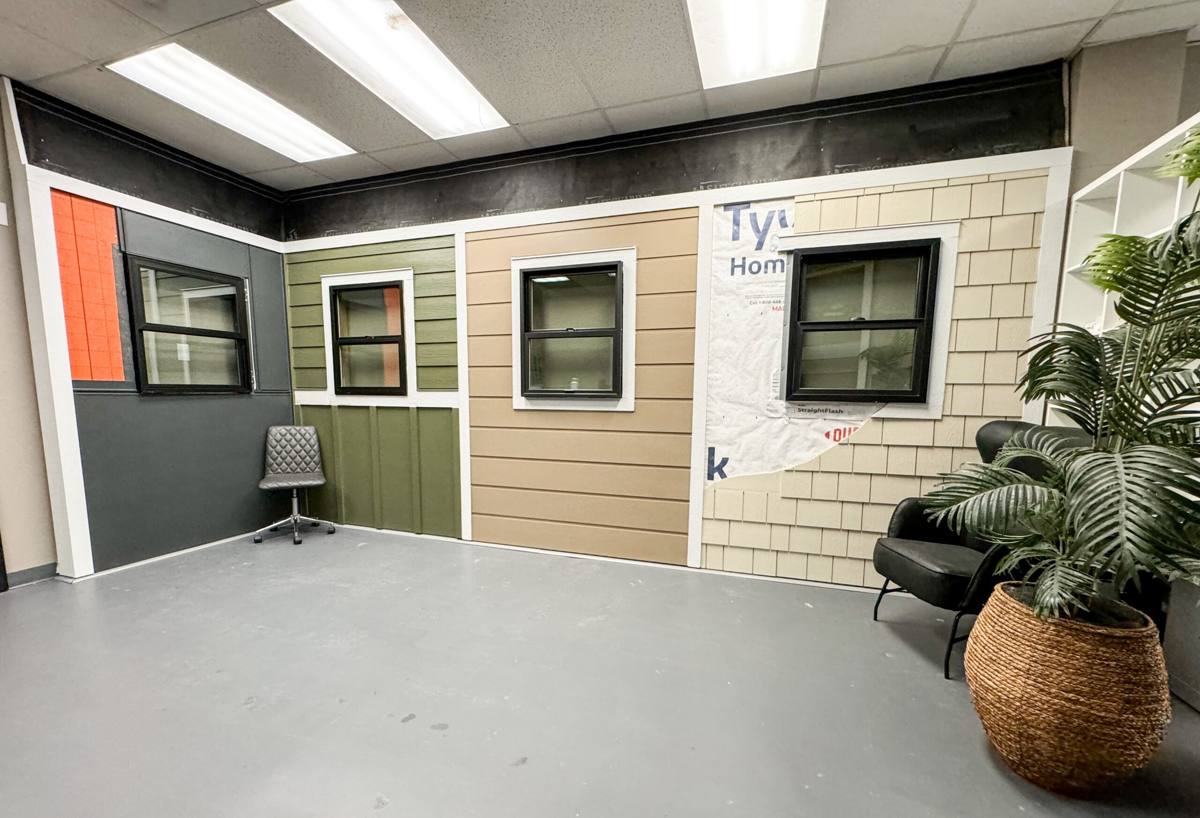
What "Energy-Efficient" Actually Means
The term gets used loosely in this industry, so it's worth being specific. Every window sold in the U.S. carries an NFRC label with a handful of numbers that actually tell you something:
- U-factor — how much heat escapes through the window. Lower is better for our climate; this is the number that most directly affects your winter heating cost.
- SHGC (Solar Heat Gain Coefficient) — how much solar heat passes through. Less critical on shaded, tree-covered lots than on a sun-exposed one, which matters for a lot of Acme properties.
- Air leakage — how much outside air sneaks past the frame and sash. This is where a poor installation can undo a good window's rating entirely.
- Low-E coating — a microscopically thin metallic layer that reflects heat back inside in winter and outside in summer, without noticeably changing how clear the glass looks.
- Gas fill — argon or krypton between the panes, which insulates better than plain air and is standard on most double- and triple-pane units now.
For most Acme homes, the priority is a low U-factor and tight air sealing at the frame. Solar gain is a secondary concern on lots with a lot of tree cover, though it still matters on more open, south-facing exposures.
Frame Materials: What Holds Up Here
Frame material affects how the window handles moisture, how much it expands and contracts with temperature swings, and how much upkeep it needs. None of these are wrong choices — they're trade-offs, and the right one depends on the house and the budget.
| Frame Type | Moisture Behavior | Maintenance | Typical Cost Factor |
|---|---|---|---|
| Vinyl | Won't rot; seams and welds are the weak point if installed poorly | Low — occasional cleaning | Lower |
| Fiberglass | Very stable in wet/cold swings; minimal expansion | Low | Mid to higher |
| Wood / Wood-Clad | Needs an intact exterior cladding or finish to keep moisture out of the wood core | Higher — finish upkeep, especially on shaded, damp walls | Higher |
| Aluminum | Conducts cold and can condense/sweat on the interior in our winters unless thermally broken | Low, but insulation is the weak point | Varies |
On shaded lots that stay damp longer after a rain, we lean toward vinyl or fiberglass for most standard replacements, and reserve wood or wood-clad for homes where the look is worth the added maintenance. We'll walk through what makes sense for your specific walls and exposure rather than defaulting to one product for every house.
Signs Your Windows Are Working Against You
Most homeowners don't think about their windows until something's visibly wrong, but the energy loss and moisture problems usually start well before that. Worth checking for:
- Fogging or a permanent haze between the panes — the seal has failed and the gas fill is gone, even if the glass looks intact from a few feet away.
- Cold drafts near the frame on a still day, not just during a storm.
- Soft or discolored wood trim or sill, especially on north- or west-facing walls that stay shaded and slow to dry.
- Visible daylight or a pencil-width gap around the sash when the window is closed.
- Windows that are difficult to open, close, or lock — often a sign the frame has shifted or swollen.
- Condensation forming on the inside of the glass regularly in winter, which can point to both an inefficient window and a ventilation issue in the home.
- A noticeably higher heating bill compared to a similarly sized home nearby.
Installation Is Where Energy Efficiency Is Actually Won or Lost
A high-end window installed with a sloppy flashing detail will underperform a mid-grade window installed correctly, every time. This is the part of the job that doesn't show up in a product brochure, and it's where we spend most of our attention:
Water Management
Every opening gets proper sill pan flashing so that any water that does get past the exterior finish drains back out instead of sitting against the framing. This matters more in a climate that stays wet for months at a stretch than it would somewhere drier — a small flashing mistake here doesn't dry out between storms the way it might elsewhere.
Air Sealing
Backer rod and sealant at the interior and exterior, plus properly lapped flashing tape integrated with the wall's water-resistive barrier, closes the gaps that let conditioned air leak out and cold, damp air leak in. This is also what stops the whistling drafts that show up during our windier winter storms.
Level, Plumb, and Square
A window installed even slightly out of square will bind, won't seal evenly, and will wear out its weatherstripping faster. We shim and check this on every unit, not just the ones that look obviously crooked.
Retrofit vs. Full-Frame Replacement
Not every window needs to come out down to the studs. The right approach depends on the condition of the existing frame and the wall around it:
- Insert (retrofit) replacement — the new window fits inside the existing frame. Faster, less disruptive, and appropriate when the existing frame and surrounding wall are still sound and dry.
- Full-frame replacement — the old frame comes out entirely, exposing the rough opening. Necessary when there's rot, water damage, or when we need to correct a flashing problem that's been letting water in for years.
We won't recommend full-frame replacement just to sell a bigger job, and we won't do an insert replacement over a wall that's clearly wet or damaged just to save time. We open things up enough to actually see what's there before deciding.
Our Process
- On-site assessment — we look at each window opening individually, check for existing moisture or rot, and measure for accurate ordering.
- Product selection — we go over frame material, glass package, and performance ratings that actually fit your home's exposure and budget, not a one-size answer.
- Scheduling around weather — openings are only exposed for as short a window as possible, and we plan around forecasted rain wherever we can.
- Installation — removal, flashing and water management, setting the unit, air sealing, and interior/exterior trim.
- Walkthrough and cleanup — every window gets operated and checked before we consider the job done, and the site is cleaned up daily, not just at the end.
Why a Crew That Already Works Acme Matters
Every part of Whatcom County deals with rain, but not every part deals with it the same way. A crew that regularly works the Acme area already knows what heavy tree cover and prolonged shade do to a wall over time, what a slow-drying lot needs in terms of flashing detail, and how much moss and organic buildup to expect around a window over a few seasons. That's the kind of judgment that comes from doing the work here repeatedly, not from a generic install checklist applied the same way everywhere in the county.
It also means being realistic with homeowners about what a window replacement can and can't fix. New windows won't solve a ventilation problem that's causing interior condensation, and they won't stop moss from growing on a shaded roof. What they will do, installed correctly, is stop the drafts, stop the water intrusion at the frame, and bring your energy costs back in line — and we'll tell you plainly if something else in the house needs attention too.
Get a Straight Answer on Your Windows
If your windows are drafty, fogged, sticking, or just old enough that you're wondering whether they're costing you money every winter, we're happy to take a look. We'll give you an honest read on what's actually going on and what it would take to fix it — no pressure, no upsell. Request a free estimate using the form below.